Winter and Monsoon Special Offer! Get 5% off on all trekking packages in Nepal . Visit during June , July, August, December , January and February and take advantage of this limited-time deal.

Things to Do during Annapurna Circuit Trek
Knowing things to do during Annapurna Circuit Trek (ACT) turns your adventure into an unforgettable Himalayan experience. The circuit is one of the classic and iconic Himalayan trek destinations in Nepal. It takes you right into the heart of the Annapurna region and offers one of the best chances to experience Nepal’s diverse landscapes and cultural richness. With every step, the scenery and terrain change, revealing thrilling adventure and unique encounters.
Imagine trekking through dense forests one day, then striking the trans-Himalayan landscape the next. Walking on a gentle forest trail one moment and the next moment, you will cross the high mountain passes. Let’s not forget the sweeping views of the Annapurna and Dhaulagiri ranges and local interactions along the way. The Annapurna Circuit trail is packed with activities. It offers exhilarating adventure but also memorable moments that will remain with you for a lifetime. Here are all the things that you can do during the circuit trek in Annapurna.
Table of Contents
Overview of the Annapurna Circuit
Before we jump into the things to do during the Annapurna Circuit Trek, you have to understand the trek route itself first. Trekking on this legendary trail is not only about circling the Annapurna massif, but it is also about experiencing the journey. It is a moderately challenging adventure that is suitable for beginners with reasonable fitness to experienced trekkers. Hence, it is one of the most popular destinations for trek enthusiasts worldwide.
The trek usually begins in Besisahar, in the lower subtropical hills. You will traverse along river valleys, traditional villages, and terrace farms. At the beginning of the trek, the ACT trail takes you through a lush forest of rhododendron. During spring, the entire forest comes alive as it bursts into different shades of red, pink, and white. Similarly, you will trek past suspension bridges, streams, and cliffside waterfalls. As the entire route falls within the Annapurna Conservation Area, you will get to witness various floral species. If you are really lucky, you may also catch sight of wildlife. Throughout the journey, you can get a stunning view of Annapurna and Dhaulagiri ranges.
The Annapurna Circuit Trek does not directly ascend to extreme altitude. It gradually and steadily gains altitude. The dense forest gives way to alpine meadows, and upon reaching upper Manang, the view changes entirely. The trekking trail becomes more rugged and open. You will trek past open valleys, rocky slopes, and desert-like, trans-Himalayan terrain. Following the route, you will cross one of the highest passes of Nepal, the Thorong La Pass (5,416 m). It is the highest point of the Annapurna Circuit Trek and also its major highlight.
The ACT route descends to the pass to the Kali Gandaki valley, where the world’s deepest gorge, the Kali Gandaki gorge, lies. It then connects to the lower Mustang area, like Muktinath and Jomsom. During the trek, you will experience constant change in scenery, climate, and even cultural experience. Such a shift is usually rare during a single trek, which makes the Annapurna Circuit stand out from the rest. Trekking through the forests and alpine meadows to high-altitude passes, there is so much to see and do. No wonder it makes the Annapurna Circuit one of the most diverse and iconic Himalayan trekking routes in Nepal.
Conquer the Thorong La Pass (5,416m)
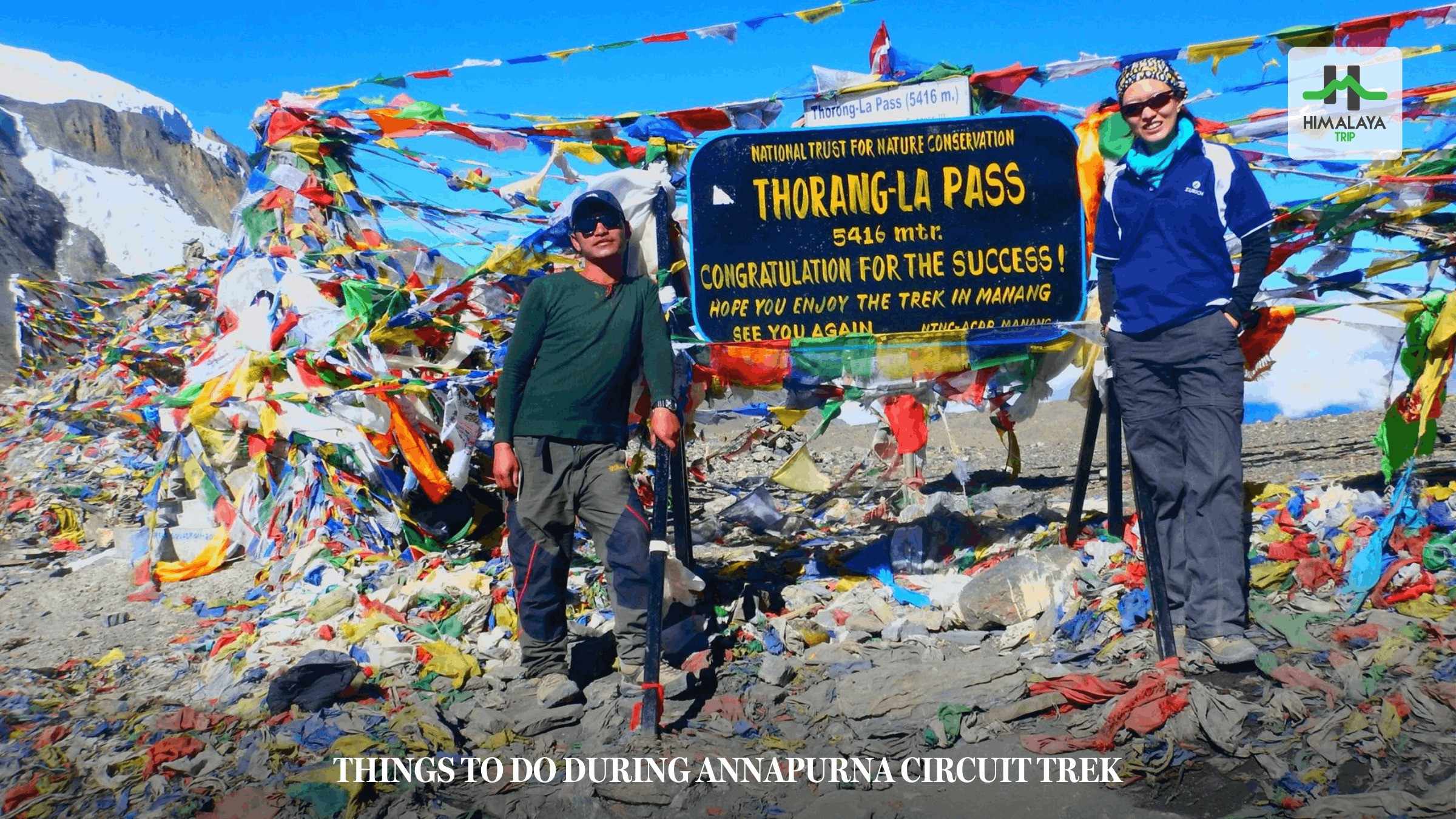
One of the most exciting and memorable things to do during the Annapurna Circuit Trek is to conquer the Thorong La Pass. The high mountain pass at an elevation of 5,416 m above sea level is the maximum altitude you will ascend on the trail. It is the moment almost all trekkers look forward to since day one of the circuit journey. Starting from Besisahar or Dharapani, the route takes you through traditional settlements such as Pisang, Chame, Gyaru, Ngawal, Manang, and Thorong Phedi.
The climb to the Thorong La Pass usually starts from Thorong Phedi or a nearby high camp. It starts early in the morning, around 3:30 or 4:00 AM, to take advantage of the stable weather. Strong, high winds are common later in the day, making the climb more difficult and riskier. The climb is not technical, but the high altitude and cold morning temperatures make the ascent slower. The terrain is rough, and there can be snow on the path in late autumn and spring. All the effort will be rewarded once you reach the top of the Thorong La Pass.

Reaching the top pass offers a sudden sense of openness and leaves you awe-struck. There is a line of colorful prayer flags and stone cairns on the trail at the top. They flutter in the strong mountain wind. The pass offers a wide view of Mount Annapurna II, Annapurna III, Dhaulagiri I, Gangapurna, Thorong Peak, and Nilgiri Himal. You will take a short break for photos and enjoy the mountain views.
Historically, Thorong La Pass was part of the old Himalayan salt trade route. Even at present, local yaks and mule caravans cross the path, transporting food and supplies between the Manang and Mustang villages. The caravan is a living reminder that the Annapurna Circuit was once part of an important route connecting across the Himalayas. It makes conquering the Thorong La Pass an unforgettable and extraordinary experience.
Explore the Village of Manang
Manang is one of the high-altitude villages on the Annapurna Circuit Trek route. At an altitude of 3,540 m, the village is one of the most important acclimatization stops before crossing Thorong La Pass. Its strategic location between the Marshyangdi and Kali Gandaki valleys makes it an ideal resting point. It helps trekkers adjust to the thin air at higher altitudes and enjoy spectacular mountain views. There are also several short excursion sites around Manang, such as the Ice Lake (Kicho Tal), the Gangapurna Glacier, and ancient monasteries.
Compared to the villages in the lower altitudes, Manang feels different. The terrain is more rugged and drier with wide valleys and rocky slopes. You will see traditional stone houses with Tibetan influences set amid windswept landscapes. Aside from the houses, there are narrow alleys and ancient walls. The locals run teahouses, small cafes, and bakeries. You can try local yak cheese, freshly baked bread, and apple pies. You can take a short acclimatization hike to the Gangapurna Glacier or Ice Lake. Either destination is perfect for acclimatization and enjoying spectacular Himalayan views.
It might come as a surprise, but there are small movie halls or mini cinemas in the teahouses of Manang. The halls are small, but they play on-demand movies. What could be more unique and memorable than watching a movie at a remote Himalayan village at an altitude of 3,540 m? Relax in a warm room with a stone stove while watching documentaries or movies in the evening. You must try it during your Annapurna Circuit Trek.

There is also a Himalayan Rescue Association Aid Post in Manang. You can visit the post where volunteer doctors give free sessions on altitude sickness and its symptoms to the attendees. Another thing that you can do on the acclimatization day at the village is visit the hillside monastery, Braka Monastery. It is one of the oldest monasteries in the area. You can see the monks performing their daily rituals. Bask in the tranquil atmosphere and connect with your inner spirituality.
Take the Side Trip to Tilicho Lake
Adding a side hike to Tilicho Lake, one of the highest lakes in the world, makes the adventurous Annapurna Circuit Trek more rewarding. The trail to Tilicho Lake takes you away from the main ACT route. You will take a quieter and less-traveled trail to the lake. It is a little demanding and requires extra effort, but the side trip is worth it. The turquoise lake is surrounded by towering snow-capped mountains that create a striking landscape that feels remote and pristine. It is perfect for enjoying the gorgeous views and for taking surreal photographs.
Following the trail that passes by Khangsar village, you will hike on rugged and loose rock sections. The area is prone to landslides, so you need to take a slow, steady pace. Most trekkers start early in the morning when the wind is calmer and the ground is more stable. The path takes you beneath the massive walls of the Tilicho Peak massif. The Tilicho Peak sits at an altitude of 4,919 m above sea level. Its elevation makes it one of the highest lakes on Earth.
You can watch the lake water appear turquoise and bright blue. Depending on the sunlight, the lake’s color changes from deep blue to emerald green. The lake creates a striking contrast against the surrounding Annapurna ranges and barren cliffs. It creates one of the most photogenic scenes in the Annapurna region. Additionally, the remote, isolated location of Tilicho Lake feels so tranquil that only a few trekkers get to experience it. If you want to see the frozen lake, early spring is the ideal time.
While on the topic, let us also share an interesting and lesser-known fact about Tilicho Lake. The high valley where the lake is located was once a part of an ancient trade route connecting it with the villages of Manang. Now mostly isolated, shepherds bring yaks to graze in the nearby alpine pastures in the summertime. It is a continuation of a seasonal tradition that dates back to ancient times.
Trekking to Tilicho Lake is a good way to acclimate before the crossing of the Thorong La Pass. Additionally, it is also an excellent opportunity to capture some of the most spectacular high-altitude photographs in the Annapurna region. Hence, detour to Tilicho Lake is one of the things to do during Annapurna Circuit Trek
Visit the Muktinath Temple
If you are looking for a culturally immersive thing to do during Annapurna Circuit Trek, visiting the Muktinath Temple is for you. The temple lies along the circuit route at an elevation of 3,800 m. Following the classic trail, you will descend to Muktinath after crossing the Thorong La Pass. It is also the point where the high-alpine valley of Manang shifts to the dry terrain of the Mustang region. Muktinath is one of the holiest spiritual sites in Nepal. It is a sacred site for both Hindus and Buddhist pilgrims. Hence, the temple also reflects the country’s religious harmony.
Descending to Muktinath after the long uphill climb to the pass offers a sense of relief and accomplishment. The beautiful view of the sweeping valley, the serene landscape, and the mountain views pleases your eyes. The peaceful and sacred atmosphere of the temple offers a calming experience for both body and mind. During the visit to the Muktinath Temple, you will come across pilgrims from both Nepal and India. Hindus consider the site a sacred temple connected to Lord Vishnu. Meanwhile, the Buddhists call the temple “Chumig Gyatsa” or “Hundred Waters,” associated with Guru Rinpoche.
The Muktinath Temple shows a mix of Hindu and Buddhist architecture. There is a Lord Vishnu shrine, which is the main temple. There are also small Buddhist stupas and prayer wheels within the complex. There are 108 stone water taps known as Muktidhara in the temple area. The water from these taps flows naturally from underground springs. Devotees believe walking under the stone taps cleanses one’s sins. If you, too, are a spiritual person or want to experience the culture, you can bathe under these taps and get cleansed of your karmic debts.

There is also an eternal flame inside the small shrine of Jawal Mai within Muktinath. Both Hindus and Buddhists consider the flame a symbol of divinity and eternal purity. The flame has been burning for centuries, naturally from the underground methane gas. It is rare to see a shrine where the elements of earth, water, and fire appear together. So, during the Annapurna Circuit Trek, bathe under the 108 stone water taps, explore around the temple grounds, and spin the prayer wheels. The spiritual atmosphere, paired with stunning scenery, makes Muktinath one of the most memorable cultural stops along the route.
Walk Through the Kali Gandaki Gorge
As mentioned before, the Annapurna Circuit Trek route goes along the world’s deepest valley, the Kali Gandaki gorge. The flowing Kali Gandaki River carves the gorge, and Dhaulagiri and Annapurna I lie on either side. Trekking through the gorge feels like entering a massive natural canyon. Descending into the gorge from the high altitude, the landscape quickly changes into thick forests and alpine meadows before opening up to wide sandy riverbanks. However, the higher sections of the gorge resemble a high-altitude desert landscape.
As the valley is narrow, the wind picks up strongly during the day. Trekking along the gorge is like walking through a natural history museum. The river cut deep into the mountains, exposing layers of sedimentary rock. Each layer shows a different geological period. The colors, thicknesses, and compositions of rock layers provide clues about ancient environments. According to the scientific findings, the Tethys Ocean existed here about hundreds of millions of years ago. They reveal the history of tectonic activity that has shaped the Himalayas today.
While walking through the Kali Gandaki Gorge, you can also find Shaligrams. These are fossilized ammonites of ancient marine creatures found over 400 million years ago. They are often scattered along the Kali Gandaki Riverbed. The Shaligrams are usually black or dark gray with spiral patterns, and their sizes can vary. Note that they are considered sacred in Hinduism. You can spare some time to search for the Shaligrams along the riverbeds. You can take them with you, but be careful about their religious significance.
During dry months (typically October to May), the riverbed shrinks. If you are traveling along the Annapurna Circuit route during these times. You can see the exposed gravel and sandbanks. Similarly, you can see the gorge from unusual angles. In early mornings or late afternoons, the towering vertical canyon walls cast long shadows. The contrast between light and rock is extraordinary, offering magical photographic settings. Walking through the Kali Gandaki gorge is a must-do when you trek the Annapurna Circuit in Nepal. Luckily, the classic ACT trail follows the Kali Gandali River, so you can get both a historic and a visual experience.
Rest in the Tatopani Hot Springs
Among the things to do during Annapurna Circuit Trek, you cannot miss the hot springs in Tatopani. The Tatopani village lies at the end of the Kali Gandaki gorge section of the trekking route. It is a small riverside town at an altitude of 1,190 m in the lower subtropical region. Tatopani literally translates to “hot water” in Nepali. There are natural geothermal springs around the village, which are famous for their relaxing and healing properties. It is believed to help soothe sore muscles and ease joint pain.
Unlike the commercial spas, the hot springs of Tatopani are fully natural. They are fed by underground hot springs and maintain a temperature around 40°C-45°C (104°F-113°F). The waters have natural minerals such as sulfur and magnesium. It helps to soothe sore muscles and joints. As a result, Tatopani is a popular stop among trekkers after the Annapurna Circuit Trek. They can heal and relax their tired bodies in the serene, lush atmosphere.
Similarly, you can also get a glimpse at the local Nepalese daily lifestyle. What many guides do not highlight about Tatopani is the lively community vibe. You can meet travelers from different walks of life and different parts of the trail gathered here. It is an excellent opportunity to meet new people and share stories. You can share a warm cup of tea or meals between dips with fellow trekkers or interact with the local families. Or you can simply listen to the sound of the flowing river while enjoying the views of the distant hills and terrace farms.
For trekkers on the Annapurna Circuit Trek route, the natural hot springs of Tatopani are the best way to conclude the adventure. It offers natural healing with human connection. Many trekkers have even stated that Tatopani is where the true sense of achievement and relief sinks in. So, at the end of the trek, do not forget to soak in the hot springs and reflect on the incredible journey through the Himalayas.
Ready for the Annapurna Circuit Trek?
The things to do during Annapurna Circuit Trek are more than just walking on a simple mountain trail. It is more than reaching the destination or crossing the high Thorong La Pass. It is about enjoying each day as it comes and exploring the trail in the best possible way. From cozy stays at local teahouses to changing scenery, conquering the mountain pass, and descending to the holy Muktinath and dipping in the natural hot water springs of Tatopani, the circuit offers a complete adventure and cultural experience. Each moment adds a memorable story to your journey.
If you want to experience the Annapurna Circuit Trek and explore these various activities, Himalaya Trip is here for you. Let us guide you through the classic trail with experienced local guides and porters. What’s more, you can customize the trek itinerary your way that fits you the best. Contact us today and start planning your Himalayan adventure!