Winter and Monsoon Special Offer! Get 5% off on all trekking packages in Nepal . Visit during June , July, August, December , January and February and take advantage of this limited-time deal.

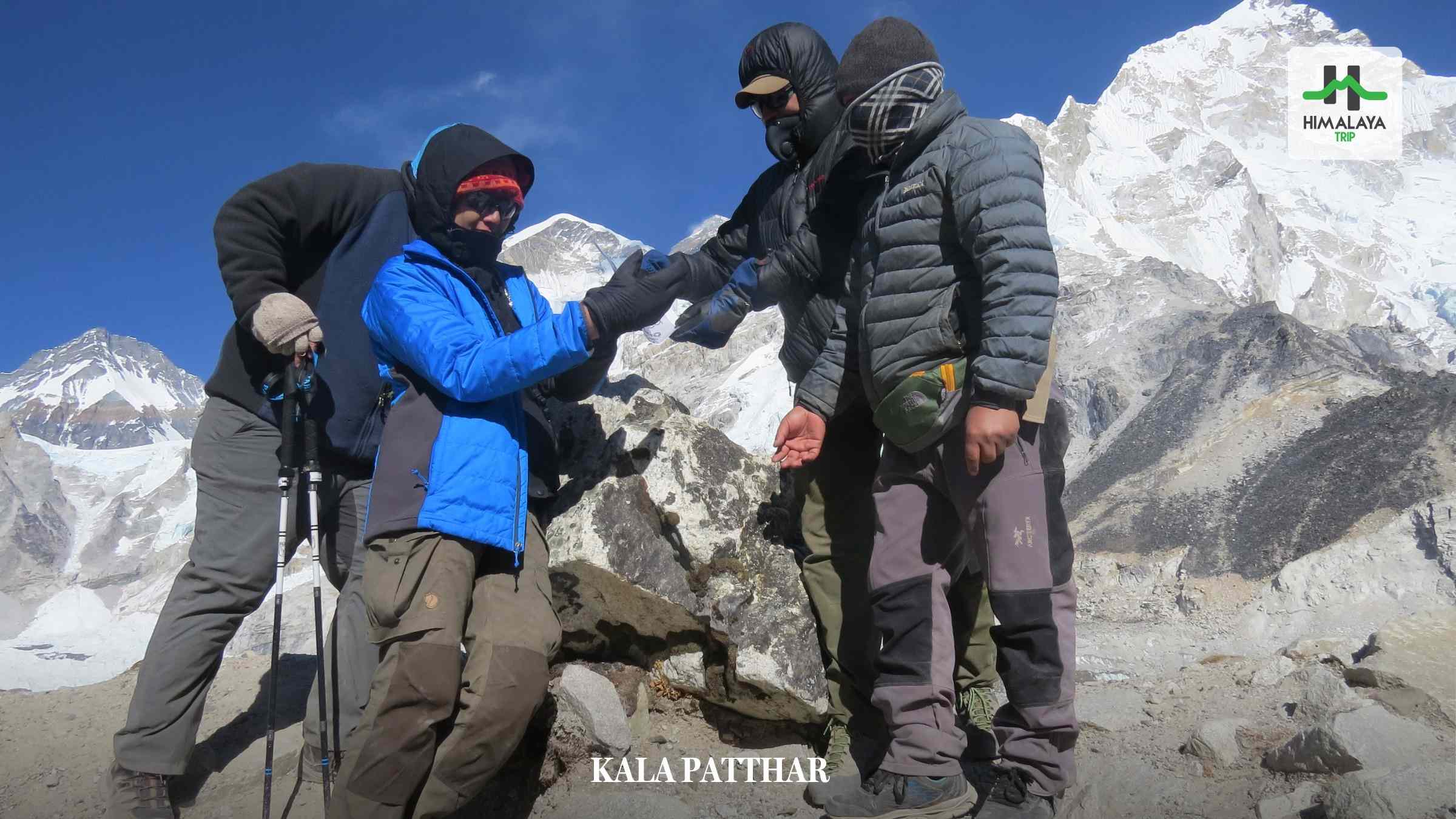
Kala Patthar
When it comes to one of the most iconic viewpoints in Nepal, Kala Patthar at an elevation of 5,550 m (18,209 ft) stands above the rest. Standing high in the heart of the Everest region, the vantage point is one of the major highlights of the Everest Base Camp (EBC) Trek. Many trekkers think that Everest Base Camp, at 5,364 m (17,598 ft), is the highest point and also the most rewarding. However, Kala Patthar is slightly higher than the base camp, and climbing it is the true climax of the journey.
Climbing to Kala Patthar is not just about reaching the highest elevation during the EBC Trek. You will get to witness one of the most beautiful sunrises in the Everest region and an iconic view of some of the world’s highest mountains. What makes it even more special is that Kala Patthar is accessible without technical skills or prior trekking experience. It attracts thousands of trekkers, adventure seekers, photographers, and mountain lovers.
If you are interested in knowing more about Kala Patthar, make sure you read until the end. Let us begin!
Table of Contents
Why Is Kala Patthar So Famous?
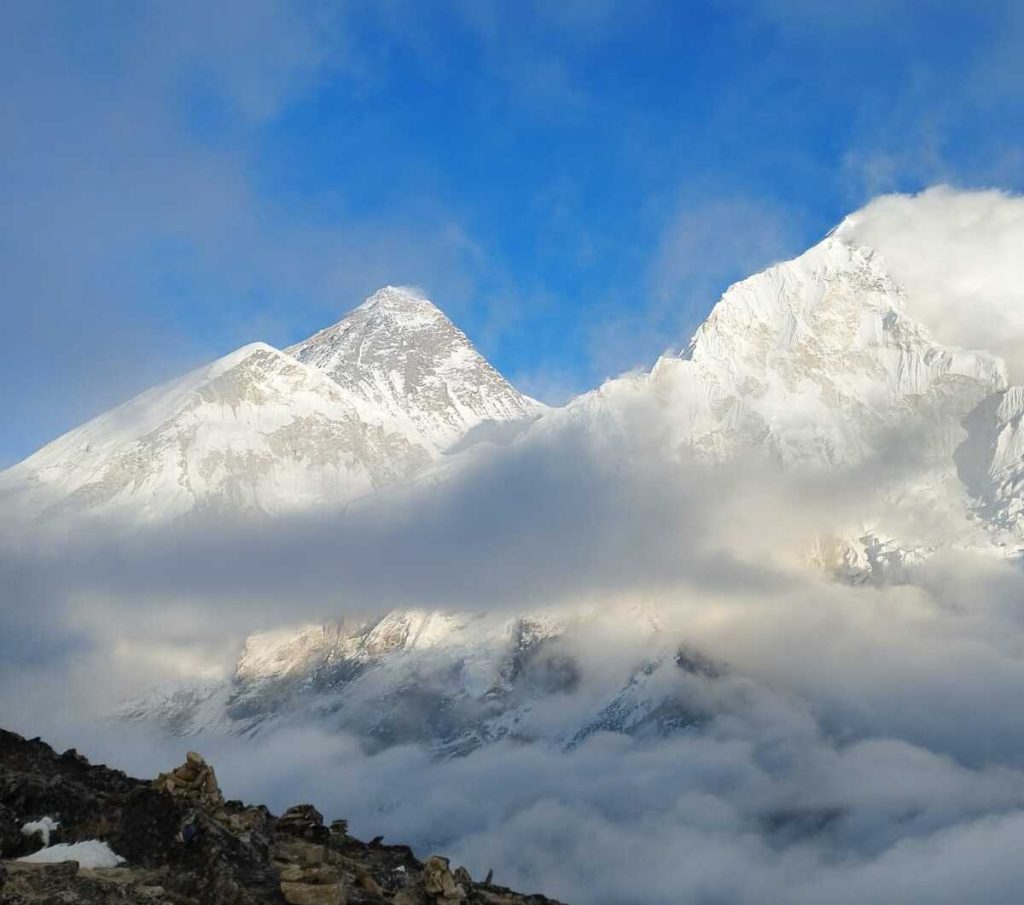
Kala Patthar is famous for offering a close-up and panoramic view of the snow-capped mountains of the Everest region. It might surprise many, but Everest Base Camp itself does not offer a complete view of Mount Everest. The massive ridge of Nuptse blocks the summit of the world’s highest mountain. But from Kala Patthar, you can see Mount Everest rise above the other surrounding peaks. It allows trekkers to appreciate the sheer size and beauty of the Himalayas.
Kala Patthar is also famous for sunrises and sunsets. Most trekkers hike to the viewpoint early in the morning to witness the golden sun rise and enjoy panoramic views of Mount Everest, Lhotse, Nuptse, Pumori, Ama Dablam, Lingtren, and Khumbutse. The changing sunlight transforms the mountain view throughout the day. The day starts with golden dawn, during the day, there are dramatic cloud formations, and the sunset is fiery and vibrant. Hence, Kala Patthar is an excellent spot to capture mesmerizing photographs.
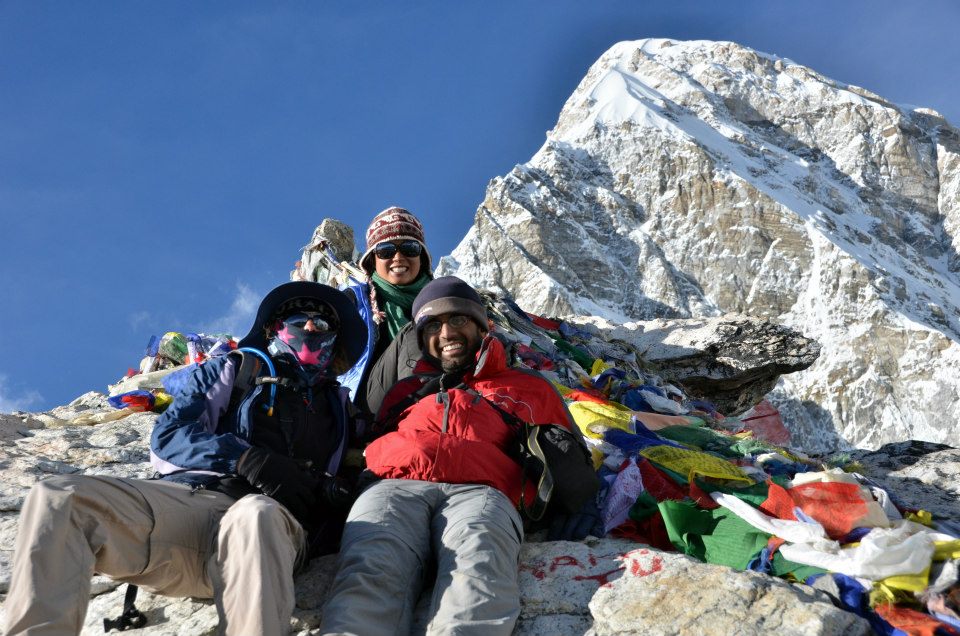
Another reason the viewpoint is famous is that it offers a unique perspective on the Khumbu Glacier and Khumbu Icefall, which are not visible from lower elevations. You can see the glacier wind through the valley, following the climbing route used by Everest expeditions towards Camp I. Since Kala Patthar is the highest point reached on the Everest Base Camp Trek, reaching it provides a strong sense of accomplishment. Watching the sunrise over the mountains, surrounded by the silent Himalayan atmosphere, makes the climb to Kala Patthar one of the greatest Himalayan experiences.
Where Is Kala Patthar Located?
Kala Patthar is located in the Khumbu (Everest) region of northeastern Nepal. It lies within the Sagarmatha National Park, a UNESCO World Heritage Site. The viewpoint rises above Gorak Shep (5,164 m) to the southwest. Gorak Shep is the last permanent settlement on the Everest Base Camp Trek route from where you take a hike to Kala Patthar. The viewpoint is a rocky hill that sits on the southern ridge of Mount Pumori.
Most standard EBC Trek itineraries include an early-morning climb to Kala Patthar to catch the sunrise. However, some itineraries also include a visit to the iconic viewpoint for sunset. Many famous Himalayan landmarks surround the viewpoint. To the east of Kala Patthar lies the Everest Base Camp and Khumbu Icefall. The viewpoint also overlooks the vast Khumbu Glacier, one of the highest and longest glaciers in Nepal. Similarly, towering peaks surround Kala Patthar, which are clearly visible on clear days.
What Does Kala Patthar Mean?
The name Kala Patthar comes from the Nepali language, where “Kala” means “black” and “Patthar” means “rock.” Hence, Kala Patthar translates into “Black Rock” in English. The name refers to the dark-colored rock formations that stand out against the white glaciers and snow-capped mountains. True to its name, Kala Patthar is made of exposed, dark metamorphic rock. It is an easily recognizable landmark along the trekking route.
Kala Patthar is often referred to as a peak, but it is actually a rocky hill or viewpoint rather than a mountain summit. The local Sherpa communities have used it as a natural landmark throughout the upper Khumbu Valley. Now the viewpoint is popular among trekkers, climbers, and photographers. The “Black Rock” marks the true highest point and major highlight of the Everest Base Camp.
The View from Kala Patthar – Nepal’s Most Iconic Himalayan Panorama
There are very few places on Earth that provide mesmerizing mountain views like Kala Patthar. The view from here is even better from the foothill of the world’s highest mountain, the Everest Base Camp. Kala Patthar offers a front-row seat to the Himalayas. You can see Mount Everest with its iconic black summit pyramid rise above the surrounding ridges. Standing tall next to Everest is Lhotse, the fourth-highest peak in the world. Similarly, you can see Nuptse, Pumori, Ama Dablam, Lingtren, Changtse, and Khumbutse in one sweeping view.
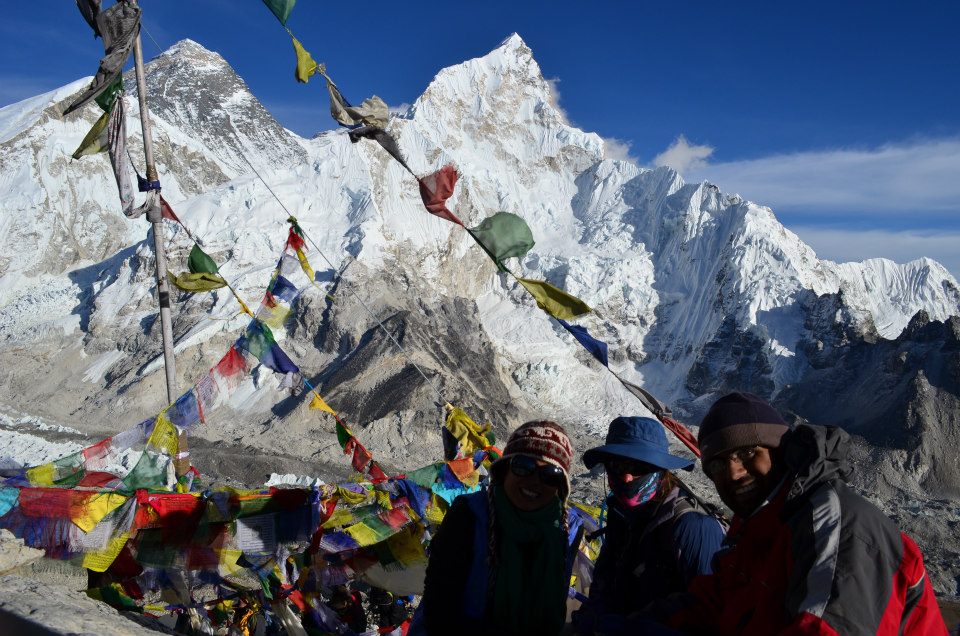
While the mountains dominate the skyline, the view below is equally spectacular. The Khumbu Glacier winds through the valley like a frozen river. You can see its surface covered with rocks, crevasses, and massive ice formations. Similarly, you can also clearly see the famous Khumbu Icefall. It marks the starting line of the South Col of Mount Everest. Standing at Kala Patthar, you can see the glacier descend from Western Cwm towards Everest Base Camp. The viewpoint offers one of Nepal’s most iconic Himalayan panoramas and scenery in the world.
Mountains Visible from Kala Patthar
Here is a list of all the mountains visible from Kala Patthar:
- Mount Everest (8,848.86 m / 29,031.7 ft): The tallest mountain in the world is the centerpiece of the panoramic view from Kala Patthar. The summit of Everest stands tall above its neighboring peaks. It looks close and clear from here. During sunrise and sunset, the mountain glows in the shades of gold and crimson, creating mesmerizing scenery.
- Lhotse (8,516 m / 27,940 ft): The fourth-highest peak in the world sits to the south of Mount Everest. From Kala Patthar, you can see its massive rock walls and icy ridges dominating the skyline. You can also see the delicate snow formations of Lhotse.
- Nuptse (7,861 m / 25,791 ft): Mount Nuptse forms the western boundary of the Everest massif. It rises across the horizon with jagged snow-covered summits. It blocks the view of the Everest summit from the Everest Base Camp, but its ridges create a stunning front view from Kala Patthar.
- Pumori (7,161 m / 23,494 ft): Pumori is often nicknamed the “Daughter of Everest.” Its pyramid-shaped summit is clearly visible to the west. The mountain stands directly above Kala Patthar, so it is one of the closest mountains you can see from the viewpoint.
- Ama Dablam (6,812 m / 22,349 ft): It is considered one of the most beautiful mountains in the world. Also known as the “Matterhorn of the Himalayas,” it features elegant, sharply defined ridges that are clearly visible from Kala Patthar. You can see the mountain’s steep rock faces, snowy ridges, and hanging glaciers.
- Lingtren (6,749 m / 22,142 ft): From Kala Patthar, Mount Lingtren appears on the western side of the Everest massif. It appears rugged and snow-covered. Although smaller than Everest and Pumori, its sharp ridges and steep icy slopes are clearly visible. Lingtren forms part of the massive mountain wall surrounding the upper Khumbu Valley.
- Khumbutse (6,665 m / 21,867 ft): It stands north of the Khumbu Glacier and is clearly visible from Kala Patthar. You can see its rugged rock faces, snow-covered ridges, and towering cliffs overlooking the Khumbu Icefall and Everest Base Camp. Together with Lingtren, it forms a striking backdrop that frames the Khumbu Glacier.
- Changtse (7,543 m / 24,747 ft): Mount Changtse is visible to the north of Mount Everest from Kala Patthar. It lies across the Nepal-Tibet border. It has a unique, rounded, and expansive appearance. Its snow-covered peak blends into the Tibetan Plateau, creating a stunning view.
Climbing Kala Patthar – What to Expect
During the Everest Base Camp Trek, you will stay at Gorak Shep overnight and climb to Kala Patthar the following day. The distance between Gorak Shep and the viewpoint is approximately 1.5 kilometers (0.9 miles) one way. The trail is steep and rocky, so it will be physically demanding. Additionally, the low oxygen level makes the climb more challenging. Usually, it takes 2 to 3 hours to reach Kala Patthar from Gorak Shep. Descending is easier than ascending, which takes 1 to 2 hours. However, the trek duration can vary depending on one’s pace and weather conditions.
You will wake up before dawn and start with a gradual ascent on rocky terrain. You will need a flashlight to light your way to the top of Kala Patthar. As you start ascending higher, the trail becomes steeper. The trail consists of uneven, rocky paths, loose rocks, and occasional boulders. It requires careful footing to navigate the rough terrain. The final stretch is the most difficult, as the altitude and physical challenge begin to take their toll. At over 5,550 m, the main challenge comes from the lack of oxygen. Walking slowly, taking short breaks, and maintaining a steady pace is crucial.
Climbing to Kala Patthar is moderately challenging. There is no need for technical mountaineering skills or the use of specialized climbing equipment. Any trekkers, including beginners with reasonable fitness, can reach the top of Kala Patthar with proper preparation. It is challenging, but the spectacular and unparalleled view of the surrounding Himalayan mountains makes the journey worth the effort. So, expect a demanding climb, as well as a rewarding view and a tranquil atmosphere.
Kala Patthar vs Everest Base Camp – Which Offers Better Views?
Kala Patthar and Everest Base Camp are two of the best viewpoints in the Everest region. However, the views differ from one another. Kala Patthar offers better, unobstructed views of the mountains. Meanwhile, the views from Everest Base Camp are more focused on the Khumbu Glacier, Khumbu Icefall, and surrounding mountains. Here is a clear table comparing the views between the two:
| Features | Kala Patthar | Everest Base Camp |
| Elevation | 5,550 m (18,209 ft) | 5,364 m (17,598 ft) |
| View of Mount Everest | Clear and unobstructed 360-degree views | The summit is blocked by Nuptse |
| Mountain panorama | Panoramic views of Everest, Lhotse, Nuptse, Pumori, Ama Dablam, Lingtren, Khumbutse, and the Khumbu Glacier | Limited mountain panorama, close views of the Khumbu Icefall, and surrounding peaks |
| Photography | Best viewpoint for sunrise, sunset, and sweeping mountain photography | Ideal for capturing the famous Everest Base Camp rock and expedition camp tents |
| Experience | Scenic viewpoint and the highest point of the EBC Trek | Iconic viewpoint, starting point for Everest expedition, and the second-highest point of the EBC Trek |
Kala Patthar Elevation and Altitude Sickness
At an altitude of 5,550 m, there is the risk of altitude sickness. The oxygen level at Kala Patthar is about 50% of that at sea level. As a result, even experienced trekkers can experience symptoms of Acute Mountain Sickness (AMS). Due to the lack of oxygen, the body works harder. It makes even a short uphill climb physically more demanding. Common symptoms that trekkers can experience include headache, dizziness, nausea, loss of appetite, unusual tiredness, shortness of breath, and difficulty sleeping.
The symptoms of altitude sickness are common above 5,000 m. The mild symptoms can improve with proper rest, acclimatization, and hydration. However, if the symptoms become severe, descend immediately to a lower altitude or rest. If it continues to worsen, immediate rescue evacuation may be necessary. Severe altitude sicknesses include High Altitude Pulmonary Edema (HAPE) and High Altitude Cerebral Edema (HACE). Because there are few hospitals, helicopter evacuation is the quickest way to provide immediate medical treatment.
In addition to acclimatization and hydration, steady pacing is crucial to minimize the risk of AMS. While on the trek, trekkers are advised to eat carbohydrate-rich meals to maintain energy. It is also advised to avoid drinking alcoholic or caffeinated beverages and smoking. Cold temperatures can also increase physical stress on the body and increase the risk of altitude sickness. Hence, proper clothing is crucial. Medications such as acetazolamide (Diamox) can assist with acclimatization, but consult with health professionals before the trek about taking them. With a carefully paced itinerary and careful preparation, most trekkers can safely reach Kala Patthar.
Tips for Reaching Kala Patthar Successfully
Now you know the details of Kala Patthar, here are some practical tips to reach the iconic viewpoint successfully:
- Take acclimatization days at Namche Bazaar and Dingboche before ascending to Kala Patthar. Gradual ascent and acclimatization help to minimize the risk of altitude sickness.
- Avoid rushing to the high altitude. Maintain a slow and steady pace. Monitor symptoms of altitude sickness as you ascend to higher altitudes.
- Keep yourself hydrated throughout the journey. Drink 3 to 4 liters of water each day to reduce the risk of dehydration and altitude sickness.
- Start the hike early in the morning or late in the afternoon for sunset to enjoy the best mountain views.
- Carry a headlamp if you are climbing to the viewpoint for sunrise.
- Dress in warm layers, as the temperature at the top of Kala Patthar can drop below freezing, especially early in the morning.
- Check the weather forecast before your climb. Changes in weather conditions, such as strong winds or snowfall, can affect your safety and views.
- Hire an experienced guide and follow their instructions. They will help maintain a steady pace, acclimatize, and assess weather and symptoms of altitude sickness.
Interesting Facts About Kala Patthar
Let us summarize our blog with all the interesting facts about the iconic viewpoint of Kala Patthar:
- Kala Patthar means “Black Rock” in the Nepali language.
- The viewpoint is higher than Everest Base Camp. It is one of the highest trekking viewpoints in Nepal.
- It offers the closest, clearest, and most spectacular sweeping view of Mount Everest. Many trekkers believe the view is even better than from the base camp.
- The Kala Patthar viewpoint is famous for sunrise views of Mount Everest and other peaks like Lhotse, Nuptse, Pumori, Ama Dablam, and more.
- The viewpoint is also popular among photographers. It is renowned for capturing the classic postcard image of Everest rising above the Khumbu Glacier.
- Kala Patthar is one of the most photographed locations in the Himalayas.
Conclusion
There is a reason why Kala Patthar is one of the most iconic viewpoints of Nepal. The sweeping mountain views from the legendary vantage point are unforgettable and not possible from anywhere else. Standing at 5,550 m, surrounded by the Himalayas and the vast Khumbu Glacier, is a moment that will stay with you long after the journey. Whether you climb before dawn to watch the golden sunrise or arrive at sunset to watch the mountain glow in shades of orange and pink, Kala Patthar promises a once-in-a-lifetime Himalayan spectacle.
The climb is demanding but extremely rewarding, and the sense of accomplishment that washes over you is indescribable. For trek enthusiasts, adventure seekers, or photographers, Kala Patthar is the best destination. If there is one place that captures the grandeur, beauty, and spirit of the Everest region, it is Kala Patthar. No wonder it is a major highlight of the Everest Base Camp Trek. For more information, you can contact us directly at Himalaya Trip. We will make your dream of witnessing the Himalayas come true!