Winter and Monsoon Special Offer! Get 5% off on all trekking packages in Nepal . Visit during June , July, August, December , January and February and take advantage of this limited-time deal.



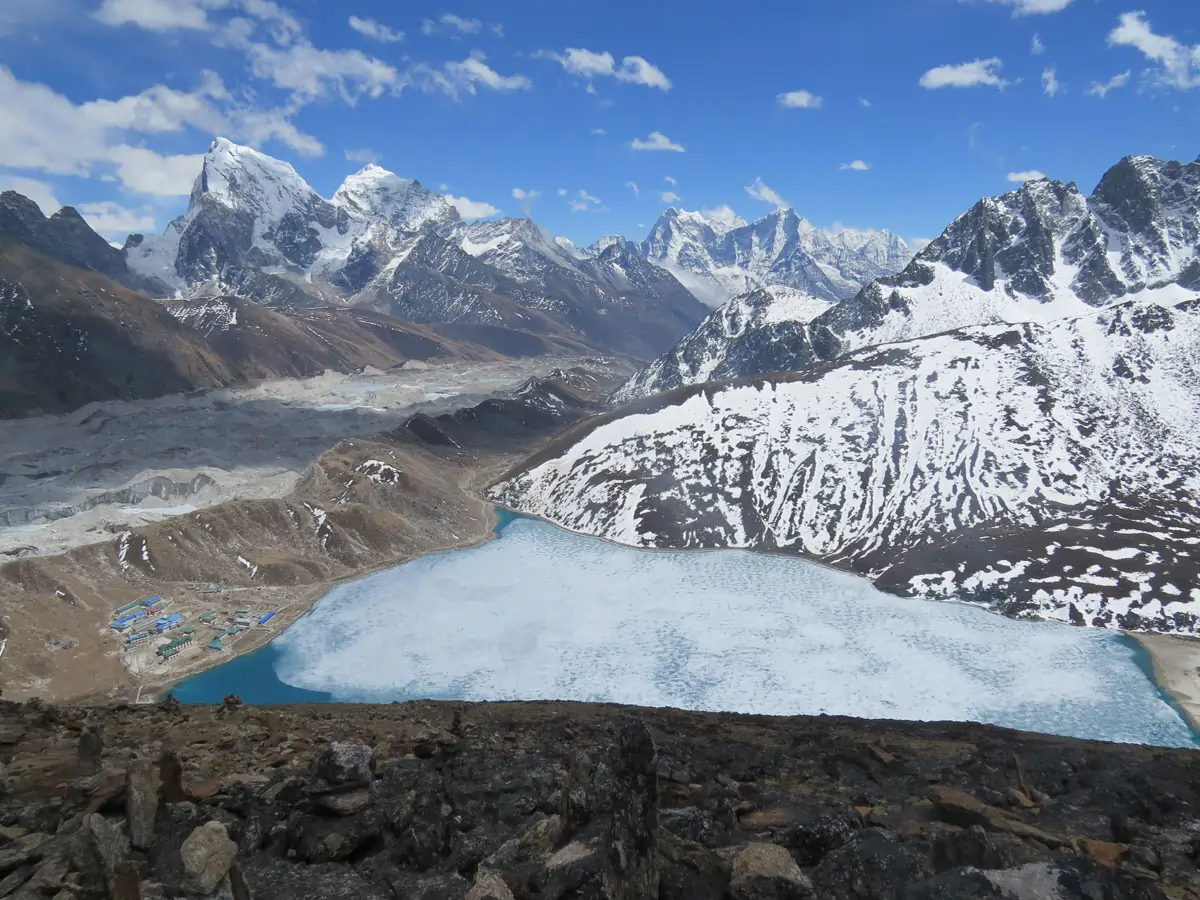
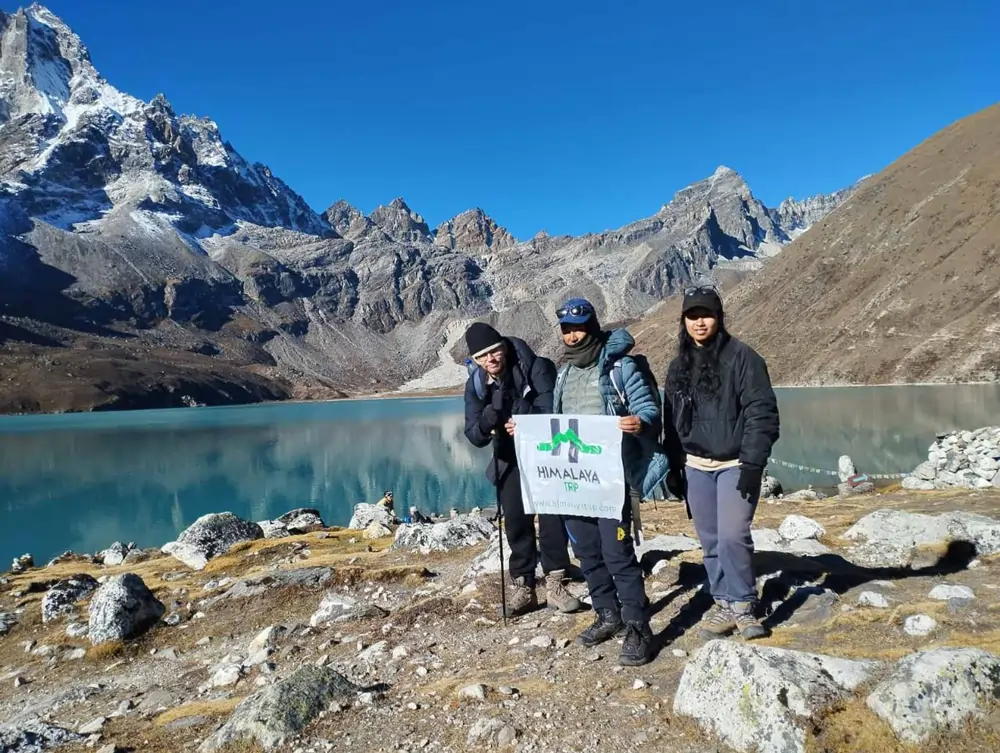
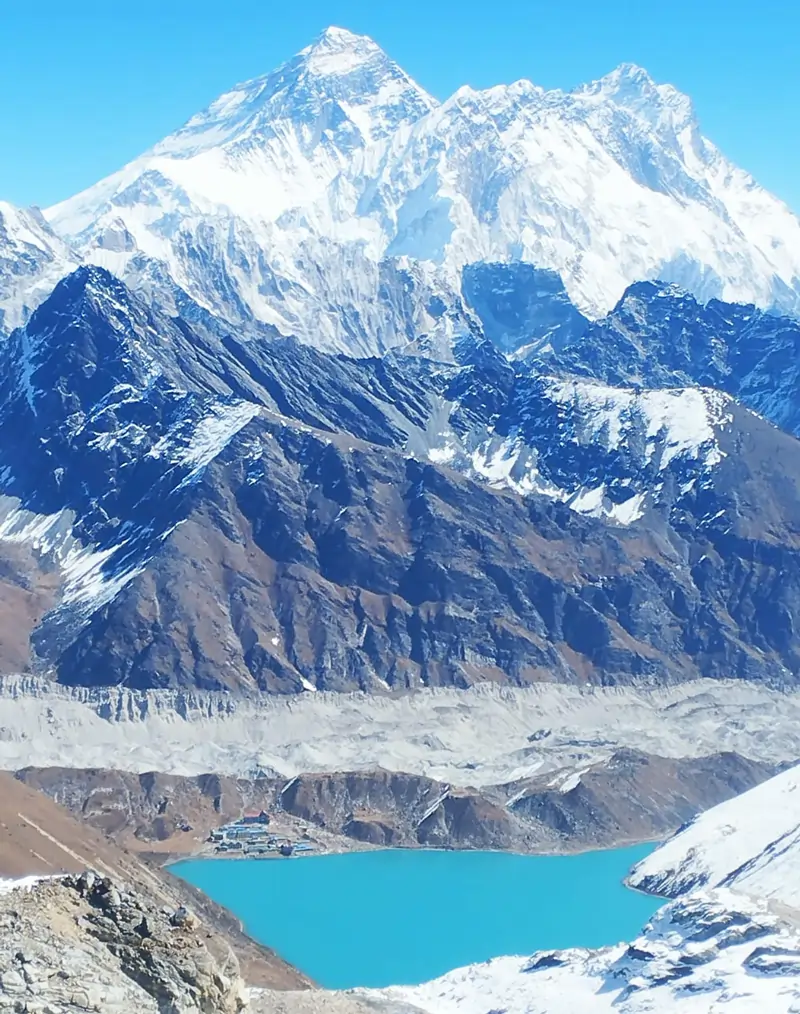
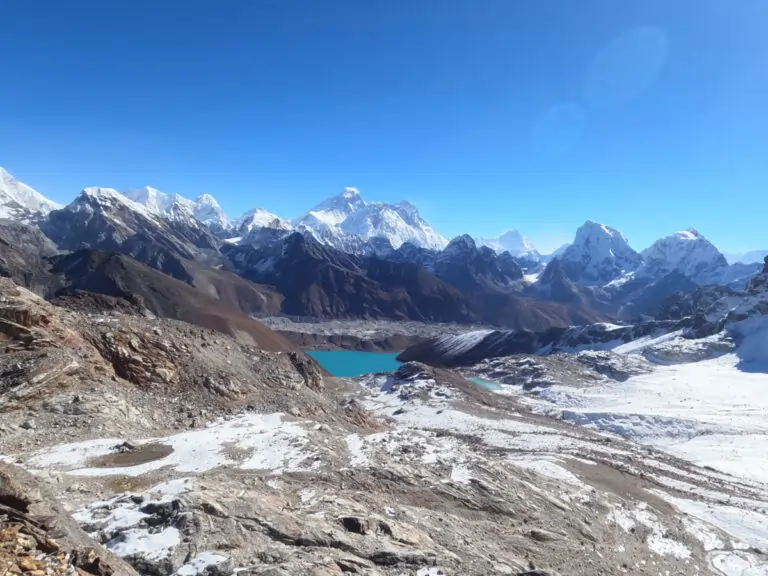
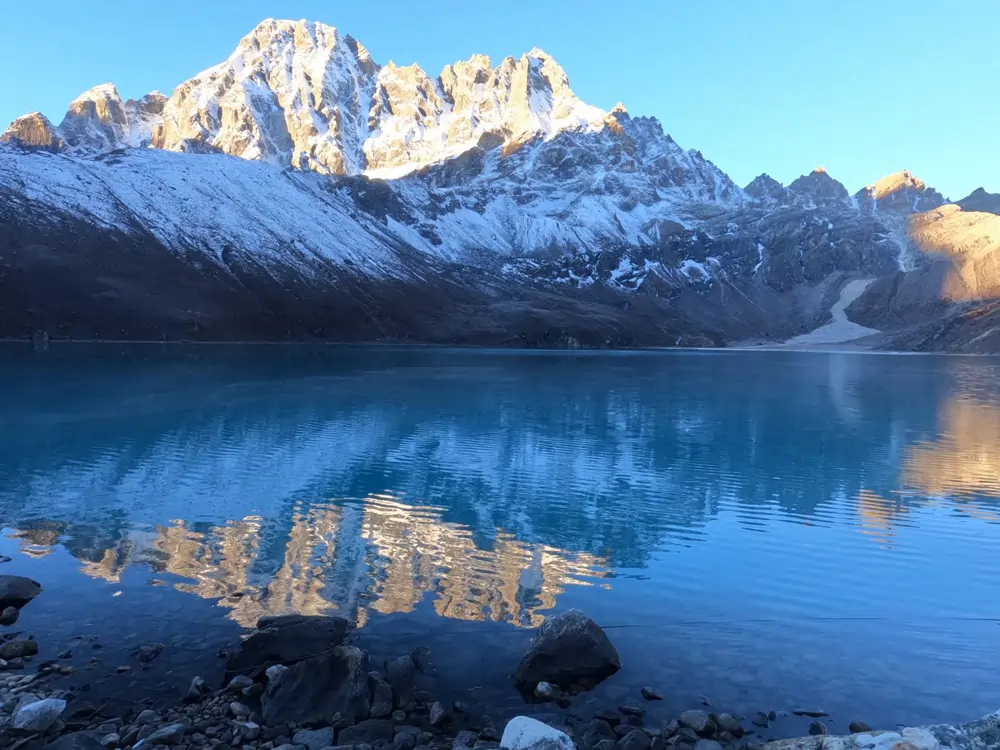
What Makes This Gokyo Lakes Trek Unique
- Take an adventurous flight to Tenzing-Hillary Lukla Airport.
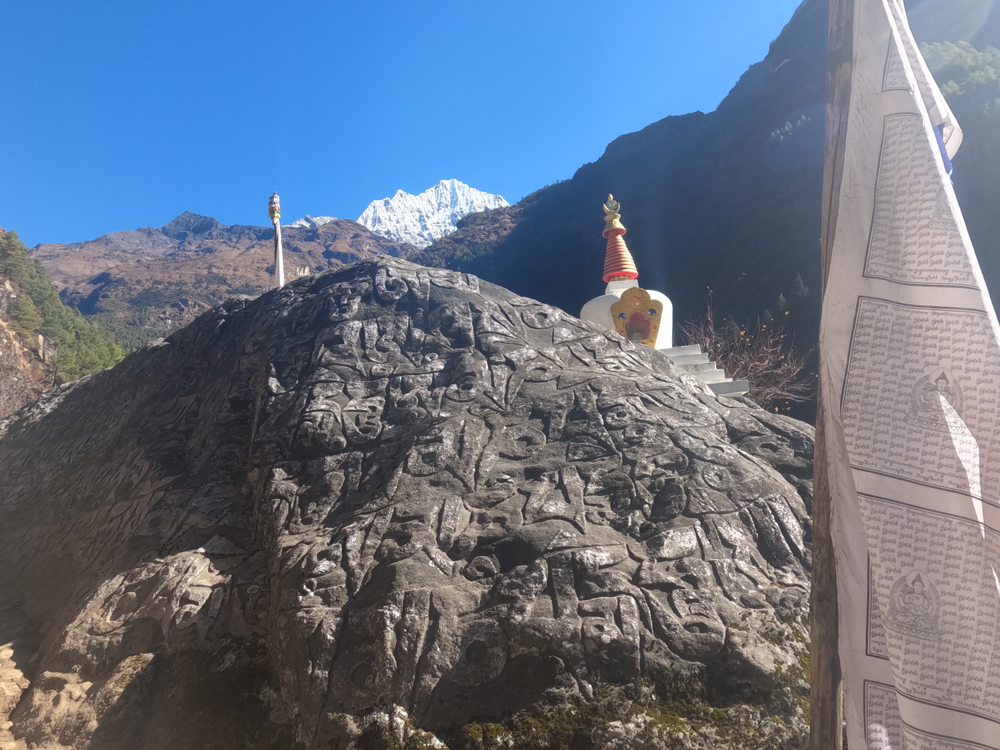
- Many Buddhist Mani stone walls, Stupas, Matra written stone, and Monasteries.
- Sagarmatha National Park entry point from Jorsalle.
- Experience the Sherpa’s way of life, their culture, and festivals.
- Explore the Sherpa capital, Namche Bazar.
- An attractive viewpoint, Everest View Hotel, with the finest Himalaya view.
- One of the beautiful Khumjung and Khunde villages.
- A nice spot at Mong La Danda offers some of the best Himalaya views.
- Wild animals, birds, flowers, many suspension bridges, etc.
- The highest point of the trek, Gokyo Ri (5,357 m ), from where one can witness the highest mountain view of Mount Everest (8,848.86 m), Lhotse( 8,516 m), Makalu (8,481 m), Cho Oyu (8,201 m), and other Himalayan views such as Ama Dablam, Island Peak, Konde, Lobuche, etc.
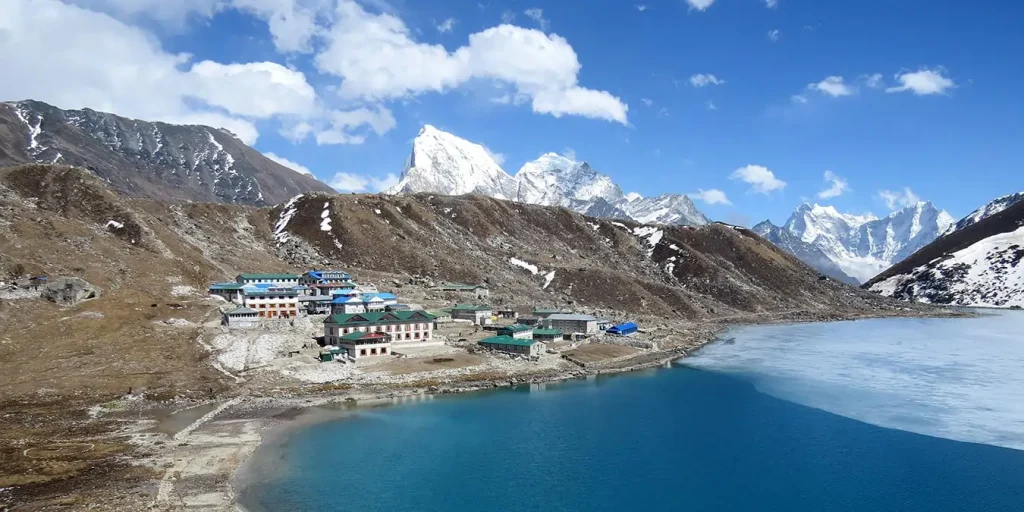
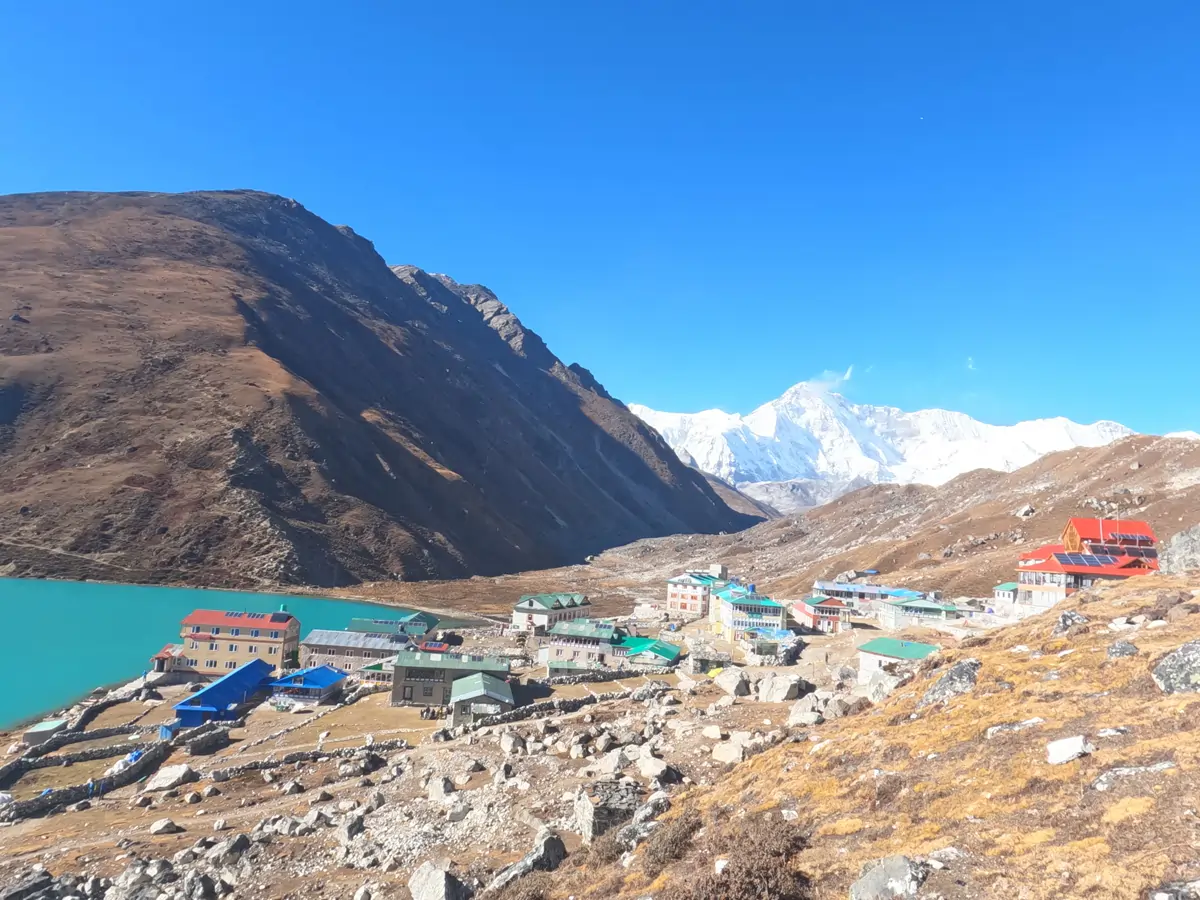
- Exploring the beautiful ice lakes, the 1st to 6th Gokyo lakes.
- The largest glacier in Nepal, the Ngozumpa Glacier.
- Renjo La Pass (5,360 m), one of the popular and adventurous passes in the Everest region.
- Visit Thame Monastery, the oldest Buddhist monastery in the Everest region.
Activity
Adventure Treks
Altitude
5360 Renjo La Pass
Best Season
Autumn Spring
Meals Included
10 Dinners 10 Lunchs 11 Breakfasts
Transportation
Domestic flight (KTM-Lukla-KTM)
Destination
Most Popular Treks
Accommodation
10 nights in Lodge
Duration
11 Days
Region
Everest Region Treks
Group Size
2
Difficulty
Adventure
Activities
11 days trek
11 Days Gokyo Lakes Trek Overview
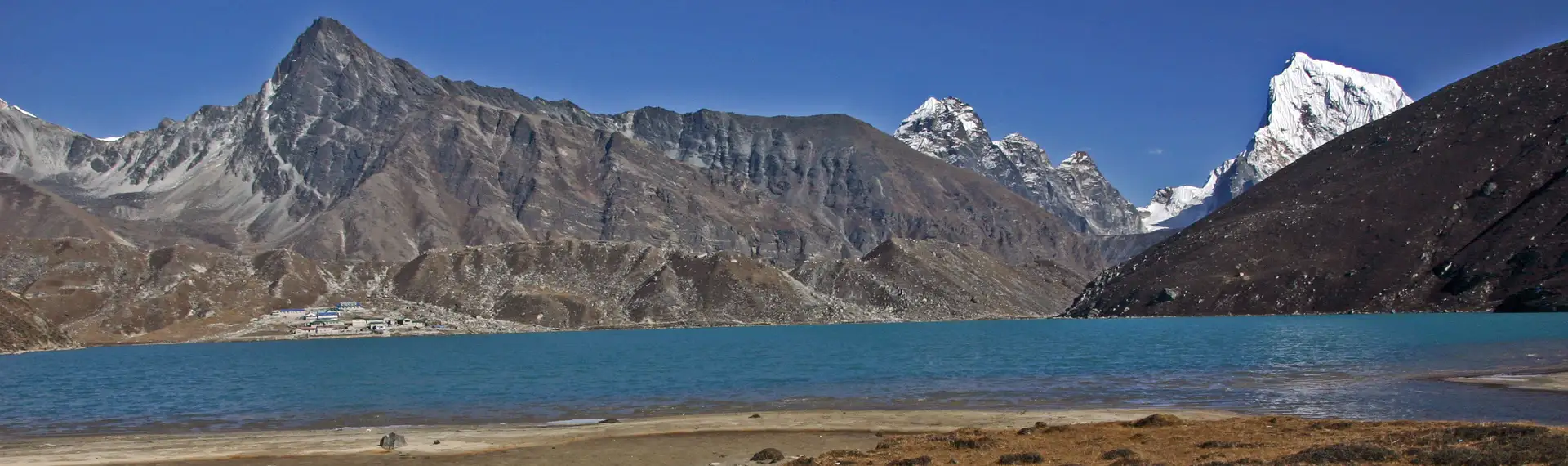
Gokyo Lake in the Everest region is one of the most pristine turquoise lakes nestled in the northwestern Solukhumbu district. The Gokyo Lakes Trek takes you deep into these untouched and hidden areas of the region. The trek is the second most popular destination in the land of the Sherpas, after the Everest Base Camp (EBC) Trek. Gokyo Lake Trekking trails are adventurous yet less crowded and more scenic, which makes it an ideal alternative to EBC. The trek also offers spectacular views of the world’s highest mountain, Everest, and includes an overnight stay in Namche Bazaar, the gateway to the Khumbu Region.
You will start the Gokyo Lakes Trek with a thrilling flight to Lukla. It’s a quiet route that traverses remote villages, icy rivers, rocky glacier areas, and the beautiful turquoise waters of the Gokyo Lakes. You will pass through traditional Sherpa villages such as Namche Bazaar, Mong La, Dhole, Machherma, Lungdhen, Thame, and more. It offers a window to glimpse the vibrant Sherpa culture and immerse oneself in it. What makes the trek more thrilling is that you will cross the largest glacier of Nepal, the Ngozumpa Glacier, to get to the hidden Gokyo village. Here, the world’s highest freshwater lake systems, the Gokyo Lakes, are located.
The Gokyo Lake is made of six lakes at an elevation of 4700 to 5000 m in the Gokyo Valley. A short hike from the village sits one of the iconic vantage points of the Everest region, Gokyo Ri (5,357 m). It offers one of the mesmerizing panoramic views of the 8,000m peaks, including Everest, Makalu, Cho Oyu, and Lhotse. You can also see other surrounding mountains. During the trek, you will also cross the high mountain pass of Renjo La (5,360 m). It is the highest point of the Gokyo Lakes Trek. Likewise, the trekking trails of Gokyo Lake from Monjo lie within Sagarmatha National Park. Hence, one can witness the diverse flora and fauna of the Everest region and the Gokyo Lakes.
Over the years, many trekkers visiting the Everest region for the Everest Base Camp Trek have been drawn to the beauty of the Gokyo Lake trek. Gokyo Lake also holds historical and cultural significance in Nepal, which is why it is recognized as a Ramsar site and is highly protected. The trek is a scenic, high-altitude adventure with rewarding views and a rich cultural experience. It is an authentic Himalayan journey of solitude, where offbeat alpine trails meet glaciers, clear alpine lakes, and giant mountains. So let’s get into the details of the 11-day Gokyo Lake trek.
Why Choose the Gokyo Lakes Trek?
The Gokyo Lake Trek is one of the best trekking destinations for those seeking stunning mountain views and adventure. But if you want to know why, you should experience it at least once in your life. Here are five reasons why:
Raw Himalayan Scenery That Changes With Altitude
The Gokyo Lakes Trek takes you on a journey in the remote part of the Everest region. Its winding, offbeat trail ranges from low subtropical forests to an elevation of 5,357 m at Gokyo Ri. Hence, you will get a visual feast where the landscape changes with elevation. From lush rhododendron forests to alpine meadows, green pastures, and glacial moraines, you can see the unique scenery of the Everest region. Similarly, you can see beautiful traditional Sherpa houses and monasteries painted in white, deep red, ochre, and more. You can also see bright murals and paintings along monastery walls, and colorful prayer flags adorning suspension bridges.
The main highlight of the 11 Days Gokyo Lake Trek is the mesmerizing views of the towering peaks and the pristine Gokyo Lakes. During the journey, you can witness the world’s highest peaks, including Mount Everest, Makalu, Cho Oyu, and Lhotse. Likewise, the turquoise Gokyo Lakes, surrounded by snow-capped mountains and glaciers, create a picture-perfect landscape. When trekkers reach the summit of Gokyo Ri, the panoramic views of the surrounding mountains, lakes, and glaciers unfold before them. The trek is an exciting adventure that offers the raw Himalayan scenery of the Everest region.
Sherpa Heritage and Living Culture
The Everest region is home to the Sherpa people, whose lives are deeply connected to the mountains. They have their own unique cultures, traditions, norms, rituals, festivals, and cuisines. The Gokyo Lakes Trekking trail passes through traditional Sherpa villages. Hence, you will visit traditional villages and settlements and meet new people. The Sherpa people’s ancestry goes back to Tibet. They practice Tibetan Buddhism, and their culture and lifestyle are deeply rooted in it. The houses and monasteries are built of stone and wood, reflecting age-old Tibetan architecture. These are decorated with prayer flags, chortens, and mani walls. One can also see prayer wheels surrounding the monasteries.
The locals run the accommodations along the Gokyo Lake Trekking route. It offers any trekkers an opportunity to witness the living culture of the Sherpa people. Likewise, you can visit monasteries along the trail, including Namche Monastery, Khumjung Monastery, and the Thame monastery. You can see Sherpa families continuing their age-old customs, such as high-altitude farming, animal herding, offering butter lamps at monasteries or prayer halls, and rotating prayer wheels while chanting mantras. In villages such as Gokyo and Lungdhen, Sherpa culture and heritage appear untouched by time. It provides trekkers with a more immersive cultural experience, making the trek more memorable.
A Tranquil Route for Solitude Seekers
Another reason to choose the 11 Days Gokyo Lakes Trek is to enjoy a quiet trekking experience, deep in the Himalayas. Compared with the Everest Base Camp and Annapurna Base Camp Treks, the Gokyo Lake trek is less popular and less crowded. The route winds through the serene forests, quiet valleys, remote valleys, glacial lakes, and moraines. It feels like traveling to a different world and a different pace of life. The solitude offers a mental escape from the hectic daily routine. It also gives you a chance to connect with nature and experience pristine natural beauty.
During the trek, you will pass by scenic landscapes without passing by other groups for hours. Gokyo Ri is one of the least-crowded vantage points of the Everest region. The serene atmosphere also gives you time to reflect. It makes the journey more spiritual and personal. You can also take spectacular photographs without any interruption. If you want to experience the least crowded treks with plenty of opportunities to experience the trek peacefully and in private, Gokyo Lakes is for you. However, during the ideal trekking seasons, such as Spring and Autumn, the number of trekkers increases. So, there can be more trekkers on the trails, and you have to book your flights and accommodations in advance.
Reward Beyond the Turquoise Lakes
Last but not least, the Gokyo Lakes Trek offers a rewarding experience that will stay with you long after the trek concludes. You will not only remember the spectacular turquoise lakes, but also the diverse trail, changing scenery, and the towering peaks. As you ascend to Gokyo Ri, you will be treated to one of the most mesmerizing panoramic views of some of the world’s highest mountains. Similarly, you will trek alongside the ancient moraines of Ngozumpa Glacier and glacial streams.
Although the Gokyo Lake trek is among the most challenging treks in Nepal, it is also equally rewarding. The trails will test your physical and mental limits. But your every effort will be worth it. In addition to the spectacular views and immersive cultural experience, you will get a deep sense of achievement and mental clarity. Since the Gokyo Lakes Trekking trail lies within the Sagarmatha National Park, you will also get to observe diverse Himalayan flora and fauna. There are only a few Himalayan routes that combine the tranquility with mesmerizing scenery, adventure, and spirituality, all in one package, like Gokyo Lakes. You need to join to experience it firsthand.
Discover the Hidden Gems of the Everest Region
For those seeking the beauty of Everest without the usual hustle, the Gokyo Lakes Trek is a great option. Explore the picturesque lakes and climb Gokyo Ri for incredible views of Mount Everest, Cho Oyu, and Makalu. This trek offers a peaceful, culturally enriching experience.

Gokyo Lakes Trek Outline Itinerary
Day 01:
Fly to Lukla and Trek to Phakding (2610 m, 8 km or 3-4 hours walk).
Day 02:
Trek Phakding - Namche (3440 m, 11 km or 5-6 hours walk).
Day 03:
Acclimatization day.
Day 04:
Trek Namche - Mong La - Dhole (4110 m, 12 km or 6 hours walk).
Day 05:
Trek Dhole - Machherma (4470 m, 5.4 km or 3-4 hours walk).
Day 06:
Trek Machherma - Gokyo (4790 m, 7 km or 4 hours walk).
Day 07:
Hike to Gokyo Ri (5357 m) and 5th Lake.
Day 08:
Trek Gokyo - Renjo La - Lungdhen (4380 m, 11 km or 7-8 hours walk).
Day 09:
Trek Lungdhen - Thame - Namche (3440 m, 18 km or 6-7 hours walk).
Day 10:
Trek Namche - Phakding - Lukla (2840 m, 19 km or 6-7 hours walk).
Day 11:
Fly from Lukla to Kathmandu.
11 Days Gokyo Trek Details Itinerary
Fly to Lukla (30 minutes) and Trek to Phakding
Activity
8 km or 3 hours walk
Highest Altitude
2610 m, Phakding
Accommodations
Sherpa Guide Lodge or similar in Phakding
Meals
Breakfast, Lunch and Dinner
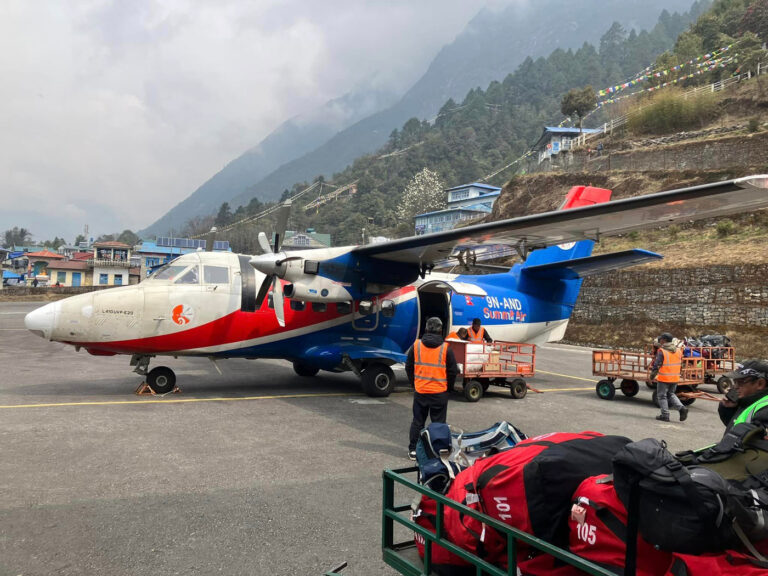
On your first day of the trek to Gokyo Valley, we take a scenic flight east from Kathmandu. The plane first takes off from Tribhuvan International Airport and banks eastbound. It’s an enthralling air journey flying parallel to the Himalayan mountains to the north. You will fly above several villages, dense forests, terraced farms, and rural landscapes of the east.
After 30 minutes, you will land at Tenzing-Hillary Airport in Lukla. You will meet your porters in Lukla and then be guided along a stone-paved pathway to Phakding. Phakding is a small riverside village and the first stop for most trekkers in the Everest region.
Kathmandu – Ramechhap – Lukla
April, May, October, and November, all the flights operate from Lukla to Ramechhap. You will drive from Kathmandu to Ramechhap early in the morning, fly from Ramechhap to Lukla due to air traffic at Kathmandu Airport.

Trek from Phakding to Namche
Activity
11 km or 5-6 hour walk
Highest Altitude
3440 m, Namche
Accommodations
Khumbu Lodge or similar in Namche
Meals
Breakfast, Lunch and Dinner
Today’s trek leads us to the renowned Namche Bazaar, a bustling tourist hub in the Everest region. To kickstart our full day of trekking, we’ll indulge in a hearty breakfast and set out from Phakding between 7:00 and 8:00 AM. The route follows the scenic Dudh Koshi River and includes multiple crossings.
After a few hours, we’ll arrive at Monjo village for lunch and permit registration of Sagarmatha National Park. Our journey continues across the long Hillary Suspension Bridge, navigating through undulating hillsides. Ascending through rich rhododendron and magnolia forests, the final stretch to Namche Bazaar demands caution due to its steep incline.

Acclimatization day in Namche Bazaar.
Activity
3-4 hrs walk
Highest Altitude
3880 m, Everest View Point
Accommodations
Khumbu Lodge or similar in Namche
Meals
Breakfast, Lunch and Dinner
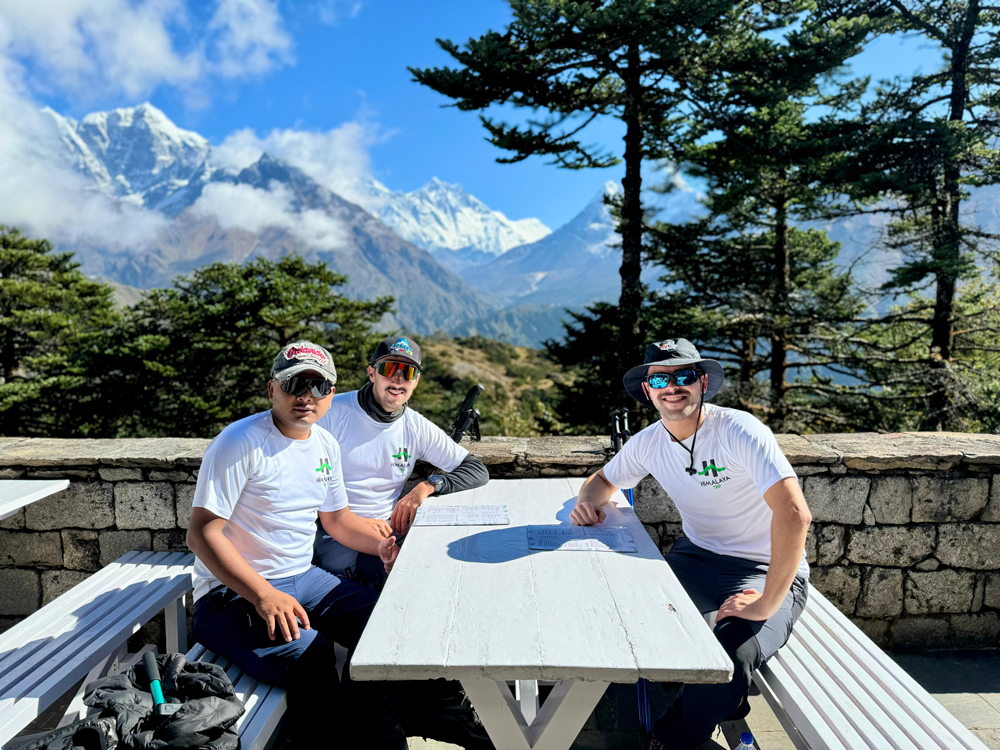
Today, we have a break in Namche Bazaar. It is our first acclimatization day on the 11 Days Gokyo Lakes Trekking itinerary. In the morning, we will hike to Everest View Hotel, where we’ll get our first clear glimpse of Mt. Everest. It takes 2 to 4 hours of steady ascent through rhododendron and pine forests to reach the Everest View Hotel. The Everest View Hotel holds the Guinness World Record for the highest-altitude hotel. It promises panoramic views of Everest, Lhotse, Nuptse, Thamserku, Kongde Ri, Khumbila, and more. Depending on our energy levels, we can either continue to Khumjung Monastery or return to Namche Bazaar to relax for the rest of the day.
To reach the Khumjung Monastery, we will trek along a well-marked trail with occasional signposts. It also passes by a few scattered houses and farm plots before reaching Khumjung village. At the Khumjung village, you can see traditional stone-and-wood houses and prayer flags. We will also visit the Khumjung Monastery. It is one of the most famous and important monasteries in the Everest region. Similarly, it holds a replica of the Yeti scalp. Here, you can immerse yourself in the local culture and religion. We will then return to Namche.
Namche Bazaar is the largest Sherpa settlement in the Khumbu region. Beyond its cultural significance, it is a vibrant tourist hub with a range of cafes, pubs, souvenir shops, restaurants, and museums. The town exudes a liveliness that might surpass your expectations. If your visit coincides with a Saturday, make sure not to miss the bustling Saturday Market.
Trek from Namche to Mong La - Dhole
Activity
12 km or 6 hrs walk
Highest Altitude
4110 m, Dhole
Accommodations
Dole Resort or similar Dhole
Meals
Breakfast, Lunch and Dinner
The trail starting from Namche heads further north, following flat and easy-going pathways. The trail gradually broadens as we progress towards Kyanjuma village, perched on a rocky mountain above the Dudh Koshi gorge. Throughout this journey, we are treated to gorgeous vistas of Everest, Lhotse, Ama Dablam, Thamserku, and Kongde Ri.
Continuing our ascent, the trail leads us to the majestic Mong La pass at an elevation of 3,972 meters. The panoramic views of the surrounding mountains from this vantage point are nothing short of stunning. From there, Mong La village sits above the raging Dudh Koshi River. We continue down to Phortse Tanka for Lunch. After Lunch, slowly climb to Dhole.

Trek from Dhole to Machhermo
Activity
5.4 km or 3-4 hours walk
Highest Altitude
4470 m, Machhermo
Accommodations
Machhermo Lodge and Bakery or similar in Machhermo
Meals
Breakfast, Lunch and Dinner
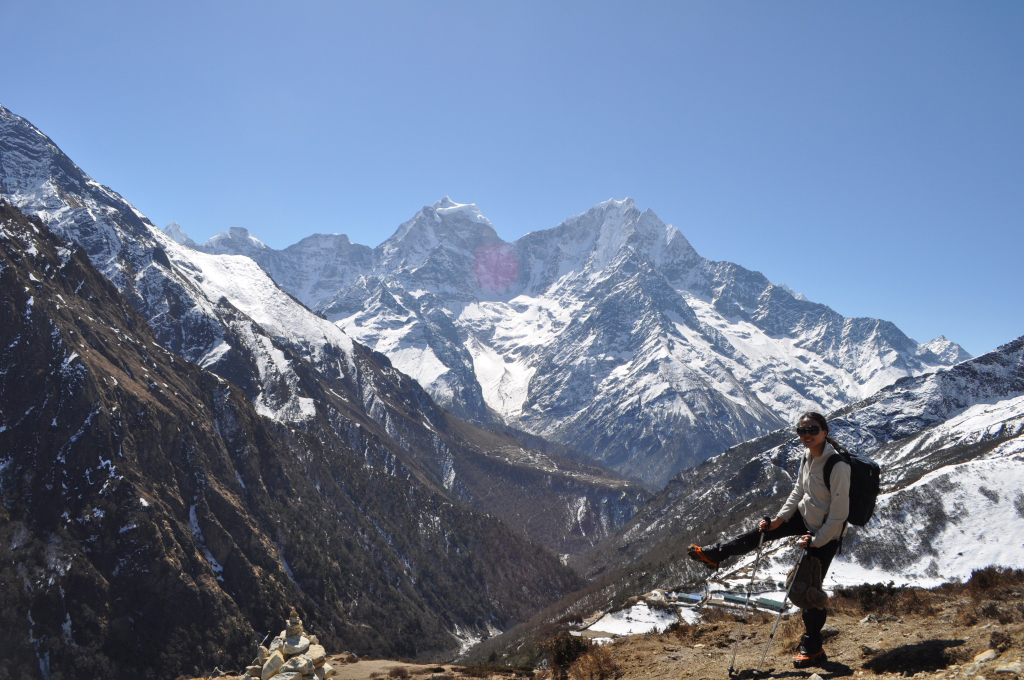
Our journey towards Maccherma unfolds a path adorned with trailside shrines and numerous prayer flags, creating an atmosphere of peace and serenity. However, the real spectacle awaits us in Dhole, where the majestic Mount Cho Oyu, standing at 8,201 meters, rises before our eyes. It ranks as the 6th-highest mountain globally.
Adding to the visual feast, the panoramas include the awe-inspiring Mount Kantega and Thamserku, showcasing nature’s splendid wonders. Amid this mountainous grandeur, picturesque meadows host grazing yaks, adding to the charm of the landscape. The trail passes through the scenic Luja Valley, nestled between towering peaks, leading to the charming village of Machherma.
Trek from Machherma to Gokyo
Activity
7 km or 4-5 hours walk
Highest Altitude
4790 m, Gokyo
Accommodations
Gokyo Resort or similar Gokyo
Meals
Breakfast, Lunch and Dinner
The trek from Machhermo to Gokyo Village is nothing short of exhilarating. Once you cross Phanga, the trail leads to an iron bridge that spans Longpongo Lake. It is renowned for its crystal-clear waters and is a favorite resting spot for trekkers. Continuing onwards, you’ll encounter the formidable Ngozumpa Glacier, Nepal’s largest glacier.
Traversing the glacier’s rugged moraines may be challenging, but the mesmerizing scenery makes the demanding journey worthwhile. Beyond the moraines, a stunning panorama unfolds, with the 3rd Gokyo Lakes, each boasting a distinctive color and charm. Nestled among these lakes, Gokyo Village is located near Dudh Pokhari, creating a picturesque setting. Spend the night in Gokyo Village, reveling in the peace and tranquility offered by this natural wonder.

Hike to Gokyo Ri and Explore the 5th Lake
Activity
6 hours
Highest Altitude
5357 m, Gokyo Ri
Accommodations
Gokyo Resort or similar Gokyo
Meals
Breakfast, Lunch and Dinner
Today’s traverse involves a hike to the summit of Gokyo Ri, promising spectacular panoramic vistas. At the pinnacle of Gokyo Ri, we’ll be treated to a mesmerizing sight of Mount Everest, the majestic Himalayan mountain range, turquoise glacial lakes, and expansive glaciers.
The trail to the quiet vantage point is steep and challenging. We must traverse loose rocks and stone steps to reach the top. Distinguishing itself from the Everest Base Camp Trek, Gokyo Ri offers a unique perspective, allowing us to marvel at the wonders of the Himalayas and serene lakes simultaneously. After the ascent and a break to savor the magnificent views, a well-deserved lunch awaits back in the village.
Post-lunch, we will have the time to explore the enchanting Gokyo village and its surroundings. Then, we will ascend to the 5th lake. It is smaller than the other Gokyo Lakes and is also less visited. We can enjoy the serene atmosphere and watch the turquoise waters reflect the snow-capped peaks. Surrounded by towering mountains, pristine blue lakes, and tranquil valleys, Gokyo stands as an ideal haven to unwind and immerse ourselves in the tranquility of the Khumbu region. Overnight stay at Gokyo village.
Trek from Gokyo via Renjo La to Lungdhen
Activity
11 km or 7-8 hours walk
Highest Altitude
5360 m, Renjo La
Accommodations
Renjo Pass Support lodge or similar Lungden
Meals
Breakfast, Lunch and Dinner
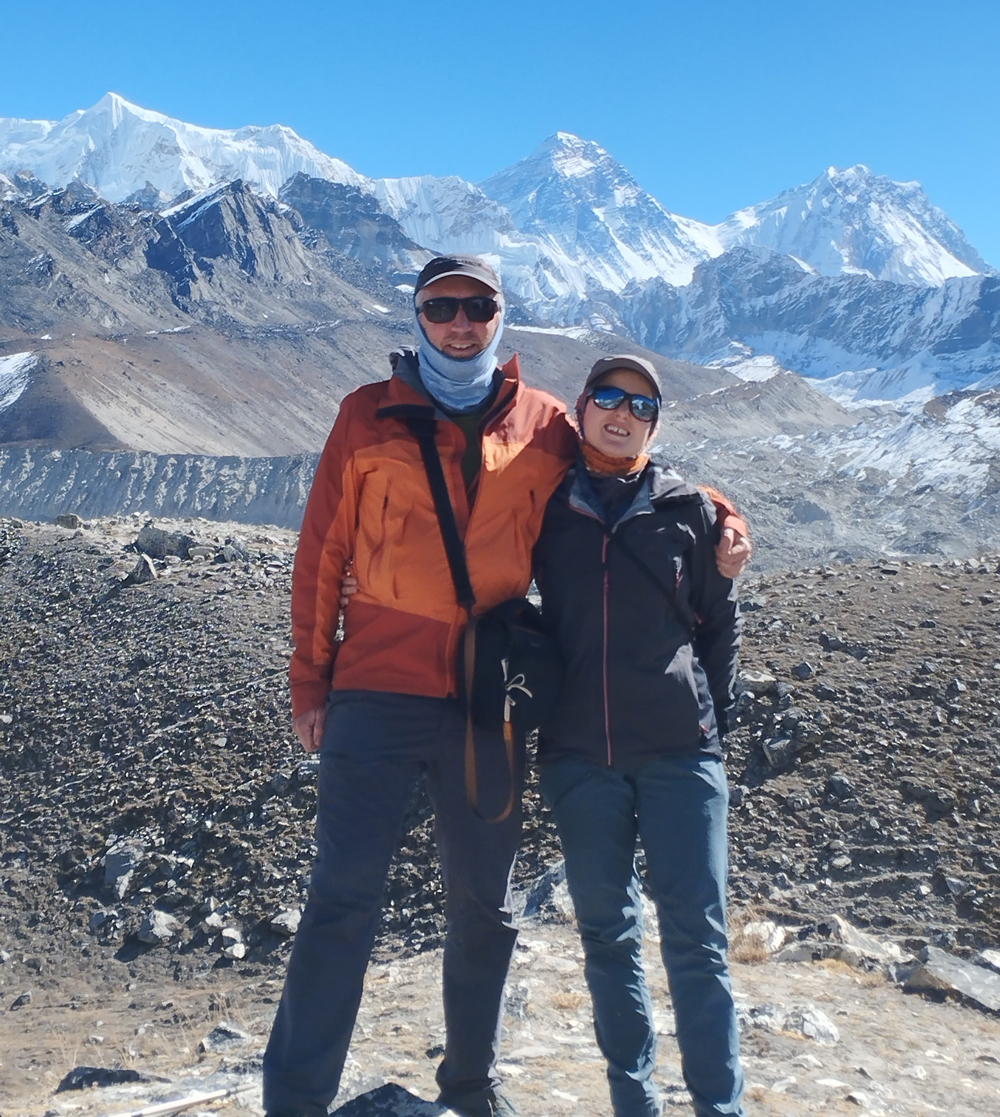
We begin the traverse from Gokyo to Renjo La by tackling steep, snow-covered sections. The trail is menacing. You will need to take your steps cautiously, navigating the challenging terrain with loose stones. Take short breaks to absorb the awe-inspiring views that surround you.
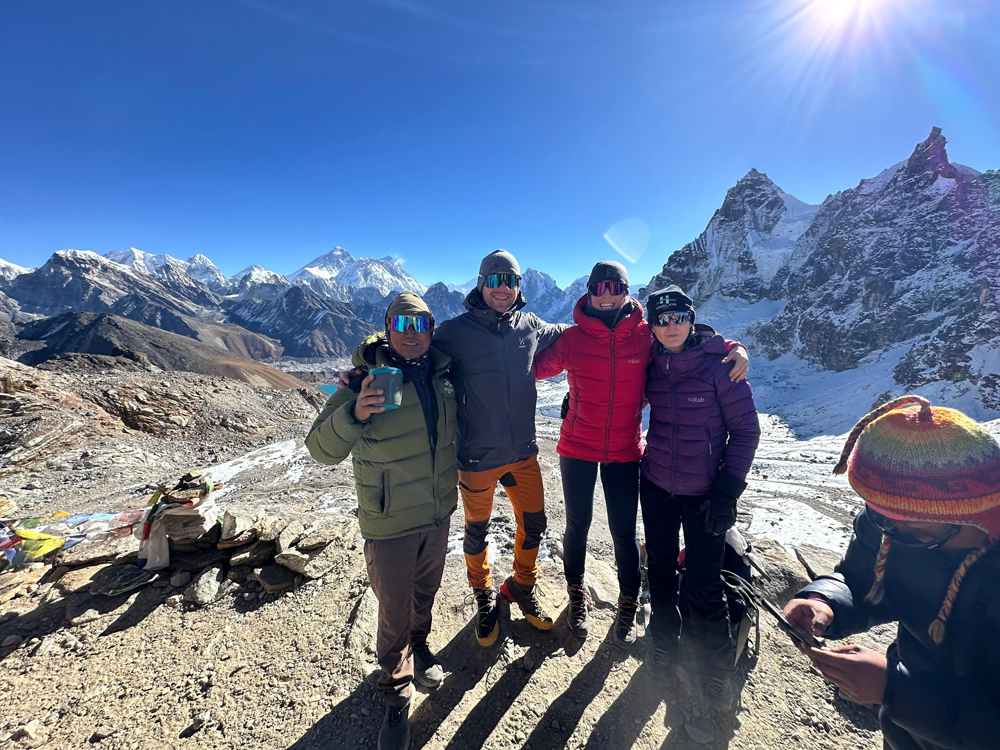
Approaching the apex of Renjo La, you reach the pinnacle of your trek at an elevation of 5,360 meters. The thin mountain air at this altitude adds an extra challenge to every step. As you ascend and stand atop Renjo La Pass, you’re rewarded with beautiful panoramas of Mount Everest, Cho Oyu, Makalu, Lhotse, and various other Himalayan giants. The colossal summits of these 8,000-meter peaks seem remarkably close, offering some of the most remarkable views of Mount Everest along any of the Everest trails. Your trail then descends towards Lungdhen for the overnight stopover.
Optional: We will start the trek early in the morning from the Gokyo Village to Dhole. We will begin losing altitude and get an enchanting view of the hills and mountains from a different angle. You can revisit some of the fantastic spots and enjoy spending some more time here. Passing by the village of Machherma on the way, we will continue our descent to the village of Dhole. Overnight at a lodge in Dhole village.
Trek from Lungdhen via Thame to Namche
Activity
18 km or 6-7 hours
Highest Altitude
3440 m, Namche
Accommodations
Khumbu Lodge or similar in Namche
Meals
Breakfast, Lunch and Dinner
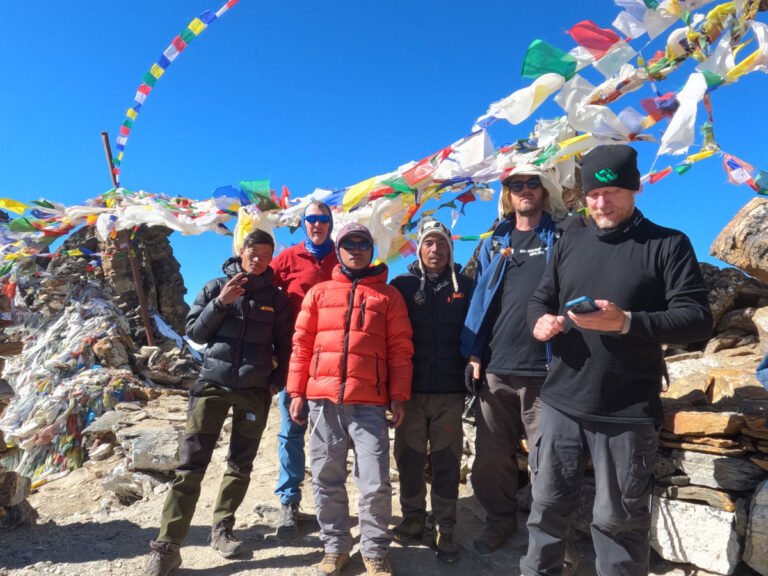
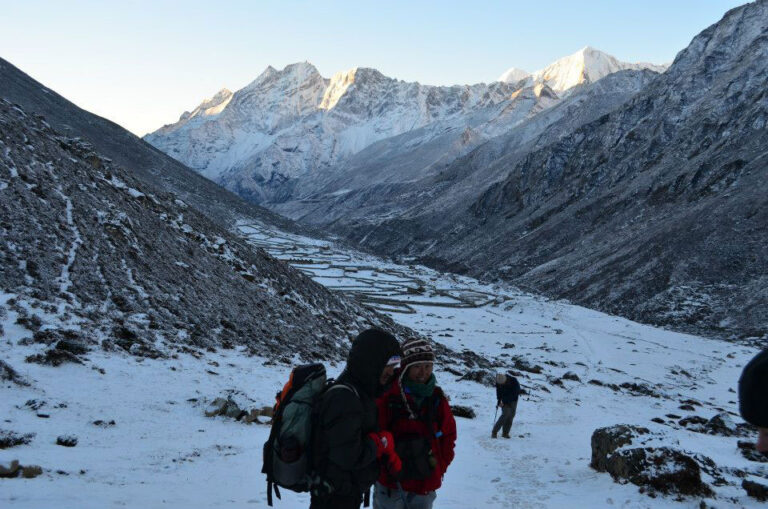
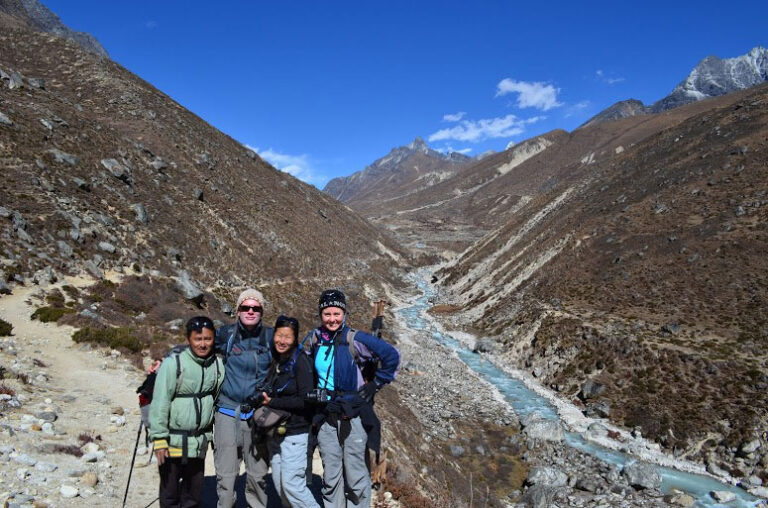
Lungdhen village sits at the bottom of a giant hill and receives delayed sunlight in the morning. The stretch from Lungdhen to Namche is relatively easy with multiple switchback ascents in between. For most of the trek, you will encounter a riverside trail that zigzags. After 4 hours into the trek, you will reach Thame, where you will have your lunch. Thame sits as the old remnant of the traditional pathway for the Tibet-Nepal trade route. From Thame onward, the road winds straight, heading towards the amphitheater-shaped village of Namche Bazaar.
Optional: After your breakfast at the Dhole village, head out for a short hike to view the Himalayan sunrise. The trek to Namche Bazaar is a mingling experience of the Sherpa culture and the natural scenery of Khumbu. The trail from Dhole to Phortse Tenga is downhill. From Phortse Tenga, you will climb to Mong La Danda for an impressive view. From Mong La Danda, the trail is downhill to Namche Bazaar. In the late afternoon, you will reach Namche Bazaar. Namche is a fantastic place to chill and enjoy the luxury of a hotel after a long trek. You can stroll around Namche for souvenir shopping and try Yak products. Overnight at a hotel in Namche Bazaar.

Trek from Namche via Phakding to Lukla
Activity
19 km or 6-7 hours
Highest Altitude
2840 m, Lukla
Accommodations
Everest Mountain Home or similar in Lukla
Meals
Breakfast, Lunch and Dinner
The pathway from Namche to Lukla is a steep descent with multiple river crossings. You will retrace our journey along the same trail, passing through Jorsalle, Monjo, and Phakding before reaching your overnight stop in Lukla.
Fly from Lukla to Kathmandu
Activity
30 minutes flight
Highest Altitude
1338 m,Kathmandu
Accommodations
own Hotel
Meals
Breakfast
You will board an early-morning flight from Lukla to Kathmandu. Your trekking journey comes to an end with you landing at Tribhuvan International Airport after a 30-minute adventurous flight. Our vehicle will drop you off at your hotel after arrival at the airport.
Lukla – Ramechhap – Kathmandu
April, May, October, and November, all the flights operate from Lukla to Ramechhap. You will fly from Lukla to Ramechhap and drive back to Kathmandu due to air traffic at Kathmandu Airport.
Note: For flexibility, you may book your own accommodations, from a Hostel to 5-star Hotel in Kathmandu, and you can stay more than one night in Kathmandu before and after the trek at your preferred place.

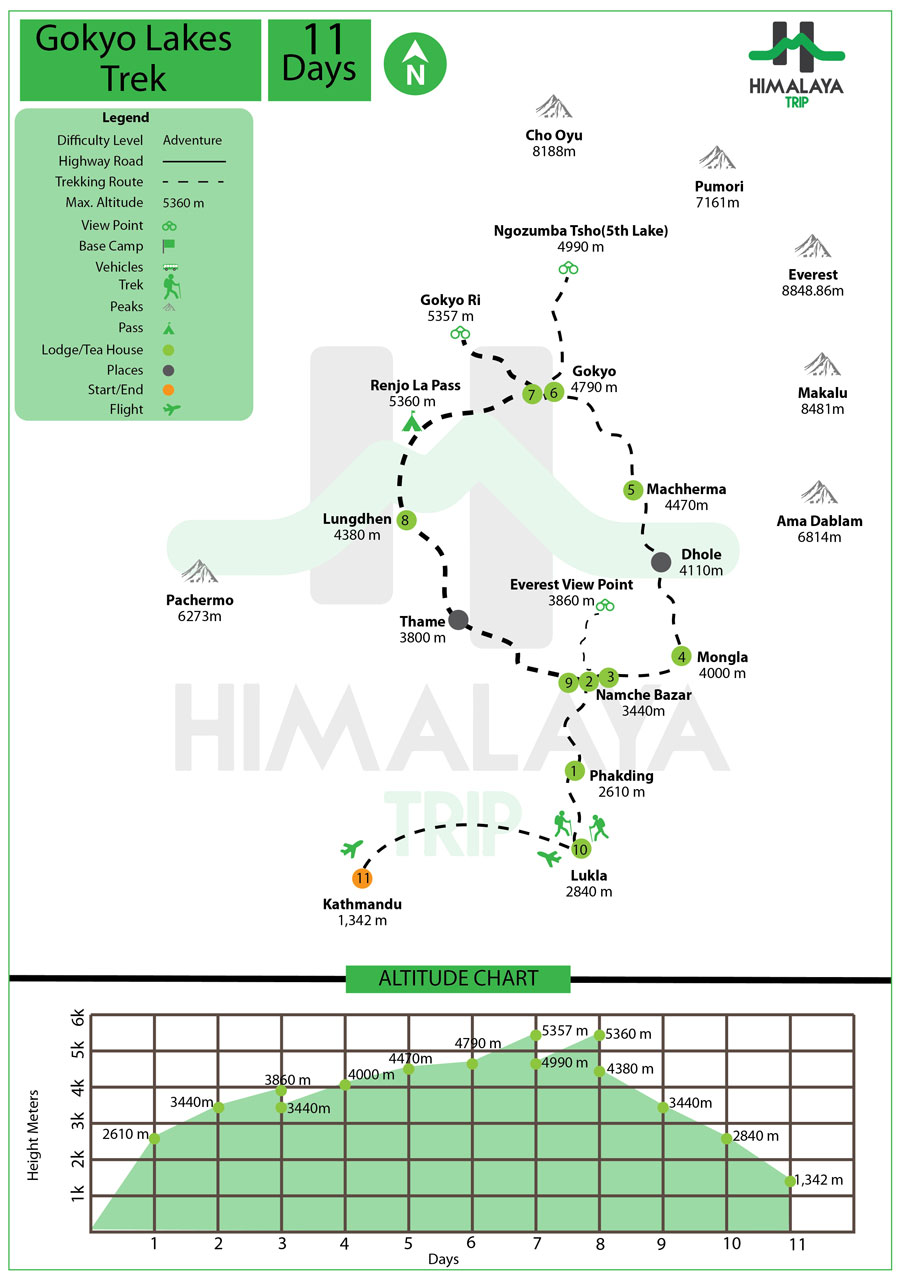
Gokyo Lakes Trek Map
What's Included ?
Everything you need for a safe, comfortable, and memorable trek — packed into one transparent price. Below is a full breakdown of what is covered in your Gokyo Lake Trek package.
Accommodation & Meals
- Lodge: Twin or triple sharing room ( 3 Nights Namche and 1 Night Lukla have attached bathroom ) and Phakding, Dhole, Machherma, Gokyo, Lungdhen have common room.
- Hot Shower in Namche and Lukla.
- Meals: 11 Breakfasts, 10 Lunches & 10 Dinners during the trek.
Transportation & Flights
- Transportation : Airport pick-up and drop off at Tribhuwan International Airport and Domestic airport .
- Kathmandu – Ramechhap – Kathmandu transportation if your flight is from Ramechhap.
- Flight: Kathmandu or Ramechhap – Lukla – Ramechhap or Kathmandu flight ticket.
Guide & Porter Services
- One English-speaking government certificate holder trekking guide.
- Porter service: one porter per two trekkers .
- Guide and Porters: Food, accommodation, salary, equipment and personal insurance etc.
Equipment & Safety
- Fingertip Pulse Oximeter — daily oxygen and pulse monitoring for altitude safety.
- First Aid Kit carried by the guide throughout.
- Duffle Bag: One Duffle bag per trekkers on return.
Permits & Official Fees
- Sagarmatha National Park fee .
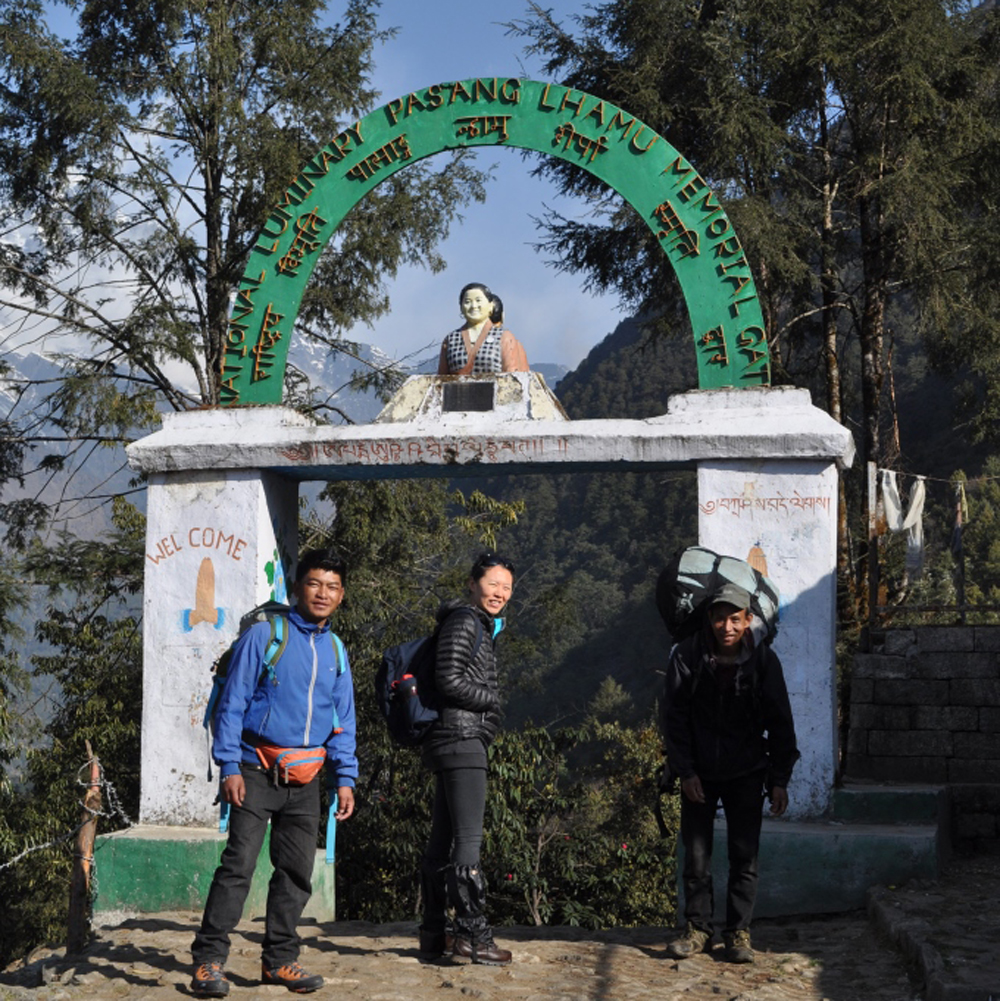
- Khumbu Pasang Lhamu Rural Municipality entrance fee.
- 13% Government VAT and all official government charges.
Complimentary Extras
- Local fresh fruit like Pomegranates and apple etc.
- Gokyo Lake Trek Map and Himalaya Trip T-shirt.
- 24/7 emergency support line available during your entire trek.
Whats not Included?
- International airfare.
- Nepal’s visa fees (15 Days US$30 and 30 Days US$50) , you fill up a form depart of immigration before you leave and pay cash and get visa on your arrival in Kathmandu airport.
- Hotel (Kathmandu Guest House ) and meals in Kathmandu.
- All the drinks, such as tea, coffee, Coke, beer, and mineral water.
- Hot shower, Wifi, Battery charge, your trekking gears.
- Your travel insurance should include emergency rescue.
- Tips for your guide and porters, etc.
Note: In the case of one person, a guide will lead this trek, you will carry own backpack.
An Adventure to Gokyo Ri and Beyond
The Gokyo Lakes Trek is not just about lakes—it’s an exploration of one of the most stunning regions of Nepal. From the Everest View Hotel to Gokyo Ri, this trek takes you on an unforgettable journey through valleys, glaciers, and Sherpa villages. It’s a trek that promises beauty, culture, and challenge, all while providing panoramic views of the highest peaks in the world. Whether you’re looking for adventure or cultural immersion, the Gokyo Lakes Trek offers both.
Available dates & Prices
If you are two or more people, private trip is available any date, providing a fantastic opportunity. If you are solo travellers, our fixed group trips are thoughtfully scheduled and offer specific departure dates.
Group Discount Pricing
Price per person — the more you travel together, the less you pay
No. of Persons
Price per Person
-
1 PersonUSD 1,299
-
2 - 4 PaxSave 8% USD 1,199
-
5 - 9 PaxSave 12% USD 1,149
-
10+ Pax Best ValueSave 15% USD 1,099
Create Your Private Trip With
Your Own Itinerary and Dates
We are more than happy to design an itinerary tailored to your schedule and preferred route. Simply share your preferred travel dates, group size, and contact and travel details, and one of our travel experts will get in touch to help plan your journey.
Once your trip is confirmed, you’ll travel exclusively with your own group, enjoying a more personalized and flexible experience.
What to Pack for Your Gokyo Lake Trek in 2026 / 2027 ?
This trek starts from Lukla 2845m and highest point at Gokyo Ri 5330m and Renjo La pass 5360m. The temperature will be cold. You must prepare warm clothes. Our comprehensive checklist covers everything from base layers to permits — organised by category so nothing gets left behind before your Gokyo Lake Trek begins.
Upper Body
- Trekking t-shirt
- Long-sleeves or jumper hoodie shirt are particularly suitable for avoiding sunburn.
- Down Jacket
- Gore-Tex or Waterproof Jacket
Undergarments
- Polypropylene thermal top and bottom
- Underwear
- Sports Bra
- Sando Tanks
Lower Body
- Trekking Pants and Waterproof Gore-Tex pants
- Wool-blend socks, liner socks(three pairs)
- Fleece Trousers
- Woolen Pants for the night
Headwear
- Warm Hat, scarf and Sun protect Cap
- Polarizing sunglasses
- Neck gaiters or A scarf or Face Mask or Face towels.
Hands
- waterproof/windproof warm Gloves
Footwear
- Camp Sandal or shoes
- Comfortable Trekking Boots (used boots better to avoid the blister)
Trekking Gear
- Sleeping bag (- 20C ) with liner : Lodges do not have enough blankets at the room.
- Flash Light for evening in case of power cut or early start for Renjo La Pass and Gokyo Ri.
- Backpack or duffle bag 60-70 Litters for porter
- Quick Dry Towel
- Rain Coat/ Poncho raining possible any time
- Day back
Safety & Climbing
- Trekking Poles (Trail is step up and down hill, it is better to have trekking poles which will save your knees ).
- Snow Micro Spikes and Gaiters if there is snow on the Renjo La Pass.
- Sunscreen 30 to 40+ (face + body + lips)
First Aid Kit
- Wet Wipes
- Dettol or Betadine
- Handy Plast
- Cotton and bandage
- Strepsils (or similar)
Medical & Medication
- Diarrhoea Relief + Rehydration Sachets
- Decongestant
- Paracetamol
- Deodorant
- Diamox
- Any Other Personal Medication
Electronics & Power
- Lodges have Two pin adapter
- Power Bank + Charging
Toiletries & Hygiene
- Toothbrush + Toothpaste
- Toilet Paper
- Sanitizer, Soap, Facewash, Shampoo etc.
- Chapstick
- Moisturizers
Hydration & Nutrition
- At Least 2 litters Water bottle or plastic bladder with Filter or iodine tablets (No place to refill water during Gokyo – Renjo La Pass – Lungdhen whole day).
- Electrolyte Powders and others.
Food & Snacks
- Energy bars Mars, Snackers and others etc specially at Renjo La pass.
- Dry fruits (Cashew , nuts, Kismis)
Documents & Money
- Original Passport, Flight ticket and copy of passport copy.
- US dollar or Npr cash or other currency for extra expenses and emergency
- Credit Card
Personal Safety
- Travel Insurance with Helicopter Evacuation is better.
- GPS unit
Ganeral
- Ear Plug if your roommate snore.
- Sim Card (Namaste and Ncell), some of places have mobile phone signal.
- Multi functional Pocket knife
Optional
Some days are short because of the high altitude. If you something for entertain, it is better for time pass.
- Card Games
- Notes Books
- Reading Books
- Camera, memory card
Trip Reviews


Unforgettable experience !!!
An unforgettable experience!! We traveled 3 friends from Spain to hike the Gokyo Lakes for 11 days. Our guide was Ramesh and took great care of us throughout the trek, making us feel like a real family. He looked for the best lodges and worried every day that we were as good as possible in every way. He adapted the planning every day according to our tastes and needs.
I hope to return and will definitely repeat with Himalaya Trip and especially with Ramesh!! Thanks for everything!!


Best Trekking Agency for Gokyo Trek
Recently got back from an intended trek to the Renjo La Pass which was organized by Harka Gurung at Himalaya Trip.
I must say Harka did a 1st class job in arranging our trek and was very quick to respond to all of our emails (I must have sent him a million emails covering every possible concern imaginable and he patiently replied to all of them addressing my concerns/questions!!).
On the trek we were assigned Jay as our guide and Dil as our porter - two great chaps who were tremendous company during our stay in the Everest region and really ensured our trip went smoothly. Jay was a responsible guide who, when I got some altitude sickness took the wise decision to wait it out for a day to acclimatise. This meant our trip could continue as normal once the symptoms dissipated.
Be warned we saw some trekking agencies taking stupid risks with their clients by going up 800+ meters in a day only to have to come straight back down during the night as both the client and guide got altitude sickness. Thankfully we were blessed with intelligent and caring guide/trekking firm which actually had the best interests of their clients in mind meaning we were kept safe during our visit.
Before we arrived for our trek, there was heavy snow in Nepal which meant the Renjo Pass was covered in 3m meters of snow making it inaccessible. Harka/ Jay were very flexible and adapted our itinerary in order to ensure we still managed to see a great deal and thanks to Harka's foresight, he asked us to bring crampons and ice axes with us which meant we could summit to the top of Gokyo Ri for absolutely stunning panoramic views of Everest and the top of the world.
In short, I highly recommend Himalaya Trip and the next time I visit Nepal I will be sure to utilize them for my trek.
UK, March 2015
Incredible Renjo La Pass Trek!!!
With a plethora of trekking companies offering services in Kathmandu, sorting through them and deciding on a quality trekking company can be difficult. Luckily for us, Himalaya Trip is already known to one member of our group. With familiarity of the company and knowledge of the quality service they offer, we began our preparation of our trek about 6 months before our planned trek dates of early April 2018. Himalaya Trip is a family business. Our lead guide, Hari, is one of the brothers in the family business. Hari was as friendly as anyone could be. He constantly had a smile on his face, and really demonstrated his problem solving ability when the airline we were flying on would not allow my brother board our KTM bound flight from Hong Kong due to his passport had an expiration date less than 6 months from our travel date. Hari coordinated with Nepal Immigration at KTM as well as the airline service desk, and was able to resolve the issue for us. Kudos to Hari right from the beginning! Through out our 11-day trek, which culminated with our reaching the top of Renjo La Pass at 5360m on day 9, Hari and his crew of one assistant guide and 3 porters made our trek an unforgettable experience. Trekking at high altitude in the Himalayas is a physically demanding endeavor. As such, you are the best judge of whether you are physically capable of doing something like that. That being said, hiring a professional trekking company like Hari and his crew will ensure a successful and memorable experience of a lifetime! I highly recommend Himalaya Trip for your Nepal trekking adventures. In fact, we are heading back to Nepal this December for another trek with Hari and his crew.
USA, April 2018

Amazing Gokyo Trip
We had the pleasure to hike through Gokyo Valley and up to Gokyo Ri with our guide Hari and our porter Bikash, who both not only did a great job but really became our friends along the way. The trek was extremely well planned and we felt very well cared for, with all our needs and wishes immediately catered for. Hari even made it possible to spontaneously adapt our route so that we could cross the Renjo La Pass and hike back through the neighboring valley.
When planning the trip from home, Harka was very helpful and always replied immediately to E-mails. We absolutely recommend this company!
Switzearland, March 2019

Gokyo Ri and Renjo La Pass circuit- excellent company, guide and porter.
My father and I recently went on a 12 day trek with Himalaya Trip. We met Harka the day after we arrived, showing and telling what we would be doing. He had organised the trek whilst we were still in Australia very well, and we were both easily able to understand what the trek would entail. Nauser our guide and Parksh our porter were excellent. Both very friendly and very knowledgeable about the surrounds and trek itself. I am hoping to come back to Nepal for a trek in the next 2 years and would certainly choose this company and the guide and porter we had - Nauser/Parksh. They were fantastic, I would highly recommend.
Australia, May 2019
Review About Gokyo Lake Trek
My partner’s no stranger to the services provided by Himalaya Trip and for good reason. This is his second time trekking with them and my first. The team were a pleasant and adaptable group who ensured we had the best experience possible. Harka, our organiser, did a great job at mapping out our itinerary and keeping us prepared and informed throughout our trip to Gokyo and we extend that thanks to Jay for his assistance before the start of this trek. We commend our lovely guide, Ramesh, whose support and dedication were deeply appreciated especially for a beginner trekker. Our porter, Dill, was a delightful companion, but unfortunately, had fallen slightly ill during the trek. After reaching one of our stops, Ramesh made the journey to retrieve our baggage from where our porter had to stop. We were impressed by the effort he made to do this all after a days trekking and as it was getting dark. Another porter, Depak, was quickly organised. Despite the short notice, he promptly made his way to Namche from Lukla to trek with us and luckily our trip went on.
We were well looked after on this trek. Even as I grew tired and a bit sick, the team remained supportive and their care and encouragement helped me endure. The views were beautiful and unforgettable. The lakes at Gokyo were as stunning as the mountains around us. I felt grateful to have shared this experience with our little family as Ramesh had called us. It was a hard good bye but I’m sure we'll return.
Australia, Oct 2023
Cassandra & Cedric
Three Passes & Everest Base Camp

Pippa Jephcott
Pikey Peak Trek
Majid, Sara and Shane
Annapurna Circuit Trek
Reviews from the globe

Hi! Im Sara, from Spain! Good morning! Yesterday we arrived from our 11-day trekking in Gokyo. There were 3 people from Spain, and I don’t know how to express how happy I felt. From the beginning, Himalaya Trip has been attentive to us, with a welcome at the hotel and...

Incredible!
Hi! Im Sara, from Spain!
Good morning!
Yesterday we arrived from our 11-day trekking in Gokyo.
There were 3 people from Spain, and I don’t know how to express how happy I felt.
From the beginning, Himalaya Trip has been attentive to us, with a welcome at the hotel and explanation of the route, rental of necessary equipment, etc.
The most important thing for us has been the ease and comfort with which Ramesh (our precious guide) has taken care of us at all time.
Attentive to the food, to make sure we didn’t get cold, adapting the route day by day according to the needs of the team.
I only have words of gratitude for Ramesh, who I would recommend for any trekking in the world.
In addition to being a great guide and knowing all the mountains of Nepal perfectly, he is a great person, with a big heart.
We hope to repeat in the not too distant future and hopefully it can be with him, since he is already part of our family.
Thank you for everything, from the bottom of my heart.
Thanks!!!!


Had an incredible experience doing the Mardi Himal trek with Himalaya Trip. Our guide Jay and our two porters Umesh and Masak were all simply incredible people. I’m a photographer so always have odd requests for weird areas to access for better angles or even simply just extending time in...
Couldn’t recommend enough
Had an incredible experience doing the Mardi Himal trek with Himalaya Trip. Our guide Jay and our two porters Umesh and Masak were all simply incredible people.
I’m a photographer so always have odd requests for weird areas to access for better angles or even simply just extending time in certain areas and all requests were met with so much help from the team. Highly recommend

I had an amazing time trekking with Surpa, particularly as this was my first solo trek. Beautiful views doing the Mardi Himal trek over 4 days, Surpa was a great guide who organised everything so well for me, kept me well fed, supported a good pace the whole way and...
Mardi Himal: fantastic trek & wonderful guide
I had an amazing time trekking with Surpa, particularly as this was my first solo trek. Beautiful views doing the Mardi Himal trek over 4 days, Surpa was a great guide who organised everything so well for me, kept me well fed, supported a good pace the whole way and always cheerful. Would recommend, and I would happily have him as my guide again in the future. The organisation and booking with Himalaya Trip was great, really responsive on emails and Harka was so helpful in organising everything and meeting me in Kathmandu for a briefing before the trip. Thanks so much!
Our 4 day Mardi Himal Trek with guide Milan and porter Plekta was a wonderful experience. The manager Harka Gurung met with us over coffee in Kathmandu and briefed us about expectations as this was our first trek. After that our guide met us at our hotel in Pokhara, helped...
Once in a lifetime experience in the Himalayas
Our 4 day Mardi Himal Trek with guide Milan and porter Plekta was a wonderful experience. The manager Harka Gurung met with us over coffee in Kathmandu and briefed us about expectations as this was our first trek. After that our guide met us at our hotel in Pokhara, helped us rent equipment, and handled all logistics in between. Our first time in the Himalayas was unforgettable between all the unbelievable landscapes and scenery, and we were lucky to have MIlan and Plekta with us to experience it all. I can’t begin to describe how ethereal sunrise is over the base camp, but hopefully you’ll be able to experience it soon!
Lukla to Gokyo Lake Trek Route
The Gokyo Lakes Trek route begins with a flight from Kathmandu to Lukla. From Lukla, the trail follows the Dudh Koshi River to Namche Bazaar, a bustling Sherpa town. From Namche, the route diverges from the classic Everest Base Camp trail, heading west towards Dhole and Machherma before reaching the Gokyo Lakes.
After exploring the Gokyo Lakes and summiting Gokyo Ri (5,357 m), trekkers traverse the Ngozumpa Glacier (the largest glacier in Nepal) before beginning their return journey. Trekkers have two options for the return journey. You can either start your direct descent for the return journey via Dhole.
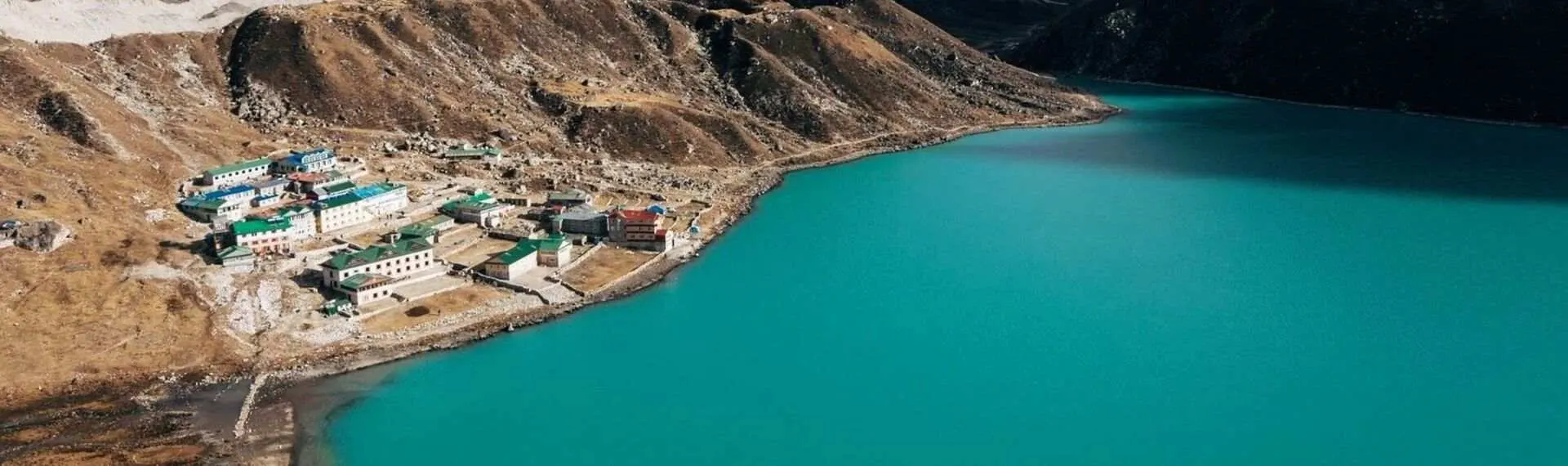
Or, you have the option to take another adventurous hike to Renjo La Pass 5360m and descend towards Lungdhen and Thame. From Lungdhen, the trail culminates with the classic Everest Base Camp Trek trail to reach Namche Bazaar, Lukla, and back to Kathmandu in the following days. The Route to Gokyo Lake traverses through Sherpa villages all along. Hence, you will have the opportunity to immerse yourself in the typical Sherpa way of life during the trekking days.
Lukla To Gokyo Lake Trek Distance
The Lukla to Gokyo Lake trek is a popular hiking route in the Everest region of Nepal. This trek offers stunning views of the Himalayas, a chance to explore the Gokyo Valley and Lakes, and the opportunity to climb Gokyo Ri. The total distance from Lukla to Gokyo Lake is about 93 kilometers.
The trek usually takes 11 to 13 days to finish. This time allows for adjusting to the altitude and taking rest days. The trail goes up gradually through charming villages, rhododendron forests, and suspension bridges, leading to the stunning Gokyo Valley, with its turquoise Gokyo Lakes.
Although the distance appears manageable, climbing to higher altitudes is the main challenge. The trek starts at Lukla (2,845m/9,334ft) and ends at Gokyo Lake (4,790m/15,715ft). Trekkers need to ascend slowly to avoid altitude sickness. It is crucial to acclimatize properly for a safe and enjoyable experience.
Why Choose the Gokyo Lakes Trek Over Everest Base Camp?
Everest Base Camp (EBC) is a classic trek destination that attracts thousands of trekkers, but the Gokyo Lakes Trek is a hidden gem that offers a tranquil and raw Himalayan adventure. The route to the Gokyo Lakes provides a scenic adventure and cultural exploration off the crowded trails. Unlike Everest Base Camp, it is untouched by mass tourism. Hence, it is ideal for those seeking a solitude adventure in the Everest region.
The Gokyo Lake Trekking trail is well-marked but still offbeat and untouched. Compared to the EBC trail, where you will pass by fellow trekkers now and then, Gokyo offers a tranquil trekking experience. It also takes you deep into the hidden valleys and villages. In addition to the scenic retail, you will also traverse Nepal’s largest glacier, Ngozumpa Glacier, and its moraine. Similarly, you can see the beautiful Gokyo Lakes and the reflections of the Himalayan peaks on them. The panoramic mountain view from the Gokyo Ri is also one of the best. Some trekkers even argue that a single-frame mountain view from Gokyo Ri is better than the view from Everest Base Camp.
The Gokyo Lakes Trek also offers a challenging sense of adventure while still being less commercialized than the EBC route. Moreover, you will cross one of the high mountain passes, Renjo La Pass (5,360 m). Although it is a high-altitude journey, its highest point is still below Everest Base Camp. The Gokyo Lake Trekking trail provides natural acclimatization, making it safer. You will also pass through remote villages where you can get an authentic Sherpa cultural experience. While staying at rustic teahouses, you can interact with locals and gain a closer look at their culture. The Gokyo Lakes Trek is a perfect alternative to the highly crowded and commercialized Everest Base Camp Trek.
Who Should Choose the Gokyo Lakes Trek?
Gokyo Lake Trek is one of the most astounding trekking destinations in Nepal. There is often confusion about who should choose the Gokyo Lakes trek. So let’s discuss who is best suited for these fantastic trekking destinations.
- Adventure lovers who love adventure activities like trekking, hill climbing, paragliding, skydiving, etc will love the Gokyo Lakes trek.
- Photographers and natural resources lovers who love to travel to different places, enjoy nature, and click some amazing photos.
- This trek is perfect for people who want to learn and understand the Sherpa culture.
- The trekkers are looking for a more moderate type of trekking challenge, which is harder than EBC but not as tough as the Kanchenjunga trek.
- The panoramic vistas of Everest, Lhotse, Makalu, and Cho Oyu from Gokyo Ri are simply awe-inspiring.
Elevation of Gokyo Lake Trek?
The Gokyo Lake Trek is a well-known trek in the Everest region of Nepal. It offers breathtaking views of the Himalayas and allows you to visit the beautiful Gokyo Lakes. The trek gradually increases in elevation. The highest point you will reach is Gokyo Ri, which is 5,357 meters (17,576 feet) high.
| Location | Elevation (meters) | Elevation (feet) |
| Lukla | 2,845 | 9,334 |
| Phakding | 2,610 | 8,563 |
| Namche Bazaar | 3,440 | 11,283 |
| Dhole | 4,038 | 13,484 |
| Machhermo | 4,470 | 14,666 |
| Gokyo | 4,790 | 15,715 |
| Gokyo Ri | 5,357 | 17,576 |
Kathmandu To Lukla Flight
In order to reach the Everest region, you first need to fly to Lukla from Kathmandu or Ramechhap. Lukla Airport, also called Tenzing Norgay Airport, is a major stop for trekkers and shipping in the region. It sits at an elevation of 9,334 feet (2,845 m) and handles most of the traffic for trekkers and their gear. The flight from Kathmandu to Lukla takes about 30 minutes, and you can see Nepal’s rugged landscape below, including mountain valleys and terraced fields.

Many first-time trekkers in Nepal wonder if the flight to Lukla is safe. Despite being known as one of the world’s most dangerous airports, the flight is generally safe. During peak season, 20 to 30 planes land in Lukla every day, and over 30,000 tourists come through this airport, which is impressive for such a notorious location. Statistically, flying to Lukla carries more risk than flying from a typical airport, but it is still fairly safe. The last accident with a passenger plane happened in October 2008. Since then, airlines and aviation officials have improved safety rules, which has made flying to Lukla safer, even if it can still feel stressful.
Can Beginners do the Gokyo Lake trek?
The simple answer is yes. Although it is a challenging trek, beginners with reasonable fitness can complete it with proper preparation. They must also be mentally prepared for the challenges. Since it is a high-altitude adventure, beginners must acclimatize and be patient with the altitude.
The Gokyo Lake Trek is one of the most demanding high-altitude treks of Nepal. During the journey, trekkers must reach an altitude of over 5,000 m in remote conditions. It is normal for first-timers to question whether they can complete the Gokyo Trek successfully. Fortunately, the Gokyo Lakes trekking trail is well-defined with clear paths. The route also allows natural acclimatization. Trekkers can take proper rest days in Namche Bazaar and Gokyo village, which helps them adapt to the increasing altitude naturally. As a result, even beginners can do the Gokyo Lakes Trek.
Trekkers must have muscular endurance and high stamina to complete 5-7 hours of trekking on average. Similarly, they must ascend and descend across varied terrain, including glacial moraines. The rugged trail and high altitude further increase the physical demands of the Gokyo Lakes Trek. Hence, beginners must build strong physical strength, stamina, and endurance for the journey. They must train for the trek at least 2 to 3 months beforehand. While training, they must focus on improving their cardio and leg strength.
It is also crucial for beginners to prepare mentally and set realistic expectations for the journey. While the remote location and quiet atmosphere may attract trekkers, they can also leave trekkers feeling isolated. Especially for beginners without prior experience trekking for long days in serene landscapes, isolation can be a concern. The trek is not suitable for those who struggle with isolation or minimal connectivity. Likewise, the lack of infrastructure and facilities can also create mental stress. Beginners should research the trek and its challenges before joining.
If you are a first-time trekker, choose a well-paced itinerary with proper acclimatization. You must understand proper acclimatization and learn how to “trek high and sleep low.” Train your body physically and mentally before the journey. It is also highly recommended that you hire an experienced guide to navigate the trail and monitor altitude. During the journey, it is crucial to follow their instructions. Listen to your body and do not over-exert yourself. When you prepare yourself adequately, you can join the Gokyo Lakes Trek with confidence, even if you are a beginner.
Altitude sickness during the Gokyo Lake trek?
Acute mountain sickness, also called altitude sickness, is a significant challenge during the Gokyo Lake trek. This trek involves intense uphill climbs, and trekkers will reach heights above 5,000 meters. Due to the rapid ascent to high altitudes, trekkers may not have enough time to adjust. Hence, it is essential to include acclimatization days in your plan.
At higher altitudes, there is less oxygen and lower air pressure, making the trek more challenging. Symptoms of altitude sickness include insomnia, headache, nausea, and loss of appetite. If you experience these symptoms, you should descend immediately and consider stopping the trek if needed. Also, avoid alcohol during the trek to prevent dehydration. Alcoholic beverages can significantly increase the risk of altitude sickness and make the Gokyo Lake trek more difficult.
There are a few ways to prevent or minimize altitude sickness during the Gokyo Lakes Treks:
Preparing for Your Gokyo Lake Trek
For the high-altitude Gokyo Lake trek, you will need more than physical preparation. The trek is not only a physical challenge but also a mentally demanding one. If trekkers think being physically fit is enough, then they are wrong. The high-altitude trek is very cold, harsh, and isolated in the remote wilderness. It’s no wonder it can take a toll not only on your body but also on your mind. You need to understand the Gokyo Lake Trek and its challenges to prepare appropriately.
First and foremost, the trekkers must be physically fit to complete the Gokyo Lakes Trek successfully. It is also crucial to build the strength, stamina, and endurance for long walks on rugged terrain. But you should focus not only on distance but also on preparing for thin air. Trekking at a higher elevation where the oxygen level is nearly half that at sea level is not a joke. The best way to improve your physical fitness is to engage in cardiovascular exercise. Having said that, rather than taking fast cardio, practice slow, controlled uphill walking. You can also practice stair climbing or hill climbing. Similarly, to build strength for endless stone staircases and glacier moraines, focus on strengthening your leg muscles. Exercises such as step-ups with weights, single-leg squats, and hiking with a weighted backpack are especially beneficial.
The changing landscape is beautiful to look at, but the constant changes can test any trekker’s focus and patience. You will traverse through one of the remote areas and the barren landscapes of the Everest region. The isolated location, lack of infrastructure, and connectivity can be mentally stressful. So, mental training is necessary. It means trekkers must be prepared for all kinds of challenges and focus on techniques to breathe easily. Meditating, practicing yoga, and training to walk without constant stimulation can help to prepare your mind for the solitude of the Gokyo Lakes Trek.
Furthermore, decent preparation is also necessary for the trek. Compared to other destinations of the Everest region, Gokyo is slightly different. The valleys are wider, and the wind is sharper and constant. You need to carry a wind-resistant outer layer and a down jacket. We have a complete packaging list below, so please scroll down for all the essentials. In addition to these preparations, learn about the Gokyo Lakes landscape and choose a time and itinerary that best fit your fitness and preferences.
Food Menu for Gokyo Lakes Trek
The teahouses along the Gokyo Lakes Trek route have their own menu. Therefore, there will be a variety to choose from. The food is hygienic, but it is not like city food. The ingredients are mostly locally produced and fresh. As the locals are mostly Buddhists, they serve mostly vegetarian and Vegan food. Non-veg foods are not recommended as they may not be hygienic.
- Breakfast: Simple Breakfast (Eggs, any item of hashbrown potato, toast, or Gurung or Tibetan Bread, Pancake, Muesli, Oat Porridge, etc.)
- Lunch and Dinner : Nepali Thali (Plain Rice, Lentil soup, Potato Curry, Green Vegetable, Papadam, Tomato Hot spicy, Chicken curry optional), Macaroni, Spaghetti, Potato item, Mo.Mo or dumplings, Pizza, fried rice, Fried Noodles, French fries, etc.
- Dessert: Fresh Fruit (Apple, orange, pomegranates, Banana with any seasonal fruit) serve as sweet dessert.
Note: Tea, Coffee, Soft, hot, and hard drinks are not included.
Gokyo Lakes Trek Cost
The cost of the Himalaya Trip’s Gokyo Lakes Trek package is US$ 1099 – US$ 1299 per person for 11 days. The cost of the Gokyo Lakes trek depends on group size and your accommodation during the trek. If you are in a group of fewer than 4 people, the cost will be higher than for groups of 5 or more. We recommend reviewing the Inclusions section to confirm costs and understand what is included in the Gokyo Lakes Trek Package.
There are numerous companies offering different prices. The cost variation is due to the included services, duration, group sizes, seasons, and other factors. For example, Kathmandu, as the capital, offers a range of lodging options, from luxury, star-rated hotels to budget accommodations. The price differs based on your preference. There is also a range of accommodation options you can choose from for the Gokyo Lake trek. Note that they are mostly basic with limited amenities. Ground transportation costs during your journey will vary based on your group size.
In addition to the trip cost, you must carry additional cash for personal expenses. The package covers transportation, accommodation, meals, permits, and fees for the guide and porter. However, the package cost does not include dessert and drinks beyond the standard package, gear purchases or rentals, any room upgrades, tips, or additional charges such as internet, hot showers, or charging devices. You should also carry extra cash for souvenirs, snacks, bottled water, and medical supplies.
Do You Need Guides and Porters for Gokyo Lakes
Many trekkers want to trek solo for freedom and adventure; however, for the Gokyo Lake trek, we recommend hiring at least one guide and trekking with at least two other trekkers. Group trekking with a single guide is the safest option for high-altitude, remote treks such as the Gokyo Lakes trek.
Guides are extremely necessary for these types of treks because of many factors of difficulty that influence the trek. For example, in extremely remote conditions with freezing temperatures, navigation between teahouses is challenging. Unless you are experienced in the region, you might get lost along the way, which is where guides come in. Guides are highly experienced and are prominent in navigation. Their main priority is to keep trekkers safe and secure from any foreseeable or unforeseen circumstances.
Porters are local people who carry your heavy backpack during the trek, allowing you to enjoy the journey without being weighed down. The Gokyo Trek includes steep climbs and long walking hours, and carrying a heavy load can tire you out. By hiring a porter, you not only make your trek easier but also support local families. With less weight, you can enjoy beautiful views, take more photos, and fully appreciate the Gokyo region.
Trekking Permits for Gokyo Lakes
Permits are essential for trekking in Nepal, including for the Gokyo Lakes Trek. These permits are usually issued by the government, a local body, or an independent organization. The Gokyo Lake Trekking trail lies within Sagarmatha National Park in Khumbu Pasang Lhamu Rural Municipality. Hence, you will need two different permits to trek to Gokyo Lake.
Sagarmatha National Park is a UNESCO World Heritage Site that covers most of the upper section of Solukhumbu District. Owing to the diverse biodiversity located in the district, the national park has been contributing to the preservation of the ecosystem. During the Gokyo Lake Trek, you will enter the Sagarmatha National Park from Monjo. From here, the areas of Namche Bazaar, Dole, Machermo, and Gokyo are all within the national park. Therefore, you will need a Sagarmatha National Park Entry Permit. You have to pay Rs. 3000 (approx. $30) for the permit. You can obtain this permit while in Kathmandu.
The northern reach of the Solukhumbu district has been divided into a rural municipality. This area is governed by this local body. Hence, you need to obtain the Khumbu Pasang Lhamu Rural Municipality Entry Permit. It is necessary to trek to Gokyo Lakes and the surrounding villages. The permit’s one-time entry fee is Rs. 3000 (Approximately $30) per person. It can be obtained upon your arrival in Lukla.
How Difficult is the Gokyo Lakes Trek
The Gokyo Lakes Trek is a moderate-to-challenging journey suitable for trekkers with reasonable fitness. For those with past experience trekking the Himalayas, the Gokyo Lake traverse might not be very strenuous. If it’s your first time trekking, you might encounter some difficulties on your journey. That said, with proper preparation and planning, this trek is doable for all kinds of trekkers, whether novice or experienced.
The Gokyo Lake trekking trail covers approximately 93 kilometers. Each day, you must hike for 5 to 7 hours on rough Himalayan trails. Some parts can be challenging, especially when going up and down steep areas. Long hours of trekking can make it hard to maintain energy. It increases the trek’s difficulty. You need to have good stamina and endurance to keep up with the long daily hikes. It can be strenuous for those who are not well prepared for long-distance walking. Similarly, the Gokyo Lake Trek takes you through the varied landscapes of the Khumbu Region. The terrain varies across the region. For example, in the lower area, the terrain is simple and easy to navigate across the barren, vast lands, lush jungles, and remote villages.
As altitude increases, the trek features steep ascents and descents and traverses glacial moraines. Thus, it requires some level of trekking experience or decent physical fitness. The high altitude is another challenge for the Gokyo Lakes Trek. Its highest points are Renjo La Pass (5,360 m) and Gokyo Ri (5,357 m). Anyone who ascends above 3000 meters is at risk of Acute Mountain Sickness (AMS), depending on their tolerance and breathing capacity. Even experienced trekkers suffer from AMS at times. Our guides, who will accompany you during the traverse, will take immediate action upon observing any signs of AMS.
The weather for most of the Spring and Autumn seasons remains calm and predictable. That said, it is uncertain, as climatic changes can occur without prior notice. The Himalayan weather is unpredictable and changes rapidly. Unprecedented rainfall, storms, and blizzards may happen, disrupting planned schedules. Your trekking guide will decide what to do if any weather-related issue arises during the trek.
When to visit Gokyo Lake
Nepal experiences distinct weather patterns across its territory, characterized by four seasons: Spring (March-May), Summer (June-August), Autumn (September-November), and Winter (December-February). For high-altitude treks such as the Gokyo Lake trek, the ideal seasons are Spring and Autumn.
Spring is widely regarded as the best time for the Gokyo Valley trek, offering clear skies and unobstructed views of the Himalayas. In these months, temperatures in the high Himalayas range from 24°C to -13°C during Spring. The relatively moderate temperature fluctuation makes this season the best time for trekking. You can see rhododendron forests in the lower trails in full bloom. Similarly, the entire landscape looks vibrant and lush. One drawback of trekking in Spring is overcrowding on trails. Flights and accommodations are fully booked, so book in advance.
Autumn is another ideal season for trekking in Nepal. It begins in mid-September and ends in November. As in Spring, the weather at this time of year is clear, stable, and favorable. The temperature ranges from 19.5°C to -14 °C. Since it starts after the rainy season ends, Autumn is ideal for high-altitude treks. The vegetation looks fresh and clean. Likewise, the visibility is extremely clear. It is the best time to witness the unobstructed views of the surrounding Himalayas. However, as the season ends, trekkers should be wary of cold and freezing temperatures and carry appropriate gear.
While Spring and Autumn are preferred, the Summer months can also be suitable for trekking to Gokyo Lake. The upper section of the Solukhumbu district lies in a rain-shadow area, resulting in dry conditions even during the Monsoon period. Areas above Namche Bazaar receive minimal rainfall during the Summer. However, the presence of monsoon clouds can intermittently obscure the views that you would otherwise see. Additionally, flight delays and cancellations are common during the Summer due to unpredictable weather. Please inquire about the Himalaya trip to plan your Gokyo trek at the best possible time.
The winter season is another less ideal time for the Gokyo Lake trek. It spans December through February, when weather-related challenges affect the trek. Trekkers may face challenges like high altitude, dynamic weather, heavy snowfall, freezing temperatures, limited accommodation, and difficulty acclimatizing. The average temperature during the winter season ranges from -5 to -20 °C. When trekkers reach high altitudes, such as Cho La Pass or Renjo La Pass, they will experience severe winter conditions. Constant snowstorms, blizzards, and avalanches can halt the trek and damage life and property.
Accommodation Guide for the Gokyo Lakes Trek
During your Gokyo Lake Trek, your accommodation will vary by area. In Kathmandu, you will find various types of stays, from luxury hotels to budget-friendly hostels. You can find private rooms with comfortable beds, attached bathrooms, hot showers, and Wi-Fi. Once you leave Kathmandu, accommodation becomes more basic, and facilities are limited. The change is gradual, so trekkers need to adapt to it accordingly.
These teahouses are run by locals, who welcome guests with their open hearts and warm smiles. In the lower Khumbu regions like Phakding and Namche Bazaar, you may find private rooms. Some teahouses even have attached bathrooms and hot showers. In mid-altitude areas like Dhole and Machherma, you will have clean, comfortable twin-shared rooms. The bathrooms are usually communal. However, they are small and simple. In high-altitude areas such as Gokyo Village, the rooms are more basic. Most rooms lack private bathrooms and are not heated. So, bring a high-quality sleeping bag. You will eat meals in the lodge’s common area, which is also the warmest spot.
While some amenities, such as Wi-Fi, charging options, and hot showers, are available, you have to pay an additional cost. You need to carry sufficient cash for the trek, as these additional charges are not included in the package. Hot showers in areas above 4,000 m are rare. Also, water freezes overnight, and you cannot use running taps in the morning. Staying in these rustic but cozy teahouses is the best way to experience Himalayan hospitality. Likewise, it offers trekkers the opportunity to experience the local Sherpa culture and way of life.
After a long day’s trek, you will rest at these teahouses, enjoying the surrounding atmosphere and views. You can sit in the dining halls in the evening, which is the heart of every teahouse. It is not only a place for meals but also for sharing stories and having conversations. You can share stories with fellow trekkers or listen to the locals’ tales. Accommodation during the Gokyo Lakes Trek ranges from luxury hotels in Kathmandu to quiet, basic teahouses. It is truly a unique experience that makes the journey more memorable and immersive.
Trips You May Like
Everest Base Camp Trek
14 Days
Adventure Treks
USD 1,349 per person
Everest Base Camp Trek With Helicopter Return
12 Days
Trekking
USD 1,949 per person
Everest Base Camp and Gokyo Lakes Trek
15 Days
Adventure Treks
USD 1,449 per person