Winter and Monsoon Special Offer! Get 5% off on all trekking packages in Nepal . Visit during June , July, August, December , January and February and take advantage of this limited-time deal.


What Makes Annapurna Base Camp Trek Beautiful
- Local Gurung cultures in the village of Ghandruk, Sinuwa, and Chhomrong.
- Beautiful view of Hiunchuli, Annapurna South, Barahi Shikhar, Annapurna I, Glacier Dom, Gangapurna, Annapurna III, and Machhapuchhre, etc.
- Options to soothe your tired muscles in the natural hot springs at Jhinu Danda.
- Trek within a protected region home to 1,226 species of flowering plants, according to the National Trust for Nature Conservation.
- Unique microclimate that receives four times more monsoon precipitation than the Everest region.
- Pass Machhapuchhre Base Camp (3,700 m), an important acclimatization stop.
- Traverse the natural habitats of endangered species like the snow leopard and the Himalayan musk deer.
- Family-run teahouses that provide local cuisine, mountain hospitality, and direct interaction with residents of the Annapurna region.
Activity
Trekking
Altitude
4130m/13550feet. ABC
Best Season
Autumn Spring
Meals Included
6 Dinners 7 Lunchs 6 Breakfasts
Transportation
Domestic flight (KTM-PKR-KTM) - optional Private vehicle (Transportation)
Destination
Most Popular Treks
Accommodation
6 nights in Lodge
Duration
7 Days
Region
Annapurna Region Treks
Group Size
2
Difficulty
Moderate
Overview of Annapurna Base Camp Trek
The Annapurna Base Camp Trek is a 7-day high-altitude mountain route in Nepal located within the Annapurna Sanctuary, a glacial basin in the northern central part of Nepal. On this adventure, you will stand at the base of Mt. Annapurna I (8,091 m), the tenth-highest mountain in the world. Renowned for its mountain scenery and cultural experiences, the trek attracts around 50 thousand trekkers from around the world every year.
Your journey begins in Kathmandu and continues to Pokhara, either by air or by road transportation. Then, you will drive to Nayapul, Birethanti and Kly Danda, the starting point of your trek. En route to the base camp, you will come across notable villages like Ghandruk, Chhomrong, Bamboo, Dovan, Deurali, and more. Similarly, you will also come across the Machhapuchhre Base Camp (MBC) at 3,700 meters and within the Annapurna Sanctuary.
The ABC trekking trail also lies within Nepal’s largest conservation area, the Annapurna Conservation Area. It goes from the forests of rhododendrons, conifers, alpine meadows, rocky fields, to glacier moraines. Similarly, you will come across rivers, streams, waterfalls, and suspension bridges over the Modi Khola on the way. It is common to see colorful prayer flags, monasteries (Ghandruk Monastery), and chortens on the trail.
Most residents belong to the Gurung and Magar communities, whose customs and daily life are connected with Tibetan Buddhist traditions. Trekkers can enjoy genuine hospitality in family-run teahouses and taste traditional local cuisine while learning about the culture of the Himalayan people.
If you are planning a trip to Annapurna Base Camp in 2026/27, our 7-day ABC package can be perfect for you. You can also extend the trek to Ghorepani Poon Hill for a sunrise view or Khopra Ridge for capturing Dhaulagiri and Annapurna peaks. We will make sure that you receive the best service from our team to make your trekking journey safe and fulfilling.
Can Beginners Trek to Annapurna Base Camp?
Yes, beginners can trek to Annapurna Base Camp. It is one of the best first Himalayan treks because it follows an established trail without technical climbing or high mountain pass crossings. The highest point is Annapurna Base Camp at 4,130 m, which is much lower than Everest Base Camp at 5,364 m and Thorong La Pass on the Annapurna Circuit. Most healthy beginners can complete the trek with moderate physical preparation, a slow walking speed, and enough time for rest.
The route is also supported by one of the best teahouse networks. Family-run lodges are found in villages such as Ghandruk, Chhomrong, Sinuwa, Bamboo, Deurali, Machhapuchhre Base Camp, and Annapurna Base Camp. These teahouses provide comfortable beds, fresh meals, clean drinking water, and regular places to rest throughout the journey. Foreign trekkers must be accompanied by a licensed guide under the current trekking rules of Nepal, which adds another layer of safety for beginners.
ABC Trek Itinerary Outline
Day 01:
Kathmandu or Pokhara - Birethanti - Syauli Bazar ( Kly Danda ) 52 km or 2 hours drive - trek to Ghandruk (2020 m, 5.3 km or 3 hours walk).
Day 02:
Ghandruk - Chhomrong - Sinuwa (2340 m, 14 km or 7 hours walk).
Day 03:
Sinuwa - Bamboo - Dovan - Himalayan - Deurali (11 km, 3200 m, 7 hours walk).
Day 04:
Deurali - MBC - Annapurna Base Camp (4130 m, 6.9 km or 5 hours walk).
Day 05:
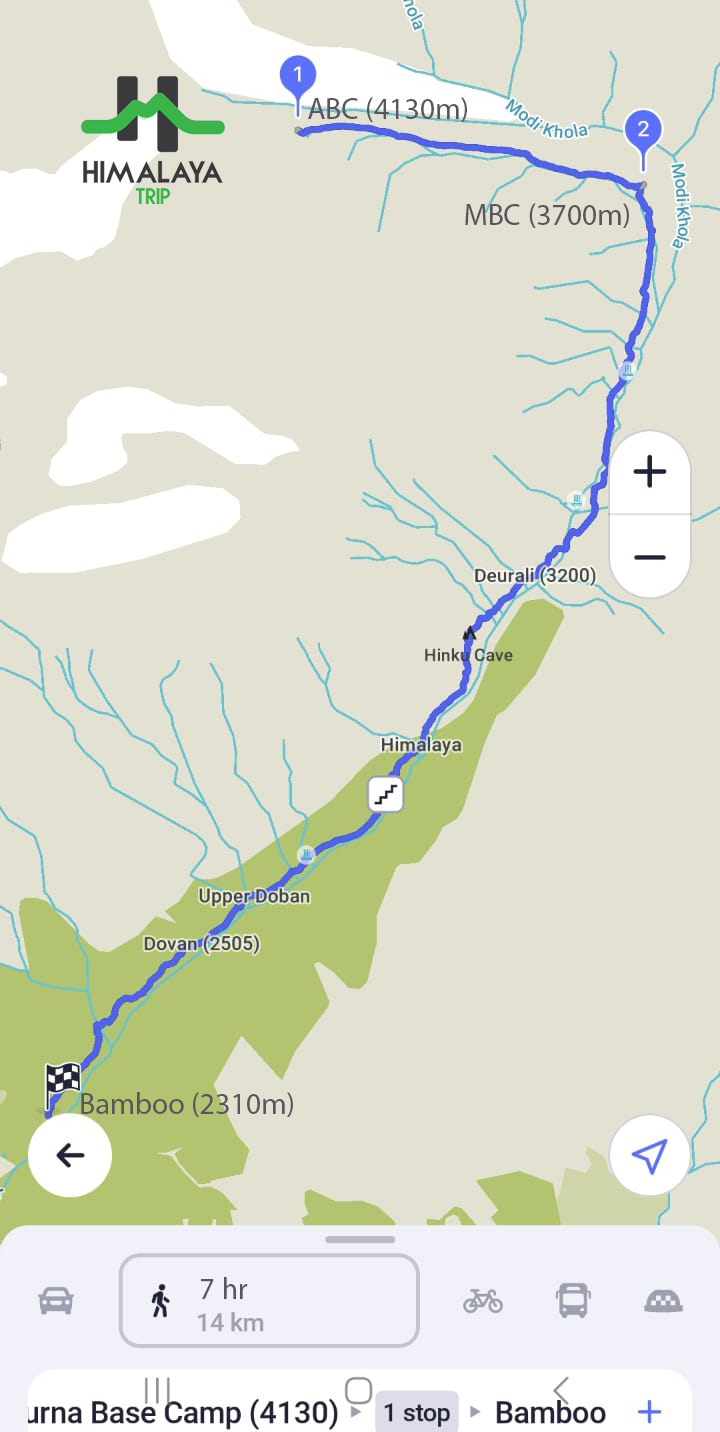
Annapurna Base Camp - MBC- Deurali - Himalayan - Dovan - Bamboo 2310 m, 14 km or 7 hours walk).
Day 06:
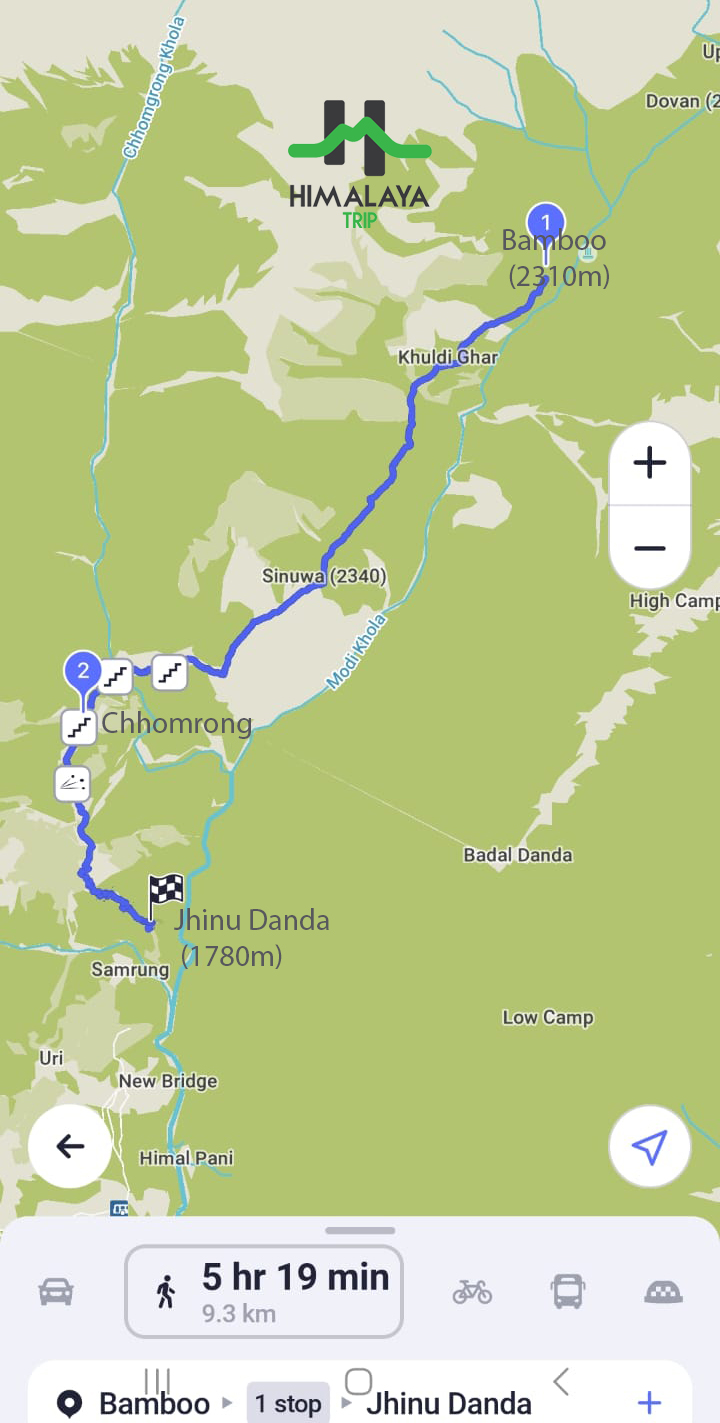
Bamboo - Sinuwa - Chhomrong - Jhinu (1780 m, 9.3 km or 5-6 hours walk).
Day 07:
Jhinu - Samrung - Siwai - Syauli Bazar - Birethanti – Pokhara or Kathmandu (830 m , 65 km or 3 hours drive).
Annapurna Base Camp Trek Itinerary
Kathmandu or Pokhara - Birethanti -Kly Danda - Ghandruk
Activity
52 km, 2 hours drive , 5.3 km or 3 hours walk
Highest Altitude
2020 m, Ghandruk
Accommodations
Breeze Guest House or similar
Meals
Lunch and Dinner
Your journey toward Annapurna Base Camp begins from Pokhara. Your guide will pick you up from your hotel in Pokhara at 8:00 am after your breakfast and start the drive to (Kly Danda) Syauli Bazar, the starting point of the ABC Trek. Alternatively, if you start from Kathmandu, you will be flown to Pokhara on a 30-minute flight. Upon landing at Pokhara airport, you will be picked up from the arrival gate and start your drive towards Syauli Bazar.
The road from Pokhara to Syauli Bazar is mostly paved. We diverge from Pokhara by taking the Pokhara-Baglung highway (Phedi, Naudanda, Kande, Nayapul ). After one and a half hours, we reached Nayapul. This point is where we divert from the highway and take a road towards Syauli Bazaar via Birethanti. The stretch from Nayapul to Syauli Bazaar is through hillside roads with numerous twists and turns. We make our way across several terraced farms and rural villages to reach Syauli Bazar after 2 hours. As the vehicle drops us off, we prepare to begin our trek.
From Syauli Bazar, it’s an easy-going traverse through rural foot trails to Kimche. We reach the stairwell of Ghandruk village after 3 hours. The incline of the staircase is steep, and after about 1 hour, we reach Ghandruk village (Lunch ). This village directly overlooks Mt. Annapurna South, Hiunchuli, and Machhapuchhre, which is populated by the Gurung Village. We settled down at Breeze Guest House or a similar private room with an inside toilet and bathroom, wifi, hot shower, and battery charge at the village for the first day of our ABC trek.
Optional: The Pokhara to Ghandruk drive option is available. It takes 3 hours to drive.


Ghandruk - Chhomrong - Lower Sinuwa
Activity
14 km or 7 hours walk
Highest Altitude
2340 m, Sinuwa
Accommodations
Kalpana Guest Horse or similar
Meals
Breakfast, Lunch and Dinner
Ghandruk village is a vantage point for gazing at the sunrise. If you’re an early riser, ask your guide to wake you up for the sunrise view. After breakfast, we make our way through the stone-paved pathway built in the village. You will have your first glance at the stone-built Gurung house as you leave Ghandruk village. From hereafter, we start our ascent to Kimrong Danda and descent toward the Kimrong River. The river is situated at the base of Ghandruk Hill and is one of the tributaries of Kimrong Khola.
You will have the first steep switchback climb of the trek. The ABC trekking trail is narrow, with an ascent through terraced farms of rural villages. After 4 hours of trekking, we reach Chhomrong for lunch, another Gurung settlement. Chhomrong is a truly beautiful village, situated on a hilltop and with stone-built houses. Your lunch will be ready by the time you arrive in Chhomrong. After lunch, you can have a leisurely tour of the village as there are many cafes, restaurants, souvenir shops, and bakeries spread across.
Hereon after, our journey begins with a downhill walk from the village via stone-paved staircases. There are over 1000 stairs that you will descend after Chhomrong. After the descent, you will reach Chhomrong Khola, which we cross via a wooden bridge. Two hours further, we will reach Lower Sinuwa, our overnight stop, with a private room at Kalpana Guest House or a similar property in Sinuwa.


Sinuwa - Bamboo - Dovan - Himalayan - Deurali
Activity
11 km or 7 Hrs walk
Highest Altitude
3200 M, Deurali
Accommodations
Dream Lodge & Restaurant
Meals
Breakfast, Lunch and Dinner
Your ABC trek route journey starts from Sinuwa as you climb above 3,000 m today. After leaving Sinuwa, you’ll pass the forests of the Annapurna Conservation Area, full of rhododendron, juniper, birch, and fir trees. The trail becomes steep after Bamboo and continues uphill until you reach Dovan. You will stop at Dovan for lunch before continuing the trek.
From here, we cross a small hamlet called the Himalaya. As we reach the Himalaya, we leave the forests behind, and a new land formation appears before us. You can enjoy beautiful views of Mt. Fishtail along the way. After about two hours of uphill walking, you will reach Deurali, where you will stay for the night. You will spend the night at Dream Lodge or a similar teahouse. Rooms are shared by two to five trekkers. Hot showers, battery charging, and Wi-Fi are available for an extra cost.


Deurali - MBC - Annapurna Base Camp
Activity
6.9 km or 5 hrs walk
Highest Altitude
4130 m, Annapurna Base Camp
Accommodations
Annapurna Sanctuary Lodge or similar
Meals
Breakfast, Lunch and Dinner
Deurali is located at an altitude of 3,200 m, and you will cross the 4,000-m mark today. The first part of the trek involves navigating a massive landslide that lies immediately after starting from Deurali. The ABC trek trail through the landslide is full of large rocks and dust. You must be cautious on this part of the trek, as rock falls occur frequently. As we complete the trail of the landslide, a semi-arid path begins. From here, it’s a slow 3-hour ascent up to Machhapuchhre Base Camp (MBC).
You will have lunch after reaching Machhapuchhre Base Camp (MBC), where you will get your first clear sight of Mt. Annapurna I (8,091 m). After MBC, the trail becomes easier with a flat path that leads to Annapurna Base Camp in about two hours. Once you arrive, you will check in to your lodge and have time to enjoy beautiful views of Hiunchuli, Annapurna South, Annapurna I, Gangapurna, Machhapuchhre, and the Annapurna Glacier. You will stay overnight at Annapurna Sanctuary Lodge or a similar lodge, where two to five trekkers share a room.


Annapurna Base Camp - MBC- Deurali - Himalayan - Dovan - Bamboo
Activity
14 km or 7 hrs walk
Highest Altitude
2310 m, Bamboo
Accommodations
Green View Lodge or similar
Meals
Breakfast, Lunch and Dinner
We’ll wake up early to catch a beautiful sunrise from Annapurna Base Camp. After that, you’ll take a short walk to Annapurna Glacier to enjoy the mountain views when the sunlight hits the peaks. We’ll stop to take photos and then return to the teahouse for breakfast.
After eating, you will start the journey back by following the same trail to Machhapuchhre Base Camp (MBC), Deurali, and Himalaya, where you will stop for lunch. The trek then continues to Dovan before reaching Bamboo, with a total walking time of about seven hours. You will stay overnight at Green View Lodge, where hot showers, Wi-Fi, and battery charging are available for an additional fee.



Bamboo - Sinuwa - Chhomrong - Jhinu
Activity
9.3 km or 5-6 hours walk
Highest Altitude
1780 m, Jhinu
Accommodations
Tibet Guest House or similar
Meals
Breakfast, Lunch and Dinner
You will follow the same trail that you used on the way up. The route traverses dense forests before reaching Sinuwa and Chhomrong, where you will stop for lunch. After lunch, you will walk downhill from Chhomrong along a village trail toward Jhinu. About one hour later, you will arrive at Jhinu, which is known for its natural hot springs
You may relax your tired muscles in the natural hot springs and have a relaxing end to the day. The overnight stay is at Tibet Guest House or a similar lodge in a private room with an attached bathroom. Hot showers, Wi-Fi, and battery charging are available to make your stay more comfortable.



Jhinu - Samrung - Motkyu - Kilu – Birethanti - Pokhara or Kathmandu
Activity
65km or 3 hours drive
Highest Altitude
830m, Pokhara
Accommodations
Own Hotel
Meals
Breakfast and Lunch
From Jhinu, you will cross a long suspension bridge and a short walk to Samrung, which takes about 15 – 20 minutes. At Samrung, a vehicle will be waiting to take us back Siwai, Birethati, Nayapul, Kande, to Pokhara. The drive takes around 3 hours. During the monsoon or early season, the trek continues to Motkyu, and then drives back to Pokhara 12:00 pm. If you plan to fly to Kathmandu the same day, we will take you straight to the airport. If not, we will drop you off at your hotel in Pokhara.
Optional: If you opt for a 7-day ABC trek from Kathmandu to Kathmandu, you will drive directly to Pokhara Airport and fly back to Kathmandu. Overnight at a Hotel in Kathmandu.


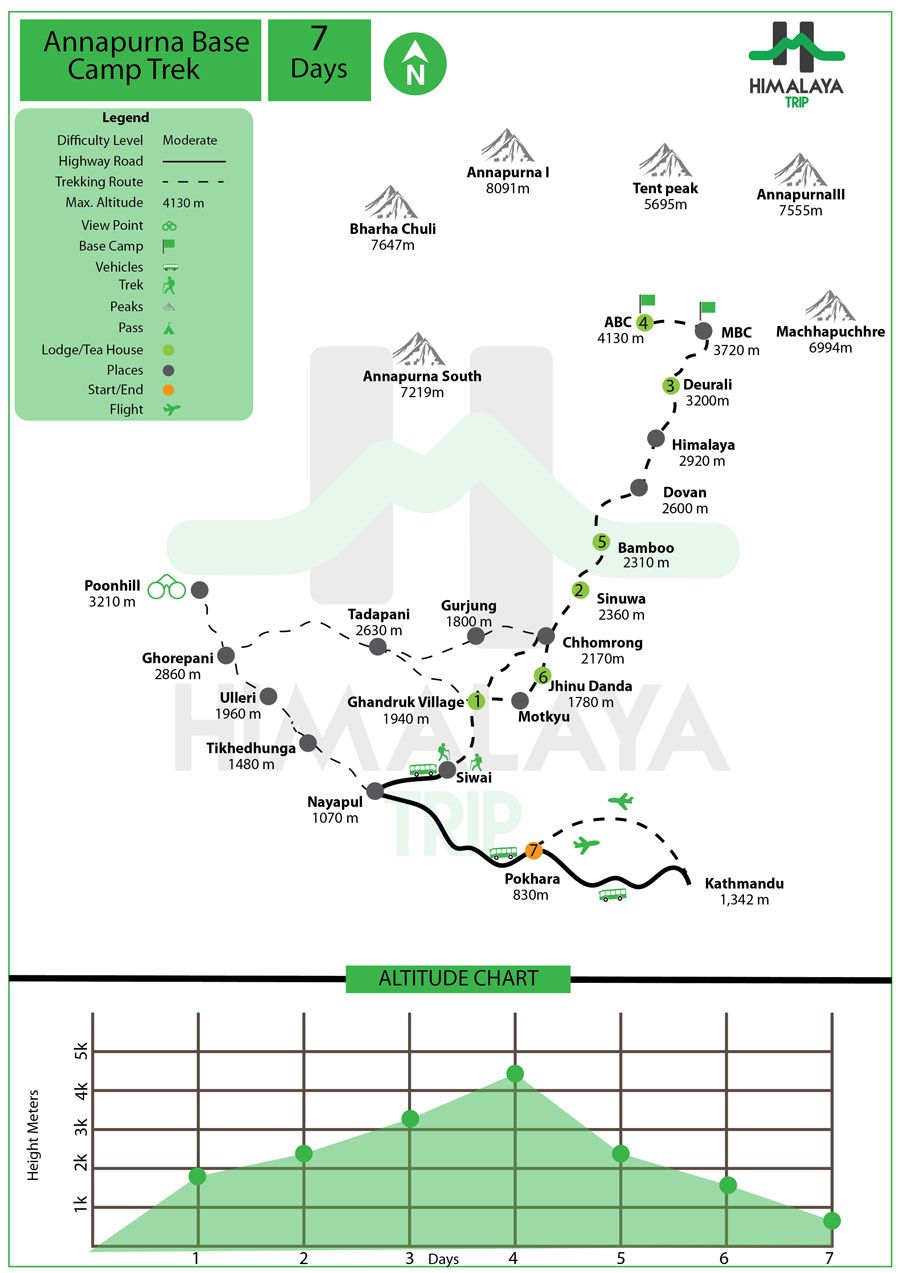
Annapurna Base Camp Trek Map
Whats Included?
Everything you need for a safe, comfortable, and memorable trek — packed into one transparent price. Below is a full breakdown of what is covered in your Annapurna Base Camp Trek package.
Accommodation & Meals
- All the Meals : 6 Breakfast, 7 Lunch, and 6 Dinner during the trek.
- Lodge: Ghandruk and Jhinu have private room with attached bathroom, Sinuwa, Deurali, ABC, Bamboo have 2-5 people share room.
Transportation & Flights
- Pokhara – Syauli Bazar (Kly Danda) private vehicle if you are more than 2 people.
- Syamrung – Pokhara by private Jeep if you are more than 2 people.
Guide & Porter Services
- Guide: Food, Lodge, Transportation, Salary, Insurance, Equipment etc.
- Optional: If you can’t carry own backpack, hike a porter between 2-3 trekkers.
Equipment & Safety
- First Aid Kit carried by the guide throughout.
- Fingertip Pulse Oximeter — daily oxygen and pulse monitoring for altitude safety.
Permits & Official Fees
- Annapurna Conservation Area Permit (ACAP).
- Himalaya Trip T-shirt.
- 13% Government VAT and official charge.
Complimentary Extras
- Local fresh fruit like Pomegranates and apple etc.
- Annapurna Base Camp Trek Map.
- 24/7 emergency support line available during your entire trek.
Whats not Included?
- International airfare .
- Nepal visa fees (15 Days US$30 and 30 Days US$50.) , you fill up a form depart of immigration before you leave and pay cash and get visa on your arrival in Kathmandu airport.
- Hotels/meals in Kathmandu (Kathmandu Guest House) and Pokhara (Hotel Hidden Kingdom ).
- Kathmandu-Pokhara- Kathmandu by Tourist Bus USD 12 / Private Car USD 110/ flight USD 115 .
- Porter cost USD 20 per day.
- All the drinks such as tea, coffee, coke, beer, Boiled filter water, WIFI, Battery charge, Gas Hot Shower etc.
- Your travel insurance which should include the emergency rescue.
- Your trekking gears.
- Tips for your guide etc.
Available dates & Prices
If you are two or more people, private trip is available any date, providing a fantastic opportunity. If you are solo travellers, our fixed group trips are thoughtfully scheduled and offer specific departure dates.
Group Discount Pricing
Price per person — the more you travel together, the less you pay
No. of Persons
Price per Person
-
1 PersonUSD 499
-
2 - 4 PaxSave 10% USD 449
-
5 - 9 PaxSave 15% USD 425
-
10+ Pax Best ValueSave 20% USD 399
Create Your Private Trip With
Your Own Itinerary and Dates
We are more than happy to design an itinerary tailored to your schedule and preferred route. Simply share your preferred travel dates, group size, and contact and travel details, and one of our travel experts will get in touch to help plan your journey.
Once your trip is confirmed, you’ll travel exclusively with your own group, enjoying a more personalized and flexible experience.
What to Pack for Annapurna Base Camp Trekking?
Your trek to Annapurna Base Camp can be safe and enjoyable if you have proper packing of essentials with you. It is very recommended you to not cross over 10kgs in your backpack, as a porter will be carrying the bags of two people together in a duffle bag. Make sure you include all the essentials in your bag. Wondering what to include? Here is the list:
Upper Body
- Base Layer (Top)
- Trekking Shirts
- Fleece Jacket
- Down Jacket
- Waterproof Jacket
Undergarments
- Base Layer (Bottom)
- Underwear (3–5 pairs)
- Sports Bra
Lower Body
- Trekking Pants
- Gaiters
- Shorts (optional for lower elevations)
- Waterproof Rain Pants
Head Wear
- Hat/Beanie
- Sun Hat
- Scarf/Bandana
- Buff/Neck Gaiter
Hands
- Gloves
- Waterproof Outer Gloves (if trekking in colder months)
Footwear
- Trekking Boots
- Lightweight Shoes/Sandals
- Trekking Socks (3–5 pairs)
- Camp Socks (warm pair)
Trekking Gear
- Backpack (50L)
- Sleeping Bag with Liner (-10°C)
- Trekking Poles
- Headlamp/Flashlight
- Daypack (20–30L, if using a porter)
- Backpack Rain Cover
Safety and Climbing
- Poncho or Raincoat
- Emergency Whistle
- Sunglasses (UV400)
First Aid Kit
- First Aid Kit
- Medical Tape
Medical and Medicine
- Personal Prescription Medicines
- Painkillers (Paracetamol/Ibuprofen)
- Diamox (Acetazolamide) (consult your doctor before use)
- Anti-diarrheal Medicine
- Motion Sickness Tablets (if needed)
- Cold & Flu Medicine
- Cough Lozenges
Electronic and Power
- Camera/Phone
- Travel Adapter
- Power Bank (10,000–20,000 mAh)
- Charging Cables
- Spare Camera Battery
- Smartwatch Charger (if applicable)
Toiletries and Hygiene
- Personal Hygiene Kit
- Toiletries
- Toothbrush
- Toothpaste
- Wet Wipes
- Hand Sanitizer
- Toilet Paper
- Quick-Dry Towel
- Lip Balm (SPF)
- Nail Clippers
Hydration and Nutrition
- Water Bottle/Water Bladder with Filter or Purification
- Electrolyte Tablets/Powder
Food and Snacks
- Snacks
- Energy Bars
- Trail Mix
- Chocolate
- Energy Gels (optional)
Documents and Money
- Documents
- Cash (Nepali Rupees)
- Backup Credit Card
- Passport
- Travel Insurance
- Trekking Permits (ACAP & TIMS, if applicable)
- Passport-size Photos (2–4 copies)
- Emergency Contact Information
Personal Safety
- Sun Protection (SPF 30–40+)
- Sunscreen Lip Balm
Accessories
- Dry Bags or Ziplock Bags
- Laundry Bag
- Small Notebook & Pen
Optional
- Playing Cards
- Book/Kindle
- Earplugs
- Eye Mask
- Binoculars
- Small Pillow
- Camera Tripod
- Gaiters (optional outside snowy/wet seasons)
- Lightweight Slippers (if you don’t want to use trekking sandals indoors)
What Do Trekkers Want to Know About Annapurna Base Camp Trek
General
The Annapurna Base Camp Trek is a multi-day Himalayan trekking route that takes you to the base of Mount Annapurna I (8.091 m), the 10th-highest mountain in the world. The trail passes Gurung and Tamang villages, rhododendron forests, farmlands, and mountain valleys before reaching the Base Camp (4,130 m).
The Annapurna Base Camp Trek is popular because of the mountain scenery, culture, and geography. Trekkers explore forests, rivers, Magar villages, and Himalayan views such as Annapurna I, Machhapuchhre, and Hiunchuli within a short trekking itinerary compared to many other Himalayan routes.
Yes, the Annapurna Base Camp Trek is possible throughout the year. Spring and autumn provide the best weather and mountain views. Winter offers uncrowded trails with colder temperatures, while the monsoon season brings rain, muddy paths, and poor visibility.
The Annapurna Base Camp Trek starts from Syauli Bazaar after a drive from Pokhara. Other optional trailheads include Nayapul Bazaar, Ghandruk, Kimche, and Tikhedhunga. The starting point depends on the itinerary selected and the amount of time available for the trek.
The Annapurna Base Camp Trek is approximately 70 to 115 km. The total distance depends on the chosen itinerary and starting point. Most trekkers complete the route over several days (5-12 days), so they have enough time for rest and acclimatization.
In general, the Everest Base Camo Trek is considered slightly more difficulty than the Annapurna Base Camp Trek due to the high altitude range passing over 5,000 meters. The EBC takes more days of hiking in the remote region compared to ABC. In addition to that, you will get rugged terrain for EBC, while the terrain in ABC is more diverse and well-marked.
Yes, there are natural hot springs near Jhinu Danda on the Annapurna Base Camp Trek route. These hot springs provide a relaxing experience for trekkers to soothe their tired muscles. The itinerary includes a stop at Jhinu Danda after you descend from the base camp.
Yes, you can combine the Annapurna Base Camp Trek with other treks such as the Ghorepani Poon Hill, Annapurna Circuit, Mardi Himal, Khopra Danda, and more. You can combine the treks according to your fitness level, time limitations, and preferences.
The pre-trek briefing is held at your hotel in Kathmandu or at our office in Kathmandu. During the briefing, your guide reviews the itinerary, checks your equipment, answers questions, and provides final information before the trek begins.
You can pay the remaining balance upon your arrival in Nepal. We accept cash in US Dollars (USD), Nepalese Rupees (NPR), and other major currencies, as well as electronic payments.
We can arrange a complimentary airport pick-up from Tribhuvan International Airport if you are staying around Thamel in Kathmandu. Otherwise, prepaid airport taxis are available 24 hours a day. In Pokhara, prepaid taxis are available at the airport, and you will need to arrange your own transfer.
Permits & Regulations
No, a TIMS (Trekkers’ Information Management System) card is not required for the Annapurna Base Camp Trek. Trekkers only need an Annapurna Conservation Area Permit (ACAP) to enter the Annapurna Conservation Area.
You can obtain trekking permits in Kathmandu or Pokhara. The ACAP permit is issued by the Nepal Tourism Board. If you book your trek with Himalaya Trip, we will arrange all the required permits on your behalf before the trek begins.
Yes, permit fees are included in our trekking packages.
Yes, children need permits for the ABC trek. Children under 10 years old are exempt from the ACAP (Annapurna Conservation Area Permit) fee, but you must still officially register their details at the permit office and carry their passport and passport-sized photos.
Annapurna trekking permits are valid for a single trekking journey. They remain valid for the duration of your trek as long as you stay within the approved trekking route and follow the conservation area regulations.
No, trekking without the required permits is not allowed. Authorities inspect permits at checkpoints, and trekkers without valid documents may be denied entry or required to pay penalties.
Cost & Budget
The packages include accommodation, meals during the trek, permits, a licensed guide, transportation, government taxes, a porter, and airport transfers. Always check the inclusions before booking.
Carrying USD 15 to 30 per day for personal expenses is sufficient. This budget covers drinks, snacks, Wi-Fi, hot showers, battery charging, tips, and other optional purchases that may not be included in your trekking package.
No, ATMs are not available on the trekking route. It is best to withdraw cash in Kathmandu or Pokhara before starting the trek, as many teahouses only accept cash payments.
No, tipping is not mandatory, but it is much appreciated. Many trekkers tip guides and porters to recognize their hard work and support. The amount depends on your satisfaction, group size, and the length of the trek.
Joining a group, traveling during the shoulder season, and booking a standard teahouse package can reduce costs. Avoid unnecessary services and carry reusable water bottles with purification tablets to lower daily expenses.
Accommodation
Yes, private rooms are available. However, availability depends on the season and the number of trekkers. At higher elevations, during peak seasons, you may need to share a room due to limited accommodations.
Some teahouses have attached bathrooms, but most have shared facilities. Attached bathrooms are more common in lower-altitude villages such as Sinuwa, Ghandruk and Jhinu.
Yes, blankets are provided at the teahouses. However, temperatures can drop well below freezing at higher elevations, so carry a four-season sleeping bag for additional warmth.
Sometimes, but not always. Some lower-altitude teahouses have charging outlets in guest rooms, while many higher-altitude lodges only provide charging facilities in the dining area for an additional fee.
Yes, advance booking is recommended during spring and autumn. These are the busiest trekking seasons, and popular teahouses can fill quickly. If you’re trekking with us, then we will arrange accommodation in advance.
Yes, couples can request a private room. Availability depends on the village, season, and room capacity. During busy trekking months, private rooms cannot always be guaranteed.
Hot showers cost between NPR 200 and NPR 500 per use. Prices vary based on the village, altitude, and the type of heating system available. Costs are higher at higher elevations.
Yes, independent trekking can cost less than a guided package. However, guided treks include permits, accommodation, transportation, and local expertise, which removes the need to arrange each service separately.
Yes, hotel stays can be added to your package. We keep hotel bookings flexible so you can choose a budget hostel or a luxury hotel. If you would like us to arrange your stay, we recommend Kathmandu Guest House in Kathmandu and Hotel Hidden Kingdom in Pokhara.
Food & Drinking Water
Yes, vegetarian or Vegan food is available throughout the trek. Most teahouses offer vegetable Dal Bhat, fried rice, noodles, pasta, soups, potatoes, and seasonal vegetables. Many trekkers choose vegetarian meals because they are freshly prepared and easily available.
Yes, drinking water is safe after proper treatment. Drink boiled water or purify natural water sources using purification tablets, filters, or UV purifiers. Untreated water should be avoided to reduce the risk of waterborne illnesses.
Yes, you can’t buy bottled water on the trail above Ghandruk and Chhomrong village because of Bottle of Mineral water banned area. You can buy boiled filter water or Using a reusable bottle is a more environmentally friendly option.
Yes, Dal Bhat is available at every teahouse. This traditional Nepali meal has rice, lentil soup, vegetables, and sometimes pickles or curry. If you’d like a break from Dal Bhat, you can also choose from other menu options. They also make best and big size Pizza. You must try during your abc trek.
Yes, teahouses can prepare simple dietary requests. Vegetarian, vegan, or egg-free meals are available if requested in advance. However, gluten-free and other specialized diets may have limited options in remote villages.
Packing & Equipment
A sleeping bag rated between -10°C and -15°C is recommended for most seasons. Although teahouses provide blankets, temperatures at higher elevations can drop below freezing.
No, crampons are not required. However, light microspikes can be useful during winter or after heavy snowfall when some parts of the trail become icy or slippery.
Yes, trekking equipment is available for rent in Pokhara. You can rent sleeping bags, down jackets, trekking poles, backpacks, and crampons at outdoor gear shops before starting the Annapurna Base Camp Trek.
Carry personal medications and a basic first-aid kit. Common items such as pain relievers, blister treatment, antiseptic cream, adhesive bandages, oral rehydration salts, medicine for stomach problems, and any altitude medication recommended by your healthcare provider.
Fitness and Preparation
Yes, one month of training can improve your fitness. Aim for regular cardio workouts, stair climbing, strength training, and long walks with a light backpack. Starting earlier is even better if you are not physically active.
Yes, many older adults successfully complete the trek each year. Good health, proper preparation, comfortable walking speed, and acclimatization are more important than age when trekking to Annapurna Base Camp.
Altitude & Safety
Altitude sickness can begin above 2,500 m. However, not everyone develops symptoms. The risk increases as you gain elevation, so it is important to ascend slowly, drink enough water, and pay attention to your body’s condition.
Early symptoms are headache, nausea, dizziness, fatigue, loss of appetite, and difficulty sleeping. These signs should not be ignored. If symptoms become worse, stop ascending and descend to a lower altitude and seek medical advice if necessary.
The best way to reduce altitude sickness is to ascend. Stay well-hydrated, avoid excessive alcohol, eat balanced meals, maintain a walking speed, and follow an itinerary that gives your body enough time to adjust to higher elevations.
Yes, helicopter evacuation is available during emergencies when weather conditions permit. Most rescue operations need valid travel insurance that covers high-altitude trekking and emergency helicopter evacuation in Nepal.
Yes, the Annapurna Base Camp Trek is safe. The trail is maintained nicely and frequently used by trekkers. Following weather forecasts, trekking responsibly, and listening to your guide improve overall safety during the journey.
Transportation & Logistics
Yes, daily domestic flights operate between Kathmandu and Pokhara. Flying is the fastest option, which takes about 25 to 30 minutes. Weather conditions can sometimes delay or cancel flights during the monsoon and winter seasons. Last couple of years, there were very poor visibility or foggy, hazy or cloudy in Pokhara during spring season because of not snowing and raining in winter season.
The Annapurna Base Camp treks end at Samrung. From the finishing point, you will travel by jeep or bus back to Pokhara. The exact endpoint depends on the itinerary and transportation arrangements.
Yes, helicopter returns are available from Annapurna Base Camp when weather conditions allow. This option reduces the return journey and offers aerial views of the Annapurna region. It is available as a private or shared charter service.
Yes, local buses connect Pokhara with several Annapurna trailheads. They are the most affordable transportation option, but are slower and less comfortable than private jeeps.
Leave Pokhara early between 7:00 and 8:00 AM. An early departure gives you enough time to reach the trailhead and complete the first day’s trek before evening.
Private jeeps are the best transportation option for groups. They offer comfort, flexibility, and faster travel compared to public buses. Sharing the vehicle among several trekkers also reduces the transportation cost per person.
You can travel between Kathmandu and Pokhara by tourist bus, private car, or flight. A sofa-seat tourist bus costs USD 12 and takes 8–9 hours. A private car costs USD 110 and also takes 8–9 hours. A flight costs USD 112 and takes only 25 minutes.
Guide & Porter
Yes, you can hire only a porter if your trekking arrangement allows it. A porter carries your heavy luggage. However, it does not replace the role of a licensed trekking guide.
A porter carries up to 20 kg (44 pounds). When two trekkers share one porter, each person is advised to pack no more than 10 kilograms to make sure the load remains safe and manageable.
A guide improves safety, convenience, and your overall trekking experience. They arrange accommodation, assist with permits, monitor your health, explain local culture, and make informed decisions if weather or trail conditions change during the trek.
Yes, licensed trekking guides speak English. Many also communicate in additional languages depending on their training and experience.
Yes, female trekking guides are available in Nepal. Several licensed female guides lead Annapurna Base Camp treks for solo travelers, families, and groups. They offer the same professional services and mountain expertise as their male counterparts.
Visa & Arrival
Yes, foreign nationals need a Nepal tourist visa to trek to Annapurna Base Camp. Citizens of many countries can obtain a visa on arrival at Tribhuvan international airport or land border crossings, provided they meet the entry requirements.
Your passport should be valid for at least six months from your date of entry into Nepal. Many airlines and immigration authorities require this minimum validity. It is also advisable to have at least one blank page for your visa stamp.
You need a valid passport, a completed visa application, a passport-sized photograph, and the required visa fee. Immigration officers may also ask for your return ticket, accommodation details, or proof of sufficient funds in some cases.
Nepal offers tourist visas for different durations with different fees. A 15-day visa costs USD 30, a 30-day visa costs USD 50, and a 90-day visa costs USD 125.
Yes, you can apply for a Nepal tourist visa before arriving. Many travelers complete the online visa application before departure and receive their visa through a Nepalese embassy, consulate, or immigration office upon arrival.
Arrive at least one day before your trek. This gives you enough time to recover from your flight, complete permit formalities, attend a trek briefing, and prepare your equipment before traveling to the trailhead.
Nepal Telecom (Namaste) is the most reliable mobile coverage on the Annapurna Base Camp Trek. If you purchase a Nepal Telecom (Namaste) SIM card, you can access mobile signal up to Machhapuchhre Base Camp (3,700 m).
You can buy a Nepal Telecom (NTC) or Ncell SIM card at Tribhuvan International Airport in Kathmandu or at authorized mobile service centers in Kathmandu and Pokhara.
Trekker Reviews and Ratings for Annapurna Base Camp


Highly recommend Himalaya trip for ABC Trek
From day one the communication and support from Himalaya trip has been exceptional. We were initially planning the trip for October 2025, but had to move it to March 2026. The management team was super understanding about the situation and we seamlessly changed plans. Our guide for the trip was Ramesh, along with two porters who made the entire journey so much easier and carefree. Everything was organised and taken care of. March being a busy season, with lodges being overbooked, Ramesh especially made sure that we were always sorted and got the best of the options available. He was very clear throughout about what to expect during the journey and how to prepare. Also took us through the most beautiful routes. During unexpected situations, we consistently felt genuine care and a sense of security around us thanks to Ramesh and the porters. I would highly recommend Himalaya trip for anyone who is considering trekking in Nepal!


Our ABC Trek experience with Himalaya Trip was incredible
Our experience with Himalaya Trip was incredible. We were guided by Ramesh who is an absolute delight and 12/10 as a guide - a trip full of laughter, great stories, and thoughtful insights into Nepal and its culture. We went as a group of 4 to Annapurna Base Camp trek and it was unforgettable as a trip. We also hired porters who were also very kind, smiley and friendly - this genuine warmth and kindness from every member of Himalaya trip company really made our trip. Ramesh was expert level guidance in everything from food recommendations, to what to wear and expect the next day in the terrain. Everything was well organized and easy to follpw. He also really made us feel safe when my sister got sick from the altitude. We really felt we experienced Nepali hospitality where we were treated as guests, welcomed, and cared for. Communication was great throughout, reliable, and easy to follow. There was everything from time for photos, rest, trekking, and challenges in between. I definitely plan on returning and hopefully doing Everest base camp with Himalaya Trips and maybe even summiting!!! Thank you Ramesh and amazing team 🙏


Jay: What a great guide
We had a really nice trek to ABC. Unfortunately we faced rain and then snow (30 cm). Jay, our guide, was very professional ensuring our safety and getting us down the mountain in time, and obtaining extra blankets at our booked guest houses. You could tell he had the experience needed for such situations.
I also would like to share that Harka, the tour manager, was extremely helpful and flexible with changing our itinerary and transport method as needed due to weather conditions. As important, Harka was very honest in dealing with us.
We highly recommend both of them. Enzo and Flavio


We are very happy to have successfully completed the Nepal ABC Trek
We are very happy to have successfully completed the Nepal ABC Trek and sincerely thank the "Himalaya Trip Private Limited" Trekking team.
Special thanks to Harka for providing detailed information before departure, arranging airport pickup and drop-off, and thoroughly explaining the itinerary.
Ramesh took great care of us throughout the journey, ensuring our meals and accommodation were well-managed. When he noticed that we were struggling with our physical stamina, he suggested an alternative route. Although it was slightly longer, the path was easier to navigate. Since the porter couldn’t always stay with us, Ramesh also helped carry some of our belongings, making it possible for us to complete the trek. His arrangements were truly flexible and considerate.
Markus and Aita always had bright smiles on their faces. They helped with our luggage, checked our rooms to ensure nothing was left behind, chatted with us along the way, and took photos with us. They gave us a sense of genuine warmth and simplicity that is hard to find in the city.
Once again, a heartfelt thanks to Harka, Ramesh, Markus, and Aita ? ?
P.S. The Himalaya Trekking team celebrated uncle and aunt's birthdays for two consecutive days, which was truly a wonderful surprise and deeply touching.
I sincerely hope to hike with your team again in the future ?


13 pax group for ABC trek with Harka
We arranged for a 13 pax group for the ABC trek with Harka. Even with a big group size, Harka and his team took good care of us. The itinerary was customized based on our needs and fitness level. Top-notch service was provided throughout our 10 days in Nepal. Our guide, Hari did an amazing job ensuring all of us were able to cope with the altitude and long trek well. During the trip, we requested some changes to the itinerary and they were able to accommodate our last-minute request. Would totally come back to them if we are planning for EBC and recommend it to those who wish to visit Nepal.


Unforgettable and its a real adventure
Haari, our tour guide, was great. He is very friendly, patient, accommodating with everyone and a mountain of knowledge about the Himalayas (very very enthusiastic about EBC, haha). He was well prepared with first aids and brought us to places to get gears and stuff that we missed out before our hike. He made plans ahead and keep us informed, totally made our ABC adventure so much more enjoyable and relaxed. The porters were super helpful and thoughtful, despite carrying our bags around the mountains they keep us entertained with their carefree personalities and great dancing skills :) (yeah, they partied at one of the teahouse we stayed). OH did I mentioned, one of our member left his camera at the previous teahouse we stayed and only realised when we arrived at the next accommodation (after 12 hours) and one of the porter volunteered to return and pick up the camera for our member, and I’m sure he was sprinting and down 6 red bull and came back in 5hours. We were very lucky and blessed indeed. Haari’s brother, Harka is the operation/ owner of the tour agency and he was also very kind and did a fantastic job in ensuring our last few days in Kathmandu a pleasant one. We had good conversations with everyone of them and all in all a great experience and a wonderful times in this beautiful country.

our honeymoon trekking
My husband and I spent our honeymoon trekking to Annapurna Base Camp and Harka was our guide. We were so pleased to have Harka as he was the perfect guide for us. Naturally he has excellent knowledge and always gently guided us into the correct decision. We were quite worried about spending so much time with someone we didn’t know. But Harka had the magic ability to know when to leave us in peace and when to spend time with us. He was very gentlemanly, with perfect manners and as I said an innate ability to know what to do. He wasn’t too distant nor too friendly. We did see other guides who didn’t get this balance right and who if they had been with us would have affected our trip for the worse. Harka was just perfect for us and I would recommend him to anyone.

I and my girlfriend took a ABC Trek
In the march of 2012, my girlfriend and I took a trip to the Annapurna Base Camp in Nepal. We have hired a guide Harka Gurung , a local guide (26), who was recommended by my friends.First, he has sent us the list of things to take with us, this information is very valuable for us, since we know what to take with us. The weather conditions were pretty rough, but we did not freeze and need anything. Harka is very fond of safety, starting from the recommendations about the food and water and ending with advice was and how to pass the Avalanche area, steep slopes, and so on. He was very nice to us and told us a lot of stories about Nepali habits, culture, and history; he was always joking and did not show any signs of angriness when we were going to slow or wanted to have rest.
Harka went all the way with us and without him our travel would not have been so nice and safe.I definitely will choose home as a guide for my next trips to Nepal and recommend him to anyone who wants to feel comfortable and nice during the trek.

We met Harka in September 2010
We met Harka in September 2010. He was going to be our trekking guide up to Annapurna Base Camp and he was more than that! He became a good friend! He is patient (he kept us going all the way up to ABC!), kind, knowledgeable, and has a real love for sharing his culture and exchanging thoughts life! We had some inspiring chats. He cares about his people, he has a heart of gold. WE would trek with him again forever, and more than that, we are still in touch because he did become one very good friend and we wish him all the best for his life. He deserves all the happiness he can get. Namaste saathi!
Sharing his culture and exchanging thoughts life
We met Harka in September 2010. He was going to be our trekking guide up to Annapurna Base Camp and he was more than that! He became a good friend! He is patient (he kept us going all the way up to ABC!), kind, knowledgeable, and has a real love for sharing his culture and exchanging thoughts life! We had some inspiring chats. He cares about his people, he has a heart of gold. We would trek with him again forever, and more than that, we are still in touch because he did become one very good friend and we wish him all the best for his life. He deserves all the happiness he can get. Namaste saathi!
Love from Spain,


Good, well organised and excellent value trip
I am more than happy to recommend Harka - he was very helpful and organised a good and professional trek (I did the Annapurna Base Camp trek with two friends). Our guide Shyam spoke good English and our two porters were a huge asset, carrying stuff we couldn't have done ourselves. All for a very reasonable price.
UK, April 2019

amazing guide Nirmal and porter Anil
A wonderful 8 day trek, led by our amazing guide Nirmal and porter Anil. It was April, and this is a very busy month, so despite the company booking in advance, we struggled to find a room on several occasions - but the overall experience and mountain views surpassed all. Thank you, Nirmal and Anil, we’ll come again!!
USA, April 2019
Highly recommended, friendly family-run company.
We booked a 7 day Annapurna Base Camp trek with Himalaya Trip in Sep. Communication when booking was excellent and they were very accommodating to fit in with our dates and pick up/drop off locations. The manager, Harka, was very quick to respond and provided good information about what to take. On arrival, Harka met us at our hotel in Kathmandu and explained the full plan for the trip giving us all our tickets and trekking passes. He also met us in the morning to ensure we got on the correct bus to Pokhara where we would meet our guide.
The guide and porter were very good: both were very friendly and couldn’t do enough to make sure we were comfortable and safe at all times. We were particularly impressed when we asked to change the plan for the last day of the trek and he gave us a few options and rebooked our accommodation and transport plan to fit. Even though the porter spoke little English he was friendly and helpful throughout.
Himalaya Trip clearly a local, family-run business and I would highly recommend booking directly with them as it was better value for money than going through an agent in the UK and also supports their local community. We will certainly use them again for future trekking adventures in Nepal.
UK, September 2019
ABC Made Memorable by Harka Gurung and Himalaya Trip !
Our little group of three were introduced to Himalaya Trip and its Founder, Harka Gurung, from another Malaysian who had trekked in Nepal in 2018.
For our trek to ABC, I found Harka and his guide, Om and his two porters, Buddhi Man and Samsher, all Gurungs from their home state, to be exceptionally professional, courteous, friendly and accommodating at all times.
We quickly warmed to the Gurungs' easygoing nature and friendly, no-nonsense dispositions, made all the more memorable by Samsher and Buddhi Man's mountain songs and spontaneous dancing whilst on the trail!
I cannot therefore recommend Harka, Om, Samsher and Buddhi Man more highly for your next trip to this beautiful land as Nepal Hidden Treks will definitely be my first port of call when I next visit, hopefully with my children.
The defining feature of Harka and his men are that this is a family business for the Gurung tribe which places employment, professional standards and career opportunities on equal if not higher measure than commercial profit, which ultimately benefits the lucky client.
Malaysia, November 2019
Daenerys Had Fantastic ABC Trek
Harka responds quickly to every query, and the guide ( om gurung) and porters ( samsher and buddi man gurung) were so friendly and accommodating. We did the 7 day Annapurna base camp trek and we had a fantastic time. Highly recommended.
Malaysia, November 2019
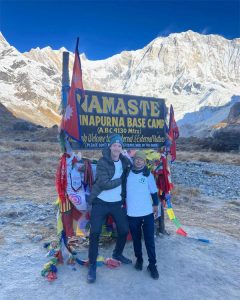
Amazing 7 Days Trek
Our ABC trek was fantastic, with beautiful scenery! We had a great time with our very friendly guide Ramesh, who organized everything (food, drinks, teahouse rooms) very well, and made us feel safe all the way. We would definitely recommend to book with Himalaya Trip.
Netherlands, September 2022

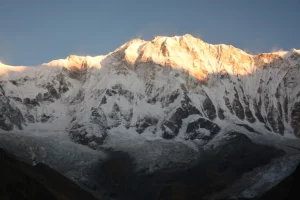
Harka organised an amazing trip
Harka organised an amazing trip with a porter and guide for us to trek to and from Annapurna Base Camp over 7 days in September. The communication pre and post trip was excellent and our guide and porter during the trek provided an exceptional service. Couldn’t recommend this company highly enough.
UK, September 2022
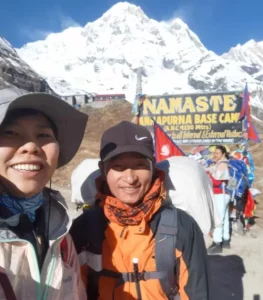
Superb service
I did ABC trek 7 days with Surpa the guide, he took a very good care of me, checked if I am fine all along the way. Couldn't ask for any better service. Before the trek Harka also briefed about the route I am going to do both email and in-person.
Thailand, October 2022
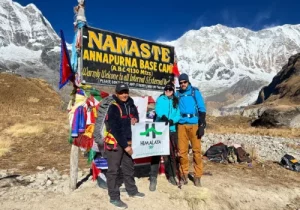
Excellent trip in Nepal
We had our trip to Annapurna base camp with Himalaya Trip in november and there were 9 hiking days. We really enjoyed the trip and organisation by the guide Surpa. Everything was thoroughly thought out, i.e accommodation, food, hiking distances etc. Surpa took a really great care of us and ensured us the safety of the trip and all the comforts. Supra is a very friendly, nice and helpful guide. We will definitely recommend Himalaya Trip and Surpa to our friends.
Estonia, November 2023
Authentic ABC Trek
It was a great experience of ABC Trek that the Himalaya Trip company and the guide provided clear details and support for the trip, especially the trekking journey to ABC. I highly recommend this trek.
Hongkong, November 2023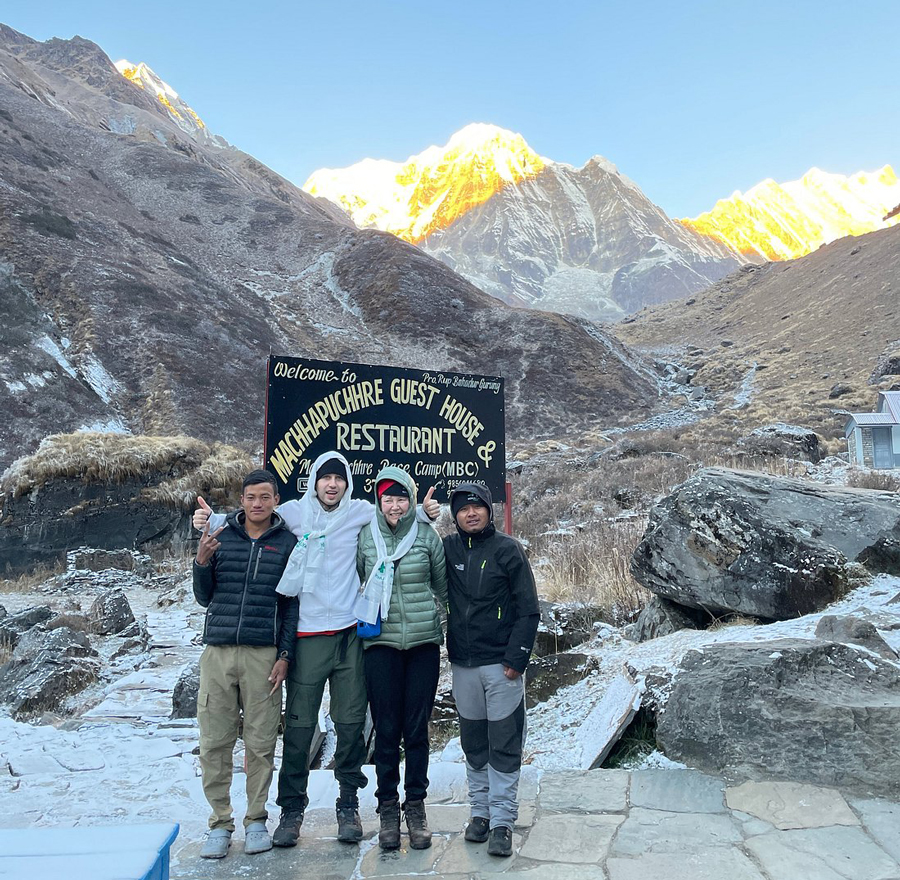
Amazing Annapurna Base Camp Trek
An amazing trek to ABC (Annapurna Base Camp). The views of Fishtail and Annapurna were extraordinary and the hiking through Ghandruk was beautiful. The guide (Milan) and the porter (Misak) were excellent and we had a great time chatting to them in English (and also in Nepalese!) They were very kind, offering us fruits after dinner and cushions to sit on when we took breaks. The trip was very well organised and all the hotels had been organised and booked in advance. We highly recommend taking this trek with Himalaya Trip.

Cassandra & Cedric
Three Passes & Everest Base Camp

Pippa Jephcott
Pikey Peak Trek
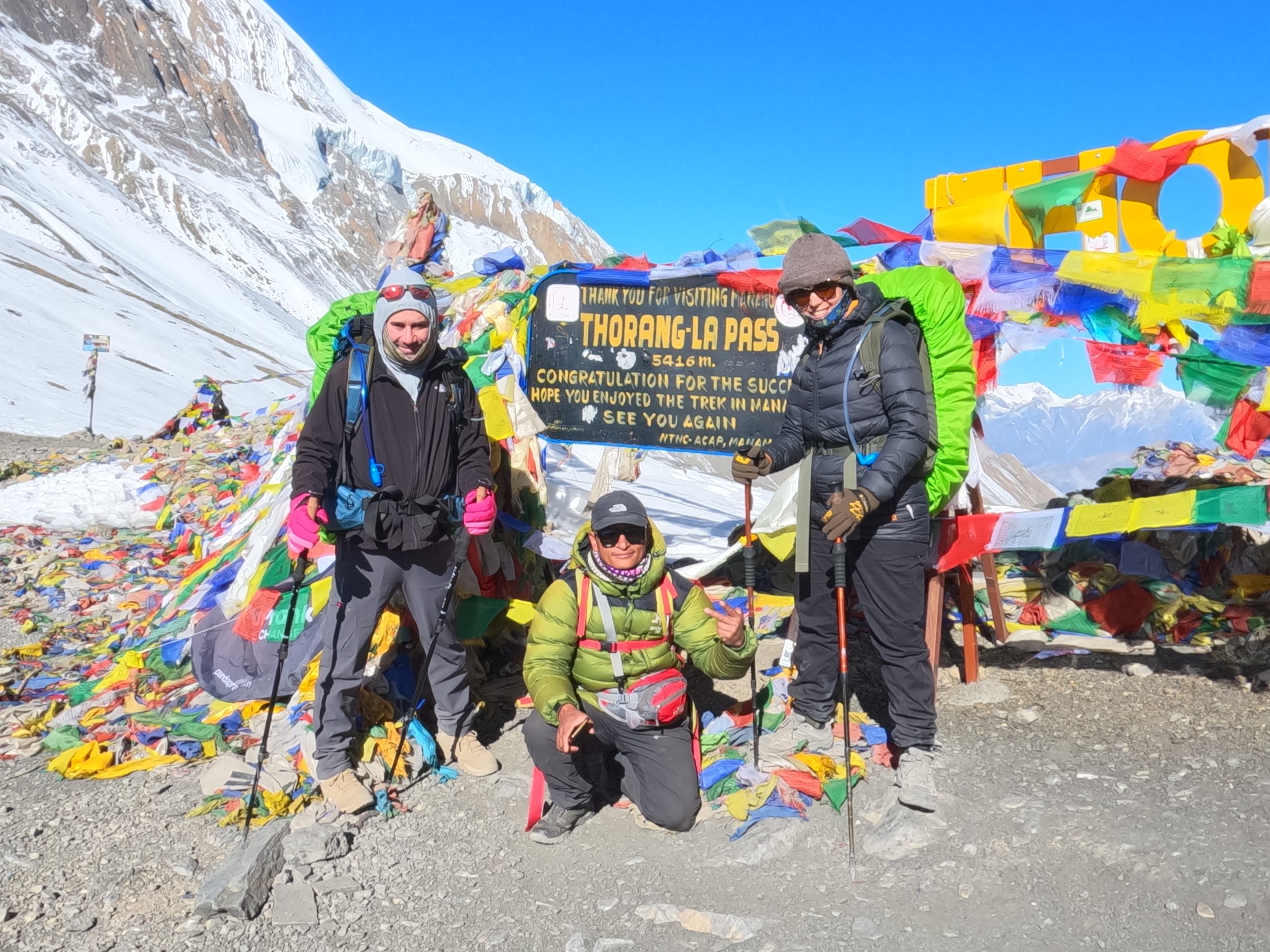
Majid, Sara and Shane
Annapurna Circuit Trek
Reviews from the globe

Hi! Im Sara, from Spain! Good morning! Yesterday we arrived from our 11-day trekking in Gokyo. There were 3 people from Spain, and I don’t know how to express how happy I felt. From the beginning, Himalaya Trip has been attentive to us, with a welcome at the hotel and...

Incredible!
Hi! Im Sara, from Spain!
Good morning!
Yesterday we arrived from our 11-day trekking in Gokyo.
There were 3 people from Spain, and I don’t know how to express how happy I felt.
From the beginning, Himalaya Trip has been attentive to us, with a welcome at the hotel and explanation of the route, rental of necessary equipment, etc.
The most important thing for us has been the ease and comfort with which Ramesh (our precious guide) has taken care of us at all time.
Attentive to the food, to make sure we didn’t get cold, adapting the route day by day according to the needs of the team.
I only have words of gratitude for Ramesh, who I would recommend for any trekking in the world.
In addition to being a great guide and knowing all the mountains of Nepal perfectly, he is a great person, with a big heart.
We hope to repeat in the not too distant future and hopefully it can be with him, since he is already part of our family.
Thank you for everything, from the bottom of my heart.
Thanks!!!!


Had an incredible experience doing the Mardi Himal trek with Himalaya Trip. Our guide Jay and our two porters Umesh and Masak were all simply incredible people. I’m a photographer so always have odd requests for weird areas to access for better angles or even simply just extending time in...
Couldn’t recommend enough
Had an incredible experience doing the Mardi Himal trek with Himalaya Trip. Our guide Jay and our two porters Umesh and Masak were all simply incredible people.
I’m a photographer so always have odd requests for weird areas to access for better angles or even simply just extending time in certain areas and all requests were met with so much help from the team. Highly recommend

I had an amazing time trekking with Surpa, particularly as this was my first solo trek. Beautiful views doing the Mardi Himal trek over 4 days, Surpa was a great guide who organised everything so well for me, kept me well fed, supported a good pace the whole way and...
Mardi Himal: fantastic trek & wonderful guide
I had an amazing time trekking with Surpa, particularly as this was my first solo trek. Beautiful views doing the Mardi Himal trek over 4 days, Surpa was a great guide who organised everything so well for me, kept me well fed, supported a good pace the whole way and always cheerful. Would recommend, and I would happily have him as my guide again in the future. The organisation and booking with Himalaya Trip was great, really responsive on emails and Harka was so helpful in organising everything and meeting me in Kathmandu for a briefing before the trip. Thanks so much!
Our 4 day Mardi Himal Trek with guide Milan and porter Plekta was a wonderful experience. The manager Harka Gurung met with us over coffee in Kathmandu and briefed us about expectations as this was our first trek. After that our guide met us at our hotel in Pokhara, helped...
Once in a lifetime experience in the Himalayas
Our 4 day Mardi Himal Trek with guide Milan and porter Plekta was a wonderful experience. The manager Harka Gurung met with us over coffee in Kathmandu and briefed us about expectations as this was our first trek. After that our guide met us at our hotel in Pokhara, helped us rent equipment, and handled all logistics in between. Our first time in the Himalayas was unforgettable between all the unbelievable landscapes and scenery, and we were lucky to have MIlan and Plekta with us to experience it all. I can’t begin to describe how ethereal sunrise is over the base camp, but hopefully you’ll be able to experience it soon!
Points of Attractions in Annapurna Base Camp Trek
Annapurna Base Camp is the next popular trekking destination after Everest Base Camp. The trek has gained popularity for its beautiful mountain views, a natural hot spring, and diverse flora and fauna. Here is a brief explanation of the major attractions ofthe Annapurna Base Camp Trek:
Machhapuchhre Base Camp (MBC)
Machhapuchhre Base Camp (MBC) is the final overnight stop before reaching Annapurna Base Camp. It lies directly below Machhapuchhre, also known as Fishtail Mountain, which is considered sacred to Lord Shiva. Because of its religious importance, the Government of Nepal has never allowed climbing on this peak. The geography changes at MBC as the forests disappear and the trail enters the open Annapurna Sanctuary. The surrounding peaks, such as Annapurna South, Hiunchuli, and Gangapurna, become much closer from this point onward.
Ghandruk Gurung Village
Ghandruk Gurung Village is one of the largest and most famous settlements on the Annapurna Base Camp Trek. Located at 1,940 m, the village is home to the Gurung community, which has a long history of serving in the Gurkha regiments. Visitors can explore the Gurung Cultural Museum to learn about local clothing, farming tools, musical instruments, and Gurkha history.
Chhomrong Village & Ridge
Chhomrong Ridge is the main gateway to the Annapurna Sanctuary. It is known for its long stone staircase with more than 2,500 steps that descends to the suspension bridge across the Chhomrong Khola before climbing back to Sinuwa. From the ridge, you can see Annapurna South (7,219 m), Hiunchuli (6,441 m), and the Modi Khola valley below. The village also has many teahouses, bakeries, and small shops, which make it one of the most important rest stops on the route.
Natural Hot Spring at Jhinu
A natural hot spring lies on your way to the Annapurna Base Camp trekking trail. It is located in the small hamlet called Jhinu, the last stop of your trek. Jhinu is approximately 14 kilometers from Nayapul. This village is located next to the Modi River, which originates in the Annapurna Range. At the village entrance, next to the river, is a small pond where natural hot water springs up from below. This hot spring is believed to have healing properties and heal many health-related issues. Additionally, it serves as a relaxation point for trekkers who return after multiple days of strenuous trekking.
Annapurna Conservation Area
Annapurna Conservation Area Project is a government-led conservation initiative in Nepal. The biodiversity of the Annapurna region, located in the Kaski, Manang, Mustang, Myagdi, and Parbat districts, is protected under this project. This project was initiated in 1986 and has since protected the natural resources of the area. The dense forests, flat lands of Mustang and Manang, high mountains, semi-arid terrain, raging white rivers, enriched fauna, and the distinct culture of the locals are preserved by ACAP. You will need an ACAP permit for the trek to Annapurna Base Camp. Permits usually range from $30 for foreigners and $10 for SAARC nationals.
Pokhara and Phewa Lake
Pokhara is the beginning and end of the Annapurna Base Camp Trek for most trekkers. Located at 822 m, Pokhara is the main gateway to the Annapurna region and the place where many trekkers arrange permits, gear, and transportation before the journey. Phewa Lake is the most famous attraction in the city with boat rides and reflections of Machhapuchhre and the Annapurna range. You can also take a boat to the Tal Barahi Temple, walk around the Lakeside area, and enjoy local restaurants and cafés before or after completing the trek.
Annapurna Massifs
The Annapurna Range, which rises to 8091 m, is a series of high mountains in western Nepal. The trek to ABC pierces through the base of these high mountains. From far away, these mountains seem astonishing. The peaks rise high and are shimmering with snow for most of the year.
On your traverse to Annapurna Base camp, you will traverse to the middle of these gigantic mountains. The prominent peaks as seen during ABC trek are Annapurna I (8,091 meters / 26,545 feet), Annapurna South (7,219 meters / 23,684 feet), Hiunchuli (6,441 meters / 21,132 feet), Machapuchare (6,993 meters / 22,943 feet), Gangapurna (7,455 meters / 24,457 feet)and Baraha Shikhar, Glacier Dom etc.
Can You Trek to Annapurna Base Camp and Fly Back by Helicopter
Yes, you can trek to Annapurna Base Camp and fly back to Pokhara by helicopter. This option is known as the Annapurna Base Camp Trek with Helicopter Return and is best for trekkers who want the full trekking experience without hiking back the same route. The flight to Pokhara takes about 15 to 20 minutes and provides beautiful aerial views of the Annapurna Sanctuary, glaciers, Machhapuchhre, Annapurna South, and the Modi Khola valley.
Choosing the helicopter return reduces the itinerary from about 7 to 8 days to 4 to 5 days because it removes the long return trek over thousands of stone steps. A shared helicopter seat costs around USD 450 to USD 575 per person, while a private charter for up to five passengers costs about USD 1,980 to USD 2,200 for the entire flight. Helicopter departures depend on weather, visibility, and the number of confirmed passengers for shared flights, so flexible travel plans are always recommended.
How Much Does Annapurna Base Camp Trek Cost in 2026/27?
Our 7 Days Annapurna Base Camp Trek package for 2026/2027 starts at USD 499 per person. At a current discounted rate, we are offering this package at USD 449 per person. The price includes transportation, meals (breakfast, lunch, and dinner), trekking permit, and a guide fee. Here is a cost table for the 7 Days Annapurna Base Camp Trek:
| No. of persons | Price per person |
| 1-1 | USD 499 |
| 2-4 | USD 449 |
| 5-9 | USD 425 |
| 10+ | USD 399 |
The package price does not include accommodation and meals in Kathmandu (Kathmandu Guest House ) and Pokhara (Hotel Hidden Kingdom ). It also does not include transportation (flight, tourist bus, and private vehicle) from Kathmandu to Pokhara, and vice versa. The trip also does not include a porter (USD 20 per day). However, we can arrange these services if you ask us at the time of booking. The cost will change according to the services added.
All other services, such as international airfare, visa fees, travel insurance, trekking gear, tips, hot showers, internet, and drinks (including tea, coffee, soft drinks, and alcoholic beverages) during the trek, are the trekkers’ personal expenses.
Gurung Culture Along the Annapurna Base Camp Trek
The Annapurna Base Camp Trek is not just about viewing the Annapurna Himalaya. The trip is also an enriching cultural experience. 90% of the locals residing along the ABC trail belong to the Gurung ethnic community. As you traverse the scenic trail, you will also have the opportunity to explore the Gurung culture and lifestyle. Ghanruk and Chhomrong are two of the biggest Gurung villages. Let’s take a closer look at their unique and vibrant culture:
Profession:
The traditional occupation of the Gurungs are as follows:
- Traditional sheep farm: The Gurung people still have sheep farms. They have long practised sheep herding and are deeply tied to their way of life. The wool from the sheep is used to weave traditional blankets and garments like Radi and Pakhi. Similarly, the sheep dung is used for compost for their farms, as the Gurung people also practice agriculture. They grow corn, millet, potatoes, beans, rice, and other seasonal vegetables.
- Honey Hunting: The Gurungs still practice traditional honey hunting. The hunters collect wild honey that giant Himalayan bees make in the steep cliffs. To harvest the honey, they still use handmade bamboo ladders and ropes. Honey hunting is more than just an occupation for the Gurungs. It is a cultural ritual passed down from generation to generation. If you are lucky, you can see it during your trek. You can also buy or test wild honey.
- Join the Gurkhas (British Army, Singaporean Police, Indian, and Nepali Army): Gurung men have a long history of serving in the military of both national and international forces. Renowned for their bravery, loyalty, and discipline, they have been serving in the Nepalese Army. Similarly, they also have a respected place in the British Gurkha Regiment, the Singapore Police Force, and the Indian Army. During the trek, you may have the opportunity to meet and interact with Gurung families who have members currently serving or retired from their military service.
Religion
The Gurung people traditionally followed the Bon religion, which is an ancient spiritual practice that predates Buddhism. Bon practice is centered around a shamanic belief system. It involves worshiping nature, ancestral spirits, and shamanic rituals. Following the arrival of Tibetan Buddhism (15th-17th century), it also influenced Gurung culture.
At present, many Gurungs follow Buddhism. However, traces of Bon religion remain deeply rooted in their culture and daily life. The unique blend of Bon and Buddhist practices has made Gurung culture unique on its own. It honors both the teachings of Buddha and worships nature and ancestral spirits.
Priests
The Gurung community has a unique religious system, with different types of priests performing various rituals. Each plays a crucial role in life-cycle ceremonies such as birth rituals, rice-feeding (weaning), weddings, and death ceremonies.
- Gurung Lama: They are Buddhist priests who perform rituals like prayers, funerals, and other religious ceremonies. The lamas follow the Tibetan Buddhist traditions.
- Poju or Pachyu: They are Bon or shamanic priests. Poju or Pachyu are more spiritual mediums or healers. They perform rituals to communicate with ancestral and natural spirits.
- Gyabri or Ghyabri: They are also priests who perform Bon-based rituals. These priests mostly perform household and communal ceremonies.
- Jhakri: They are shaman who perform spiritual healing and protection rituals. The Gurung people use jhakri to deal with sickness or misfortune. Likewise, they perform rituals for households, crops, livestock, and villages.
Culture Dress
The Gurung people also have their own distinct traditional attire that reflects their unique cultural identity and heritage. The traditional cultural dress of women includes a lungi (a wrap-around skirt), a Makhamali blouse, and a Ghalek shawl. They also wear traditional jewelry made of gold/ silver, and ornaments that reflect their social and marital status.
Similarly, the men wear a Bhoto (vest) over a Bhangra skirt or suruwal (trousers), and a bhakhu (woolen coat). Men also wear accessories like woolen belts, scarves, and sometimes a khukuri sheath.
Festivals
Among the many festivals celebrated by the Gurung community, Tamu Losar (Gurung New Year) is the biggest. It is celebrated on Poush 15 or 30th December based on Miti (Date). According to the Georgian calendar, the New Year falls between Christmas and the English New Year. The 12-year cycle of the Gurung calendar is similar to the Tibetan lunar new year. However, the timing and rituals are different. Each year is represented by an animal: cow, tiger, cat, eagle, snake, horse, sheep, monkey, bird, dog, deer, and mouse. Animals play a significant role in the celebration.
Other festivals celebrated by the Gurung people include Maghe Sankranti, Shrawan Sankranti, Buddha Jayanti, and Holi. Families come together and celebrate these festivals. There are also community gatherings. They serve sel roti, achar, kodo raksi (millet liquor), and other local delicacies. The festival is also accompanied by prayers, dances, and music.
Local Kodo Raski / Millet wine
Kodo raksi is a traditional millet wine that is an integral part of Gurung culture. It is served in all major festivals, rituals, and celebrations. The millet wine is important not only for social purposes but also for religious purposes. The raksi is an organic, home-brewed liquor. Every family has its own traditional method of preparing this alcoholic beverage, which is passed down through generations.
Cultural Dance/ Music
The cultural dance and music of the Gurung community is more than a means of entertainment. It reflects their history, tradition, social life, and folklore. Rodhi and Dohari are two popular folk songs of Gurungs. They are often performed in Rodhi houses, where youngsters gather in the evening. The songs are usually call-and-response duets about love, life, and more.
The traditional Gurung dances are performed during auspicious ceremonies like festivals and weddings. Sorathi and Ghatu are two popular dance forms. In Sorathi, the dance is performed in a circle, which tells the story of folklore and heroism. Meanwhile, Ghatu is a ritualistic dance and seasonal celebration. Young girls perform it during the spring festival. The dance is accompanied by music and tells about mythology.
Language
The Gurung people also have their own unique Gurung language, known as Tamu Kyi or Tamu language. It belongs to the Tibeto-Burman language family. Their language is also an essential part of their cultural identity. It is rich in stories, proverbs, and folk songs. The language was traditionally oral. With the community’s efforts, it has also developed into written forms. Their language is an integral part of their daily life and is passed down from generation to generation.
Annapurna Marathon / Annapurna Day
The French Expedition led by Maurice Herzog successfully summited Annapurna I on June 3, 1950. The Annapurna Marathon and Annapurna Day are celebrated to honor this successful ascent. This marathon starts from Annapurna Base Camp 4130m to Ghandruk village via Machhapuchhre Base Camp, Bagar, Deurali, Himalaya, Dovan, Bamboo, Banuwa, Sinuwa, Chhomrong, Ghurjung, Chuile, Kimrong Danda, Kimrong Khola, and Uri. During the marathon, participants can enjoy the scenic views and witness the local lifestyle of the Gurung people. The day is also the celebration of the history, heritage, and culture of the Annapurna region.
Annapurna Base Camp Trek vs Everest Base Camp Trek
Are you confused about ABC or EBC? Here is a difference between these trekking adventures, which can be beneficial for you to choose any of the next trekking destinations:
| Aspects | Annapurna Base Camp | Everest Base Camp |
|---|---|---|
| Elevation | 4,130 m (13,550 ft) | 5,364 m (17,598 ft) |
| Duration | 5 to 12 days | 12 to 17 days |
| Difficulty | Easy than EBC | Challenging than ABC |
| Major Peaks | Annapurna I, Machhapuchhre, Hiunchuli | Mount Everest, Lhotse, Ama Dablam, Nuptse |
| Access Point | Pokhara (by road or air) | Lukla (by flight) |
| Weather | Milder at lower altitudes | Colder and harsher due to higher elevation |
| Group of people | Gurung and Magar | Sherpa |
| Cost | Relatively affordable | Generally more expensive |
| Unique Features | Natural hot springs at Jhinu Danda | Khumbu Glacier and Tengboche Monastery |
| Popularity | Less crowded than EBC | More famous and frequently visited |
Alternative Trekking Route for Annapurna Base Camp
If you are looking for an alternative route to reach the Annapurna Base Camp Trek, then you have multiple options. Each alternative offers you something different, experiences, and challenges. Here are some options for you:
Annapurna Base Camp Trek With Poon Hill
- The trek duration is 9 days, ideal for trekkers with good health and fitness.
- The adventure combines a classic trail to the Annapurna Base Camp with the popular Poon Hill View Point.
- See one of the most beautiful sunrises, with wide views of Annapurna I, Annapurna South, Shaulagiri, Machhapuchhre, and other nearby peaks.
Mardi Himal Trek
- A relatively new trek that is easily accessible and takes only 3 to 5 days to complete.
- The off-the-beaten trail takes you along high ridges and less-explored areas of the Annapurna region.
- Enjoy a peaceful trekking experience and enjoy gorgeous views of Mardi Himal, Machhapuchhre, and other surrounding snow-capped peaks.
Khopra Danda Trek
- The trek takes 7 to 12 days to complete and is suitable for both beginners and experienced trekkers.
- You will hike on a quieter trail away from the crowds while enjoying beautiful views of snow-covered mountains.
- Take a hike to Khayer Lake, a sacred alpine lake right under the Annapurna South and Khopra Ridge.
Jomsom to Annapurna Base Camp Trek
- A perfect trek for those seeking a unique trek experience in the Annapurna region, and takes only 9 to 12 days.
- It’s a lesser-known route to the Annapurna Base Camp that connects with the Mustang region.
- Enjoy stunning views of the snow-capped mountains and arid landscapes of Mustang.
North Annapurna Base Camp Trek
- North Annapurna Base Camp, known as the Annapurna First Base Camp is less-traveled, remote, more challenging. Therefore, it is more suitable for experienced or seasoned trekkers.
- The northern route is less developed with only simple lodgings available. Experience the Tibetan-influenced culture and witness authentic highland lifestyles.
- Ideal for those who want a raw and off-the-beaten-path Himalayan adventure. It offers a closer view of the towering mountain vistas like Annapurna I, Annapurna South, Hiunchuli, and Gangapurna.
If you have any other preferences, please don’t hesitate to consult with us. Based on your preferences and time, you can customize your Annapurna Base Camp trekking itinerary. No matter which trekking route you choose, traditional or different, you can see beautiful views of the Himalayas, thick forests, and terraced fields. The rewarding experience makes any challenge worth tackling.
Is ABC Trek the Best in the Annapurna Region?
The ABC Trek is often considered one of the best treks in the Annapurna Region. This is because of its varied landscapes and beautiful mountain views. The Annapurna Base Camp trail will take you through lush rhododendron forests, charming Gurung villages, and terraced farmlands. With an adventure of about 7 to 8 days, you will reach the majestic Annapurna Base Camp, surrounded by towering peaks.
This trek not only offers you scenic beauty but also offers a chance for cultural immersion, making it a top choice among trekkers. In addition to that, this trek is also one of the easy trekking adventures in the Annapurna region, with shorter days and well-marked trails. With the combination of all these factors, the ABC trek is the top trekking destination in the region, attracting over 1000 trekkers every year.

However, the “best” trek depends on your preferences and trekking goals. While ABC offers a relatively short and direct route to experience the Himalayas, other treks, such as the Annapurna Circuit or the Mardi Himal Trek, provide different experiences, including crossing high-altitude passes and exploring less-crowded trails. For many, the Annapurna Base Camp Trekking is an unbeatable blend of adventure and accessibility in the Annapurna Region.
Elevation of Annapurna Base Camp
The Annapurna Base Camp trek is located at an elevation of 4,130 meters (13,550 feet) above the sea level. The level of altitude involved make it a high-altitude trekking destination. However, it is not as extreme as the other Himalayas Base Camp like Everest Base Camp. From this high spot, you can see wide views of peaks like Annapurna I, Machhapuchhre, and Hiunchuli, making a stunning background for trekkers.
The altitude requires careful acclimatization, especially for those unaccustomed to high altitudes. To prevent altitude sickness, you should ascend gradually, stay hydrated, and take proper acclimatization breaks during the trek. Reaching Annapurna Base Camp at this elevation is a rewarding experience, allowing you to witness some of the most dramatic mountain landscapes in the world.
Challenges of the Annapurna Base Camp Trek
Let’s look at some of the biggest challenges of the Annapurna Base Camp Trek that may affect your journey:
- Climb more than 2,500 stone steps around Chhomrong and Chhomrong Khola, which place extra pressure on the knees and leg muscles.
- Reach Annapurna Base Camp at 4,130 m, where the available oxygen is about 60% of sea level.
- Watch for symptoms of Acute Mountain Sickness (AMS) between Deurali (3,230 m), Machhapuchhre Base Camp (3,700 m), and Annapurna Base Camp if you ascend too quickly.
- Unpredictable temperature changes, as daytime temperatures in the lower valleys can exceed 25°C while nights at base camp often fall between -5°C and -15°C.
- Sleep in basic teahouse rooms without heating.Expect long daily walks of 5 to 7 hours on suspension bridges, rocky trails, dusty canals, and forest paths.
- Reusable water bottle requirements can be challenging, as single-use plastic bottles are restricted in many parts of the Annapurna Conservation Area.
- Many lodges don’t serve meat because the Annapurna Sanctuary is considered sacred by local communities.
WiFi and Internal Access During the Annapurna Base Camp Trek
During the Annapurna Base Camp Trek, you will find Wi-Fi and internet access at most tea houses along the route. However, the speed and reliability of the connection can vary depending on the location. In lower-altitude areas like Ghandruk and Chhomrong, internet connectivity tends to be better than at higher altitudes. You may need to pay a small fee of $2 for Wi-Fi usage. Note that the cost usually increases as you go higher.
It is always a good idea to manage your expectations about connectivity in remote areas. To stay connected throughout the trek, you can also purchase a local SIM card like NTC or Ncell with data packages. NTC SIM work up to MBC which is better option for this trek. These networks work well in some parts of the Annapurna region but may have limited coverage in higher altitudes. There is electricity up to MBC but ABC has only Solar Panel to charge. Carrying a power bank is essential, as charging facilities are limited and often come with an extra fee.
What Can You Expect During Annapurna Base Camp Trek?
Trekking to Annapurna Base Camp, you can expect to witness the 10th-highest mountain in the world, Annapurna I (8,091m), alongside Machhapuchhre (6,993 m) and Hiunchuli (6,441 m). You can witness the beautiful sunrise and sunset over the Himalayas every morning and evening, which is definitely mesmerizing. You can also experience the unique culture and tradition of the Gurung people, inspired by Tibetan Buddhism. People here are friendly and make you feel at home.
Throughout the journey, you will be staying in teahouses and family hotels. They offer you basic amenities and a warm atmosphere. Although there are some perks to this trekking adventure, the Himalayas can definitely come with some challenges. Featuring a variety of landscapes, you will ascend to an elevation of over 4,000 m, which can be pretty demanding. With a moderate level of challenges involved, this trek is perfect for both beginners and experienced trekkers.
Annapurna Base Camp Trek Duration
Annapurna Base Camp Trek can be completed in 7 days, but this is an express itinerary that suits trekkers with good fitness and limited travel time. The route covers about 65 to 70 km with daily walks of 5 to 8 hours. The trek starts near Pokhara and traverses Ghandruk, Chhomrong, Bamboo, Deurali, and Machhapuchhre Base Camp before reaching Annapurna Base Camp. This shorter itinerary reduces the overall trip length but requires longer walking days and faster altitude gain than the standard 9 to 11-day itinerary.
You can choose between a road and an air route to get to Pokhara, depending on your needs and preferences. From Pokhara, you will again take a short drive to Nayapul, Birethanti (ACAP Check Point ), Kly Danda or Ghandruk. The ABC trail passes through scenic villages like Chhomrong, Bamboo, and Deurali before reaching Annapurna Base Camp. For those who prefer a more relaxed pace or additional acclimatization days, the trek can take closer to 10 to 12 days.
Shorter options, like the 7-day trek, are ideal for trekkers with limited time but require a higher level of fitness and longer trekking hours each day. On the other hand, longer itineraries allow you to enjoy the journey at a slower pace. You can soak in the beauty of the Annapurna region and experience local culture in more depth. No matter how long the trip is, good planning and preparation will help you enjoy this beautiful Himalayan journey.
Annapurna Base Camp Trek 2026/2027 Weather & Best Time
Seasons highly influence the Annapurna Base Camp Trek experience. It also shapes the safety, comfort, and scenery during the journey. Depending on the season, your journey can be magical and memorable or uncomfortable and miserable. So, picking the right season for the ABC Trek is crucial.
Spring from March to May and Autumn from September to December are the two best time for Annapurna Base Camp Trek. These seasons offer you clear skies, stable weather, and mild temperatures, making it a perfect time for adventure in the Annapurna region. Aside from these two seasons, summer (June to August) and winter (December to February) are the off-seasons. If you want to avoid the big crowd of peak season, you may choose ABC Trek in winter season. Little bit cold still clear weather. Here is a brief on each season to help you decide the right one for your ABC Trek:
Spring (March to May)
- Trail condition: Dry, stable, and comfortable
- Visibility: Very good, especially in early mornings
- Rainfall pattern: Minimal rainfall
- Landslide risk: Very low
- Snow pattern: There can be snow patches near Machhapuchhre Base Camp during March. The snow melts by April, and the trail is clear by May.
- Seasonal speciality: Blooming rhododendrons and wildflowers add vibrant colors to landscapes. The wildlife is also most active, so you may get wildlife sightings during the journey.
Autumn (September to November)
- Trail condition: Dry, firm, and clearly defined
- Visibility: Excellent and one of the clearest among all the seasons
- Rainfall pattern: Occasional rainfall during early spring, but it gets dry and stable by October.
- Landslide risk: Moderate risk in early September
- Snow pattern: Mostly snow-free, but there can be light snowfall at Annapurna Base Camp in late November.
- Seasonal speciality: A crisp, clear sky offers the best mountain views. The landscape and vegetation look fresh and vibrant. Daytime temperatures are also the most comfortable for trekking.
Summer (Monsoon):
- Trail condition: Muddy, slippery, and lower forest trails are infested with leeches
- Visibility: Poor due to frequent clouds and mist obscuring mountain views.
- Rainfall pattern: Heavy, frequent rainfall, with July as the peak season.
- Landslide risk: High risk, particularly in narrow valleys and steep sections in areas along the Modi Khola and between Jhinu Danda and Chhomrong.
- Snow pattern: Occasional fresh snow at Annapurna Base Camp, but it quickly melts away.
- Seasonal speciality: Quiet trail with very few trekkers, lush green landscapes, and cascading waterfalls.
Winter:
- Trail condition: Dry and firm in the lower region, but icy and snow-covered in elevation above Deurali (3,230 m).
- Visibility: On clear days, visibility is excellent, with crisp, unobstructed views of the mountains. Visibility drops sharply during snowfall or winter storms.
- Rainfall pattern: Very low
- Landslide risk: Very low
- Snow pattern: Regular snowfall above 3,000 m, and the piled-up snow may block the trail to Annapurna Base Camp.
- Seasonal speciality: Tranquil trails, snow-covered Himalaya landscapes, and crisp views of the snow-capped mountain vistas.
How to Prepare For The ABC Trek?
The points below will help you prepare your body and pack the right items so you’re ready for your trip.
- Arrange your ACAP Permit and trekking documents before leaving Pokhara because they are checked at entry points on the route.
- Carry Nepalese cash because ATMs are not available beyond Birethanti.
- Train for 6 to 8 weeks before the trek with hiking, stair climbing, jogging, cycling, or swimming to improve stamina.
- Strengthen your legs with step-ups, squats, lunges, and calf raises because the trail has thousands of stone steps around Chhomrong.
- Practice walking with a backpack weighing 5 to 8 kg for 3 to 4 hours to prepare for daily trekking distances.Pack well-used hiking boots, trekking poles, warm
- clothing, rain protection, and a headlamp for early morning walks to Annapurna Base Camp.
- Consult your doctor before traveling if you have health concerns or want advice about Acetazolamide (Diamox) for altitude sickness prevention.
- Include a personal first aid kit with blister treatment, pain relief medicine, sunscreen, lip balm, and bandages.
Do We Need Permits for Annapurna Base Camp Trek?
If you are trekking to Annapurna Base Camp in 2026 or 2027, you will need to obtain the Annapurna Conservation Area Permit (ACAP). As the trekking trail passes through the Annapurna Conservation Area, getting this permit is mandatory. The permit is issued to protect the rich biodiversity of the area. Getting this permit ensures you are a responsible traveler and presents your responsibilities as a trekker. The permit is checked at the entry point in Birethanti, Chhomrong. Trekkers can obtain ACAP in 2026/27 at Tourism Board offices in Kathmandu/Pokhara or Birethanti checkpost via a registered trek agency.
| Nationals | Cost |
|---|---|
| Nepali | NPR 100 per person |
| SAARC Nationals | NPR 1000 per person |
| Other Countries | NPR 3000 per person |
Accommodations During The Annapurna Base Camp Trek
The most common means of accommodation in the ABC trek are teahouses and lodges, which are more like homestays than hotels. A teahouse is a house with a wooden structure built in mountainous areas. In lower regions, the teahouses have better facilities and amenities. Some may even provide single rooms. However, the higher you go, the more rustic they become. These tea houses offer rooms ranging from 2-person to 5-person group rooms during your trek. As they have limited rooms.
The accommodation facilities are very basic, with rooms having beds, mattresses, quilts, and pillows. Common rooms are available in Ghandruk, Jhinu Danda, Sinuwa, Deurali, Annapurna Base Camp (ABC), and Dovan. Bathrooms are communal with an Asian squat style. Wi-Fi and Hot showers are available but cost extra. Power sockets are available only in the dining area as you trek higher than Chhomrong. Ghandruk, Sinuwa, Duerali, Dovan, and Jhinu have electricity. ABC has only a solar panel to charge.
Generally, the rooms have poor insulation, so trekkers are advised to carry a sleeping bag (-10 C ) during the ABC Trek. A log fire heating system is available only in communal spaces and dining halls. The locals of the region run these accommodations, so it is the best way to experience the cultural richness and friendly Nepalese hospitality. You can also observe the lifestyle of the Gurungs and Magars, as well as get a peek at their culture and customs.
Food Menu for Annapurna Base Camp Trek
During your trekking adventure, you will have the opportunity to enjoy a diverse range of culinary delights. The teahouses offer both Nepalese and Continental dishes, providing a taste of local flavors. The Lodges have a Menu; you will have your own choice. The food is hygienic, but the menu is limited in higher altitude regions.
- Breakfast: Simple Breakfast (Eggs with hashbrown potato, toast or Gurung or Tibetan Bread, Pancake, Muesli, oat porridge, etc.)
- Lunch and Dinner : Nepali Thali (Plain Rice, Lentil soup, Potato Curry, Green Vegetable, Papad, Tomato Hot spicy, Chicken curry optional), Macaroni, Spaghetti, Potato item, Mo: Mo or dumpling, Pizza, Fried Rice, Fried Noodles, French fries, etc. We recommend to try a Pizza at Duerali, ABC, and Dovan during this trek.
- Dessert: Fresh fruit (apple, orange, pomegranate, banana, and any seasonal fruit) served as a sweet dessert.
- Popular Local Delicacies: Wild honey, Gurung bread, Local millet wine, Chyangra sukuti, Jungle bamboo shoot pickle or curry, Dakaya (dried vegetable), Mushroom
Note: All drinks, including soft, hot, and alcoholic beverages, are not included. If you have any specific dietary requirements or preferences for meals during your trekking journey, be sure to inform your operator at the time of booking.
You Can Also Check: Food and Accommodation during Annapurna Base Camp Trek
TRIPS YOU MAY LIKE
Short Annapurna Base Camp Trek
5 Days
Trekking
USD 375 per person
Annapurna Circuit with Annapurna Base Camp Trek
17 Days
Trekking
USD 1,050 per person
Annapurna Base Camp Trek With Poon Hill
9 Days
Trekking
USD 625 per person