Winter and Monsoon Special Offer! Get 5% off on all trekking packages in Nepal . Visit during June , July, August, December , January and February and take advantage of this limited-time deal.


Must-See Highlights of the Manaslu Circuit Trek
- Trek on a remote and less-crowded trail in the Manaslu region, away from the commercialized routes.
- Within the 11 days, trek through the diverse trails from lush forests to alpine meadows and glacial valleys, within the Manaslu Conservation Area.
- Cross thrilling suspension bridges over the deep gorges of the Budhi Gandaki River.
- Get a chance to witness the rich biodiversity and raw Himalayan nature of the region.
- Pass by Tibetan-influenced villages like Machhakhola, Jagat, Philim, Deng, Bihi, Namrung, Ligaon, Lhogaon, Syalagaon, Samagaon, Samdo, Dharamshala, and more.
- Discover ancient monasteries and trek past colorful prayer flags, mani walls, chortens, and stupas.
- Witness the spectacular views of Manaslu (8,163 m), Larkya Peak (6,249 m), Kang Guru (6,981 m), Annapurna II (7,937 m), Ganesh Himal (7,422 m), NgadiChuli (7,871 m) or (peak 29), Himlung Himal (7,126 m), Boudha Himal (6,672 m), and others.
- Conquer the adventurous high mountain pass of the Larkya La Pass (5,106 m).
- Experience the warm mountain hospitality and explore the culture and customs of the local Gurung and Tibetan-origin communities, like Nubri people.
Activity
Adventure Treks
Altitude
5106 m
Best Season
Mar-May, Sep-Nov
Meals Included
11 Breakfast, 11 Lunch, 10 Dinner
Transportation
Car/Jeep/Bus/Van
Destination
Most Popular Treks
Accommodation
10 Nights Lodge
Duration
11 Days
Region
Manaslu Region Treks
Start / End Point
Kathmandu / Kathmandu
Group Size
1 - 20
Difficulty
Adventure
Manaslu Circuit Trek Overview
The Manaslu Circuit Trek is one of the off-beat and thrilling treks, offering a raw Himalayan trekking experience. Its remote trail circles around Mt. Manaslu, the eighth-highest mountain in the world, with a staggering altitude of 8,163 meters. The peak neighbors the Annapurna massif to the west, and the Annapurna ranges to the east. You will explore the hidden and remote areas of the country whose natural beauty remains untouched.
The Manaslu Circuit was opened to trekkers in 1991. However, it remains within a restricted area that requires a special permit for access. You will kick-start the journey with a scenic and bumpy ride to Machhakhola. From here, you will begin trekking, traversing from dense subtropical forests to alpine meadows, glaciers, and moraines. The trekking route consists of steep ascent and descent sections, with rough and rocky terrain. However, the more challenging the trail, the more adventurous and exciting the journey.
During the journey, you will come across beautiful Gurung , Nubri and Tibetan settlements such as Machhakhola, Jagat, Philim, Deng, Bihi, Namrung, Ligaon, Lhogaon, Syalagaon, Deng, Namrung, Lho, Samagaun, Dharamshala, Bhimthang, Tilije and more. You will stay at rustic, locally run teahouses and feast on homemade meals. Thus, you will gain insight into the local culture, traditions, and way of life. You will see that there is a huge influence of Tibetan Buddhism, especially in the higher altitude regions that are close to the Tibetan border. En route, you will also come across many monasteries, prayer flags, mani walls, chortens, and sacred sites that give a glimpse of the religious and spiritual aspects of the Manaslu region.
You will also enjoy amazing views of mountains, glaciers, frozen lakes, and high mountain passes, making the Manaslu Larke Pass Trek journey unforgettable. The most thrilling and adventurous part of the venture is crossing the Larkya La Pass, also known as Larke La Pass (5,106 m). Ascending the steep trail will physically and mentally test trekkers. Nevertheless, the magnificent views of Mt Manaslu, Annapurna, Lamjung Himal, and others from the pass’s top make it worth all the effort.
The 11 Days Manaslu Circuit Trek is an extraordinary adventure that combines adventure, pristine Himalayan beauty, and enriching cultural immersion. It is also a great alternative for commercialized trek destinations like Everest Base Camp (EBC) and Annapurna Base Camp (ABC).
Interesting Sights on the Manaslu Circuit Trek
Larkya La Pass, the high mountain pass of Manaslu
Larkya La pass scales 5106 meters as the highest point of the Manaslu Circuit Trek. This pass provides a surreal view of Manaslu massifs and an amusing ambiance. Your trek towards Larkya La Pass begins on Day 9 from Dharmashala.
The high altitude, glacial Birendra Lake
The pristine lake, Birendra Lake, is situated right after the village of Samagaon. This lake is one of the most renowned water bodies of the Manaslu region. It was named after the late king of Nepal, Birendra Bir Bikram Shah. This lake portrays turquoise water that originates from Manaslu Mountain. You may extend to Kalo Tal (Prok) and Ponkar Tal (Bhimthang).
High altitude Nubri settlement of Samagaon
Sama Gaon stands as a densely inhabited hamlet in the Manaslu area. Heavily influenced by Tibetan Buddhism, you will see traces of Buddhism all over Samagaon. Your whole Day 7 will be spent in Samagaon as an acclimatization rest.
Manaslu Base Camp, a remote Himalayan base
Manaslu Base Camp sits at the foot of Mt.Manaslu. This base camp is the initial stopover for climbers on an expedition to the summit of Mt. Manaslu. The base camp elevates to 4800 meters. It takes about 4-5 hours to hike here from Samagaon.
Manaslu Circuit Trek Outline Itinerary
Day 01:
Drive Kathmandu to Machhakhola (869 m, 204 km or 9-10 hours drive) by public bus.
Day 02:
Trek Machhakhola - Jagat (1340 m,17 km or 7 hours walk).
Day 03:
Trek Jagat - Deng (1860 m, 20 km or 7 hours walk).
Day 04:
Trek Deng - Namrung (2630 m, 17 km or 6-7 hours walk).
Day 05:
Trek Namrung - Samagoan (3620 m, 15 km or 6-7 hours walk).
Day 06:
Rest day.
Day 07:
Trek Samagoan - Samdo (3875 m, 8 km or 3 hours walk).
Day 08:
Trek Samdo - Dharmasala (4460 m, 6 km or 4-5 hours walk).
Day 09:
Trek Dharmasala - The highest point Larkya La Pass (5106 m) - Bhimthang (3590 m, 16 km or 8-9 hours walk).
Day 10:
Trek Bhimthang - Tilche (2300 m, 18 km or 7 hours walk).
Day 11:
Drive Tilche - Dharapani - Besishahar by public Jeep, Besishahar - Kathmandu by public bus (1340 m, 228 km or 9-10 hours drive).
Manaslu Circuit Trek Itinerary
Drive from Kathmandu to Machhakhola
Activity
204 km or 9-10 hours drive
Highest Altitude
869 m, Machhakhola
Accommodations
Hotel M.T Everest or similar
Meals
Breakfast, Lunch and Dinner
On your first day of the trek, we take a scenic drive toward our starting point. You will be picked up from your hotel in the morning. Then, we leave Kathmandu Valley from Nagdhunga and take the Prithvi Highway headed west. After driving 70 kilometers on the highway, our road diverges from Akhu Khaireni and heads north to Gorkha Bazaar. We travel further through the rural landscape, terraced farms, bazaars, and small towns to reach Arughat.
From here on, the road is a dirt path and uneven. After another 2 hours of a ride through the river basin of the Budhi Gandaki River, we reach Machha Khola by public bus , a small town located on the riverside. The public bus from Kathmandu to Machhakhola has Nepali size seats which is smaller and shorter legroom. They play load Nepali music to entertain passengers and driver not felt to sleep. I recommend to bring earplugs to avoid the music. We stayed overnight at Hotel M.T Everest in Machhakhola.
Note: If you prefer, it is also possible to hire a Private Jeep.


Trek from Machhakhola to Jagat
Activity
17 km or 7 hours walk
Highest Altitude
1340 m, Jagat
Accommodations
New Mongolian Cottage and Lodge or similar
Meals
Breakfast, Lunch and Dinner
Our trek starts after a hearty breakfast at our hotel. We perform some stretching activities before we start. The first stretch of the Manaslu Circuit Trek with the Larke Pass trail provides an easygoing stroll on the bank of a raging river. An hour into the trek, we reach Khorlabesi. From Khorlabesi, a path originating from Barpak in the Gorkha district converges with our trail. As you move ahead, you come across Tatopani, a natural hot spring near Khorlabesi village.
After trekking for a while, we will encounter the two biggest landslide stretches of the area at Dovan for Lunch. Here, we will come across the confluence of the Budhi Gandaki and the Dovan River. The whole trail is filled with gradual ascent through the tropical landscape Thulo Dhunga and Yaru Khola. After an hour , we reached Jagat during midday for our stopover. Both your permits, MCAP and MRAP, must be presented at the small office located in the village. We will stay here for the night at New Mongolian Cottage and Lodge or similar.


Trek from Jagat to Deng
Activity
20 km or 6-7 hours walk
Highest Altitude
1860 m, Deng
Accommodations
Hotel Windy Valley or similar
Meals
Breakfast, Lunch and Dinner
Our trail today still follows the riverbank, passing through small hamlets located alongside. You will encounter your first Buddhist monuments in this stretch of the trail. The village inhabitants are primarily Buddhists, and you will find the trail dotted with prayer flags, small Chortens, Mani walls, and local monasteries.
The Manaslu Larke Pass Trek trail today pierces through the villages of Salleri, Philim, Bhang Sing, Ekle Bhatti, and Pewa for Lunch. Upon reaching a little bit farther, Ekle Bhatti, you will stand at the confluence of two major rivers of the Manaslu area: Budhi Gandaki and the Syar River. The Syar River originates from another popular trekking destination, the Tsum Valley.
We cross the Budhi Gandaki River to reach the other side and follow through. You will have a glimpse of shimmering Himalayan peaks as you head to your next village: Nyak Phedi and Pewa. This village overlooks Shingri Himal (7,161 m) and Lapchun Himal (5,996 m) to the front. We trek for another hour to reach our overnight stop at Hotel Windy Valley or similar in Deng.
Note: You can also customize your itinerary to include the famous trek to Tsum Valley.


Trek from Deng to Namrung
Activity
17 km or 6-7 hours walk
Highest Altitude
2630 m, Namrung
Accommodations
Namrung Guest House or similar
Meals
Breakfast, Lunch and Dinner
Our destination today is Namrung, a gateway to the Manaslu Sanctuary. You will experience the geological amusement of Manaslu on today’s traverse. The journey from Deng to Namrung is a lengthy one, lasting approximately 6-7 hours as we travel along the banks of the Budhi Gandaki River. Along the way, we pass through densely populated villages such as Ranagaon, Bihi, Prok, and Ghap (Lunch ) before finally reaching our destination for the night.
Upon arriving in Namrung, we are greeted by a completely different landscape. The flat plains of the Manaslu region of Nepal come into view from this point onwards. The majestic presence of Mt. Manaslu becomes apparent as it looms before us in all its glory. The entrance to Namrung is marked by an impressive stone structure that reflects Tibetan architectural influences. For our overnight stay, we settled into Namrung Guest House or similar located in Namrung.


Side hike option: Deng to Prok village to Kalo Tal or Deng – Bihi to Serang Gompa
If you want to take a side trip to Kalo Tal via Prok village, you will follow the trail from Deng to Bihi, then hike to Prok. You will visit Kalo Tal and return to Prok for an overnight stay. The Kalo Tal is a beautiful lake, surrounded by gorgeous scenery. It will add an extra day to the itinerary. You will have to hire a local guide from Prok.
If you want to explore the Serang Gompa, you will trek from Deng to Bihi, from where you will take a side trail to the gompa. It’s a 6- to 7-hour trek from Bihi, so it adds an extra day to the trip.
Trek from Namrung to Samagoan
Activity
15 km or 6-7 hours walk
Highest Altitude
3520 m, Samagaon
Accommodations
Hotel Tashi Delek or similar
Meals
Breakfast, Lunch and Dinner
Today, our journey heads to the renowned village of Samagaon. Our day begins early, and after enjoying a delicious breakfast, we set off on our traverse. At first, the Manaslu Circuit Trek with Larke Pass trail leads us through the flat lands of Namrung, where there is little elevation gain. The terrain remains relatively level Ligaon, Syogaon until we reach Lhogaon. After a satisfying lunch in Lhogaon, we commence our steep ascent towards to Syalagaon and Samagaon.
As we approach Ligaon from Lhogaon, we pass by Syogaon. Syogaon serves as an intersection between the Manaslu Circuit Trek and the Himal Chuli Base Camp Trek. If you head south from Syogaon, you will find yourself at the base camp of Himal Chuli. However, for our journey today, we will be heading westward and will eventually arrive at Samagaon in the evening. It is our final destination for the day, overnight at Hotel Samagaon or similar.
Note : If you are interested to go Pungyen , you may extend a day and stay in Shyala or hike from Samagaon to utilize your rest day.


Rest day in Samagaon
Accommodations
Hotel Tashi Delek or similar
Meals
Breakfast, Lunch and Dinner
It is essential to acclimate and rest your body for a while before continuing our ascent to a higher altitude. We rest at Samagaon for the day to adjust to the higher altitude. A rest day doesn’t imply we stay at the teahouse the whole day. We have a series of activities that you may enjoy on this day. Samagaon is filled with Buddhist artifacts and monuments. This space truly reflects the influence of Tibetan Buddhism in Nepal. Although exploring the village is enjoyable, taking a short excursion is even more exciting and adds a thrilling element to the adventure.
Located near Samagaon is Sama Monastery. Right next to the village lies Birendra Lake, which is a pristine glacial-fed lake with crystal-clear waters. Alternatively, you can choose to hike up to Manaslu Base Camp if your body feels up to it. Likewise, you can take a hike to the ancient Pungyen Gompa that sits beneath the Manaslu Peak. The monastery is located in a remote location and is one of the most significant spiritual hubs of the Manaslu region. You can communicate further with your guide to plan the day.
The hikes you can do today are:
- A trip to Pungyen Gompa (4-5 hours of a moderate hike)
- Manaslu Base camp and back (5-6 hours of a moderate hike)
- Birendra Tal and back (2 hours of a more leisurely walk)


Trek from Samagoan to Samdo
Activity
8 km or 3-4 hours walk
Highest Altitude
3875 m, Samdo
Accommodations
Hotel Little Tibet or similar
Meals
Breakfast, Lunch and Dinner
Today’s journey takes us to an elevation above 3500 meters. The trek begins with an uphill ascent from Samagaon, and you will notice the effects of high altitude on your body. Just after passing through the village of Samagaon, we come across Birendra Tal, a glacial lake that originates from Mt Manaslu. It is at this point that the path diverges towards Manaslu Base Camp.
Continuing northward, we follow the Budhi Gandaki River, and along the way, we encounter two yak sheds known as Lela Kharka and Kyonggma Kharka. After a 3-hour trek from Samagaon, we finally reach Samdo (Lunch ) , where we will spend the night at Hotel Little Tibet or similar. In the afternoon, you may hike to Samdo Peak to acclimatize.


Trek from Samdo to Dharmasala
Activity
6 km or 4-5 hours walk
Highest Altitude
4460 m, Dharmasala
Accommodations
Larke Peak Guest House or similar
Meals
Breakfast, Lunch and Dinner
The journey from Samdo to Dharamsala presents a challenging ascent. As you make your way, the landscape undergoes a drastic transformation. The lush greenery gives way to a dry and barren terrain, offering breathtaking vistas of the Manaslu range. To the north, you can see Lajyung Himal, while the mighty Mt. Manaslu looms in the south. Crossing over the Larkya River, which originates from the towering Larkya peak at an impressive altitude of 6249 meters, you continue along its course toward Dharamsala (Lunch).
Dharmasala itself is a small settlement consisting of only a few lodges nestled alongside the banks of the Larkya River. Just before reaching Dharamsala lies Larkya Bazaar, renowned for its temporary Tibetan market. Another name by which Dharmsala is known is “Larkya Phedi,” which translates to “base of Larkya.” It is here where we spend our night Larke Peak Guest House or similar before continuing our journey.


Side hike option: Samdo to the Tibet Border
It is also possible to take a side hike to the Tibetan Border early in the morning before joining the main trail to Dharmasala. Climb uphill and cross the Rui La Pass to the Tibet border viewpoint. You will return to Samdo after the excursion, so it adds an extra day to the itinerary.
Trek from Dharmasala to Larkya La Pass and Trek to Bhimthang
Activity
16 km or 8-9 hours walk
Highest Altitude
5106 m, Larkya La Pass
Accommodations
Ponker Cottage House or similar
Meals
Breakfast, Lunch and Dinner
Today’s journey involves a moderate ascent on this trek. We tackle the rocky terrain of Larkya Phedi, where the Larkya La Pass Trek trail is as dry as a desert. Despite the gradual ascent, the elevation is high, so we advise taking slow steps. The path is littered with glacial moraine and rocky sections. After approximately 4-5 hours of traversing, we arrive at the highest point of the Manaslu trek: Larkya La Pass. This pass serves as a boundary between the Annapurna Conservation Area and the Manaslu Conservation Area.
From this vantage point, we are treated to breathtaking panoramic views of towering mountains such as Kangguru (6,781 m), Annapurna II (7,937 m), Cheo Himal (6,807 m), and Gyaji Kung (7,030 m). These awe-inspiring sights reward our strenuous hike to reach the pass. We begin the descent journey by navigating through small patches of snow scree and grassy moraines. The descent is steep along an icy section where Crampons and trekking poles are recommended. From here, Bhimthang village is situated right beside, overnight at Ponker Cottage House or similar.


Trek from Bhimthang to Tilche
Activity
18 km or 7 hours walk
Highest Altitude
2300 m, Tilije
Accommodations
Lodge
Meals
Breakfast, Lunch and Dinner
Bimthang offers some of the best views of the Manaslu landscape and is a lively place to experience the rural mountain lifestyle. The sunrise over the mountains marks the start of your day as you will trek to the Puktu Kharka, Surki for Lunch, and the village of Gho and Tilche today. The Manaslu Larke Pass Trek trail is mostly smooth and downhill to Tilche.
You will notice the change in landscape as you shift from Alpine patches to subtropical forests. Reach the village of Tilche, stopping through some of the smaller settlements along the way. Overnight at a hotel, The North Face in Tilche.


Side hike option: Bhimthang to Ponkar Tal
Take a side trail from Bhimthang to the hidden and remote glacial lake known as the Ponkar Tal. Surrounded by towering mountains, glaciers, and ridges, the views from the lake area are absolutely spectacular. The side hike adds an extra day to the itinerary, as you will return to Bhimthang after the lake excursion.
Drive Tilche - Dharapani - Beshisahar - Kathmandu
Activity
227 km or 9-10 hours of drive
Highest Altitude
1340m m, Kathmandu
Accommodations
own Hotel
Meals
Breakfast, Lunch
Today marks the end of the trekking part of our journey. After breakfast in Tilche, we drive along a rough mountain road toward Dharapani and then continue to Besisahar. The drive offers scenic views of terraced fields, waterfalls, and small hillside villages like Dharapani, Tal, Chamje, Syange, and Bhulbhulle. After a bumpy but beautiful ride, we arrive at Besisahar, where we have Lunch. After Lunch, continue driving from Besishahar to Kathmandu by public bus. The distance between Besisahar and Kathmandu is 175 kilometers. We take the black-topped road from Besisahar and drive towards Dumre. From Dumre, we head eastward along Prithvi Highway. From Dumre, it takes about 6 hours to reach Kathmandu. The journey is scenic and pleasing. Upon reaching Kathmandu, you will check into our hotel for an overnight stay at the Hotel in Kathmandu.
optional: You will also have the option of hiring a private Jeep/car/van for the drive back to Kathmandu. You can also customize your itinerary to trek to Pokhara and continue on the Manaslu Circuit route.
For flexibility, you may book your own accommodations, from a budget-friendly hostel to a 5-star Hotel in Kathmandu, and you can stay more than one night in Kathmandu before and after the trek at your preferred place. Most of our customers like Kathmandu Guest House in Kathmandu.

Manaslu Circuit Trek Map

Having a detailed map can be beneficial for trekkers during Manaslu Circuit Trek. The 11-day Manaslu Trek Map will provide detailed insight into the geography, landscape, route, points of attraction, and stopovers along the route. A proper map will help you plan your schedule and itinerary. You will be prepared for the terrain to come and can act accordingly. A handy map will also include Manaslu Trek tips, which provide information about teahouses, landmarks, landslides, river crossings, and other factors.
Whats Included?
Everything you need for a safe, comfortable, and memorable trek — packed into one transparent price. Below is a full breakdown of what is covered in your Manaslu Circuit Trek package.
Accommodation & Meals
- Meals : 11 Breakfast, 11 Lunch, and 10 Dinner during the trek.
- Lodge: 2 Nights at Samagaon and After the Larkya La Pass at Bimthang have attached bathrooms, and other places have private rooms with a toilet and shared bathrooms.
- Solar Hot Water is available.
Transportation & Flights
- Airport Pick up and drop off at Tribhuwan International airport in Kathmandu.
- Kathmandu – Machhakhola by public bus.
- Tilche – Besishahar by Jeep and Besishahar – Kathmandu by public bus.
Guide & Porter Services
- One English-speaking government certificate holder trekking guide.
- Porter service: one porter per two trekkers. No porter for solo trekkers.
- Guide and Porters: Food, accommodation, salary, equipment and personal insurance etc.
Equipment & Safety
- Fingertip Pulse Oximeter — daily oxygen and pulse monitoring for altitude safety.
- First Aid Kit carried by the guide throughout.
- Duffle Bag: One Duffle bag per trekkers on return.
Permits & Official Fees
- Manaslu / Annapurna Conservation area permit.
- Manaslu Restricted area permit .
- Chumnubri Rural Municipality permit.
- 13% Government VAT and official charge.
Complimentary Extras
- Himalaya Trip T-shirt.
- Local fresh fruit like Pomegranates and apple etc.
- Manaslu CircuitTrek Map.
- 24/7 emergency support line available during your entire trek.
Whats not Included?
- International airfare.
- Nepal visa fee (15 days for USD$25 and 30 days for USD$50), you fill up a form depart of immigration before you leave and pay cash and get visa on your arrival in Kathmandu airport.
- Hotel and meals in Kathmandu (Most of our customer like Kathmandu Guest House in Kathmandu).
- All the drinks such as: tea, coffee, coke, beer, mineral water etc.
- Your Trekking Gears and Personal shopping.
- Hot Shower, Battery charge, Boiled water, WIFI etc.
- Your travel insurance which should include emergency rescue.
- Tips for the staffs.
Note: In the case of one person, a guide will lead this trek, you will carry own backpack.
Available dates & Prices
If you are two or more people, private trip is available any date, providing a fantastic opportunity. If you are solo travellers, our fixed group trips are thoughtfully scheduled and offer specific departure dates.
Group Discount Pricing
Price per person — the more you travel together, the less you pay
No. of Persons
Price per Person
-
1 PersonUSD 949
-
2 - 4 PaxSave 11% USD 849
-
5 - 9 PaxSave 16% USD 799
-
10+ Pax Best ValueSave 21% USD 749
Create Your Private Trip With
Your Own Itinerary and Dates
We are more than happy to design an itinerary tailored to your schedule and preferred route. Simply share your preferred travel dates, group size, and contact and travel details, and one of our travel experts will get in touch to help plan your journey.
Once your trip is confirmed, you’ll travel exclusively with your own group, enjoying a more personalized and flexible experience.
What to Pack for Your Manaslu Circuit Trek in 2026 / 2027 ?
The lowest point of this trek is Machhakhola 869m and highest point is Larkya La 5106m. The temperature will be warm to cold at night. So, you need mixed clothes for lower and higher altitudes . Our comprehensive checklist covers everything from base layers to permits — organised by category so nothing gets left behind before your Manaslu Circuit Trek begins.
Upper Body
- Trekking Shirts
- Long-sleeves or jumper hoodie
- Down Jacket
- Gore-Tex or Waterproof Jacket
Undergarments
- Thermal set
- Underwear
- Sports Bra
- Sando Tanks
Lower Body
- Trekking Pants
- Waterproof Gore-Tex pant
- Trekking Warm Socks
- Trekking Short Pants
Headwear
- Warm Hat, scarf and Sun protect Cap
- Polarizing sunglasses
Hands
- Waterproof/windproof warm Gloves
Footwear
- Camp Sandal or shoes
- Comfortable Trekking Boots
Trekking Gear
- Sleeping bag (- 20C ) with liner : Lodges do not have enough blankets at the room.
- Flash Light for evening in case of power cut or early start for Larkya La Pass
- Backpack or duffle bag 60-70 Litters for porter
- Quick Dry Towel
- Rain Coat/ Poncho raining possible any time
- Day back
Safety & Climbing
- Trekking Poles (Trail is step up and down hill, it is better to have trekking poles which will save your knees ).
- Micro Spikes
- Gaiters
- Sunscreen 30 to 40+ (face + body + lips)
First Aid Kit
- Wet Wipes
- Dettol or Betadine
- Handy Plast
- Cotton and bandage
- Strepsils (or similar)
Medical & Medication
- Diarrhoea Relief + Rehydration Sachets
- Decongestant
- Paracetamol
- Deodorant
- Diamox
- Any Other Personal Medication
Electronics & Power
- Lodges have Two pin adapter
- Power Bank + Charging
Toiletries & Hygiene
- Toothbrush + Toothpaste
- Toilet Paper
- Sanitizer, Soap, Facewash, Shampoo etc.
Hydration & Nutrition
- At Least 2 litters Water bottle or plastic bladder with Filter or iodine tablets.
- Electrolyte Powders and others.
Food & Snacks
- Energy bars Mars, Snackers and others etc.
- Dry fruits (Cashew , nuts, Kismis)
Documents & Money
- Original Passport, Flight ticket and copy of passport copy.
- US dollar or Npr cash or other currency for extra expenses and emergency
- Credit Card
Personal Safety
- Travel Insurance with Helicopter Evacuation is better.
- GPS unit
Ganeral
- Ear Plug (Load Music on Public Bus for Kathmandu – Machhakhola and Tiliche – Besishahar and Kathmandu).
- Sim Card (Namaste and Ncell), most of places have mobile phone signal.
- Insect repellent ( for lower elevation).
- Multi functional Pocket knife
Optional
Some days are short because of the high altitude. If you something for entertain, it is better for time pass.
- Card Games
- Notes Books
- Reading Books
- Camera, memory card
FAQs About Manaslu Circuit Trek
General Information
The trek circles Mount Manaslu (8,163 m), the eighth-highest mountain in the world. In addition to Mount Manaslu, trekkers can see Himalchuli (7,893 m), Ngadi Chuli (7,871 m), Manaslu North (7,157 m), and Annapurna II (7,937 m).
The trail is less crowded because it lies inside a restricted area with special permit requirements (Manaslu Restricted Area Permit). All trekkers must travel with a licensed guide and meet permit regulations.
Yes, you can visit several ancient Buddhist monasteries such as Ribung Gompa, Pungyen Gompa, and Lho Gompa. They are age-old monasteries that reflect the Tibetan Buddhist heritage of the upper Manaslu region.
Yes, the trek passes from subtropical valleys to alpine meadows and high mountain landscapes. This variation creates different weather conditions throughout the journey.
Yes, the Manaslu Circuit Trek is an important part of the Great Himalayan Trail (GHT). It follows a route around Mount Manaslu and crosses the Larkya La Pass (5,106 m), one of the highest passes in Nepal.
Yes, the 11-day Manaslu Circuit can easily be extended by 5 to 6 days to explore the Tsum Valley. The route turns off at Lokpa Village and takes you to ancient Tibetan monasteries, such as Mu Gompa, before joining the main circuit again.
Permits & Rules
No, independent trekking is not allowed on the Manaslu Circuit. All foreign trekkers must be accompanied by a licensed trekking guide while traveling inside the Manaslu Restricted Area. Himalaya Trip arranges licensed guides as part of the trek.
The Manaslu Restricted Area Permit is issued by Nepal’s Department of Immigration through a registered trekking company. Individual trekkers cannot apply for it directly.
A passport, a Nepal visa, and passport-sized photographs are required for the permits. We also need your travel details to process the Restricted Area Permit before the trek begins to avoid delays.
No, the Restricted Area Permit (RAP) fee varies by season. During the peak trekking season (September to November), the permit costs USD 100 for the first seven days. From December to August, it costs USD 75 for the first seven days. If you stay longer in the restricted area, an additional daily fee applies.
The Restricted Area Permit is required from Jagat to Dharapani. Although the trek starts at Machha Khola, the restricted zone officially begins at Jagat and ends after reaching Dharapani, where the restricted area regulations no longer apply.
Yes, the ACAP is mandatory because the trail exits through Dharapani in the Annapurna Conservation Area. Even though most of the trek takes place in the Manaslu region, entering the Annapurna conservation zone needs a valid ACAP permit.
Yes, but the permit must cover every additional day you plan to remain inside the restricted area. If your itinerary changes before the trek starts, Himalaya Trip can arrange the permit for the required duration according to government regulations.
No, the Manaslu Restricted Area Permit is not required for Nepali citizens.
Weather
October is one of the most stable months for crossing Larkya La Pass. The weather is dry, the skies are clearer, and the snow accumulation is lower than in winter.
Yes, the weather changes due to the large altitude difference. Machha Khola has a warm subtropical climate, while Larkya La Pass experiences alpine conditions with freezing temperatures, strong winds, and snowfall.
Yes, spring trekkers can see blooming rhododendron forests in the lower and middle areas of the Manaslu Circuit. Flowering occurs between March and April, which adds colorful scenery before the trail reaches the higher alpine areas.
The lower elevations between Machha Khola and Namrung receive much heavier rainfall than the upper alpine region. These sections have dense forests and are more vulnerable to muddy trails, leeches, and landslides during the monsoon.
No, snowfall does not block the pass throughout the entire winter. However, heavy snowstorms can temporarily close the route. Local guides will monitor trail conditions and weather forecasts before attempting the crossing for safety.
Transportation & Logistics
After finishing the trek at Dharapani, you drive to Besisahar and then continue to Kathmandu by road for around 9–10 hours.
No, domestic flights are not part of the standard Manaslu Circuit Trek itinerary. The entire journey to and from the trekking route is completed by road.
The trekking portion ends at Dharapani in the Manang District. After arriving there, you will board a vehicle for the return drive. Dharapani also connects the Manaslu Circuit with the Annapurna Circuit trekking route.
The Manaslu Circuit is a point-to-point trek rather than an out-and-back route. After circling Mount Manaslu and crossing Larkya La Pass, the trail naturally descends into Dharapani.
Road access has expanded in some lower areas, but the standard trekking itinerary continues on foot from Machha Khola.
Yes, you can extend your journey after reaching Dharapani. Since Dharapani is also a main stop on the Annapurna Circuit, it is possible to continue toward Manang instead of returning to Kathmandu, provided permits and itinerary allow.
Most trekkers spend their first trekking night at Jagat after starting from Machha Khola.
Yes, Motorable road affects lower valley sections between Arughat and Machha Khola. Beyond Jagat, the trail is remote and has no roads. It is a mountain footpath, and our guides will take you ona safe walking paths away from vehicle traffic.
Accommodation
Attached bathrooms are available in some lower-elevation villages but are uncommon at higher altitudes. From villages like Samagaun upward, you have to use shared toilets.
Yes, private rooms are available when teahouses are not full. However, during the peak trekking seasons of spring and autumn, they may not be guaranteed due to high demand.
Yes, teahouses offer charging facilities, but they may charge an additional fee of around (~USD 1-2). Electricity is available in larger villages such as Namrung, Samagaun, and Samdo, while charging options are more limited in the Larkya area.
Yes, Wi-Fi is available in some villages, but it is not guaranteed throughout the trek. Internet service is found in larger settlements such as Namrung and Samagaun.
Dharmasala (Larkya Phedi) has the most basic accommodation on the Manaslu Circuit. Is the final overnight stop before crossing Larkya La Pass, so facilities are limited compared to villages lower on the route.
No, bedrooms in Manaslu teahouses are not heated. Heating is available only in the communal dining room, where a central stove provides warmth for trekkers.
No, luxury lodges are not available on the Manaslu Circuit Trek. The route is known for its remote character, and accommodation is limited to traditional teahouses that provide essential facilities for trekkers rather than hotel-style services.
Arriving earlier increases the chance of getting a comfortable room during the peak trekking seasons. Villages such as Samagaun, Samdo, and Dharmasala can fill up quickly when many trekking groups are following the same itinerary.
Food
Yes, vegetarian meals are available at teahouses. Dal Bhat, vegetable fried rice, vegetable noodles, potato dishes, soups, chapati, porridge, and pancakes are served from Machha Khola to Dharapani.
Yes, bottled mineral water is available in many villages, but it is not recommended. Carry a reusable bottle and drink boiled/purified water to reduce plastic waste in the Manaslu Conservation Area and support responsible trekking practices.
Yes, snacks are sold in the trail shops. Biscuits, chocolates, instant noodles, chips, energy bars, and soft drinks are available at teahouses and small shops.
Yes, food choices become more limited beyond Samagaun. Since all supplies are transported by porters, mules, or yaks, teahouses near Samdo and Dharmasala offer fewer menu items than villages at lower elevations.
No, fresh fruits are not available on the entire route. You may find some seasonal fruits in the lower villages, but they become rare above Namrung due to the difficulty of transporting fresh produce to high-altitude areas.
Yes, you can refill your reusable bottle at teahouses in every overnight village.
Yes, Tibetan bread is served in many teahouses in the upper Manaslu region. It is eaten for breakfast with jam, honey, butter, or eggs.
Packing & Equipment
Yes, waterproof trekking boots with good ankle support are necessary. The trail has river crossings, muddy areas during the monsoon, and snow near Larkya La Pass, which makes durable footwear important for safety.
No, crampons are not required during the main trekking seasons. However, light microspikes can be helpful if snow or icy conditions develop near Larkya La Pass.
Gaiters keep snow, mud, and small stones out of your boots. They are useful when crossing Larkya La Pass after snowfall or trekking through muddy trails during the monsoon season.
Yes, carry spare batteries or a power bank because cold temperatures reduce battery performance, and charging facilities are less available between Samdo and Dharmasala.
Layering is better than carrying one heavy jacket because it keeps you warmer by trapping air between layers. You can add or remove layers as the weather and temperature change during the trek.
Yes, carry enough Nepalese Rupees before leaving Kathmandu. ATMs are not available on the trekking route, and teahouses, shops, and charging services accept cash payments only.
Safety
Altitude sickness can begin above 2,500–3,000 m. On the Manaslu Circuit Trek, you’ll enter this elevation after reaching villages such as Namrung and continue to sleep at higher altitudes before crossing Larkya La Pass.
The itinerary increases altitude slowly over several days before reaching Larkya La Pass. Overnight stops in villages such as Namrung, Samagaun, and Samdo give your body more time to acclimate to the thinner air before the highest point of the trek.
Yes, travel insurance with high-altitude trekking and emergency helicopter evacuation coverage is recommended. Since the Manaslu region is remote, helicopter evacuation may be required if a serious injury occurs during the trek.
Tell your guide immediately and avoid gaining more altitude until your condition is assessed. If symptoms worsen or become severe, descending to a lower elevation is the safest treatment. Your guide will decide the appropriate course of action.
Crossing Larkya La Pass in a single day reduces the amount of time spent above 5,000 m. The standard itinerary starts from Dharmasala, crosses the pass in the morning, and descends to Bimthang the same day to minimize long-duration exposure to high altitude.
Drinking enough water helps your body function more effectively at high altitude. Dry mountain air and continuous walking increase fluid loss, so staying hydrated supports acclimatization and reduces the dehydration-related problems.
Guide & Porter
A guide is required because the Manaslu Circuit traverses a restricted area chosen by the government near the Nepal-Tibet border.
You should carry only your daily essentials in your daypack. These covers drinking water, a rain jacket, warm clothing, sunscreen, snacks, personal medications, valuables, and important documents, while the porter carries your larger duffel bag.
Yes, trekking with only a guide is possible if you are comfortable carrying your own backpack. Many experienced trekkers choose this option.
Yes, your guide assists with permit verification at official checkpoints. They make sure the required documents are available and complete the inspection process smoothly while traveling through the Manaslu Restricted Area.
Yes, a licensed guide can lead trekkers of different nationalities as long as all permit requirements are met.
Yes, experienced guides regularly monitor the trail and weather conditions. If heavy snowfall affects Larkya La Pass, they will assess the situation and recommend the safest approach based on local conditions and official advice.
No, a porter and a licensed trekking guide have different responsibilities. Only a licensed guide is authorized to lead trekkers through the Manaslu Restricted Area and fulfill the government’s guiding requirements.
Yes, Himalaya Trip arranges licensed trekking guides and porters for the Manaslu Circuit Trek.
Booking, Payment & Trip Preparation
Book at least a few weeks before your planned departure. Early booking gives us enough time to arrange your Restricted Area Permit, licensed guide, transportation, and accommodation.
The pre-trek briefing is held at your hotel in Kathmandu or at the Himalaya Trip office. During the briefing, your guide reviews the itinerary, permit details, equipment, and weather conditions and answers any final questions before departure.
The remaining balance is paid after arriving in Nepal before the trek begins. Himalaya Trip accepts payment in cash, including US dollars, Nepalese Rupees, and other major currencies, as agreed in the booking terms.
Passport copies are useful for permit verification and as backup identification during the trek. Although your guide manages most formalities, keep copies separate from your original passport as an important safety measure.
No, Machha Khola has only basic local shops. Special trekking equipment such as boots, down jackets, sleeping bags, and trekking poles should be purchased or rented in Kathmandu before the journey begins.
Arriving at least one day before departure provides time for the pre-trek briefing, final equipment checks, permit confirmation, and preparation. It also avoids itinerary disruptions if your international flight is delayed before the trek begins.
Communication, Electricity & Miscellaneous
Yes, mobile network coverage is available in many villages, but it is not present for the whole trek. Nepal Telecom (NTC) provides better coverage than other networks in the Manaslu region.
Yes, you can buy a Nepal Telecom (NTC) or Ncell SIM card after arriving in Kathmandu. SIM cards are available at Tribhuvan International Airport and authorized mobile service centers.
Yes, you should let your family know that mobile signals and internet connections are not available everywhere. Communication gaps are normal on the Manaslu Circuit between remote villages and near Larkya La Pass.
No, drinking alcohol before crossing Larkya La Pass is not recommended. Alcohol contributes to dehydration and may make altitude-related symptoms worse.
Hot showers are available in lower and mid-altitude villages for an additional charge. However, facilities are limited at higher elevations, and some teahouses near Dharmasala may not provide hot showers.
Flying a drone needs permission from the relevant authorities in Nepal. Since the Manaslu Circuit passes a restricted area and conservation zones, you should obtain the necessary approvals before operating a drone.
Manaslu Circuit Trek Review


12 Days Manaslu Circuit Trek from Kathmandu
We have just got back from an amazing 12 day Manaslu circuit trek organised incredibly quickly by Harka. He was super responsive and kept us updated at every point. Our guide, Mr Jayaram was amazing - he had incredible insight into the area, was always enthusiastic and checked in with us about our welfare regularly. Mr Jayaram was great at setting a good pace, ensuring we could take in the sights and save enough energy for the high pass. He also altered the itinerary to give us a slightly shorter day which had the benefit of a better view of Manaslu. Our porter, Shiva, was a great guy teaching us the ways of Nepalese rummy. To note; the public bus to Soti khola is little short on leg room but we had a sofa bus on the return which was comfortable. Absolute 10/10 experience all round, thank you!


Again, wonderful experience
Thanks to Himalaya Trip going to Nepal feels like going home. I completed the Manaslu Circuit trek two weeks ago, just after the protests in the Kathmandu valley. That has been my second trek in Himalayas with Himalaya Trip, and again it was an awesome experience: exploring extraordinary places, foods, culture and traditions. My guide, Ramesh took excellent care of me and made sure I would see off-the-beaten-track places, forgotten villages and that I would try local specialities tourists normally do not have chance of trying. Everything was well thought of and organized and I felt completely satisfied and safe. It is the best time to go trekking now, as the skies are clear, weather is favourable and the life has come back to normal in the Kathmandu valley after the demonstrations. I am looking forward to booking my next trip with these guys next year!


guide, Jay was a really nice guy
Myself and three other guys who usually trek independently got together and used Harka's company to organise aspects of our trek in Tsum valley. He responded to email enquiries promptly and did everything that was asked of him. He was personable and straightforward and immediately proved his worth before even leaving KTM when one of our group lost his passport and all his cash on the first day! Harka was able to sort out the issues with the Embassy and bank and made what could have been a total hassle a lot easier. Our guide, Jay was a really nice guy - professional, likeable and easy going. If you're looking for a company to organise your trek, I can wholeheartedly recommend this one.
UK, April 2014

Manaslu circuit trek and Tsum valley
Harka provided us a confident and great guide for the Manaslu circuit trek and Tsum valley. We were 23 days in the mountains which was amazing. our guide was very reliable and helped with the meals and homestay accommodation. We also found him fun and a good companion for the journey. Overall we highly recommend Manaslu circuit and Himalaya Trip
UK, April , 2016


Excellent trekking company and guide Jayandra
We recently completed a 4 week trek in Manaslu and Tsum Valley with Himalaya Trip and Jayandra Gurung as our guide. Jayandra was very responsive to our email queries and got back to us quickly. On the trek, Jayandra was very conscientious about doing a good job and keeping us safe. He was patient and flexible with our suggestions. We specified wanted a guide who was flexible and responsive to our ideas and suggestions and Jayandra was excellent. Decisions were made together. He is easy going and very pleasent to be around. Jayandra went above and beyond by carrying fresh fruit for our dessert each night. What a treat! We were also able to visit Jay's home in Kathmandu and his village while on the trek to meet his family. We really appreciated this opportunity. The head of the company, Harka, was also very helpful, and kept the communication flowing when Jay was out trekking with other clients. We had an excellent trek. No complaints at all.
Canada, Dec 2016

Lifetime memory thanks to Himalaya Trip / Guide / Porter
I did quite a bit of research for a reputable agency for my 16 day Manaslu Circuit trek. I emailed a number of different agencies, and got price quotes that ranged quite a bit. I decided to go with Himalaya Trip because the price was great, the communication was excellent, and equally important, the fixed prices quoted for things like a private jeep were exactly what the cost should be -- this agency was not trying to hike up prices and make money off me like so many other agencies tried to do. I felt like I can trust these guys.
Our guide Jay, and porter Deep, were two really great guys. We shared a lot of laughs with them and they were near the top of the list of why this excursion was so great.
Jay was always looking out for us, making sure we're ok, and safety was always his top priority. Our agency recommended crampons for the pass, and they came in handy. Most others that we passed on the trail did not have them.
If you're looking to book a trekking trip or any other tour in Nepal, you will not go wrong with this company. Just email them and you will see ... the communication alone will put you at ease.
FYI - many people like to "shop around" in Kathmandu for agencies because they will find a better price. We met some people who did that, and the price we paid with this agency was significantly lower than they ended up paying.
USA, March 2017

Magnificent Manaslu
The trip of a lifetime on one of the best treks in Nepal, professionally organized by Harka and his team at Himalaya Trip and especially my expert guide Shyam.
On arrival in Kathmandu Harka had all my permits ready. What followed was 17 days of pure adventure. Thanks to Harka. Himalaya Trip get a five star rating. Will be back again soon.
Ireland, Oct 2017

We just finished the Manaslu Circuit
We just finished the Manaslu Circuit. We booked with Harka and his team and it was perfect. The organization was very efficient: Harka is very responsive, and he answered all our (many!!) questions in no time.
Our guide Jayandra was the best. He is a wonderful guide, never trying to hurry, always being flexible and calm. We wanted the itinerary not to be too strict, as we like to take our time and walk as far as we get, not as far as the itinerary tell us. He helped us a lot, always showing us to the nicest locations in the villages and some great spots for our breaks. He always knew if there would be another good overnight option a little further down or if it was better to stay and most importand: He obviously always knew where to get the best Dal Bhat ;) No request was ever too much trouble. We had a great trek!
Thanks a lot for the unforgettable time.
Germany, Nov 2017

Manaslu Circuit Trek was a Wonderful experience
The whole Manaslu Circuit trek was a Wonderful experience! We enjoyed it thoroughly. Our guide Om an our porter Ram were just pefect in assisting, organizing and telling us everything we wanted to know. The weather at the beginning of October was also perfect. Not to forget Harka, who organized everything very well from Kathmandu. I can highly recommend Himalaya Trip ! Rainer Goetzelman
, October 26, 2018


Manaslu trekking with Surpa (Guide-porter) and Min (porter)
We had a fantastic time doing the Manaslu trekking with Surpa and Min. Surpa was really knowledgable and always tried to find the best places to stay for us. His help and support were necessary to bring us up to the top of Larkya La pass while one of us had altitude sickness. Min, our porter, was also fantastic. Always happy and ready to play card games when done with the day. Not only it was a physical experience but also a human one. Thank you Himalaya Trip for that time. Highly recommend!
French, April 2019
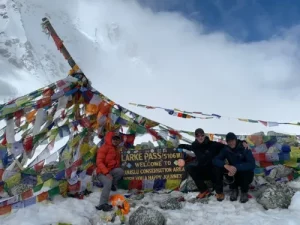
Wunderfull and unforgettable views and experiences Manaslu trekking including Larka pass 5106 meters.
We, father and son, did the 14 Days Manaslu Trekking in may 2022. We have very good experiences with Harka and Jay. They are very helpfull to make you a good time. From beginning to end they are pleased to help you to make up youre plans.
Germany, May 2022
Manaslu Circuit Trek with Himalaya Trip
We did the Manaslu Circuit Trek with Himalaya Trip and it was quite awesome. We had quite some luck because monsoon season was bit longer as usual. But it almost did not rain.
Big thanks to Jay our guide and Mesak our porter. They did a great job and were really flexible, so we could have influence in the program. Also open to all the question we had about Nepal and especially the valleys we were in.
Switzerland, September 2023
Cassandra & Cedric
Three Passes & Everest Base Camp

Pippa Jephcott
Pikey Peak Trek
Majid, Sara and Shane
Annapurna Circuit Trek
Reviews from the globe

Hi! Im Sara, from Spain! Good morning! Yesterday we arrived from our 11-day trekking in Gokyo. There were 3 people from Spain, and I don’t know how to express how happy I felt. From the beginning, Himalaya Trip has been attentive to us, with a welcome at the hotel and...

Incredible!
Hi! Im Sara, from Spain!
Good morning!
Yesterday we arrived from our 11-day trekking in Gokyo.
There were 3 people from Spain, and I don’t know how to express how happy I felt.
From the beginning, Himalaya Trip has been attentive to us, with a welcome at the hotel and explanation of the route, rental of necessary equipment, etc.
The most important thing for us has been the ease and comfort with which Ramesh (our precious guide) has taken care of us at all time.
Attentive to the food, to make sure we didn’t get cold, adapting the route day by day according to the needs of the team.
I only have words of gratitude for Ramesh, who I would recommend for any trekking in the world.
In addition to being a great guide and knowing all the mountains of Nepal perfectly, he is a great person, with a big heart.
We hope to repeat in the not too distant future and hopefully it can be with him, since he is already part of our family.
Thank you for everything, from the bottom of my heart.
Thanks!!!!


Had an incredible experience doing the Mardi Himal trek with Himalaya Trip. Our guide Jay and our two porters Umesh and Masak were all simply incredible people. I’m a photographer so always have odd requests for weird areas to access for better angles or even simply just extending time in...
Couldn’t recommend enough
Had an incredible experience doing the Mardi Himal trek with Himalaya Trip. Our guide Jay and our two porters Umesh and Masak were all simply incredible people.
I’m a photographer so always have odd requests for weird areas to access for better angles or even simply just extending time in certain areas and all requests were met with so much help from the team. Highly recommend

I had an amazing time trekking with Surpa, particularly as this was my first solo trek. Beautiful views doing the Mardi Himal trek over 4 days, Surpa was a great guide who organised everything so well for me, kept me well fed, supported a good pace the whole way and...
Mardi Himal: fantastic trek & wonderful guide
I had an amazing time trekking with Surpa, particularly as this was my first solo trek. Beautiful views doing the Mardi Himal trek over 4 days, Surpa was a great guide who organised everything so well for me, kept me well fed, supported a good pace the whole way and always cheerful. Would recommend, and I would happily have him as my guide again in the future. The organisation and booking with Himalaya Trip was great, really responsive on emails and Harka was so helpful in organising everything and meeting me in Kathmandu for a briefing before the trip. Thanks so much!
Our 4 day Mardi Himal Trek with guide Milan and porter Plekta was a wonderful experience. The manager Harka Gurung met with us over coffee in Kathmandu and briefed us about expectations as this was our first trek. After that our guide met us at our hotel in Pokhara, helped...
Once in a lifetime experience in the Himalayas
Our 4 day Mardi Himal Trek with guide Milan and porter Plekta was a wonderful experience. The manager Harka Gurung met with us over coffee in Kathmandu and briefed us about expectations as this was our first trek. After that our guide met us at our hotel in Pokhara, helped us rent equipment, and handled all logistics in between. Our first time in the Himalayas was unforgettable between all the unbelievable landscapes and scenery, and we were lucky to have MIlan and Plekta with us to experience it all. I can’t begin to describe how ethereal sunrise is over the base camp, but hopefully you’ll be able to experience it soon!
Temperature and Weather in Manaslu Circuit Trek
The temperature scale varies in the Manaslu circuit trek based on the time of the year. Summer months are characterized by increased temperatures all over, while winter temperatures remain below freezing.
Based on the weather conditions and temperature, spring (March to May) and autumn (September to November) are the best times for trekking in Manaslu region. Both seasons feature stable and favorable weather with mild temperatures, making them perfect for an enjoyable trekking experience. During the spring, you can see blooming rhododendron forests, and in the autumn, you can witness lush vegetation with vibrant fall foliage. The lower precipitation level offers excellent visibility, with crystal-clear views. Hence, spring and autumn are the best times for Manaslu Trek.
While it is possible to take the journey in summer and winter, they are considered shoulder months. Summer (June to August) is monsoon in Nepal. There is a chance of rain every day in hilly regions, and it will be cloudy, with a risk of landslides. Winter (December to February) is the coldest time of the year. It will be challenging to trek due to the heavy snow and freezing temperatures. Moreover, there is a high chance that high-altitude treks will close due to snow blocking the trails and mountain passes. There are very few trekkers on the trails, making it the perfect time for those seeking an extreme adventure and a tranquil atmosphere.
The table provided here estimates the temperature you can expect at various stopovers during your Manaslu Circuit Trek 11 days.
| Stopover | Spring Weather | Spring Temperature |
Autumn Weather | Autumn Temperature |
|---|---|---|---|---|
| Arughat (600m) | Warm, occasional rain | 15°C to 30°C | Warm, clear skies | 16°C to 28°C |
| Machha Khola (710m) | Warm, some rain | 10°C to 25°C | Mild, mostly dry | 12°C to 24°C |
| Jagat (1340m) | Cool mornings, mild showers | 8°C to 22°C | Cool, dry | 10°C to 21°C |
| Deng (1860m) | Cool, possible drizzle | 5°C to 18°C | Cool, mostly clear | 7°C to 17°C |
| Namrung (2630m) | Cool, crisp air | 0°C to 15°C | Cool, dry | 2°C to 14°C |
| Samagaon (3530m) | Cold mornings, dry | -5°C to 23°C | Cold, clear skies | 0°C to 10°C |
| Samdo (3860m) | Cold, windy | -8°C to 10°C | Very cold, dry | -2°C to 8°C |
| Dharamsala (4460m) | Very cold, windy | -10°C to 5°C | Very cold, dry | -5°C to 3°C |
| Bimthang (3720m) | Cold mornings, dry | -8°C to 8°C | Cold, clear | -5°C to 6°C |
| Tilije (2515m) | Cool, occasional showers | 5°C to 20°C | Mild, mostly dry | 6°C to 18°C |
Note: Temperatures during the night time are cold, reaching below 0°C in places from Namrung. Your tea house provides a sleeping quilt, but you might need a sleeping bag if it gets cold.
Why should you choose Manaslu Trek?
See Glaciers, Snowy Peaks, and Sunrise Views from Lho to Samagaon
The Manaslu Trek offers amazing views of some of Nepal’s tallest and most beautiful mountains. You can see Mount Manaslu (8,163m), the eighth-highest mountain in the world, along with Himalchuli, Ngadi Chuli, Ganesh Himal, and Shringi Himal. These peaks are covered in snow and look stunning, especially under a clear blue sky. Along the way, there are also many viewpoints like Lho Village, Shyala, and Samagaon, where you can enjoy sunrise and sunset views over the mountains. The Larkya La Pass (5,106 m) is the highest point of the trek and gives you an unforgettable panoramic view of the Himalayan range.
Peaceful Walk Through Rhododendron and Oak Forest
Trekking in Manaslu region takes you through exciting and wild trails. These paths go through calm forests, quiet villages, and peaceful mountain areas. Along the way, you’ll see many kinds of plants and animals. Some of them are rare and even endangered. The forests are filled with colorful rhododendrons, juniper, oak, and other wild plants, especially in spring. Because fewer people trek in this region, the trail feels peaceful and more natural, which is another benefit.
Buddhist Traditions and Village Life in Manaslu Region
Trekking in the Manaslu region is a rich cultural experience. People living here still follow their old way of life. Watching their daily routines, farming, and religious rituals gives you a special look into their world. Most of the people follow Buddhism, so you’ll see many Buddhist landmarks like chortens, mani walls, prayer flags, and old monasteries along the trail. These cultural sights, combined with friendly local villagers, make the trek more meaningful.
Spot Snow Leoprad and Other Wildlife During the Manaslu Trek
The Manaslu region is home to many wild animals, including some that are rare and endangered. Because of the changing landscapes, from deep forests to high mountain valleys, you can find many types of animals and birds. If you’re lucky, you might spot animals like the snow leopard, Himalayan Tahr, blue sheep, and even musk deer. The area is protected by conservation rules, which help keep the animals safe. For nature lovers, this trek is a great chance to explore Nepal’s amazing wildlife in their natural homes.
Can Beginners Trek to Manaslu Circuit?
Yes, beginners can do the Manaslu Circuit Trek 11 days with proper preparation. It is among the moderate to challenging treks in Nepal. However, it is not impossible for beginners. At the same time, one must not underestimate its difficulties.
The route takes you deep into the remote Manaslu region, which remains largely untouched by modernization. You must overcome tough terrains, high altitudes, and rugged landscapes, as well as long hours of hiking throughout the trek. All these factors make the Manaslu trek moderately challenging, even for experienced trekkers, so it is naturally difficult for beginners. However, beginners can still successfully complete the trek.

One of the most important things that beginners must not overlook is physical preparation. The trekkers must improve their physical stamina level and enhance their physical endurance. One way to achieve this is by engaging in physical training that strengthens the legs and improves cardiovascular health. Next, beginners must understand altitude sickness and its prevention. They must also choose an itinerary with adequate acclimatization days to minimize the risk of altitude sickness.
Furthermore, beginners looking to hike to Manaslu Base Camp should hire expert guides who will help them navigate the rugged terrains and keep them safe and secure. They must also hire a porter who will carry heavy luggage, leaving trekkers baggage-free. Likewise, they must choose the best time for the Manaslu Circuit with Larkya La Pass Trek to ensure a comfortable trek experience.
Panoramic Views of Manaslu, Himalchuli, Glaciers, and more
During the Manaslu Circuit Trek, you will be treated to a wide variety of stunning views that change dramatically as you ascend through different landscapes. It starts from beautiful subtropical valleys, passes through alpine forests, rugged mountain terrain, and eventually the high-altitude Larkya-La Pass. The scenery changes all the way from terraced farmland with cascading waterfalls to snow-capped peaks and glacial rivers. The difference in landscapes provides a great background during the trek, making every day very visually appealing.

Key Views Along the Trek
- Mount Manaslu (8,163m), the 8th highest peak in the world.
- Panoramic views of the Himlung Himal, Cheo Himal, and Kang Guru from Larkya-La Pass (5,160m).
- Budi Gandaki River Valley
- Snow-capped Peaks like Himalchuli (7,893m), Ngadi Chuli (7,871m), and Ganesh Himal.
- Glaciers and Glacial Lakes
- Tibetan Buddhist Monasterie
Walking Around Mani Walls, Chortens and Prayer Flags
The Nubri valley is home to old monasteries, stone walls and tall gateways called chortens, and each one comes with its own rules of respect. When you walk past a mani wall, a chorten or a prayer flags, always keep it on your right side and pass by in a clockwise direction. Before stepping into any temple, take off your shoes and hat at the door. If you want to take a photo inside a prayer hall, ask first. Do not touch statues, relics or the altar, and if you sit down inside, tuck your feet under you rather than point them toward the altar or a monk.
Beyond the temples, the whole upper Nubri valley follows an old rule called Shagya, which means no killing of animals. Past the village of Namrung, the community strictly forbids the slaughter of any animal, so please do not ask your teahouse host to prepare fresh chicken or goat meat for you. Some places may serve dried meat brought up from lower villages, but it is best to stick to simple vegetarian meals like dal bha. As for greetings, a “Tashi Delek” will bring a smile to local faces here, even though “Namaste” works fine too.
Distance, Duration, and Trail Details of the 117 km Manaslu Trek
The distance of the Manaslu Circuit Trek is around 117 kilometers (72.7 miles) walk and 374 km (232.39 miles) drive and usually takes 11 days to complete, depending on your starting point and pace. Most trekkers begin from Machha Khola, which offers a standard 11-day route back to Kathmandu. Others start from Barpak, adding two extra days, or from Barpak, which shortens the route by bypassing the lower sections.
The trekking trail passes through lush forests, deep river gorges, suspension bridges, traditional villages, and high alpine landscapes. It slowly gains elevation, giving your body time to adapt. On most days, trekkers walk for about 6 to 7 hours over gradual slopes, but some days can be longer and more demanding.
As you move higher, the terrain becomes rockier, narrower, and more remote, especially near the Larkya La Pass (5,135 meters), which is the highest point of the trek. This section includes steep uphill climbs and possibly icy trails, particularly in colder months. Although the trail doesn’t require technical climbing, the altitude, rough paths, and long walking hours make it a challenging adventure. Good physical fitness, proper gear, and mental preparation are essential for a safe and enjoyable trek.
Beautiful Side Trips on the Manaslu Circuit Trek Route
The Manaslu Circuit Trek is undoubtedly one of the most authentic Himalayan adventures in Nepal. What sets it apart is that several hidden side trips take you off the main trail and into untouched terrain. Here are some detours that you can take to make the trek more diverse and memorable:
Prok village to Kalo Tal
The Prok village to Kalo Tal is one of the most underrated side trips in the Manaslu region. First, you will trek on the main trail from Jagat to Philim and then to Ekle Bhatti. Then, you will continue along the river toward Deng and Bihi, from where you will start trekking on the side trail. You will start trekking on the upper trail that climbs toward Prok village. Based on our 11-day itinerary, you can take this side trek on Day 4. From Prok village, you will take a short and steep hike to Kalo Tal, a beautiful and mysterious alpine lake. The side hike adds an extra day to your itinerary.
You will trek through quiet forests and traditional settlements. Away from the crowded trail, these villages offer an authentic glimpse at the local village life. Kalo Tal, also known as “Black Lake” or “Death Lake,” gets its name from its mystical, dark, and mirror-like surface. Surrounded by rugged cliffs, the atmosphere around the lake is peaceful. It feels isolated and untouched by the outside world. The locals associate the hidden Kalo Tal with the spiritual energy, sacred, and ancient folklore. It is one of the least explored side trips on the Manaslu Circuit.
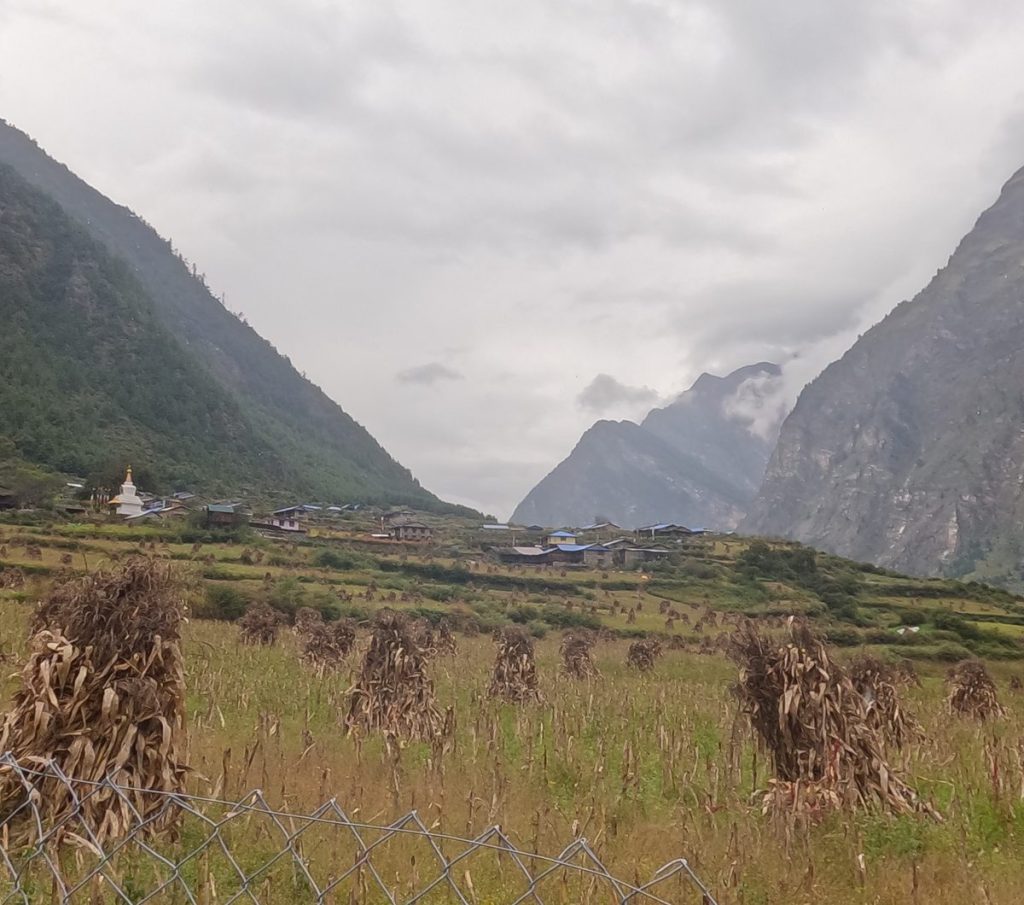
Samdo to the Tibet Border
If you want just a short side trek without adding extra days, you can hike from Samdo to the Tibet Border. On day 8 of the Manaslu Circuit journey, you will trek from Samagaon to Samdo, which takes only around 3 hours. As it is a short hike, you can easily integrate this detour into your itinerary. Please note that it adds an extra day to the itinerary.
The offshoot trail not only offers a chance to witness the barren, wind-swept terrain of the Tibetan Plateau but also to explore the ancient trade route. You will walk on the rugged path and cross the Rui La Pass towards the Tibet border viewpoint (Lajyung La area). The path was an historically important trade route between Nepal and Tibet. Similarly, you will gain insight into the unique cultural connection between the Manaslu region and Tibet. It is highly recommended for trekkers who love exploring new cultures and history.
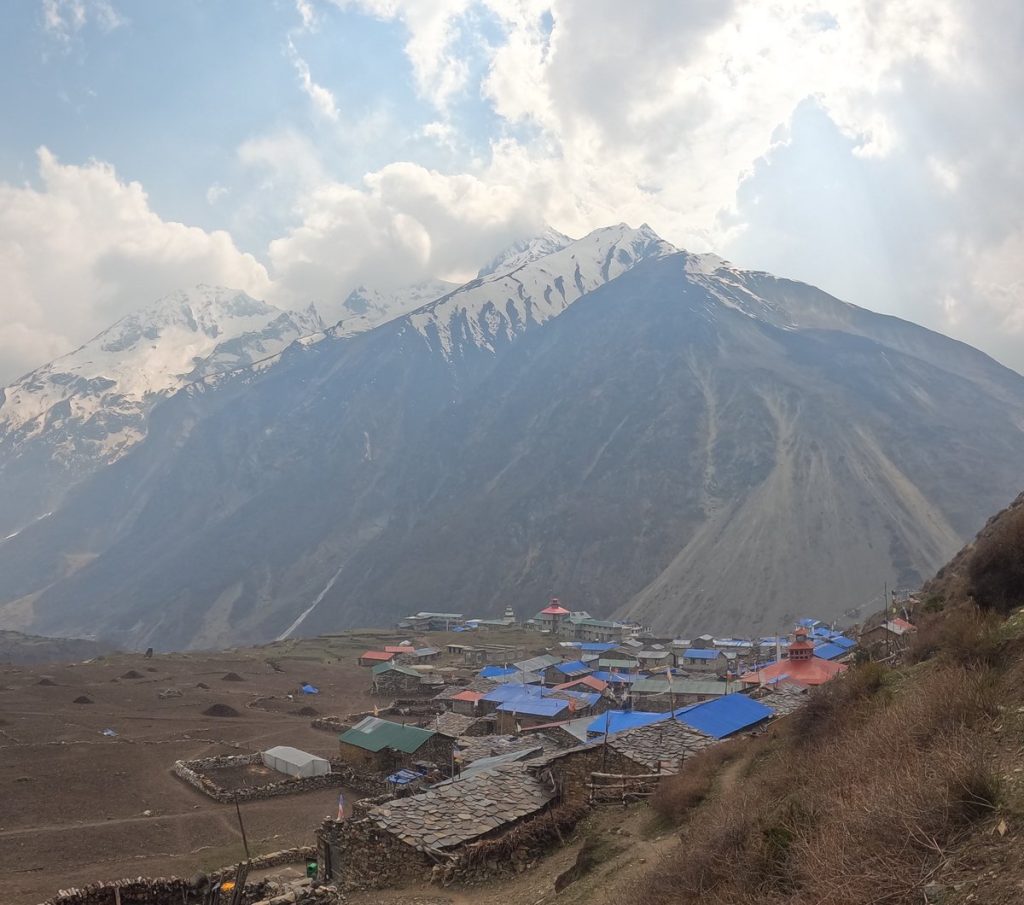
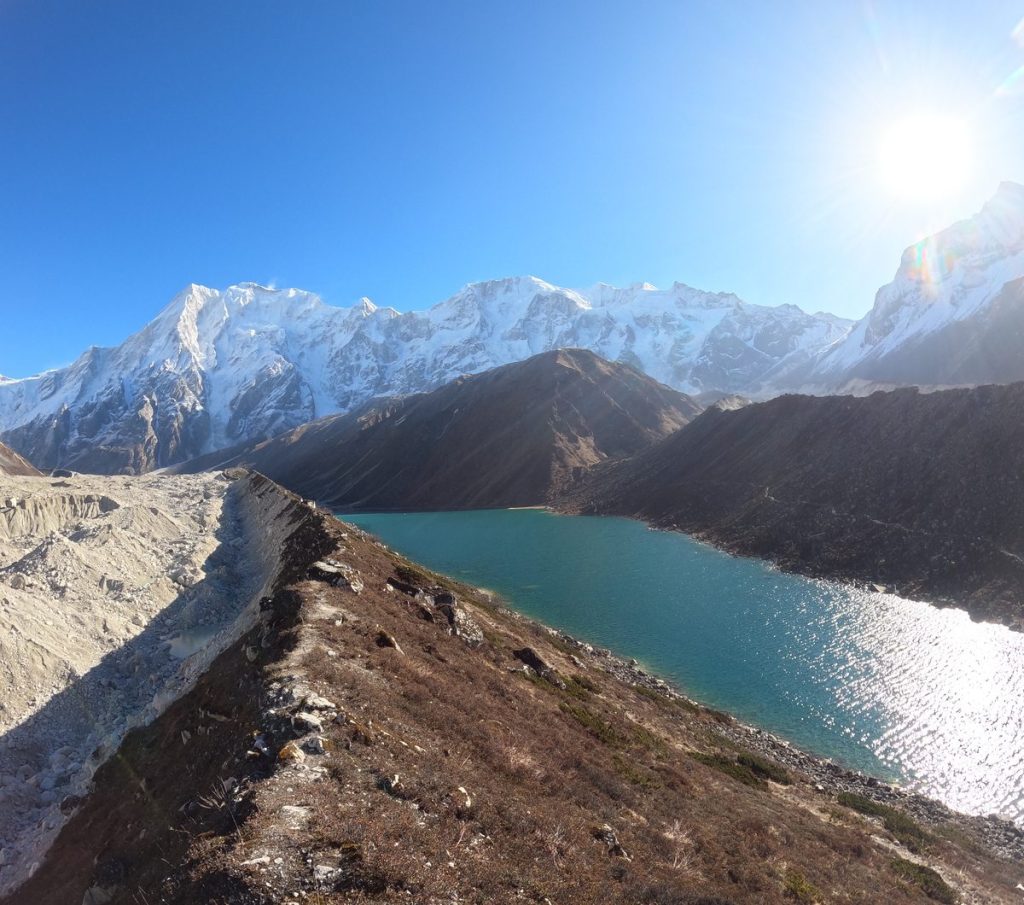
Bhimthang to Ponkar Tal
The Ponkar Tal is often visible from the top of the Larkya La Pass, but not many take the side trip. As per the standard Manaslu Circuit itinerary, trekkers usually follow the main trail from Bhimthang to Tilche. On our itinerary, it falls on day 10. To take the side hike from Bhimthang to Ponkar Tal, you have to split the day 10 into two parts, which adds an extra day. You will trek from Bhimthang to Ponkar Tal and return. The round trip takes around 3 to 4 hours. Then, the next day, you will head to Tilche.
The Ponkar Tal sits above the Bhimthang village at an altitude of around 4,200 m. It is a pristine glacial lake with turquoise and deep blue water. Depending on the sunlight, the water changes its color from icy blue to emerald green. You can see the reflection of the surrounding mountains on the clear water of the lake. Compared to other Himalayan lakes, Ponkar Tal is less crowded and feels remote. Hence, the atmosphere feels quiet, serene, and personal. It is also an excellent viewpoint that offers gorgeous views of Mount North Manaslu, Himlung, Phungi Himal , Cheo, and the surrounding glaciers, ridges, and snowfields.
Samagaon / Syala to Pungyen Gomba
One of the best ways to experience the spiritual richness of the Manaslu region is to take a side hike to Pungyen Gomba. You can easily take the side excursion to the gompa without adding extra days. The standard Manaslu Circuit Trek itinerary includes an acclimatization day at Samagaon. On the acclimatization day, you can hike to the Pungyen Gomba. It is also possible to hike from Syala, which is located slightly lower than Samagaon. It is a perfect add-on that requires no change in your original itinerary.
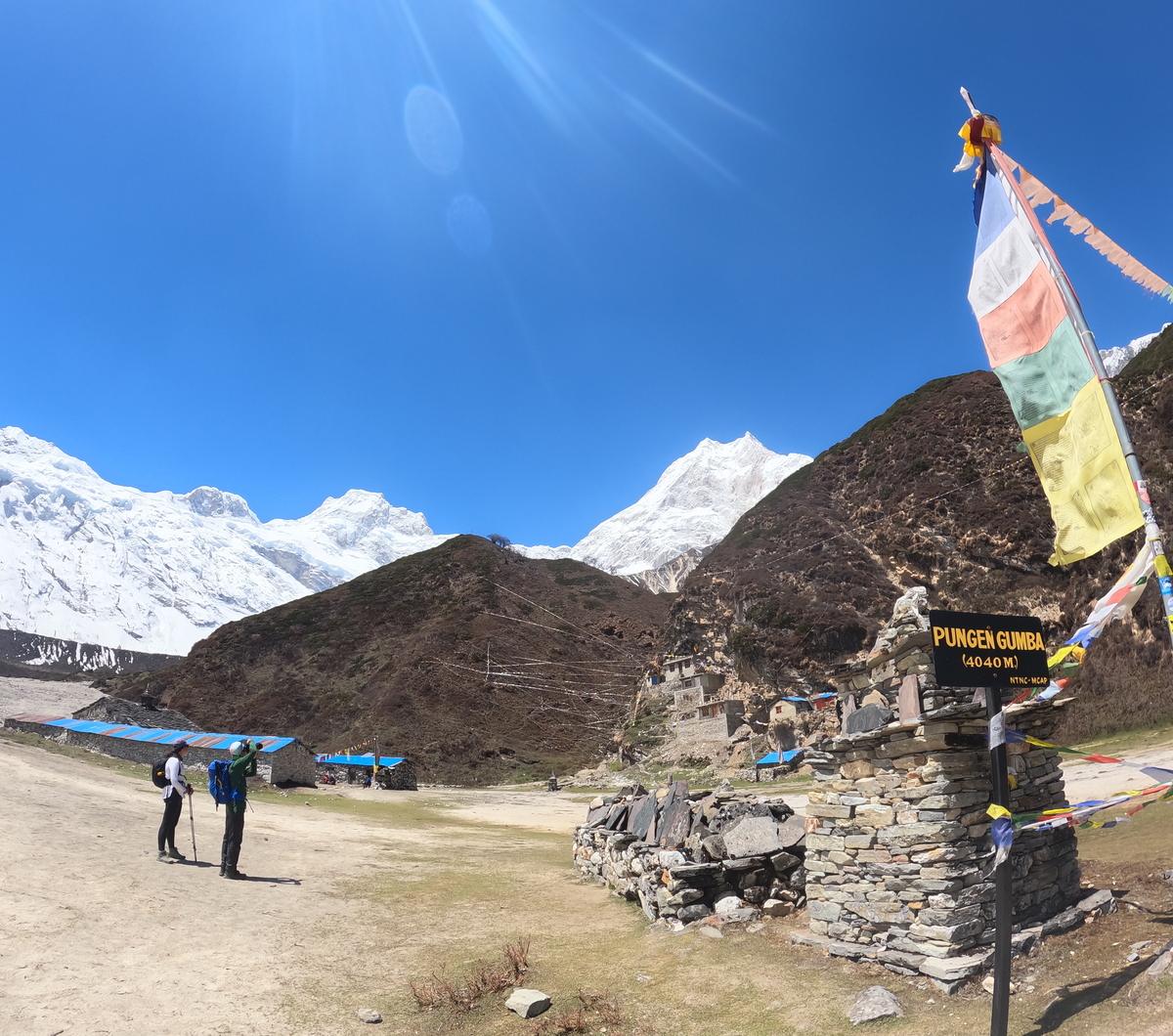
Pungyen Gompa or Puggen Gumba is a hidden monastery that sits below Mount Manaslu. It is located at an elevation of 4,000 m, right above Samagaon village. It is an age-old monastery and an important spiritual hub of the Manaslu region. It is a center for Tibetan Buddhists in the Nubri Valley. The Pungyen Gompa is a Buddhist nunnery where nuns reside, meditate, pray, and perform various religious rituals. Similarly, it offers a gorgeous view of snow-covered mountain peaks, open valleys, and glacial moraines. It is an ideal spot to immerse oneself in the spiritual and tranquil atmosphere of the Himalayas.
Bihi to Serang Gompa
Another hidden side hike along the Manaslu Circuit Trek route is Serang Gompa. The excursion fits on Day 4, when you trek from Deng to Namrung, you pass through Bihi before reaching Namrung. From Bihi, you will leave the main trail and climb uphill through the forest and ridge trail to Serang Gompa. It takes 6 to 7 hours to reach the gompa from Bihi, so you will need to add an extra day to the itinerary. The following day, you will descend from the gompa and rejoin the main trail to Ghap.
Hiking to Serang Gompa is ideal for an immersive cultural detour. Serang Gompa is a remote, spiritually important Buddhist monastery dating back over 500 years. It is located at an altitude of 3,100 m above Bihi village and in a sacred “Beyul.” The term Beyul translates to “hidden valley,” and locals consider it spiritually protected. The monastery is an important hub with a deep connection to Tibetan Buddhist culture and a crucial preservation site of ancient Buddhist tradition. Serang Gompa is a living spiritual sanctuary that connects you to the ancient Himalayan spirituality.
Annapurna Circuit Trek
The Annapurna Circuit Trek trail is not a side hike, but you can combine this classic trail with the Manaslu Circuit Trek naturally. Hence, we are including this on our list. After completing the Manaslu Trek at Dharapani, you can drive directly to Manang. From here, you will join the classic Annapurna Circuit Trek. Combining this trek will add 5 more days to the itinerary. Although the trekking duration gets slightly longer, you will get to explore two legendary trek destinations of Nepal.
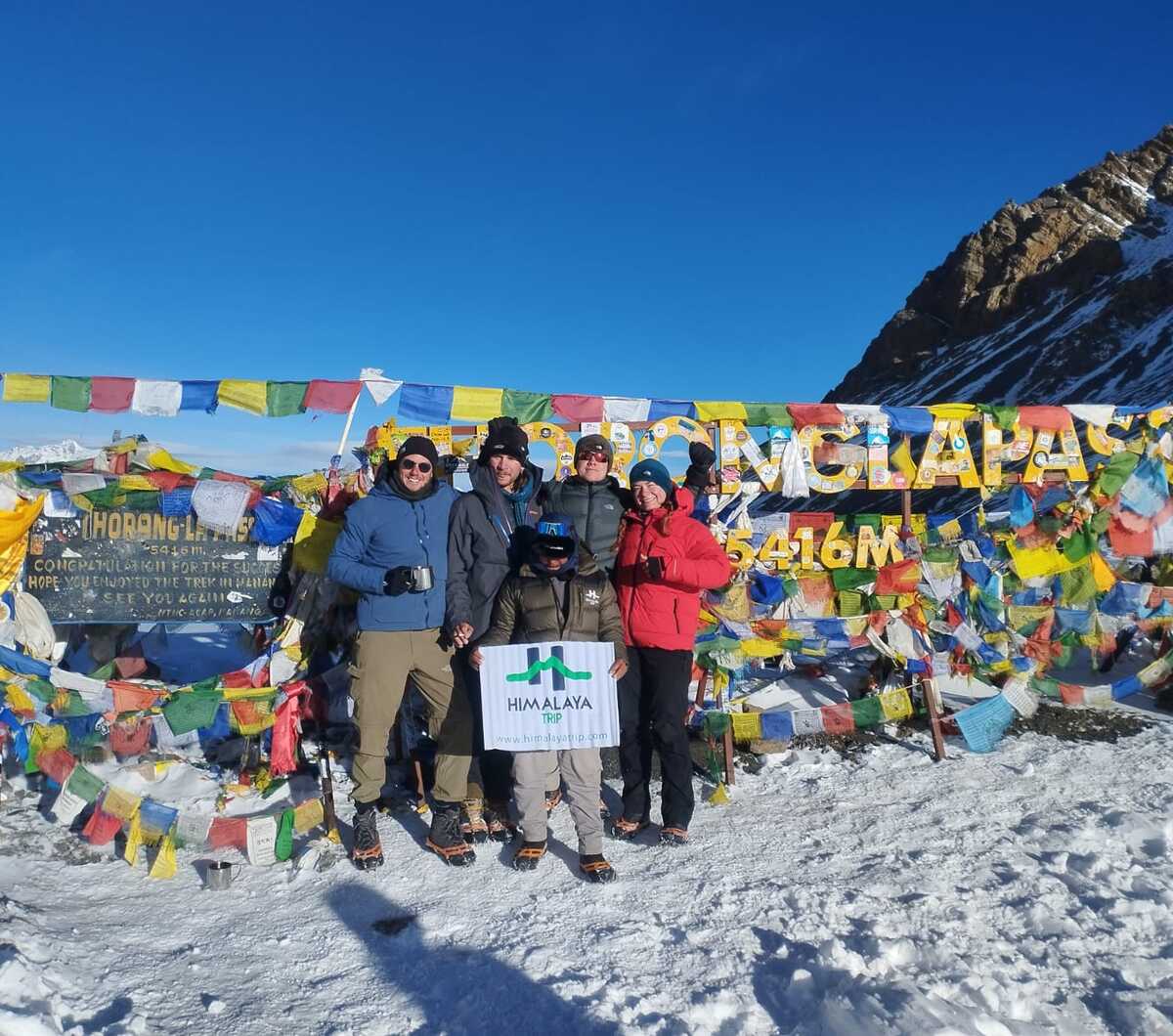
You will drive from Dharapani to Manang. Then, upon reaching Manang, you will take an acclimatization or rest day. Then, you will trek to Chauri Leddar and Thorong Phedi. From Thorong Phedi, you will cross the iconic Thorong La Pass (5,416 m) and descend to Muktinath. You will take a scenic drive from Muktinath to Pokhara to Kathmandu. In addition to the rich adventure, combining the Annapurna Circuit with the Manaslu Circuit allows you to explore diverse Himalayan landscapes and witness mountain views up close. This combination offers a complete Himalayan journey and an unforgettable trekking experience.
Note: The package pricing varies based on the number of days added. Adding extra days or extending into the Annapurna Circuit increases overall costs due to additional accommodation, meals, guide/porter services, and permits. For more information on additional costs or any other queries, contact us directly at info@himalayatrip.com or via WhatsApp at +9779851196388!
Understanding the Costs of the Manaslu Circuit Trek
The Manaslu Circuit Trek 11 days costs between $749 and $949 per person. Typically, the trek package includes the cost of meals, accommodation, and trekking permits. Accommodation prices in the area start from about $5 to $10 per night, and meals can cost between $25 and $30. As you go higher on the trails, trip costs tend to rise. Sometimes the trip can go over budget, so carrying extra cash is a good idea.
A licensed trekking guide costs around $30 per day, and a porter costs about $20. These costs cover their salary, food, accommodation, and insurance. Taking a local bus from Kathmandu to Machhakhola costs about $10 per person. A private jeep for up to 6 people will cost about $250 .
The Manaslu Trek cost can vary depending on several factors, such as trek duration, season, and services. For example, the price is slightly lower during the off-season for trekking. Trek agencies also offer group discounts for large groups. If you add extra services beyond those included in the package, the price will increase. Trekkers must also separate a budget for personal expenses that may occur during the Manaslu Trek.
Typical Day in Manaslu Circuit Trek
A day during the Manaslu Circuit Trek starts early, at about 7:30 am to 8 am. Each day brings you a new adventure filled with beautiful views and friendly people. After waking up and freshening up, we will have an early morning breakfast and start our trekking adventure. The trek will lead us to diverse landscapes, from rigid terrain to lush forests.
On the journey, we can witness the beautiful waterfalls and the breathtaking views of the surrounding mountains. On the way, we will also see a lot of prayer flags and chortens, reflecting the Buddhist culture. After walking for about 3 to 4 hours with frequent short breaks, we will finally reach our lunch stop. Lunch is usually served by teahouses. We will have a meal enjoying stunning views.
Resuming our journey while enjoying the trail and making memories, we will finally reach our destination between about 4 pm and 5 pm accept Samagaon to Samdo , Samdo to Dharmasala. We will then get to our room and take a short rest. The dinner is usually served at 6 -7 pm in the communal dining space. After having dinner, we will either get to bed or have a short chitchat with fellow trekkers.
Manaslu Circuit Trek vs Annapurna Circuit Trek
| Feature | Manaslu Circuit Trek | Annapurna Circuit Trek |
| Location | Manaslu Region, West-Central Nepal | Annapurna Region, Central Nepal |
| Highest Point | Larkya La Pass (5,106m) | Thorong La Pass (5,416m) |
| Trek Duration | 11-13 days | 10-17 days |
| Difficulty | Challenging | Moderate |
| Permits Required | Restricted Area Permit, Manaslu and Annapurna Conservation Area Permit, Chumnubri Rural Municipality permit. | Annapurna Conservation Area Permit |
| Permit Fees | 145 – 170 USD | NRS 3000 |
| Trekking Season | March-May, September-November | March-May, September-November |
| Crowd Level | Less crowded | More crowded |
| Accommodation | Basic teahouses | Well-developed teahouses, lodges |
| Cultural Experience | Rich Tibetan-Buddhist Culture | A mix of Hindu and Buddhist Culture |
| Guide | Compulsory | Not compulsory |
| Resupply Points | Limited | Frequent supply points and shops |
| Mountains Viewed | Over 23 mountains | 43 mountains |
| Wildlife | High chance of viewing snow leopards, blue sheep | Diverse but less compared to Manaslu |
You Can Also Check: Annapurna Circuit Trek vs Manaslu Trek
Accommodation during Manaslu Circuit Trekking
Teahouses are the most common means of accommodation in Manaslu Circuit Trek. As the trekking area lies in a remote region and at a high altitude level, getting a luxurious resting spot is not possible. However, you can find multiple teahouses across the way that offer you basic facilities. The houses built in this region are of wooden structure, usually multi-storeyed.
The rooms are usually shared with a bed, mattress, pillow, a blanket . The bathrooms are also usually shared, (2 Nights Samagaon and After the Larkya La 5106m tire night at Bimthang have attached bathroom) and you will get typical Nepali squats toilets in them. Usually, the kitchen and communal dining space are separated from the bedding space. Gathering in those communal spaces and having meals while sharing stories are the best things among trekkers.
Additionally, teahouses are equipped with Wi-Fi facilities, but they cost extra. Namaste (NTC ) mobile reception is available Manaslu Circuit route accept Dharmasala to Larkya La Pass. Hot showers are available with solar power (sunny day is hot, rainy or cloudy day can be cold shower) or gas shower, which also costs extra ($1-$2). Apart from these, these teahouses have a range of confectioneries, drinks, snacks, souvenirs, and alcoholic beverages that you can buy.
Food During The 11 Days Manaslu Circuit Trek
While trekking in Manaslu, you will have the opportunity to savor a variety of culinary delights. Teahouses along the trekking trail serve Nepalese as well as Continental dishes, allowing you to experience the region’s flavors. They offer a variety of options for breakfast, lunch, and dinner. The menu widens in lower regions and narrows in remote and high-altitude areas.
Additionally, the food is not what you would typically find in the city, so please manage your expectations. Since locals run the teahouses and eateries, the food is hygienic and fresh. Many teahouses along the Manaslu Circuit Trek route have a coffee machine. So, if you are a coffee lover, you can still enjoy a warm cup of coffee while taking in the serene Himalayan scenery.
- Breakfast: Simple Breakfast (Eggs, any item has-brown potato, toast or Tibetan Bread, Pancake, Muesli, Oat Porridge, etc.)
- Lunch and Dinner : Nepali Thali (Plain Rice, Lentil soup, Potato Curry, Green Vegetable, Papadam, Tomato Hot spicy, Chicken curry optional), Macaroni, Spaghetti, Potato item, Mo: Mo or dumplings, Pizza, Fried Rice, Fried Noodles, French fries, etc.
- Dessert: Fresh fruit (apple, orange, pomegranate, banana, and any seasonal fruit) served as a sweet dessert.
Here are some local foods you must try during your Manaslu Circuit Trek if you want to experience authentic delicacies:
- Corn/buckwheat/millet flour Dhido with Nettle (Sisno) soup or Sukuti ( dry meat ),
- Su-cha (better/ salt tea),
- Chhaang (local beer ) made of millet, barley, rice,
- Tongba, made of millet
- Tsampa porridge,
- Thukpa,
- Yak Cheese and Churpi
- Tibetan Bread, etc.
Note: If you have any specific dietary requirements for meals during the trip, please inform your guide in advance so that they can make the necessary arrangements with the teahouse kitchens. Additionally, the package does not include all soft, hot, and hard drinks.
Water Bodies in Manaslu Circuit Trekking
The Manaslu region has many small streams and glacial lakes that come from the high mountains. Two main rivers, the Budhi Gandaki and Marsyangdi, start from the Manaslu mountain range. These rivers are part of the larger Saptagandaki River system.
Likewise, the higher mountain ridges are home to clear, peaceful glacial lakes. These lakes are the sources of strong Himalayan rivers. Some important lakes in the area are Kalo Tal, Birendra Lake, and Ponkar Lake. These rivers and lakes add to the beauty of the trek, offering trekkers a full natural experience with fresh water, calm spots, and great scenery.
Can We Trek Manaslu Circuit Solo?
Yes, you can trek the Manaslu Circuit solo under the updated 2026 rules in a restricted area. However, anyone trekking to Manaslu must be accompanied by a government-registered trek leader or guide. A government-approved trekking guide ensures safety, provides local expertise, helps in navigation, and serves as a communication bridge between locals and trekkers. In the event of unforeseen circumstances, your mountain guides will take control. They will take action that best ensures trekkers’ safety. Hence, they play a crucial role in making the journey safe and a more enriching experience.
Solo trekkers can only obtain permits for the route through a registered trek agency. The stretch from Jagat to Bhimthang along the route is a secluded, restricted area. Nepal has separate provisions for access in restricted areas before. The government controls these areas due to their geopolitical location, delicate ecosystems, environments, and cultures, which have made them a restricted area of the country. The Manaslu Trek can be done solo with a trekking guide despite its restricted status.
Trek Difficulty of Manaslu Circuit
The Manaslu Circuit Trek in Nepal is challenging due to its high altitude, rocky terrain, and remote location. Its difficulty depends on how fit you are and how much stamina you have. However, the trek is considered a moderate to challenging venture. The highest point is Larkya La Pass (5106 m), where you might experience Acute Mountain Sickness (AMS). Similarly, the long duration of the trek is not for the faint of heart. You must navigate steep trails, both uphill and downhill, on rough and rocky terrain. The long day trekking, i.e., 5 to 7 hours, is demanding even for experienced trekkers.
Nonetheless, the trail to Larkya La Pass is rough and rocky, with a steep ascent. It is the most demanding part of the journey. Similarly, the Manaslu region is one of the most isolated places in Nepal. Hire an experienced guide and porter for your trekking in the Himalayas. Since there are no proper roads, it’s hard to find cell signals and electricity in most areas. Hence, trekkers can get mentally exhausted or stressed. It can hamper the success of your trek. It’s a good idea to start a fitness routine at least a few months before the trek.
Do we get Acute Mountain Sickness (AMS) during the Manaslu trek
Yes, Altitude sickness is quite common on the Manaslu Circuit Trek, especially at higher elevations like Larkya La Pass, which is over 5,000 meters (16,404 feet). The risk of altitude sickness increases significantly above 2,500 meters (8,200 feet) because oxygen levels drop, making it harder for the body to adjust. The symptoms of altitude sickness are headache, fever, nausea, shortness of breath, fatigue, etc. These symptoms occur during the regular Acute Mountain Sickness; however, there are more serious conditions as well.

High Altitude Pulmonary Edema (HAPE) and High Altitude Cerebral Edema (HACE) are two of the serious forms of altitude sickness. In HAPE, the condition affects the heart and lungs of the victims, and HACE affects the brain of the victim, as both of these conditions can be fatal. Hence, before going out to experience the tough high-altitude trek like the Manaslu Circuit. Here are some ways to minimize or prevent altitude sickness during the Manaslu Circuit Trek.
- Proper acclimatization is needed, which means at least a day or two days of rest.
- Trek higher and sleep lower to get used to the lower oxygen levels.
- Stay hydrated during the two weeks of the trek.
- Avoid taking alcohol and caffeine during the high-altitude trek.
- Focus on having healthy diet foods filled with proteins and carbohydrates, and avoid having meats as they might be unhygienic.
In our 11 Days Manaslu Circuit Trek itinerary, we have an acclimatization day at Samagaun. The village is located at an altitude of 3,520 m and is a popular stop for acclimatization. It is at a perfect altitude for trekkers to rest before moving to higher-altitude areas like Samdo (3,875 m) and Larkya La Pass (5,106 m). There are also several side trips close to the village, perfect for acclimatization hikes. Trekkers can follow the “climb high, sleep low” principle to help their bodies adapt to high altitude and low oxygen levels.
The acclimatization day at Samagaun is also a strategic altitude-training day. Some of the side-hike options from Samagaun include Manaslu Base Camp (4,800 m), Birendra Lake (3,690 m), and Pungyen Gompa (4,000 m). After the short hike, trekkers will return to the village to sleep at a lower altitude. In addition to the acclimatization days, our guide also takes special care and precautions to keep our trekkers safe. Our guides are licensed and experienced professionals. They are trained to recognize the early symptoms of altitude sickness and take immediate action to ensure the trekker’s safety.
During the trek, they will closely monitor trekkers for signs of AMS. They also use a pulse oximeter to check the oxygen saturation levels of the trekkers. Similarly, the guides manage the walking pace and encourage hydration. In emergencies, they will swiftly take action to prioritize the trekker’s safety. From providing immediate first aid to descending to a lower altitude or coordinating a helicopter evacuation, the guides will take the proper action. So rest assured, you are in safe and experienced hands throughout the trek with Himalaya Trip.
Costs and Process for Manaslu Trekking Permits
The permits serve as a form of security, as the authorities can monitor every trekker’s route around Manaslu. These permits help to regulate tourism and preserve the environment and local culture. Similarly, revenue from permits supports local development projects and conservation efforts in the Manaslu Conservation Area. Trekkers must obtain a Manaslu Conservation Area Entry Permit (MCAP) and an Annapurna Conservation Area Entry Permit (ACAP) for the Manaslu Circuit Trek. Similarly, trekkers must also now obtain the local permit, known as the Chumnubri Rural Municipality Permit.
The route also lies within Nepal’s restricted region, which is why trekkers wishing to trek the Manaslu Circuit must also obtain a Manaslu Restricted Area Permit (RAP). With the updated rules for 2026, solo travelers are allowed to trek in Manaslu. The reason for issuing this permit is that the part of the route lies close to the Tibetan border, which raises security concerns. It also helps efficiently regulate tourists and trekkers, ensuring responsible travel practices.
Trekkers can obtain the required permits in Kathmandu through a registered trek agency. Here are the fees for all the permits necessary for the 11 Days Manaslu Circuit Trek:
| Permits | Costs |
| RAP |
|
| MCAP |
|
| ACAP |
|
| Chumnubri Rural Municipality Permit (new) |
|
Benefits of Booking Manaslu Circuit Trek with Himalaya Trip
Himalaya Trip is one of the most renowned trekking and tour agency in Nepal. Our location is based in Kathmandu. With several years of experience under our belt, we are dedicated to providing excellent travel and trekking experience to our travelers. Here are some of the reasons for choosing the Himalayan trip.
- Recommended on TripAdvisor – We are one of the most recommended tour operators on TripAdvisor.
- Fast response – We provide fast communication and response service, which includes immediate booking or cancellation of tours.
- Small group private trek – We provide an itinerary package for small group or private trek. This is ideal for small families or as a shared trek for budget-friendly options.
- Safety is the top priority – Our first priority of the trek or tour of any kind is the safety of our trekkers and tourists without any compromise.
- Tailor-made itinerary- We also provide a tailor-made itinerary that is suitable for each individual trekker or tourist.
- Seasonal package – Different types of trekking and tour packages are available based on the condition of the season.
Trips You May Like
Annapurna Circuit Trek
10 Days
Adventure Treks
USD 675 per person
Tsum Valley Manaslu trek
19 Days
Adventure Treks
USD 1,399 per person