Winter and Monsoon Special Offer! Get 5% off on all trekking packages in Nepal . Visit during June , July, August, December , January and February and take advantage of this limited-time deal.

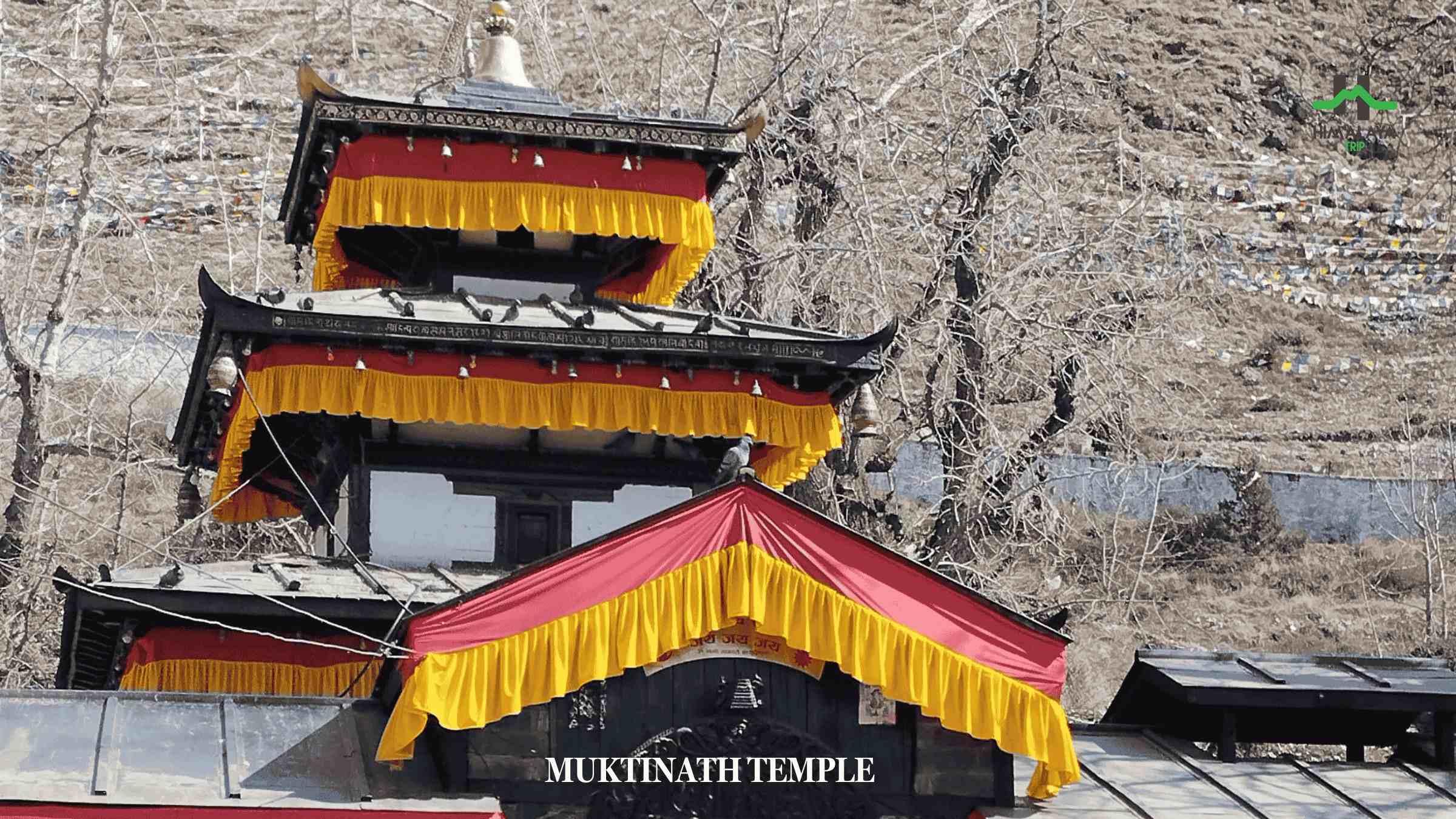
Muktinath Temple
Muktinath Temple is a sacred jewel of Nepal, located in the heart of the Himalayas, in the trans-Himalayan Mustang region. It is a revered site for both Hindus and Buddhist communities. At an altitude of 3,710 m, the temple draws pilgrims and visitors from around the world. The pilgrims visit the temple as a place of salvation, meditation, and divine energy. Meanwhile, trekkers stop by the holy temple to enjoy the surrounding views, immerse themselves in the local culture, and connect with inner spirituality.
What makes Muktinath unique from other temples in Nepal is the harmonious blend of spirituality and natural beauty. It is located in a serene mountain setting with snow-capped mountains as a backdrop. Similarly, the temple reflects the rich religious tapestry, unity, and deep-rooted cultural harmony. Visitors can see the unique fusion of Hindu and Buddhist iconography. For Hindus, it is the place of salvation, and for Buddhists, it is a site of enlightenment. It makes Muktinath a unique pilgrimage destination and a common stop during the Annapurana Circuit Trek or the Mustang Trek.
Want to know more about this holy pilgrimage site? Then make sure to read until the end. In this blog, we will tell you everything you need to know about Muktinath Temple. Whether you want to take a spiritual visit, stop by during the trek, or explore the culture, we will provide you with all the necessary insights. From the temple’s history and religious significance to permits, routes, best seasons, and other related tips, we have got you covered. This blog will cover both the devotional and adventurous aspects of Muktinath in equal depth. Let’s begin!
Table of Contents
What is Muktinath Temple
Muktinath Temple is one of the most sacred pilgrimage sites in Nepal, located in the Mustang district and at the foot of the Thorong La Pass. The name Muktinath comes from two Sanskrit words: “Mukti,” which means liberation or salvation, and “Nath,” meaning lord or protector. Hence, the name of the temple translates to the “Lord of Liberation.”
The main temple is dedicated to Lord Vishnu, the Hindu god believed to be the guardian of the universe. He is one of the three most important gods in Hinduism who preserves and protects the universe. Within the temple’s complex are monasteries and shrines that Buddhist devotees worship. Various rituals are performed by both Hindus and Buddhists at Muktinath Temple. It is one of the fine examples of religious harmony and coexistence between Hinduism and Buddhism.

In addition to the shared spiritual space, the temple embodies all five elements of nature. These elements are believed to exist together in their natural form, which enhances the Muktinath Temple’s sacred significance. These elements not only exist in symbolic form but can be witnessed physically and experienced. The five elements are:
- Fire (Agni): The sacred, eternal flame at Jwala Mai Temple represents the element of fire. The flame is fueled by natural gas that seeps through the earth and burns continuously. It is a natural and extraordinary phenomenon worshipped by both Hindus and Buddhists.
- Water (Jal): Within the temple courtyard, there are 108 sacred water spouts known as Muktidhara. These spouts represent Jal, and pilgrims bathe under them as a ritual of purification.
- Earth (Prithvi): The Muktinath Temple, which stands on the Himalayan terrain of Mustang. It symbolizes stability, grounding, and a raw, natural form of the earth element.
- Air (Vayu): Strong mountain wind flows through the Mustang valley. It sweeps through the temple, which represents the element of air. The constantly flowing air represents life force and connection with the physical and spiritual realms.
- Sky (Akash): The open Himalayan sky above the Muktinath temple symbolizes the space and infinity. It creates a deep sense of connection to the cosmos and the divine.
The Muktinath temple is more than just a place of worship for pilgrims. It symbolizes liberation, unity, and harmonious existence of the natural elements. Whether you visit the temple for religious devotion, cultural exploration, or to experience the natural beauty of the Himalayas, it is a deeply transformative and spiritual journey.
History of Muktinath Temple
The history of Muktinath Temple is not just a legend, and its origins are documented in ancient scriptures and sacred literature. According to Sri Vaishnava literature, the temple was historically known as Tiru Salakkiramam. It is also celebrated in the Nalayira Divya Prabandham, a collection of 4,000 Tamil hymns composed between the 7th and 9th centuries CE by the Alvar saints. These hymns describe Muktinath as a sacred place of divine liberation and the earthly abode of Vishnu. These highlight the spiritual importance of the temple before the present temple structure was built.
Queen Subarna Prabha Devi, the wife of King Rana Bahadur and daughter-in-law of King Prithvi Narayana Shah, the unifier of Nepal, constructed the present Muktinath Temple around 1815 AD. The temple is built in a pagoda-style structure, reflecting the architectural style of the early 19th century. However, the site itself is much older, and the statue of Vishnu existed long before the current temple was built.
Historians believe the site was worshipped for centuries, possibly even thousands of years. Since the temple embodies natural elements, early sages and pilgrims worshiped the site for thousands of years. During the medieval period, Mustang became part of the Kingdom of Lo. It resulted in the strong influence of Tibetan Buddhism in the area. Meanwhile, Hindu pilgrims from southern Nepal and India continued to visit Muktinath. Before the pagoda-style temple, there was likely a small shrine or an earlier structure. The temple lies near the ancient trade routes between Nepal and Tibet. Hence, the pilgrims traveling between India and Tibet would stop here for worship and rest.
At present, Muktinath is one of the most important pilgrimage sites in Nepal. The temple is now a part of the Annapurna Conservation Area, turning it into a natural heritage site. It attracts thousands of visitors every year, including Hindu and Buddhist devotees, and national and international trekkers. Despite the modernization, the core belief of visiting Muktinath Temple remains the same, i.e.,it can free a person from the cycle of birth and death.
Religious Significance of Muktinath Temple
There are several deeply rooted myths associated with the Muktinath Temple that make it a religiously significant site in Nepal. Let’s take a look at the Hindu and Buddhist mythological beliefs about the temple:
Why Hindus Consider Muktinath Sacred
There is a fascinating legend linking Muktinath Temple with Lord Vishnu. According to the myth, Goddess Vrinda (or Tulsi), who was a devoted follower of Lord Vishnu, cursed him after a complex divine misunderstanding. The curse turned Vishnu into a Shaligram stone, a sacred fossilized ammonite. Muktinath was the place where Lord Vishnu was freed from the goddess’s curse. He regained his divine form and attained liberation or moksha. Hence, Hindu pilgrims visit Muktinath as a place of liberation, and Shaligram stones are also worshipped there.
The pilgrims bathe in the sacred water and worship Vishnu at the temple. They believe it will cleanse their sins and allow them to attain moksha. Devotees also take Shaligrams home, which are found along the Kali Gandaki River. These sacred stones are believed to bring protection, prosperity, and spiritual blessings to the household. The five elements of nature associated with the temple are known as “panchabhoota,” and are central to Hindu cosmology. During festivals like Makar Sankranti, pilgrims from India and Nepal take the Muktinath yatra. They worship in the temple, perform rituals, take baths, and receive blessings for salvation.
Why Buddhists Consider Muktinath Sacred
Buddhists call the Muktinath Temple Chumig Gyatsa, which translates to “Hundred Waters.” It is a sacred tantric site. Buddhist devotees consider the idol in the main temple to be Avalokiteśvara, one of the most important figures in Mahayana and Vajrayana Buddhism. The deity is known as the Bodhisattva of Compassion. Similarly, in Vajrayana Buddhism, the temple is believed to be inhabited by dakinis, divine female energies or goddesses who are sky dancers. These energies are associated with wisdom, transformation, and enlightenment.
The Muktinath site is one of the twenty-four Tantric places, and the natural elements are considered as manifestations of these spiritual forces. Likewise, according to Tibetan Buddhism, Guru Rinpoche (Padmasambhava) visited Muktinath in the 8th century. He mediated there and blessed the site. Therefore, Buddhist devotees believe it to be a spiritually powerful place where spiritual realization is easier to attain. Like Hindus, Buddhists also consider the 108 water spouts within the temple to cleanse negative karma and purify those who bathe under them.
There are small Buddhist monasteries scattered around the Muktinath Temple. Monks and nuns perform daily prayers and rituals. The nuns around the complex are considered to be Dakinis and descendants of the women who were taught by Padmasambhava when he visited Muktinath. There is also a statue in the Mharme Lhakhang Gompa within the temple premises, which is believed to be built by Padmasambhava in his own image before his departure to Tibet. Buddhist pilgrims visit Muktinath during festivals like Saga Dawa and Losar.
The 108 Water Spouts at Muktinath
We have been mentioning the 108 water spouts in Muktinath. You might be wondering what these might be? These water spouts are stone taps carved in the shapes of a cow or bull heads. They have spiritual significance and are also known as “Muktidhara.” These water spouts symbolize strength, protection, and auspiciousness.
The water from the Gandaki River directly flows from these Muktidharas. The river itself is considered one of the holiest rivers in the region. Water flows continuously from the river year-round, even in winter. All the spouts have their own individual symbolic importance. But together these spouts represent the cosmic energy of Lord Vishnu. Pilgrims believe bathing under all the 108 Muktidharas cleanses one’s sins and brings them closer to moksha. The ritual of passing under each spout is a deeply meditative practice. Many pilgrims chant mantras while others silently pass under the spouts.
In both Hinduism and Buddhism, the number 108 is considered sacred. It symbolizes spiritual completion, wholeness, and cosmic order. Usually, the pilgrims start at the first spout and progress in order. They let the icy water pour over them at each station. It is challenging to run under the freezing water of 108 water spouts, but it is spiritually uplifting. Similarly, the experience is more immersive and represents endurance and devotion.
Unlike many holy sites, where holy water is limited to a fountain or symbolic, the Muktidharas of Muktinath are alive and accessible to devotees. One can cleanse them physically and mentally as well as connect with nature and divine power.
What You Can See from Muktinath Temple
Aside from the temple, monasteries, and water spouts, Muktinath Temple is also a vantage point for witnessing some of the most spectacular Himalayan scenery in the Annapurna region. From the temple complex, you can see the world’s 7th-highest peak, Mount Dhaulagiri (8,167 m). The mountain stands tall on the northern horizon, its snow-covered peaks clearly visible. Similarly, you can see the mountains such as Tukuche Peak (6,920 m), Nilgiri Himal (7,061 m), and Tilicho Peak (7,134 m). The snow-covered jagged peaks against the high-altitude desert landscape of Mustang create a spectacular visual feast. It makes the Muktinath Temple one of the best spots to witness the raw beauty of the Himalayas.
The surroundings of the Muktinath Temple are semi-arid or desert-like. It is a classic Trans-Himalayan landscape with wind-eroded cliffs and gray and ochre colored rock formations. As the area is barren, there is only sparse vegetation. The entire scenery feels vast and raw. The scenery looks even more surreal in the early morning. When the first light of the sun hits the snowy peaks, it glows in golden hues. The shifting shadow adds depth to the valleys. Similarly, the sky also changes its color to red, orange, and pink.
Mornings are also the best time for pilgrims to engage in spiritual reflection. Likewise, photographers can capture gorgeous views of the mountain panoramas and the landscapes. The serene atmosphere and beautiful scenery of the Muktinath temple have also made it one of the best locations for shooting Nepalese films and music videos. The directors seek to capture the area’s otherworldly beauty, spiritual aura, and cinematic landscapes. These create a visually captivating and emotionally powerful setting. All these factors make Muktinath not just a sacred site but also a cultural and visual landmark of Mustang.
How to Reach Muktinath Temple
It requires a mix of flights, road travel, or trekking to reach the Muktinath Temple. Each route offers a unique experience, but they all lead to the same destination. The mode of transportation can also vary depending on the budget, time period, and preference. Take a look at these three travel options to reach the temple:
By air:
The fastest and most comfortable way to reach Muktinath Temple is via air. However, there is no airport around the temple. First, you have to fly from Kathmandu to Pokhara, then take a short flight to Jomsom. From Jomsom, you have to take a 1.5 to 2-hour jeep ride to Muktinath. It is also possible to trek, but it takes longer. The airway is the best option for those with limited time, those who want to avoid long road journeys, or both. However, taking the airway is the most expensive option.
By road:
The second option is to take the roadway. You can either fly or drive from Kathmandu to Pokhara. From Pokhara, you can take a bus or a jeep to Muktinath. You will drive past traditional settlements such as Beni, Tatopani, Ghasa, Marpha, and Jomsom. Note that the road journey is longer, so you may need to split it over two days. However, driving through the changing landscape offers an opportunity to witness the changing scenery. It is the most popular option among pilgrims that balances comfort and budget.

By trek:
For adventure seekers and travelers seeking more immersive experiences, choose to trek to Muktinath Temple. Most trekkers take the Annapurna Circuit Trek and descend to the temple after crossing the Thorong La Pass. However, trekking to the temple takes several days. It is also physically and mentally challenging. On the other hand, you will get to experience the thrilling trail, local culture, stunning Himalayan landscapes, and more before reaching Muktinath.
Where to Stay Near Muktinath
The accommodation near Muktinath Temple is centered in Ranipauwa. It is a small village that sits right next to the temple. The accommodation is simple with basic facilities and amenities. These are mainly designed for pilgrims, so you will mostly find lodges or guesthouses with simple shared rooms. Most rooms have twin beds and shared bathrooms. Occasionally, you may find rooms with attached bathrooms. You will have to pay additional fees for services such as charging devices, hot water, Wi-Fi, etc. Also, note that some accommodations may provide hot water in a bucket.
Staying in Ranipauwa gives you the advantage of reaching the temple early. But if you want a more comfortable stay, you can travel to Jomsom. It takes 1.5 to 2 hours to drive from Muktinath. In Jomsom, you can find a wide range of hotels with better facilities. You may find rooms with private bathrooms, hot showers, Wi-Fi, charging for electrical devices, etc. Similarly, there are better restaurants, shops, cafes, and bakeries in Jomsom.
The rooms in both Ranipauwa and Jomsom get filled up quickly during peak seasons. The number of pilgrims as well as trekkers on the Annapurna Circuit at these times of the year. It is highly recommended that all travelers book their accommodation in advance.
Permits Required to Visit Muktinath
The Muktinath Temple is situated within the Annapurna Conservation Area in the Annapurna region. As a result, all foreign visitors must get the Annapurna Conservation Area Permit (ACAP). Another permit necessary to visit the holy temple is the TIMS Card (Trekkers’ Information Management System). It is used to gather information about trekkers and track their movements to ensure safety while traveling.
The ACAP permit costs NPR 3,000 per person for Non-SAARC Nationals and NPR 1,000 per person for SAARC Nationals. Meanwhile, the TIMS Card costs NPR 2,000 per person for Non-SAARC Nationals and NPR 1,000 per person for SAARC Nationals.
ACAP and TIMS can be obtained from the Nepal Tourism Board in Kathmandu or Pokhara, or through a registered trekking agency. You have to provide a copy of your passport, passport-size photo, and itinerary.
There are multiple checkpoints on the way to the Muktinath Temple, such as Jomsom, where you have to show the permits. Hence, you must carry them with you at all times during the visit. The fees collected from the permits are used for trail maintenance, environmental conservation, and local community development.
Perfect time to visit Muktinath
The perfect time for the Muktinath tour is during spring (March to May) and autumn (September to November). These seasons are also peak times for trekking and travel in Nepal. The weather conditions and temperatures are ideal for visiting the temple. During these times, rainfall is unlikely. Hence, the trail is dry and stable. The visibility is also excellent, so the chances of weather-related delays and obstructions of the mountain views are minimal.
Here is the month-by-month table of the weather conditions for the Muktinath Temple visit:
| Season | Month | Weather | Travel conditions |
| Spring | March | Beginning of spring, the temperature becomes warmer, and there are fewer crowds | Decent |
| April | Stable weather and comfortable temperature | Good | |
| May | Stable weather, warm temperature, and good visibility | Good | |
| Summer | June | Start of monsoon season, possibility of flight delays | Acceptable |
| July | Heavy rain, poor visibility, and weather-related delays | Avoid | |
| August | Heavy rain, poor visibility, and weather-related delays | Avoid | |
| Autumn | September | Monsoon gradually leaves, visibility improves, and fresh air | Good |
| October | Peak season, most favorable weather, and excellent visibility | Best | |
| November | Stable weather, crisp air, clear views, and fewer crowds than in October | Best | |
| Winter | December | Temperature drops, mornings get colder, and skies are clear | Not ideal |
| January | Freezing mornings, cold temperatures, and possible snow | Not ideal | |
| February | Cold but gets warm slightly | Not ideal |
For the best visiting experience, especially for first-time visitors, spring or autumn is ideal. Since the weather is the most stable, the trekking conditions are comfortable, and you can enjoy the best mountain views. The trails are also safe, and photographers can capture the vibrant landscape, crisp skies, and clear mountain views. The months of these seasons are also ideal for bathing at the 108 sacred water spouts or for participating in the Muktinath Temple rituals to create unforgettable memories.
Conclusion
The Muktinath Temple is a site where devotion, legends, and the grandeur of the Himalayas come together to create a sacred atmosphere. From the 108 water spouts to eternal flames, towering peaks, and semi-arid landscapes, the temple tells a story of faith and cosmic harmony. The presence of Hindu and Buddhist faiths creates a religious harmony that has maintained a peaceful spiritual balance for centuries.
The journey to Muktinath Temple feels very sacred. Along the way, the landscape itself becomes part of the spiritual experience. It reminds you of the vastness of the universe and the cosmic harmony. Whether you come for spiritual liberation, a moment of reflection, or to simply enjoy the Himalayan scenery, the visit will leave a lasting impression. If you too want to discover the sacred world of Muktinath, where devotion meets the Himalayas, Himalaya Trip is here to serve you. Contact us directly for more information!