Winter and Monsoon Special Offer! Get 5% off on all trekking packages in Nepal . Visit during June , July, August, December , January and February and take advantage of this limited-time deal.


Why You’ll Love the Everest Three Passes Trek
- The highest pass, Kongma La Pass (5,535 m), offers a spectacular view of Ama Dablam, Nuptse, Lhotse, Cholatse, and other peaks.
- The world’s most popular Everest Base Camp (5,364 m), with an attractive view of Everest, Pumori, Nuptse, South Col, Khumbu icefall, etc.
- Kala Patthar (5,545 m), the closest and most beautiful view of Mt. Everest, Pumori, and other peaks
- Adventure Cho La Pass (5,420 m) to connect the Gokyo valley and the Everest Base Camp route with beautiful Himalaya views on both sides.
- Gokyo Ri (5,357 m), the best viewpoint to see the world’s four highest mountains, Everest, Lhotse, Makalu, Cho Oyu, and other peaks
- The beautiful 4th, 5th, or 6th Lakes, with clear views of Cho Oyu and Mount Everest from multiple angles.
- A challenging Renjo La pass (5,360 m) connects Gokyo Lake and the Thame Valley, offering fantastic views of Mount Everest, Lhotse, Makalu, and other peaks.
- Buddhist Stone walls, Stupas, Chorten, Manasteries, Sherpa culture, wild animals, birds, flowers, suspension bridge, etc.
- Lukla Airport, Jorsalle, Namche Bazar, Syangboche Viewpoint, Tengboche, Chhukhung Ri, Island Peak Base Camp, Gorak Shep, Gokyo, and the Ngozumpa Glacier are other highlights of this trek.
Activity
Adventure Treks
Altitude
5545m ( Kala Patthar)
Best Season
Mar-May Sep-Nov
Meals Included
17 Breakfast 16 Lunch 16 Dinner
Transportation
Flight/Car/Van
Destination
Most Popular Treks
Accommodation
16 Nights Lodge
Duration
17 Days
Region
Everest Region Treks
Group Size
2
Difficulty
Most Adventure
Everest Three Passes Trek Overview
The Everest Three Passes trek is also officially known as the Everest Circuit Trek. The round-trip trek takes you around the highest passes in the Everest or Khumbu region, all over 5,000 meters. The high passes are Kong Ma La Pass (5,535 m), Cho La Pass (5,420 m), and Renjo La Pass (5,360 m). This daring escapade in the Solukhumbu district combines two of the most popular treks in the Khumbu region: the Everest Base Camp Trek and the Gokyo Lakes Trek.
The soaring passes you will encounter during this traverse are unlike any other treks in Nepal, offering a stunning adventure with a mix of breathtaking views for anyone seeking a unique experience. This trek combines high passes, pristine lakes, deep gorges, dense forests, a distinct culture, natural diversity, and wholesome adventure over 17 days of the adventurous journey.
You will begin the trek with a flight to Lukla. From here, you will traverse through famous Sherpa settlements like Namche Bazaar, Tengboche, Dingboche, Gorakshep, and more. It takes you to the iconic base camp of Mount Everest at 5,364 meters and then to the high-altitude vantage point of Kala Patthar at 5,545 meters. En route, you can get a breathtaking view of the Khumbu Glacier and the Khumbu Icefall. It allows you to enjoy the classic trek experience.
For the next stretch of the trek, you will trek on the lesser-known and hidden gem of the region, the serene Gokyo Valley. You will trek on glacier moraine while enjoying the view of turquoise Gokyo Lakes and Nepal’s longest glacier, the Ngozumpa Glacier. The trek also takes you to another high-altitude viewpoint, the Chhukung Ri. The panoramic views of Lhotse, Makalu, Nuptse, Ama Dablam, and other snow-capped vistas will take your breath away.
The High Passes is a challenging venture that will satisfy any adventure and thrill seekers. Moreover, the vibrant Sherpa culture that you will encounter along the way offers a rich cultural experience. You will pass by numerous Buddhist monasteries, prayer flags, prayer wheels, stupas, and chortens along the way, offering a glimpse into the region’s deeply rooted religious beliefs. The trek is in every way a rewarding trip and an extraordinary trekking experience.
Points of Attractions in the Everest Three Passes Trek
The Everest region and its vicinity is alluring to natural enthusiasts. This trek will reward you handsomely if you find solitude in a natural setting and ambiance. Herein highlighted are some of the major attractions of this trek that you will encounter:
Ancient Buddhist Monuments and Spiritual Stops
The Sherpa people who reside in the region follow Buddhist traditions. During your traverse of the Everest 3 Passes Trek, you will encounter several Buddhist heritage sites that date back centuries. Chortens, Stupas, Mani Walls, Inscriptions, Festivals, and Monasteries are all tangible factors of Buddhist monuments.
Similarly, you will visit Tengboche Monastery, Thame Monastery, Khunde Monastery, Pangboche Monastery, and Namche Monastery during this trek. These centuries-old monasteries are evidence of Solukhumbu being a sacred Buddhist district. Likewise, these Buddhist monuments and sites also reflect the deep-rooted beliefs of the Sherpa people and the Himalayan mountain culture.
Gateway to the High-Altitude Himalayan Crossing, Kongma La Pass
The first pass you will encounter on the Everest Three Passes Trekking route is the Kongma La Pass. Standing tall at 5,535 meters above sea level, this pass lies between Chhukung and Lobuche villages. Khumbu Glacier cuts off the western base of this pass right before you reach Lobuche. The crossing of Kongma La Pass marks the transition from the Imja Valley to the upper Khumbu basin. From here, you will start trekking on a high-altitude alpine terrain.
Kongma La is considered one of the most challenging passes located in Nepal. Its altitude is one factor that makes it difficult. You will also have to trek on loose scree, snow-covered sections, and glacial moraine to cross the pass. While it is physically and mentally demanding, the challenges also add thrill to the journey. The view from the top of the pass also makes the cross worth every effort.
Iconic High-Altitude Crossing of Cho La Pass
In between the route of EBC and Gokyo Valley sits another pass by the name of Cho La Pass (5420 m). This is one of the highest passes in the Eastern Region, and you will cross it after Kongma La Pass. Cho La Pass is technically daunting and strenuous. As you hike up from Dzonglha, you will encounter a steeply inclined section that takes you to the top of the pass. Although the pass is short, you will need technical glacier crossing skills.
In addition to careful navigation and footwork, you may also need to use crampons. Hence, it feels like a mountaineering crossing rather than a standard trekking pass. The view from the top of Cho La Pass is spectacular. You can get gorgeous views of Mount Ama Dablam, Cholatse, Lobuche East, and the surrounding glaciers. The western base of Cho La Pass requires you to cross the Ngozumpa Glacier after leaving the Gokyo Lakes. The mix of scenic beauty and technical challenge makes Cho La Pass an iconic high-altitude crossing.
Scenic High-Altitude Crossing of Renjo La Pass
The third and final pass of the trek is Renjo La Pass. After reaching the Gokyo valley, you will encounter this pass and move towards Lungdhen village for your return journey. It is the westernmost pass of this trek and reaches 5,360 meters above sea level. Similarly, it serves as a gateway from the lower Khumbu region toward the remote Gokyo Valley. The climb to Renjo La Pass from the Gokyo side is steeper than the descent towards Lungdhen.
You will need to traverse rocky trails, snowy ridges, and moraine slopes. From the top of the pass, you can witness spectacular views of Mount Everest, Lhotse, Makalu, and Cho Oyu. Compared to Kongma La and Cho La Pass, Renjo La is relatively at a lower altitude and more accessible. Hence, it is more ideal for acclimatization. The high altitude and spectacular views from the top make the Renjo La Pass crossing a scenic high-altitude adventure.
Walking Beside the White Waters of the Dudh Koshi River
The Dudh Koshi River is the major river system that cuts through the Solukhumbu district, flowing south into the Saptakoshi River system. It is also known as the world’s highest-elevation river that originates from the glaciers of the Everest range. The river is also the lifeline of the Everest region. During the Everest 3 Passes Trek, you will encounter this river multiple times.
You will trek on the trail along the Dudh Koshi River and its milky-white waters through terrace villages, forest slopes, and deep gorges. The sound of the flowing water and its crystal-clear tributaries offers a relaxing trekking experience. Walking alongside the Dudh Koshi River is a journey through the Himalayan natural beauty. Likewise, it is a gateway to the high passes of the Everest Three Passes Trekking route.
Imja River, Flowing From the Imja Glacier Basin
The Imja River originates from Imja Glacier, located near the Imja Tse (Island Peak) and Ama Dablam. You will first encounter this river between Tengboche and Dingboche, where a suspension bridge is hung above. This river collects its water from the Imja Glacier in the Dingboche Valley. As a result, the water of the Imja River has a beautiful turquoise-blue hue, which becomes more distinct during sunny days. Trekking alongside the river gives you a close-up view of the Imja Glacier.
Similarly, the clear water of the river often reflects the surrounding mountains, which makes it ideal for photography. The Imja River is one of the unique natural beauties of the Everest region. It also has cultural and spiritual significance. Villages and settlements like Chhukung rely on the river’s water for agriculture and livestock. Likewise, small shrines, mani walls, and colorful flags line the banks of the Imja River. It also has a role in village life and folklore.
Turquoise Glacial Gokyo Lakes
Located at elevations between 4,700 and 5,000 meters, the Gokyo Lakes are a high-altitude freshwater lake system. They comprise six main lakes that are fed by glacial meltwater from the Ngozumpa Glacier. The Thonak Lake is the largest among the Gokyo Lakes. Gokyo Lake, also known as Dudh Pokhari or Gokyo Cho, is a lake near Gokyo village. While trekkers commonly visit the first five lakes, the sixth is overlooked due to its elevation and mysterious, abyssal nature.
The Gokyo Lakes are not only beautiful to look at and photograph, but they also have religious significance. These lakes are sacred for Hindus and Buddhists alike. The lakes are famous for their stunning turquoise color, which changes hue depending on sunlight, angle, and glacial sediment. Additionally, they are surrounded by towering mountains, including Cho Oyu, Gyachung Kang, and, in the distance, Everest. So, the Gokyo Lakes offer one of the most photogenic landscapes in the region.
The trek can be done clockwise and anticlockwise, with the trail separating from Namche Bazaar.
Challenge Yourself with Everest's Best Views
17 Days Everest Three Passes Trek Outline Itinerary
Day 01:
Fly to Lukla and Trek to Phakding (2610 m, 8 km or 3-4 hours walk).
Day 02:
Trek Phakding - Namche Bazar (3440 m, 11 km or 5-6 hours walk).
Day 03:
Acclimatization day.
Day 04:
Trek Namche - Tengboche (3860 m, 9 km or 5-6 hours walk).
Day 05:
Trek Tengboche - Dingboche (4410 m, 11 km or 4-5 hours walk).
Day 06:
Trek Dingboche - Chhukhung (4730 m, 5 km or 2-3 hours walk).
Day 07:
Acclimatization day ( Hike to Chhukhung Ri or Island Peak Base Camp).
Day 08:
Chhukhung -Kongma La Pass (5535 m) - Lobuche (4910 m, 9.8 km or 7-8 hours walk)
Day 09:
Trek Lobuche - Gorak Shep (5140m, 11 km or 7-8 hours walk) and Hike to Everest Base Camp (5364 m).
Day 10:
Gorak Shep - Climb up to Kalapather (5550 m) close view of Mt. Everest - Dzongla (4830 m, 15 km or 6-7 hours walk).
Day 11:
Trek Dzongla - Chola Pass (5420 m) - Dragnag (4700 m, 10 km or 7-8 hours walk).
Day 12:
Trek Dragnag - Gokyo (4790 m, 5 km or 3 hours walk).
Day 13:
Climb up to Gokyo Ri (5330 m) and 5th Lake
Day 14:
Trek Gokyo - Renjo La pass (5360 m) - Lungdhen (4380 m,11 km or 7-8 hours walk).
Day 15:
Trek Lungdhen - Thame - Namche (3440 m, 18 km or 6-7 hours walk).
Day 16:
Trek Namche - Lukla (2840 m, 19 km or 6-7 hours walk).
Day 17:
Fly back to Kathmandu
Everest Three Passes Trek Details Itinerary
Kathmandu - Lukla 2845 m - Phakding 2610 m
Activity
30 Minutes flight and 8 km or 3-4 hours
Highest Altitude
2610 m, Phakding
Accommodations
Lodge
Meals
Breakfast, Lunch and Dinner
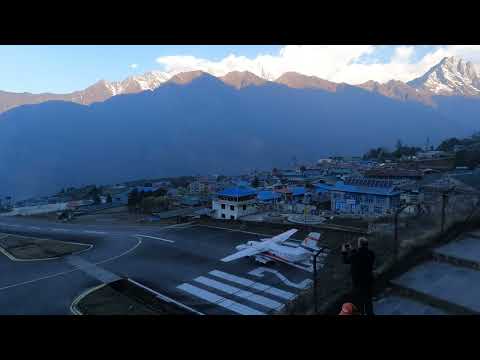
You will take a scenic early morning flight from Tribhuvan International Airport’s domestic terminal. It’s a thrilling 30-minute flight that lands you at the gateway to Everest, the Tenzing-Hillary Airport in Lukla. The village of Lukla, at an altitude of 2,845 meters, is a dense village inhabited by the Sherpa community. Your trekking journey begins here.
You will walk along the pathway built through the heart of this commercial village. There are numerous souvenir shops, confectionery stores, apparel shops, restaurants, and lodges in this village. Since today is the first day of the trek, the stretch is short, covering about 3 hours. You will mostly trek downhill on a straightforward path to Phakding, at an elevation of 2,610 meters. It’s a gradual descent beside the Dudh Koshi River to reach Phakding for your overnight stay.
Kathmandu- Ramechhap – Lukla flight
The flight will operate from Manthali, Ramechhap, in April, May, October, and November. You need to drive from Kathmandu to Manthali at 2 a.m., then fly to Lukla. Alternatively, you can drive a day early, stay overnight in Manthali, Ramechhap, and fly to Lukla the next morning.
Note: Due to the air traffic in Kathmandu Airport, all the flights will be operating from Ramechhap to Lukla and Lukla to Ramechhap during the peak season from March, April, May, October, and November. At other times of the year, you will fly from Kathmandu to Lukla and Lukla to Kathmandu.

Phakding - Namche 3440 m
Activity
11 km or 5-6 Hours walk
Highest Altitude
3440 m, Namche Bazar
Accommodations
Lodge
Meals
Breakfast, Lunch and Dinner
Phakding and Namche Bazaar are located at high elevations. Right after departing from Phakding, you will enter Sagarmatha National Park at Jorsalle, where you will need to show your permits. Then, you will encounter two famous suspension bridges hanging on top of one another. This bridge is called the Hillary Suspension Bridge, which spans the raging Dudh Koshi River. The bridge is adorned with a Buddhist prayer flag, creating a serene and spiritual atmosphere during your trek.
The next stretch of the trek is steep and on a dirt track. You will pass through several stone-paved pathways before reaching Namche Bazaar in the evening. Namche Bazaar is a vibrant and dense Sherpa village shaped like an amphitheater. While the climb today is strenuous, it feels worthwhile upon reaching this serene village. This village is the commercial hub of the Everest region and is filled with shops, restaurants, eateries, pubs, entertainment houses, and more. You can take a stroll around the village in the evening.


Acclimatization day
Activity
4 Hours walk
Highest Altitude
3880 m, Everest View Hotel
Accommodations
Lodge
Meals
Breakfast, Lunch and Dinner
Today, we’re taking a break in Namche Bazaar. Our morning plan involves hiking to Hotel Everest View, where we’ll get our first glimpse of Mt. Everest. It is a 2-hour uphill hike through alpine meadows. The hike offers stunning panoramic views of Lhotse, Nuptse, Thamserku, Kongde Ri, Khumbila, and other nearby peaks. Depending on our energy levels, we can choose to extend the hike to Khumjung Monastery or return to Namche Bazaar to relax for the rest of the day.
Namche Bazaar is notable as the largest Sherpa settlement in the Khumbu region. Beyond its cultural significance, it’s a lively tourist hub with cafes, pubs, souvenir shops, restaurants, and museums. The town has a vibrant atmosphere that may exceed your expectations. If you happen to be here on a Saturday, don’t miss the bustling Saturday Market.


Namche - Tengboche 3860m
Activity
9km or 5-6 Hours walk
Highest Altitude
3860m, Tengboche
Accommodations
Lodge
Meals
Breakfast, Lunch and Dinner
On the fourth day of the Everest Three Passes trek, you’ll traverse from Namche Bazaar to Tengboche. You will face a formidable challenge with a substantial elevation gain of nearly 1,200 meters (4,000 feet). Despite the demanding ascent, this day promises to be exceptionally gratifying as you’ll be treated to stunning views of the distant Everest Mountain Range throughout the journey. Although Tengboche is only 1,378 feet or 420 meters higher in elevation than Namche Bazaar, the day’s trek will involve gaining more than double that amount.
The elevation profile chart illustrates this phenomenon. Halfway along the trail, there’s a significant descent before ascending again. It surpasses the initial elevation gain during the latter part of the journey. Your route will first head straight forward, then descend to the Imja Tse River. It will then ascend steeply to reach Tengboche village, which sits overlooking Mt. Ama Dablam (6,812 m).


Tengboche - Dingboche 4410 m
Activity
10 km or 4-5 Hours walk
Highest Altitude
4410 m, Dingboche
Accommodations
Lodge
Meals
Breakfast, Lunch and Dinner
The trekking trail from Tengboche onwards is relatively gentle with only a few steep ascents. You will need to cross a suspension bridge over the Imja Khola and hike up stone steps. As you continue trekking through the forest trail, you will come across the village of Pangboche. It is one of the oldest Sherpa villages. Similarly, you will also pass by the village of Shomare and Orsho. From here, the trail gradually ascends into alpine terrain. Much of the route follows the Dudh Koshi river basin to reach Dingboche.
The journey from Tengboche to Dingboche takes approximately 4 to 5 hours, including lunch breaks. Dingboche is a beautiful Sherpa settlement renowned for its thriving agriculture and diverse domestic animals. The serene and vibrant panoramic views of Everest from Dingboche are truly captivating, leaving you mesmerized. The majestic Everest massifs come into closer view. It offers opportunities to interact with locals and gain insights into their culture and lifestyle.


Dingboche - Chhukhung 4730 m
Activity
5 km or 2-3 Hours
Highest Altitude
4730 m, Chhukhung
Accommodations
Lodge
Meals
Breakfast, Lunch and Dinner
The trekking trail from Dingboche onwards is relatively gentle with only a few steep ascents to Chhukhung village. As it is a short 3 hour trek, after lunch, you can hike to Chhukhung Ri, overnight at the Lodge in Chhukhung.

Acclimatization day
Activity
Rest day
Highest Altitude
5100 m, Island Peak Base Camp
Accommodations
Lodge
Meals
Breakfast, Lunch and Dinner
During your rest day at Chhukhung, you will trek to Island Peak Base Camp. Both hikes take 4 to 5 hours round-trip.
Photographers will find these hikes to be heavenly, as you will gaze at some of the most photogenic terrain during this traverse. The mountain views are also undoubtedly mesmerizing. We return to our teahouse shelter at Chukkung in the evening for an overnight stay.
Note: Climbing Island Peak requires proper preparation, gear, and a climbing permit from the Nepal Mountaineering Association (NMA).


Chhukhung - Kongma La Pass 5535 m - Lobuche 4910 m
Activity
9.8 km or 7-8 Hours walk
Highest Altitude
5535m, Kongma La Pass
Accommodations
Breakfast, Lunch and Dinenr
Meals
Lodge
The Kongma La Pass (5,535 m) lies between Chhukhung and Lobuche, with both villages on either side. The trail is uneven and not properly marked during this traverse. The route out of Chhukhung is direct, with rocky boulders and sandy sections. As you ascend more, the inclination of the path becomes steeper. You will carry your packed lunch from the teahouse on this day, as there are no settlements in between.
The traverse is approximately 4-5 hours long and offers sweeping views of Mount Lhotse from the pass summit. You will be surrounded by a series of mountains, including Mount Lhotse (8,516 meters / 27,940 feet), Nuptse (7,861 meters / 25,791 feet), Makalu (8,485 meters / 27,838 feet), and Ama Dablam (6,812 meters / 22,349 feet). From the top, the steep descent to Lobuche takes about 2 hours. You will stay overnight at the teahouse or lodge in Lobuche village.
Note: If you are not feeling well or are not physically prepared in Chhukhung, you have the option to reach Lobuche on the Lower route by skipping the Kongma La pass.


Lobuche - Gorakshep 5140 m - Everest Base Camp 5364 m
Activity
11 km or 7-8 Hours walk
Highest Altitude
5364 m, Everest Base Camp
Accommodations
Lodge
Meals
Breakfast, Lunch and Dinner
Lobuche sits on a flatland cut off by the Khumbu Glacier, which originates in the Everest range. From Lobuche, you continue your trek at a deliberate pace, overcoming challenging sections of the glacier. Navigating this part requires careful steps, although there’s no need to worry as the glacier isn’t excessively slippery. The terrain is adorned with rocks and sand, providing a stable footing. Upon successfully traversing the glacier, you’ll be greeted by the first glimpse of Gorak Shep Village.
Gorak Shep is teeming with teahouses and lodges, serving as the final settlement before reaching Everest Base Camp. You can take a well-deserved break at one of the teahouses in the village, stow your belongings, and savor a hot lunch. After lunch, you will begin a 4-hour hike from Gorak Shep Village to Everest Base Camp, traversing the rocky Khumbu Glacier. Enjoy panoramic views and encounter the Khumbu Ice Fall, the starting point of the Everest Climb. Witness the majestic Mt Everest before reaching the famed conclusion marked by the rock inscribed with “EBC.” In the evening, you will return to Gorak Shep for an overnight stay.


Gorakshep - Kala Patthar - Lobuche - Dzonglha 4830 m
Activity
15 km or 6-7 Hours walk
Highest Altitude
5545 m, Kala Patthar
Accommodations
Lodge
Meals
Breakfast, Lunch and Dinner
You will commence the day early with a two-hours hike to the mighty Kala Patthar peak, standing at 5,545 meters above Everest Base Camp. The vantage point offers a close-up of Mount Everest and a panoramic view of the glaciated valley. You can also witness the natural beauty of the Khumbu Icefall. After returning to Gorak Shep, you will savor a delightful breakfast before descending towards Dzonglha village.
Amidst the stunning views of Nuptse, Changtse, and Lhotse peaks, you will make a brief hike to Lobuche village. Then, you will take a detour westward, climbing towards Dzongla village. The trail goes alongside grassy ridges, and you will cross several small bridges along the way. It descends slightly to Dzonglha, which sits at the base of the Cho La Pass. You will spend the evening taking in the view of Awi Peak (5245 m) and stay overnight.
Dzonglha - Chola Pass - Dragnag 4700 m
Activity
9 km or 7-8 Hours walk
Highest Altitude
5420 m, Cho La Pass
Accommodations
Lodge
Meals
Breakfast, Lunch and Dinner
Today, you will cross the second high mountain pass on the journey from Dzonglha to Dragnag. This is another strenuous stretch of this trek, with the elevation reaching 5,420 meters at the top of Cho La Pass. The trail progressively steepens, presenting more challenging terrain as you ascend. Similarly, you will traverse the Cho La Glacier, navigating through dense snow. After a short descent following a steep ascent, reach the summit of Cho La Pass at 5,420 meters. It is the most demanding of the three passes.
The top of the pass is adorned with prayer flags. It offers a mesmerizing view of the glaciated valley and mountains, including Ama Dablam, Cholatse, Pumori, and others. Then, you will descend to the opposite side on a steep and rocky trail. You will continue through boulders towards Dragnag Village, a quaint Sherpa settlement, and conclude at a cozy tea house alongside warm meals.


Dragnag - Gokyo 4790 m
Activity
5 km or 3 Hours walk
Highest Altitude
4790 m, Gokyo
Accommodations
Lodge
Meals
Breakfast, Lunch and Dinner
You will gradually begin to ascend from Dragnag. The trail then descends slightly, and you will cross the Ngozumpa Glacier. Despite the short distance, exercise caution while navigating past the Ngozumpa glacier. You will need to trek on rocky, gravel, and icy terrain when crossing the glacier.
After trekking for a while, the village comes into view alongside the expansive oligotrophic lake of Dudh Pokhari. You can spend the remainder of the day exploring the stunning lakes, as Gokyo boasts six freshwater lakes situated at an elevation of 4,700 m- 5,000 m, with Thonak Lake being the largest among them. Aside from the beautiful view of the turquoise lakes, you can also see the stunning scenery of Gokyo Ri and Cho Oyu. You will spend the night in Gokyo village.


Gokyo Ri and 4th and 5th Lake
Activity
Rest day
Highest Altitude
5357 m, Gokyo Ri
Accommodations
Lodge
Meals
Breakfast, Lunch and Dinner
Today’s adventure takes us to the summit of Gokyo Ri, promising awe-inspiring panoramic views. From the peak, you’ll be treated to a mesmerizing sight of Mount Everest, the majestic Himalayan range, turquoise glacial lakes, and vast glaciers. Unlike the Everest Base Camp Trek, the Gokyo Ri trek offers a unique perspective, allowing you to marvel at the wonders of the Himalayas and serene lakes at the same time.
After the rewarding ascent to Gokyo Ri, you will relish a well-deserved lunch in the village. After lunch, you will explore the 5th and 6th Gokyo Lakes in the area. This lake is one of the 6 Gokyo Lakes located in Gokyo Valley. The lake offers a pristine ambiance amidst the gigantic Himalayan mountains. After visiting the lake, you will return to the village for your overnight stay.

Gokyo - Renjo La Pass 5360 m- Lungdhen 4380 m
Activity
11 km or 7-8 Hours walk
Highest Altitude
5360 m, Renjo La Pass
Accommodations
Lodge
Meals
Breakfast, Lunch and Dinner
Our journey from Gokyo to Renjo La begins with a steep, snow-covered trail that requires cautious steps through challenging terrain strewn with loose stones. Frequent breaks are essential to take in the beautiful surroundings and to catch your breath. As you approach the pinnacle of Renjo La, located at an elevation of 5,360 meters, the thin mountain air adds an extra challenge to your ascent. However, reaching the summit is immensely rewarding as it offers stunning panoramas of Mount Everest, Cho Oyu, Makalu, Lhotse, and other Himalayan giants.
These colossal 8,000-meter peaks appear remarkably close, providing some of the most remarkable views of Mount Everest along any Everest trail. The trail from Renjo La Pass descends towards Lungdhen. It is a steep, rocky descent that leads to the remote Bhote Koshi Valley. The trail gradually flattens as you approach Lungdhen. The small village is in a remote area, with very few tourists. You will stay at Lungdhen overnight and enjoy the serene atmosphere.
Note: If you are exhausted after the Kongma La, EBC, Kalapather, Cho La, Gokyo Ri, and 5th Lake, you have the option to avoid the Renjo La. You may trek down to Dhole. The next day, you will reach Namche.


Lungdhen- Thame - Namche 3440 m
Activity
18 km or 6-7 Hours walk
Highest Altitude
3440 m, Namche
Accommodations
Lodge
Meals
Breakfast, Lunch and Dinner
Lungdhen village is nestled at the base of a massive hill, receiving sunlight later in the morning. The journey from Lungdhen to Namche involves relatively easy terrain with several winding uphill sections. Much of the trek follows a riverside trail, zigzagging along its course. There are gentle descents through subtropical and alpine forests. After four hours, you’ll arrive at Thame for lunch.
Thame is a historic stop on the ancient trade route between Tibet and Nepal, and home to the beautiful Thame Monastery. Along the way, you will also pass by the villages of Thamo and Samde. The trail also passes several Sherpa settlements. It is a straightforward ascent towards Namche Bazaar, nestled in an amphitheater-shaped valley. Upon arriving in Namche, you can rest or explore around the village for souvenirs or celebrate your journey.

Namche - Phakding 2610 m - Lukla 2840 m
Activity
19 km or 6-7 Hours
Highest Altitude
2840 m, Lukla
Accommodations
Lodge
Meals
Breakfast, Lunch and Dinner
It is the final day of your trek. You will have breakfast with the Himalayan views at Namche before resuming the journey. The route from Namche to Lukla features a steep descent and several river crossings. Although it is faster than climbing uphill, the steep descent can be hard on the trekkers’ knees.
Along the way, you will also pass by familiar mani walls, chortens, and prayer flags. You’ll retrace your journey along the same trail, passing through Jorsalle, Monjo, and Phakding before ultimately reaching your overnight stop in Lukla.
Lukla - Kathmandu
Activity
30 minutes
Highest Altitude
1338 m, Kathmandu
Accommodations
own Hotel
Meals
Breakfast
Your final day of the Everest High Passes trek begins with an early-morning flight from Lukla to Kathmandu, concluding your trekking adventure with a thrilling 30-minute flight. Touch down at Tribhuvan International Airport, where our vehicle will transport you to your hotel upon arrival.
Lukla – Ramechhap flight
Flights will be operated from Lukla to Ramechhap in April and May, and from Lukla to Kathmandu in October and November.
Note: For flexibility, you may book your accommodations, whether a Hostel or a 5-star Hotel in Kathmandu. You can stay in Kathmandu for more than one night before and after the trek at your preferred accommodation. We recommend Kathmandu Guest House in Kathmandu. You can book directly or through us. You can also join another trek package, for which you can consult with our agency.
Everest Three Passes Trek Map

Whats Included ?
Everything you need for a safe, comfortable, and memorable trek — packed into one transparent price. Below is a full breakdown of what is covered in your Everest Three Passes Trek package.
Accommodation & Meals
- Lodge : 4 Nights ( 3 Nights Namche, 1 Night Lukla have attached bathroom and Phakding, Tengboche, Dingboche, Chhukhung, Lobuche, Gorak Shep , Zhonglha, Dragnag, Gokyo, Lungdhen have common room.
- Hot Shower in Namche and Lukla.
- Meals: 17 Breakfasts, 16 Lunches & 16 Dinners during the trek.
Transportation & Flights
- Transportation : Airport pick-up and drop off at Tribhuwan International Airport and Domestic airport by private vehicle.
- Kathmandu – Ramechhap – Kathmandu transportation if your flight is from Ramechhap.
- Flight: Kathmandu or Ramechhap – Lukla – Ramechhap or Kathmandu flight ticket.
Guide & Porter Services
- One English-speaking government certificate holder trekking guide.
- Porter service: one porter per two trekkers. No porter for solo trekkers.
- Guide and Porters: Food, accommodation, salary, equipment and personal insurance etc.
Equipment & Safety
- Fingertip Pulse Oximeter — daily oxygen and pulse monitoring for altitude safety.
- First Aid Kit carried by the guide .
- Duffle Bag: One Duffle bag per trekkers on return.
Permits & Official Fees
- Sagarmatha National Park fee .
- Khumbu Pasang Lhamu Rural Municipality entrance fee.
- 13% Government VAT and all official government charges.
Complimentary Extras
- Seasonal fresh fruit en route — pomegranates & apples.
- Everest Three Passes Trek Map and Himalaya Trip branded T-shirt.
- 24/7 emergency support line available during your entire trek.
Whats not Included?
- International airfare.
- Nepal’s visa fees (15 Days US$25 and 30 Days US$40) , you fill up a form depart of immigration before you leave and pay cash and get visa on your arrival in Kathmandu airport.
- Hotel (Kathmandu Guest House) and meals in Kathmandu.
- Your trekking gears.
- All the drinks such as tea, coffee ,coke, beer, mineral water, hot shower, wifi, battery charge etc.
- Your travel insurance which should include the emergency rescue.
- Tips for your guide and porters etc.
Note: In the case of one person, a guide will lead this trek, you will carry own backpack.
Experience the Himalayas Like Never Before
The Everest Three Passes Trek is not just a physical challenge—it’s an emotional journey. As you ascend through alpine forests, across glaciers, and over mountain passes, you’ll gain an appreciation for the strength of nature. The trek rewards you with panoramic views, cultural insights, and the personal satisfaction of reaching Everest’s highest points.

Available dates & Prices
If you are two or more people, private trip is available any date, providing a fantastic opportunity. If you are solo travellers, our fixed group trips are thoughtfully scheduled and offer specific departure dates.
Group Discount Pricing
Price per person — the more you travel together, the less you pay
No. of Persons
Price per Person
-
1 PersonUSD 1,699
-
2 - 4 PaxSave 9% USD 1,549
-
5 - 9 PaxSave 12% USD 1,499
-
10+ Pax Best ValueSave 15% USD 1,449
Create Your Private Trip With
Your Own Itinerary and Dates
We are more than happy to design an itinerary tailored to your schedule and preferred route. Simply share your preferred travel dates, group size, and contact and travel details, and one of our travel experts will get in touch to help plan your journey.
Once your trip is confirmed, you’ll travel exclusively with your own group, enjoying a more personalized and flexible experience.
What to Pack for Your Everest Three Passes Trek in 2026 / 2027 ?
This trek starts from Lukla 2845m and three passes (Kongma La 5535m, Cho La 5420m and Renjo La 5360m) with highlight of Chhukhung Ri or Island Peak Base Camp or Everest Base Camp 5364m, Kala Patthar 5550m, Gokyo Ri 5330m and Gokyo 5th Lake . The temperature will be cold. You must prepare warm clothes. Our comprehensive checklist covers everything from base layers to permits — organised by category so nothing gets left behind before your Everest Three Passes Trek begins.
Upper Body
- Trekking t-shirt
- Long-sleeves or jumper hoodie shirt are particularly suitable for avoiding sunburn.
- Down Jacket
- Gore-Tex or Waterproof Jacket
Undergarments
- Polypropylene thermal top and bottom
- Underwear
- Sports Bra
- Sando Tanks
Lower Body
- Trekking Pants and Waterproof Gore-Tex pants
- Wool-blend socks, liner socks(three pairs)
- Fleece Trousers
- Woolen Pants for the night
Headwear
- Warm Hat, scarf and Sun protect Cap
- Polarizing sunglasses
- Neck gaiters or A scarf or Face Mask or Face towels.
Hands
- Waterproof/windproof warm Gloves
Footwear
- Camp Sandal or shoes
- Comfortable Trekking Boots (used boots better to avoid the blister)
Trekking Gear
- Sleeping bag (- 20C ) with liner : Lodges do not have enough blankets at the room.
- Flash Light for evening in case of power cut or early start for Kongma La, Kala Patthar, Cho La, Renjo La Pass and Gokyo Ri.
- Backpack or duffle bag 60-70 Litters for porter
- Quick Dry Towel
- Rain Coat/ Poncho raining possible any time
- Day back
Safety & Climbing
- Trekking Poles (Trail is step up and down hill, it is better to have trekking poles which will save your knees ).
- There is Snow on three passes , the Micro Spikes and Gaiters are needed.
- Sunscreen 30 to 40+ (face + body + lips)
First Aid Kit
- Wet Wipes
- Dettol or Betadine
- Handy Plast
- Cotton and bandage
- Strepsils (or similar)
Medical & Medication
- Diarrhoea Relief + Rehydration Sachets
- Decongestant
- Paracetamol
- Deodorant
- Diamox
- Any Other Personal Medication
Electronics & Power
- Lodges have Two pin adapter
- Power Bank + Charging
Toiletries & Hygiene
- Toothbrush + Toothpaste
- Toilet Paper
- Sanitizer, Soap, Facewash, Shampoo etc.
- Chapstick
- Moisturizers
Hydration & Nutrition
- At Least 2 litters Water bottle or plastic bladder with Filter or iodine tablets (No place to refill water during whole day of Three Passes ).
- Electrolyte Powders and others.
Food & Snacks
- There is no lunch places during the three passes. Energy bars Mars, Snackers and others etc .
- Dry fruits (Cashew , nuts, Kismis)
Documents & Money
- Original Passport, Flight ticket and copy of passport copy.
- US dollar or Npr cash or other currency for extra expenses and emergency
- Credit Card
Personal Safety
- Travel Insurance with Helicopter Evacuation is better.
- GPS unit
Ganeral
- Ear Plug if your roommate snore.
- Sim Card (Namaste and Ncell), some of places have mobile phone signal.
- Multi functional Pocket knife
- 2-4 large plastic bags: to separate clean clothes from dirty ones.
Optional
Some days are short because of the high altitude. If you something for entertain, it is better for time pass.
- Card Games
- Notes Books
- Reading Books
- Camera, memory card
How Tough is the Everest Three Passes Trek?
Everest Three Pass Trek’s difficulty ranges from moderate to challenging. For experienced trekkers, the trek may not be as challenging. However, for those with no experience, this trek can be strenuous.
One of the primary reasons the venture is tough is due to the high altitude. On this trip, trekkers will ascend to the high altitude of Kongma La Pass (5,535 m). The risk of altitude sickness increases at altitudes above 3,000 meters. When trekkers reach altitudes above 3,000 meters and eventually 5,000 meters, the risk of altitude sickness increases. It can halt the progress of the itinerary in its tracks.
The entire journey takes about 17 to 21 days. During the trek, trekkers must walk 6 hours per day over varied terrain, with a few days of rest in between. It can be very physically and mentally exhausting. The weather is also unpredictable, so it’s essential to prepare for anything at any time. The temperatures are freezing, and the harsh weather will make the trek more difficult. Accommodations along the route do not have properly insulated rooms. Therefore, you must wear thick layers to stay warm at night.
Being mentally strong is equally important. You will be walking in a place with no facilities. Good food and warm clothes are rare here. You need to prepare yourself to adapt to a rural lifestyle. Be ready for the worst, but don’t wear yourself out mentally. Training with shorter hikes to build endurance before tackling this trek is essential for both mental and physical preparation.
Should you try the Everest Three Passes Trek as a Beginner?
Beginners with absolutely good physical fitness and preparation should try the Everest Three Passes Trek. It is a strenuous and high-altitude venture that is not for the faint of heart. The trek is better suited to intermediate or seasoned trekkers. During the trek, one must cross three high mountain passes that exceed 5,000 meters in elevation. Another factor beginner trekkers should consider is the trek’s duration. Moreover, the demanding trails and challenges of the trek should not be underestimated.
If you are a beginner looking to join the venture, it is essential to understand the challenges and prepare accordingly. You should begin physical preparation several months before the journey. It helps to build the strength, stamina, and endurance necessary for the trek. Similarly, it is necessary to understand the risk of altitude sickness. Because beginners are more exposed to risk, you should choose an itinerary with sufficient time for acclimatization. Hire a certified and experienced guide to accompany you during the trek. Additionally, consider hiring a porter to reduce your physical strain by carrying your heavy luggage.
With meticulous preparation and proper support, beginners can try the Everest Three Passes Trek. But they must be prepared for the challenges that come along with it. For new trekkers, we recommend starting with moderate treks to build experience.
Can I Trek Solo on Everest High Passes in 2026?
Yes, you can go on a solo trek to Everest High Pass in 2026; however, it is not recommended. As mentioned earlier, several challenges will affect trekking.
It will be challenging on the high-altitude trek, with dynamic weather, freezing temperatures, and the risk of frequent snowstorms, blizzards, and avalanches. During these extreme trekking conditions, the trekkers must rely on the expertise of guides, and trekking alone can be very risky, so you need at least one more trekking companion with you.
Hiring guides and porters will help trekkers navigate and stay safe and secure throughout the trek. Guides are experienced with the trails of the Khumbu region. Thus, even if the trek is long and rugged, they know how to navigate from teahouse to teahouse.
They are also well equipped with the know-how of altitude sickness, proper acclimatization, and first-aid skills, which will be helpful during the trek. Furthermore, guides are equally beneficial, as they carry heavy loads even on steep ascents and descents. Having carried and kept your bags secure will make the trek even more enjoyable.
Lukla to Everest High Passes Trek
The Everest Three Passes Trek route begins from Lukla and ascends to Namche Bazaar, a vibrant Sherpa settlement that unveils a world of its own. The trail then ascends through a semi-arid landscape, offering a thrilling journey on the Everest High Passes trek.
The initial challenge begins at the Kongma-La Pass, which stands at 5,535 meters, with the ascent starting from Chhukhung. Prepare for a rigorous 5-hour climb, best initiated in the early morning. The adventure continues with a visit to Everest Base Camp, followed by a return to Gorak Shep.
Next on the agenda is the ascent to the majestic Kalapathhar peak. It has an impressive height of 5,555 meters. After the ascent, we will progress towards Dzongla. Chola Pass (5,420 m) emerges as a significant milestone on the trail between Dzongla and Thagnak. Continuing the journey, we trek to the pristine Gokyo Lake and conquer yet another pass, Renjo La Pass (5,345 m).
The adventure culminates with this traverse, leading the way back to Lukla. This thrilling adventure promises not only scenic landscapes but also a test of endurance, making it a memorable odyssey through the heart of the Everest region.
Experienced Guides and Porters for Everest Three Passes Trek
Trekking guides and porters are crucial to ensuring a successful trek. When you join on the Everest High Passes Trek with Himalaya Trip, you can trust that your trekking guide is licensed and government-registered and has extensive experience in the Himalayas. We prioritize local guides who are intimately familiar with the area, providing you with invaluable insights about the surroundings and expertly navigating the trail.
Throughout your trek, dedicated porters will accompany you. Each porter must carry a maximum of 20-25 kilograms of baggage, serving two individuals at most. This ensures a more comfortable and enjoyable trekking experience. If you have specific language preferences for your guide, please let us know, and we will make the necessary arrangements to accommodate your needs.
Is any altitude training recommended for this trek?
Everest Three Pass Trek is one of the highest altitude treks, which is why high altitude sickness is one of the major concerns for trekkers. Due to this, reach altitude training is recommended, especially for beginners who have decent physical fitness but are unaware of the know-how on proper acclimatization.
Before the high-altitude complex trek like these, trekkers can train in low altitudes to replicate the situation they are likely to encounter during these high altitudes. Here are some ways of altitude training for the adventure ahead:
- Spend time at a high altitude, then descend slightly to sleep, simulating trekking conditions. It follows the principle of “trek high and sleep low.”
- The interval training substitutes the burst of high-intensity and low-intensity trekking.
- Focus on raising your cardio level to last in the rough terrains.
- Increase your strength level by focusing on strength training exercises like lifting weights and spending time in the gym.
Daily Routine on the Everest Three Passes Trek
The Everest Three Passes Trek is a challenging but rewarding adventure through the Himalayas. A typical day on this trek can be broken down into the following:
Morning:
- 5 to 6 AM: Early Start: Wake up early, usually around 6:00 AM, to enjoy the sunrise over the mountains.
- 6 Am to 7 AM: Breakfast: Fuel up with a hearty breakfast at your teahouse or lodge.
- 7 AM to 12 PM: Trekking: Begin your daily trek, typically covering 4-6 hours of walking.
Afternoon:
- 12 PM to 1 PM Lunch Break: Stop for lunch at a teahouse or picnic spot along the trail.
- 2 PM to 4 PM: Continue Trekking: After lunch, continue your trek, enjoying the stunning scenery and acclimatizing to the altitude.
- 4 PM to 5 PM: Reach Your Destination: Arrive at your destination for the night, usually a teahouse or lodge.
Evening:
- 5 PM to 8 PM: Dinner: Enjoy a delicious dinner at your accommodation, followed by some relaxation and socializing with other trekkers.
- 9 PM to 10 PM: Rest and Recharge: Get a good night’s sleep early from around 9 to 10 PM to prepare for the next day’s trek.
Perfect Time for Everest High Passes Trek
We organize this trek year-round. But if you are planning to do this trek at the best time. We recommend the following time.
- Winter (December – February): This is the coldest time of the year. It will be difficult to trek because there will be heavy snow. The route will be closed.
- Spring (March-May): This is the best time to trek on the EBC trek. You will have wonderful weather with warm temperatures. You will also have a chance to see the Rhododendron flowers.
- Summer (June–August): This is the monsoon in Nepal. There is a chance of rain every day, and it will be cloudy. There is a chance to cancel the flight. A rain poncho or rain jacket is needed.
- Autumn (September – November): This is another good time to do this trek after the rainy season. It will be fresh and clear weather will appear. It will be a warm temperature.
Cultural Experience and Sherpa Lifestyle during the Trek
The Everest Three Passes Trek is not only about journeying through towering peaks or conquering high mountain passes. It is also a journey through the living Sherpa culture. The Sherpa people are the heartbeat of the Everest region. The Everest Three Passes Trek route passes through traditional villages such as Namche Bazaar, Tengboche, Dingboche, Chhukhung, Lobuche, and more. These charming villages are home to the Sherpa people, so you can get a glimpse at their culture and Himalayan lifestyle.
While traversing these traditional villages, you will see stone houses with wooden beams and prayer flags. Similarly, you will pass by ancient monasteries, mani walls, chortens, and stupas. These reflect the cultural and spiritual aspects of the Sherpa people. They tell stories about faith, endurance, and harmony with the Himalayas. Monasteries such as Tengboche and Thame are the spiritual centers of the Everest region. The monks perform daily rituals, chanting, and ceremonies, keeping the age-old Buddhist practice alive.
Trekking on the Everest 3 Passes route, you can see the locals busy with their daily chores. From farming to tending yaks and running local shops, you can gain insight into their Sherpa life. While staying at the local teahouses, you can see the Sherpa families prepare traditional meals, craft handicrafts, butter lamps, or prayer wheels. It also offers an opportunity to attend morning prayers and local festivals. You can also interact with them during the casual tea sessions in teahouses. As you sit in the communal hall after a long day’s trek, you can hear about their mountain life, history, and local folktales.
Everest Three Passes Trek allows you to immerse yourself in the Sherpa culture and mountain hospitality. It is also an opportunity to understand the religion and spirituality of the Sherpa people. All these deep immersions turn your high-altitude adventure into a journey of human connection. You may also gain a newfound appreciation for this resilient mountain community. The journey is the best way to experience the authentic Sherpa culture. For those seeking a cultural or spiritual journey in the Himalayas, the Everest Three Passes Trek is the perfect trip.
Everest Three Passes Trek Map and Guide
A comprehensive map can prove invaluable for trekkers undertaking the Everest Three Passes Trek. A map offers detailed insights into the geography, landscape, route, points of interest, and stopping points along the journey.
As the map suggests, the trek starts with the small trek hub in Lukla. You will board the flight from Kathmandu or Ramechhap. After landing in Lukla, you will trek towards Namche Bazaar, but along the way, you will also reach Phakding, a small village.
Upon arriving at Namche, you will have two ways, one towards the EBC Trek and the other towards Renjo La Pass. We will move towards Tengboche, Dingboche, and Chhukhung, ultimately reaching Kongma La Pass. After descending from Kongma La Pass, we will reach Lobuche, climb towards Everest Base Camp, and even reach Kala Patthar. We will then descend to another Sherpa village in Dzonglha and move forward to the second of three passes in Cho La.
We will then reach other villages like Dragnag, Gokyo, and Gokyo Ri. Finally, you will reach Renjo La Pass, drop back to Thame, then to Namche, Phakding, and Lukla, then board a flight to return to Kathmandu.
By consulting such a map, you can meticulously plan your schedule and itinerary in advance, ensuring you’re well-prepared for the upcoming terrain. Himalaya Trip provides the Everest Three Passes Trek Map, a useful resource that includes tips and information on teahouses, landmarks, potential landslides, river crossings, and other crucial factors. Our all-inclusive package consists of a detailed map that we will provide before you depart from Kathmandu.
Permit Requirements for Everest Three Passes Trek
Trekkers must have two entry permits to be eligible for the Everest Three Passes. The two permits that the trekkers need to obtain are the Khumbu Pasang Lhamu Rural Municipality Permit and the Sagarmatha National Park Permit.
The Everest region is enclosed by Sagarmatha National Park, established in 1976. The local governing body of the Everest region, after Lukla, is Khumbu Pasang Lhamu Rural Municipality, which requires a separate entry permit.
Since the trail passes through the national Park, the trekkers must also obtain a national park permit. It is a UNESCO World Heritage Site, and your permit cost helps preserve the area’s ecosystem. The permit can be obtained in Lukla, Monjo, Namche, or Kathmandu. The Khumbu Pasang Lhamu Rural Municipality is situated in the northern part of the Solukhumbu district. The trekkers can secure the Khumbu permit only at Lukla or Monjo.
| Permit Type | Cost (NPR) | Cost (USD) |
| Khumbu Pasang Lhamu Rural Municipality Entry Permit | 3,000 | 30 |
| Sagarmatha National Park Entry Permit | 3,000 | 30 |
Dealing with the various permits and paperwork can be daunting in an unfamiliar location. This is where the Himalaya trip comes into play. We are here to assist you in planning your entire trek, including obtaining all the necessary permits and managing the paperwork on your behalf.
Teahouses and Lodges Along the Trek
Accommodation is an important aspect of the trek. For trekkers, having the best place to rest in the form of accommodation is really important as it can help relax and rejuvenate your body. The options for accommodation range from the hotels and lodges in the lower level of the trek to the cozy, small teahouses amid the Himalayas.
Throughout your trek, you’ll encounter numerous mountain lodges offering essential respites. Typically constructed with wooden structures, these houses feature rooms accommodating 2-3 people, and standard facilities include quilts, mattresses, and pillows. Teahouses in the Everest region are equipped with power access for charging electronics. While WiFi availability varies, hot showers often incur an additional cost.
What foods can we expect during the trek?
Meals are an essential part of the trek and should be taken seriously. Not having proper meals can harm trekkers, as they may become too weak or ill, halting their trek. In terms of meals, the trekkers will have three meals every day: breakfast, lunch, and dinner. Your meals will be prepared at the teahouses throughout your Everest Passes trek. Lunch breaks will be taken in the midpoint villages, while dinners and breakfasts will be served at the tea houses where you stay.
The Lodges have a Menu; you will have your own choice. The food is hygienic vegetarians and Vegan. But it is not like city food. Non-veg food is not recommended. It is not hygienic.
- Breakfast: Simple Breakfast (Eggs, items like brown potato, toast, Gurung or Tibetan Bread, Pancake, Muesli, Oat Porridge, etc.)
- Lunch and Dinner: Nepali Thali (Plain Rice, Lentil soup, Potato Curry, Green Vegetable, Papadam,Tomato Hot spicy, Chicken curry optional), Macorani , Spaghetti, Potato item, Mo.Mo or dumpling, Pizza, Fried Rice, Fried Noodles, French fries, etc.
- Dessert: Fresh Fruit (Apple, orange, pomegranate, Banana, with any seasonal fruit) served as a sweet dessert.
Note: All the drinks, soft, hot, and hard, are not included. Also, if you have any dietary restrictions, let your trek agency know at the time of booking, and they will make the arrangements accordingly.
Everest Three Passes Trek Review


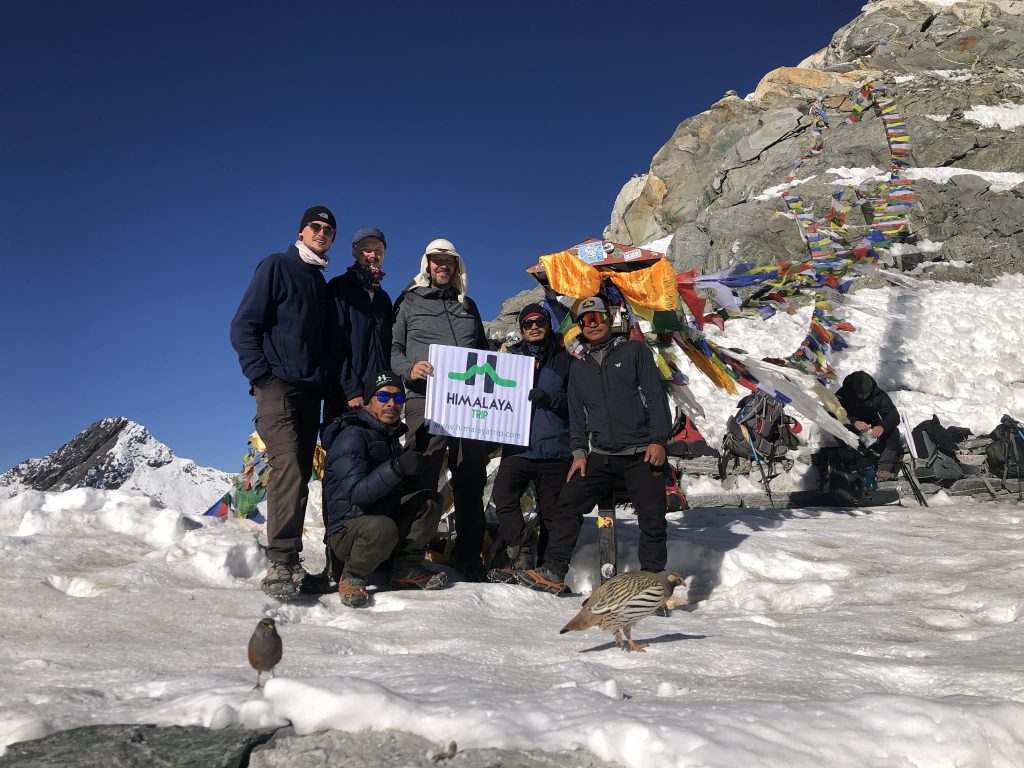

Jiri to base camp and the 3 passess
5th trip that Harka’s has sorted for me and again we were not disappointed ? Jay our guide and Bikas and Buddha the porters were brilliant as always. Took the kids this time and the adventure was fantastic enjoyed by all. We will be back in 3 years for another trek and will be using the same team ?


Personalized Everest
A group of 4 of us traveled with Harka on a 15-day trek in the Everest region. Harka was very accommodating in letting us customize our trip based on the group's preferences. We went over 3 high passes, up 2 small mountains, to clear mountain lakes, and Everest base camp. We had a great adventure that I would highly recommend.
USA, October 2012

Amazing company and people
In April we booked the Three High Passes trek to EBC with Himalaya Trip after glowing recommendations from one of our friends, and had one of the best trips of our lives thanks to our guide Jayandra, and The rest of Harka's team!
At all times we had complete confidence in them and have become great friends. They helped us buy gear upon arriving in Kathmandu, handled all the flights to Lukla and made sure at all times we were ok with altitude and energy etc.. Our guide Jay was awesome, and even when heavy snow met us on our descent from Gorak Shep, Jay and another guide Om from the same company were there helping us and all others on the mountain down the slippery tracks - great guys.
We were so happy with their tours we immediately booked another 5 day trek in the Annapurna region to Poon Hill a day after our EBC trek. There we had great food, saw the sunrise at Poon Hill and sat in natural hot springs next to a river in the rainforest with thunder and lightning overhead. An amazing experience and the best Dal Bhat!
Even after the earthquakes, the selflessness of the Nepalese and Himalaya Trip continued to amaze us. If you are interested in visiting Nepal and doing any treks, PLEASE contact Himalaya Trip and support these great people. Nepal is a beautiful country and these guys will help you have the best time!
New Zealand, April 2015

mad dogs and english men – Jiri – base camp – 3 passes
what can I say...
3 treks in one for a group of mates from across the world
Harka organized the trek we asked for, but he didn't tell us we were actually doing 3 treks in one
we did the Jirri to base camp trek adding 5 days to avoid flying into Lukla airport then the 3 "killer" passes as well
Jay was a legend and fantastic guide who we had when we did the Manaslu circuit so no problems there, Bickas was a great porter and again the language barrier was not an issue and we all got on fantastically
I can't fault Harka and his team as they look after you from the moment you arrive at the airport to dropping you off for your flights home
this is the 3rd time we have been trekking in Nepal, all treks with Harka and we will be back in a couple of years for more adventures
Harka has built a great family business and all the other trekkers we met that were using him had all done multiple treks with him, so that is how you determine a good business the return trade and yes we will be returning again
Go Harka and his team from Himalaya Trip.
Australia, October 2018

Jirri to base camp and the 3 passes
Brilliant, fantastic and breathtaking - go the team Jay, Bikas and Meshak treated us like kings. My 4th trek with them and they are still the best in Nepal. 21 days of trekking and everyday something else to tick of the bucket list we started in the rhododendron forests and ended at the 5550 myr passes climbing up close to a rock face, walked on snow covered glaciers and around pristine high altitude lakes. Always being looked after by the team from hidden treks - will be back fir another trek in 4 years I can’t wait and can’t reckomrnd these guys hug enough ????
Australia, October 2022
I would like highly recommend Harka
I would like highly recommend Harka, as a great organiser of our trek. He managed fit to all our requirements (tiing, places we would like to see and hike during the trekking). Moreover, he took care of us even once our private staying in Kathmandu (transfers, checking if we are fine, helping to find a driver for additional sightseeing we wanted to have).
Last, but not least: we are sooo greatful to our great guide (Ramesh) during our trek and Depak (our porter). With this team, the trek was real pleasure and magnificent experiance. Ramesh was always taking care of our health and condition, trying to find best rooms in teahouses and best spots during aclimatization time. Once - due to health conditions - we were not able to finish the trek as planned - he was fully supportive to change the plan and adapt it to our capabilities.
Ramesh and Depak were the best team we could have during our trek (Everest base camp and Island Peak base camp with Depak was a great experience with a lot of fun!).
Poland, October 2023

Amazing 3 Passes Trek Experience
We recently completed the 3 passes trek with Jay (guide) and Bikas (porter) and it was an amazing, unforgettable experience. The whole experience of organizing it with the Himalayas Trip team was very straight forward and they were very accommodating. Jay picked us both up separately from the airport and the whole trip he couldn't do more for us. With the help of Bikas, over 17 days, we climbed through the 3 passes, bowled over by the beauty of the Himalayas as we slowly became mountain men and accustomed to our new life of lodges, altitude and rice and noodles. It is a stunning area and escape and when the clouds were gone, the landscape is so wonderful, you don't want to leave. Jay & Bikas took great care of us the whole trip, we felt like family by the end of it and I would strongly recommend anyone considering this trip to undertake it with Jay and the Himalaya Trip team. It was a wonderful, unforgettable experience and we haven't stopped planning our next trip back to the mountains. We will be seeing the mountains and the Himalaya Trip team soon!
United Kingdom, 09/24

Cassandra & Cedric
Three Passes & Everest Base Camp

Pippa Jephcott
Pikey Peak Trek
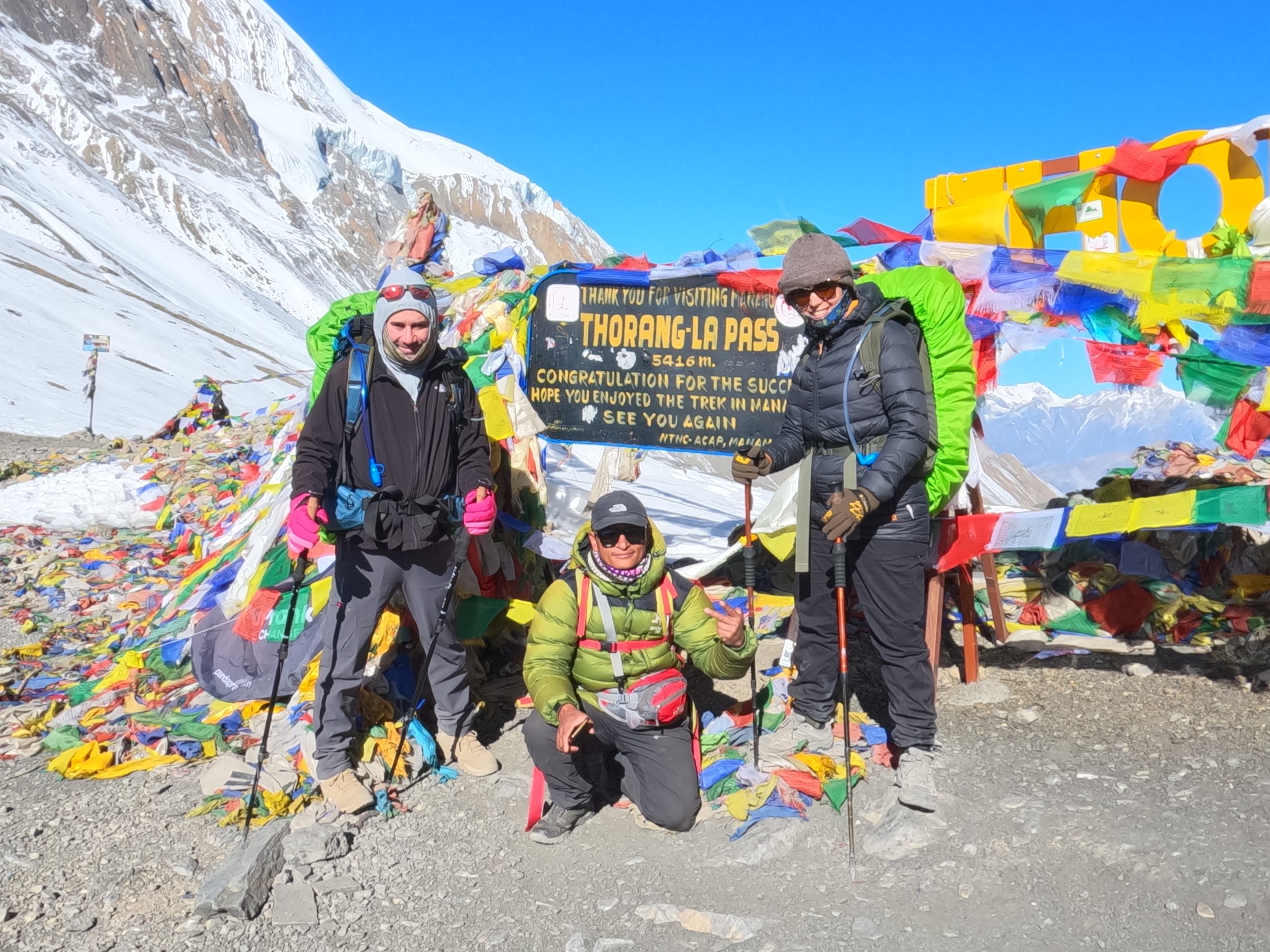
Majid, Sara and Shane
Annapurna Circuit Trek
Reviews from the globe

Hi! Im Sara, from Spain! Good morning! Yesterday we arrived from our 11-day trekking in Gokyo. There were 3 people from Spain, and I don’t know how to express how happy I felt. From the beginning, Himalaya Trip has been attentive to us, with a welcome at the hotel and...

Incredible!
Hi! Im Sara, from Spain!
Good morning!
Yesterday we arrived from our 11-day trekking in Gokyo.
There were 3 people from Spain, and I don’t know how to express how happy I felt.
From the beginning, Himalaya Trip has been attentive to us, with a welcome at the hotel and explanation of the route, rental of necessary equipment, etc.
The most important thing for us has been the ease and comfort with which Ramesh (our precious guide) has taken care of us at all time.
Attentive to the food, to make sure we didn’t get cold, adapting the route day by day according to the needs of the team.
I only have words of gratitude for Ramesh, who I would recommend for any trekking in the world.
In addition to being a great guide and knowing all the mountains of Nepal perfectly, he is a great person, with a big heart.
We hope to repeat in the not too distant future and hopefully it can be with him, since he is already part of our family.
Thank you for everything, from the bottom of my heart.
Thanks!!!!


Had an incredible experience doing the Mardi Himal trek with Himalaya Trip. Our guide Jay and our two porters Umesh and Masak were all simply incredible people. I’m a photographer so always have odd requests for weird areas to access for better angles or even simply just extending time in...
Couldn’t recommend enough
Had an incredible experience doing the Mardi Himal trek with Himalaya Trip. Our guide Jay and our two porters Umesh and Masak were all simply incredible people.
I’m a photographer so always have odd requests for weird areas to access for better angles or even simply just extending time in certain areas and all requests were met with so much help from the team. Highly recommend

I had an amazing time trekking with Surpa, particularly as this was my first solo trek. Beautiful views doing the Mardi Himal trek over 4 days, Surpa was a great guide who organised everything so well for me, kept me well fed, supported a good pace the whole way and...
Mardi Himal: fantastic trek & wonderful guide
I had an amazing time trekking with Surpa, particularly as this was my first solo trek. Beautiful views doing the Mardi Himal trek over 4 days, Surpa was a great guide who organised everything so well for me, kept me well fed, supported a good pace the whole way and always cheerful. Would recommend, and I would happily have him as my guide again in the future. The organisation and booking with Himalaya Trip was great, really responsive on emails and Harka was so helpful in organising everything and meeting me in Kathmandu for a briefing before the trip. Thanks so much!
Our 4 day Mardi Himal Trek with guide Milan and porter Plekta was a wonderful experience. The manager Harka Gurung met with us over coffee in Kathmandu and briefed us about expectations as this was our first trek. After that our guide met us at our hotel in Pokhara, helped...
Once in a lifetime experience in the Himalayas
Our 4 day Mardi Himal Trek with guide Milan and porter Plekta was a wonderful experience. The manager Harka Gurung met with us over coffee in Kathmandu and briefed us about expectations as this was our first trek. After that our guide met us at our hotel in Pokhara, helped us rent equipment, and handled all logistics in between. Our first time in the Himalayas was unforgettable between all the unbelievable landscapes and scenery, and we were lucky to have MIlan and Plekta with us to experience it all. I can’t begin to describe how ethereal sunrise is over the base camp, but hopefully you’ll be able to experience it soon!
Trips you may like
Everest Three Passes Trek without EBC
14 Days
Trekking
USD 1,399 per person
Everest Base Camp Trek
14 Days
Adventure Treks
USD 1,349 per person