Winter and Monsoon Special Offer! Get 5% off on all trekking packages in Nepal . Visit during June , July, August, December , January and February and take advantage of this limited-time deal.


Annapurna North Base Camp Highlights
- Trek on the remote and less-crowded off-the-beaten trek path to the Annapurna North Base Camp.
- Skip the crowded, commercialized trail for a quieter, more unique and authentic trekking experience.
- Traverse the diverse landscapes of the Annapurna region, from lush forests to alpine meadows, rocky terrain, and glacier moraines.
- Reach the isolated Annapurna North Base Camp (4190 m) right below the North face of Annapurna I.
- Side trip to the alpine lake of Narchyang Lake (4050 m), fed by glacial melt.
- Pass by secluded villages such as Humkhola, Basket Mela, Narchyang, and experience rich mountain hospitality.
- Enjoy spectacular and close-up views of Annapurna I, Varaha Shikhar, Tukuche Peak, Nilgiri, and Dhaulagiri range.
- Experience camping in the Himalayan wilderness, surrounded by nature and far away from noisy city life.
Activity
Trekking
Altitude
4190m/13747feet. ABC
Best Season
March - May, September - November
Meals Included
4 Breakfast, 5 Lunch, and 4 Dinner
Transportation
Jeep
Destination
Nepal
Accommodation
4 nights in camping tents
Duration
5 Days
Region
Annapurna Region Treks
Start / End Point
Pokhara / Pokhara
Group Size
2 - 20
Nature Of Trek
Camping
Difficulty
Moderate
Annapurna North Base Camp Trek Overview
The Annapurna North Base Camp Trek is a unique and extraordinary journey into the wildest region of the Annapurna massif. Unlike the classic Annapurna Base Camp Trekking trail, it is far from crowds and bustling teahouses. The northern side is a hidden gem, perfect for those looking for an adventurous escape into the Himalayas. Also called the Maurice Herzog Trail, following the route of the historic 1950 French expedition that first summited an 8,000-meter peak.
The northern Annapurna Base Camp sits right below the north face of Annapurna I (8091 m), the world’s tenth-highest mountain. The trek begins with a scenic ride on a bumpy mountain road from Pokhara to Tatopani, then to Humkhola. From Humkhola, you will start trekking on the Annapurna North Base Camp trail. It takes you through quiet forests, deep valleys, high alpine terrain, and glacial moraines. The trek feels completely different from the classical trail, with an atmosphere that’s more raw and isolated.
The Annapurna North Base Camp Trek trail allows you to explore the remote Narchyang area. It is a lesser-known and less-traveled area of the Annapurna region. As you move to a higher region, the landscape becomes more isolated. You will traverse glacial valleys that offer unparalleled and uninterrupted views of the Annapurna I, Fang Peak, Nilgiri North, Nilgiri Central, Tukuche Peak, Khangsar Kang, and Dhaulagiri range. Similarly, you can witness gorgeous views of the Annapurna Fang Glacier, icefalls, and moraines.
Following the trail, you will reach the Annapurna North Base Camp at an altitude of 4,190 m above sea level. You can get a more spectacular view of the surrounding mountain peaks, rock walls, and glaciers from here. You will also visit Narchyang Lake at 4050 m. It is a beautiful alpine lake near the Narchyang village. The side hike to the lake not only offers a scenic stop to take in the mountain vistas but also adds cultural and natural depth to the Annapurna North Base Camp Trek.
The journey is a camping or basic Lodge trek that is perfect for real adventure seekers. As a result, the Annapurna North Base Camp Trek also feels like an expedition. Each stop offers a front-row seat to the untamed Himalayan scenery. The trek is ideal for those who love exploring and want a genuine wilderness trek experience over comfort and crowds. You will immerse yourself in one of Nepal’s least-visited areas, a place that remains timeless and untouched. If this matches your preference, join Himalaya Trip’s 5 Days Annapurna North Base Camp Trek!
Annapurna North Base Camp Trek Outline Itinerary
Day 01:
Drive from Pokhara (830 m) to Tatopani (1190 m) to Humkhola (2890 m).
Day 02:
Humkhola (2890 m) to Busket Mela (3650 m).
Day 03:
Busket Mela (3650 m) to Campsite (4050 m).
Day 04:
Campsite (4050 m) to North Annapurna Base Camp (4190 m) and Narchyang Lake (4050 m), Trek down to Humkhola (2890 m), and drive back to Tatopani (1190 m).
Day 05:
Drive Tatopani (1190 m) to Pokhara (830 m).
5 Days Annapurna North Base Camp Trek Itinerary
Pokhara - Beni - Tatopani - Humkhola
Activity
7-8 hours drive
Highest Altitude
2890 m
Accommodations
Share Tent Camp or Basic Lodge
Meals
Lunch and Dinner
The Annapurna North Base Camp Trek journey begins with a drive from Pokhara to Beni. You will head north on the Pokhara-Muktinath road. Along the way, you will pass by many small but charming settlements, terrace farms, valleys, and rivers. The road gradually climbs from the lowland Pokhara valley towards the foothills of the Annapurna range. After driving for 2 to 3 hours, you will reach Beni. Beni to Tatopani translates to “hot water” in Nepali. From here, you will drive to your next destination, Humkhola.
Along the way, you can get a stunning glimpse of the snow-capped mountain peaks at a distance. From Tatopani, the road becomes narrow and winding. It will be a rough and bumpy but thrilling ride. The vehicle drives through dense forests of rhododendron and pine. Similarly, you will pass by remote Himalayan villages and terrace farms along steep slopes. You can see hydropower tunnels and the Kali Gandaki River along the way. After driving for some hours, you will reach Humkhola. It is the gateway to the Annapurna North Base Camp. You can get clear views of Mount Annapurna and Nilgiri from here. Tonight you will camp at Humkhola.
Humkhola - Busket Mela
Activity
5-6 hours walk
Highest Altitude
3650 m, Busket Mela
Accommodations
Share Tent Camp or Basic Lodge
Meals
Breakfast, Lunch, and Dinner
Wake up in the crisp mountain air of Humkhola. You will have breakfast and begin your Annapurna North Base Camp Trekking from here. The trek trail goes through the mixed forests of rhododendron, oak, and pine. You will mostly walk on single-track footpaths and dirt trails. There are also rocky, rugged sections. Along the way, you will pass by small settlements, terrace farms, small streams, and wooden bridges. While passing by these settlements, you can see traditional houses with prayer flags and mani walls. It offers a glimpse at the local culture, traditions, and lifestyles.
As you gradually gain elevation, the landscape will change to alpine terrain, and vegetation becomes sparser. You will come across a beautiful, cascading Futu waterfall. Likewise, you will come across shelters like Sandikharka and Ghupaphant. Moving forward on the Annapurna North Base Camp, you can get stunning views of the snow-capped Tilicho Peaks. After trekking for a while, you will reach Busket Mela. It will be your first high-altitude campsite. You can also get gorgeous panoramic views of Mount Annapurna II, Lamjung Himal, and other surrounding peaks. There is also a river nearby. As you will be entering a secluded location from Busket Mela, there is no access to electricity from here. Network connection is also poor. You will stay here for the night.
Busket Mela - Campsite
Activity
5-6 hours walk
Highest Altitude
4050 m, Campsite
Accommodations
Share Tent Camp or Basic Lodge
Meals
Breakfast, Lunch, and Dinner
After breakfast at Busket Mela, you will resume your trek journey to the north base camp of Mount Annapurna. You can feel the cold alpine air and enjoy stunning mountain views. The Annapurna North Base Camp Trekking trail gradually ascends through alpine trails. On your way, you will come across rocky paths, massive rock formations, and grassy sections. The views of Mount Annapurna I, Varahi Shikhar, and Nilgiri become closer and bigger. Similarly, you will occasionally come across colorful prayer flags and stone cairns.
There are many waterfalls and small streams along the Annapurna North Base Camp Trekking route to the Campsite. Similarly, you will come across a signboard pointing towards the SunKhola (translates to River of Gold). Trekking past the signboard, you will arrive at Campsite. It is located in a wide alpine basin and surrounded by snow-capped Himalayan peaks. There are no permanent lodges around the area, so you will camp here. Right next to the Campsite, there is the Panchakunda Lake. It is a perfect spot to rest for the night before the actual climb to the North Base Camp.
Campsite - North Annapurna Base Camp and Narchyang Lake - Humkhola - drive back to Tatopani
Activity
7 hours walk, 2 hours drive
Highest Altitude
4190 m, North Annapurna B. C.
Accommodations
Lodge
Meals
Breakfast, Lunch, and Dinner
An exciting day awaits you today, so you will start early. After breakfast at the Campsite, you will head to North Annapurna Base Camp. It is a gentle ascent through the wide alpine basin. Colorful prayer flags and stone cairns mark the trail. As you move closer to the base camp, the vegetation disappears completely. The landscape becomes more isolated and rugged, surrounded by rocky moraine, gravel, and glacial debris. In addition to the rough terrain, the thin air makes the uphill climb physically and mentally demanding.
Finally reaching the base camp, you will be greeted with up-close and mesmerizing views of Annapurna I, Dhaulagiri, and the surrounding icefalls, rock faces, and glaciers. The scenery feels raw, and the quiet atmosphere makes the experience more personal and memorable. The base camp is also an excellent spot for photography. After soaking in the views and tranquil atmosphere, you will head towards the Narchyang Lake. The north base camp trekking route ascends and descends gently across open meadows and rocky grounds. You will occasionally cross streams and reach the lake that sits in a secluded alpine terrain. The Narchyang Lake is surrounded by cliffs and towering peaks.
After the adventurous climb to base camp and Narchyang Lake, you will begin your descent. The Annapurna North Base Camp trekking trail gradually descends through alpine terrain into high-altitude grasslands. As you continue descending, the barren landscape begins to turn greener. You will enter the forests of rhododendron and pine. The oxygen level begins to rise, making breathing easier. Descending is easier than climbing uphill, but your knees may feel the strain. You will retrace your steps to Humkhola, passing by familiar scenery. Then hop on a vehicle to Tatopani. The vehicle drives on the winding mountain road, descending gradually. You will leave behind the Himalayan foothills, and the mountain views become more distant. First, you will drive on a bumpy, dusty road to Tatopani. Tonight, you will stay at Tatopani.
Tatopani - Pokhara
Activity
4 Hours drive
Highest Altitude
1190 m, Tatopani
Accommodations
own Hotel
Meals
Breakfast and Lunch
Today is the final day of your Annapurna North Base Camp Trek journey. You will enjoy a hearty breakfast with views of Tatopani. You will enjoy the Natural hot spring. After the lunch, The vehicle will take you on the familiar road to Pokhara. You will drive past the lush valleys, settlements, and terraced hillsides. The road condition on this part is relatively smoother. Upon reaching Pokhara, the Annapurna North Base Camp Trek journey comes to an end. Thank you for choosing to travel with Himalaya Trip.
Annapurna North Base Camp Trek Map

Whats Included?
Accommodation & Meals
- Meals : 4 Breakfast, 5 Lunch, and 4 Dinner during the trek.
- Lodge: 3 Nights at basic Lodge or share tent camp (Humkhola, Busket Mela, Campsite ) and Tatopani has private room with attached bathroom.
Transportation & Flights
- Pokhara – Beni by taxi or Jeep
- Beni – Hum Khola – Tatopani by share Jeep.
- Tatopani– Pokhara by public Bus or Jeep.
Guide & Porter Services
- Guide: Food, Lodge, Transportation, Salary, Insurance, Equipment etc.
- Optional: If you can’t carry own backpack, hike a porter with extra cost between 2-3 trekkers.
Equipment & Safety
- First Aid Kit carried by the guide throughout.
- Fingertip Pulse Oximeter — daily oxygen and pulse monitoring for altitude safety.
Permits & Official Fees
- Annapurna Conservation Area Permit (ACAP).
- Himalaya Trip T-shirt.
- 13% Government VAT and official charge.
Complimentary Extras
- Local fresh fruit like Pomegranates and apple etc.
- Annapurna North Base Camp Trek Map.
- 24/7 emergency support line available during your entire trek.
What’s not included?
- International airfare .
- Nepal’s visa fees (15 Days: USD 30 and 30 Days: USD 50) , you fill up a form depart of immigration before you leave and pay cash and get visa on your arrival in Kathmandu airport.
- Hotels and meals in Kathmandu (Kathmandu Guest House ) and Pokhara (Hotel Hidden Kingdom).
- Kathmandu-Pokhara- Kathmandu by flight/ Tourist bus/ Private Car (We arrange if you ask).
- Porter cost USD 20 per day.
- All drinks tea, coffee, Coke, beer, drinking water, WIFI, Hot Shower, etc.
- Your travel insurance should include emergency rescue.
- Your trekking gear.
- Tips for your guide etc.
Available dates & Prices
If you are two or more people, private trip is available any date, providing a fantastic opportunity. If you are solo travellers, our fixed group trips are thoughtfully scheduled and offer specific departure dates.
Group Discount Pricing
Price per person — the more you travel together, the less you pay
No. of Persons
Price per Person
-
1 PersonUSD 499
-
2 - 4 PaxSave 20% USD 399
-
5 - 9 PaxSave 25% USD 375
-
10+ Pax Best ValueSave 30% USD 350
Create Your Private Trip With
Your Own Itinerary and Dates
We are more than happy to design an itinerary tailored to your schedule and preferred route. Simply share your preferred travel dates, group size, and contact and travel details, and one of our travel experts will get in touch to help plan your journey.
Once your trip is confirmed, you’ll travel exclusively with your own group, enjoying a more personalized and flexible experience.
Annapurna North Base Camp Trek vs Classic Annapurna (South) Base Camp Trek
Both the Annapurna North Base Camp Trek and the classic Annapurna (South) Base Camp take you to the Annapurna massif from different directions. Not only are the trails completely different, but the entire journey and experience are unique as well. Let us get to know about both the north and south base camps and compare them:
Route and location
ABC North: The Annapurna North Base Camp Trek route approaches the Annapurna massif from the northern side. You will start with a drive from Pokhara to Beni, Tatopani and then to Humkhola. Your trek begins from Humkhola and takes you through the remote Narchyang Valley. The north ABC route takes you through remote areas such as Busket Mela and Campsite.
ABC South: Meanwhile, the classic Annapurna Base Camp (South) Trek route approaches the Annapurna massif from the southern side. The common starting point of the journey is Nayapul. However, depending on the trek itinerary and your preferences, you can choose a different starting point, such as Tikedhunga, Ulleri, or Ghandruk. The south ABC route takes you through notable Gurung and Magar villages such as Ghorepani, Chhomrong, Deurali, etc.
Trail atmosphere and crowd level
ABC North:The trail to Annapurna North Base Camp feels very raw and untouched. Due to the remote and secluded route, the atmosphere is quiet. There are also very few trekkers on the north base camp trek route. It is lesser known to trekkers and still a true hidden trekking gem of the Annapurna region. You will trek through lush forests, glacial valleys, and alpine landscapes.
Along the route, there are only small settlements, and you will spend your nights in temporary camps. The silent atmosphere gives you time to connect with the surrounding nature and enjoy solitude. During the Annapurna North Base Camp Trek, you will only come across a handful of trekking groups. But mostly it is a quiet trek with no busy villages or crowded viewpoints.
ABC South: On the other hand, the classic Annapurna South Base Camp is well-developed and more crowded. It is the second-most-popular trekking destination in Nepal. Hence, the classic ABC trekking route is lively, especially during spring and autumn. You will trek through traditional Gurung and Magar villages, forest trails, steep stone staircases, rocky fields, and glacial valleys.
During the journey to the South Base Camp, you will frequently come across teahouses and break stops. In the evening, you will share stories and meals with fellow trekkers and locals in the warm, communal dining halls. The trek is ideal for trekkers who enjoy social interaction and meeting new people.
Trek style and difficulty
ABC North: The Annapurna North Base Camp is a basic lodge or share tent camp based trek. It is also a high-altitude adventure, with its highest point at 4,190 m. The trek difficulty is moderate to challenging. The long hours of trekking on rugged terrain and in a secluded environment require strong physical fitness.
Similarly, you will traverse glacier moraines and glacier-fed streams. It requires good stamina and endurance. Mental preparation is equally important. There are no comfortable teahouses in the highest altitude areas of the north base camp route. Thus, the ABC North route feels more like an expedition than a standard route. It is more suited for experienced trekkers.
ABC South:As the classic Annapurna Base Camp (South) Trek is a popular destination, the trail is better developed than the north base camp route. It is a teahouse-based trekking route with well-defined paths and steep stone staircases. The southern Annapurna Base Camp sits at an altitude of 4,130 m.
Like the northern base camp, the classic base camp trek also requires reasonable fitness and mental endurance. There are frequent villages and teahouses along the route for short breaks and hydration. The classic ABC Trek is moderately difficult and suitable for trekkers of all levels, from beginners to experienced.
Infrastructure and accommodation
ABC North:Due to the remote location of the Annapurna North Base Camp, there is a lack of proper infrastructure and accommodation. There are no permanent teahouses in higher areas. It is a basic tent camp-based trek, so you must plan carefully and hire a reliable support guide. The trail is mostly unmarked with minimal signage. There are no charges or internet access along the route.
Likewise, the mobile networks are weak or non-existent. You will stay in tents set up by the owner of Lodge. They will also set up your sleeping, dining, and toilet tents at the campsites. It may not be luxurious, but they are comfortable and offer an authentic wilderness experience.
ABC South: The Annapurna South trekking route is among the best-developed trekking trails in Nepal. The trails are well-maintained with frequent rest stops and clear signage. Similarly, there are small shops and bakeries along the route. Compared to the north base camp, the classic ABC trek route offers better network coverage and simpler, more reliable logistics.
The accommodations along the trail may be basic, but they are comfortable. Most rooms are twin-share with communal bathrooms. Likewise, most accommodations offer charging facilities and internet (which may not be available in higher regions) for a small fee. The classic ABC Trek is more comfortable with strong infrastructure and accommodations.
Scenic and cultural experience
ABC North:The Annapurna North Base Camp Trek offers more raw, dramatic scenery than the classic ABC Trek. Due to the isolated location, the scenery looks less polished. It is exactly what makes the journey feel more authentic. Within a short time, the landscape changes from dense forests to glacial valleys and alpine meadows. You can enjoy the spectacular views of the Annapurna ranges, walls of ice, and surrounding icefalls in peace.
The untamed nature and the sense of solitude are completely different from the classic Annapurna Base Camp (South) Trek. However, the cultural interaction is limited during this journey. The ABC North route passes through only a few remote settlements. Interaction with locals is brief but genuine.
ABC South: Like the Annapurna North Base Camp, the scenery along the Annapurna South Base Camp Trek route also changes constantly. You will start from the lower subtropical regions with terraced farms and dense forests. As you gradually ascend, the landscape changes into bamboo forests and alpine terrain. The scenery along the southern route looks more layered and colorful.
Similarly, you can enjoy the iconic view of the snow-capped mountain vistas of Annapurna South, Machhapuchhre (Fishtail), Hiunchuli, and Gangapurna throughout the journey. The trekking route passes through several Magar and Gurung villages. It adds richer cultural immersion. You can also see numerous colorful prayer flags, monasteries, mani walls, and stone cairns. The classic ABC Trek is more culturally and socially immersive.
Choosing Annapurna North Base Camp:
The classic Annapurna Base Camp is undoubtedly a beautiful and culturally immersive journey. However, the Annapurna North Base Camp Trek offers a more rugged and untamed adventure. It also provides isolation, solitude, and a deeper connection with nature and the towering Himalayas.
Mountain Views and Surrounding Peaks
The North Annapurna Base Camp Trek offers some of the most incredible mountain views in the entire Annapurna region. Unlike the classic ABC Trek route, the north base camp trek provides a more powerful and striking mountain-viewing experience. You will see that the massive snow-capped peaks rise from remote glacial valleys. They are truly a spectacular scenery that will leave you awe-struck. During the trek, you will not only observe them but also stand directly below them.
Here is a list of the mountains and surrounding peaks that you will see during the ABC North Trek:
- Annapurna I (8091 m): It is the world’s tenth-highest mountain and one of the world’s most dangerous 8000-m peaks. The peak was also one of the first 8000-m peaks to be ever summited. You can get a clear view of the rarely seen Annapurna North Face with its striking ice, rock, and hanging glaciers.
- Annapurna Fang/ Fang Peak (~7600 m): It is a lesser-known peak that sits near the base camp area. You can clearly see the sharp ridges and the glacial surroundings of Annapurna Fang from the north base camp.
- Khangsar Kang (7485 m): It is one of the most notable peaks in the Annapurna massif. It is clearly visible from higher camps.
- Tilicho Peak (7,134 m): The peak is only visible from certain sections of the Annapurna North Base Camp Trek route. It lies near the Tilicho region and is famous for its steep rock faces.
- Nilgiri North (7061 m): It is a majestic peak that rises tall on the western horizon. The view looks striking and is noticeable from afar.
- Nilgiri Central (6940 m): The central Nilgiri peak is visible alongside the Nilgiri North. It adds to the walls of mountains along the Kali Gandaki.
- Tukuche Peak (6920 m): It is a beautiful mountain that rises above the Kali Gandaki Valley. Tukuche Peak is visible from the lower and mid-sections of the Annapurna North Base Camp Trek route.
- Dhaulagiri I (8167 m): You can see this seventh-highest mountain in the world from selected viewpoints on clear days.
- Dhaulagiri ranges: These are a series of peaks that are lined in the Western horizon. You can see the grand views of these towering Himalayas during the trek.
Permit required for Annapurna North Base Camp
All foreign trekkers must obtain an Annapurna Conservation Area Entry Permit (ACAP) for the Annapurna North Base Camp Trek. The north base camp’s trekking trail, just like the popular Annapurna South Base Camp, lies within the Annapurna Conservation Area. The ACAP helps to regulate tourism in the area while also preserving the fragile environment.
Trekkers must obtain the ACAP before the journey. Unlike other popular Annapurna trek routes, the permit is not available along the trail. Therefore, you should get the permit before starting the trek. You can get the permit through a registered trekking agency in Kathmandu or Pokhara. The ACAP fee is NPR 3,000 per person (about USD 25).
The ACAP requires the following documents:
- A valid passport with at least six months before its expiry date. All trekkers must provide a clear photocopy or scanned copy of their passport.
- A valid Nepal tourist visa. Trekkers can obtain the visa on arrival at Tribhuvan International Airport in Kathmandu.
- Two recent passport-sized photos.
- Clear outline of the Annapurna North Base Camp Trek outline and trekking route.
Annapurna North Base Camp Trek Difficulty
The Annapurna North Base Camp trek is moderate to challenging and combines high-altitude adventure with remote wilderness and rugged terrain. The less-traveled trail and limited infrastructure will test your physical strength, stamina, and mental endurance. Hence, the north ABC Trek requires good health, proper preparation, and adaptability.
The first difficulty of the north Annapurna Base Camp that trekkers must be aware of is the steep trail and diverse terrain. There are steep ascent and descent sections. Similarly, the trekking trail goes through narrow valleys, ridgelines, rocky paths, stone staircases, river crossings, and glacial moraines. You must trek for long hours without rest stops or villages. The average walking time per day is 5 to 7 hours. The terrain feels very raw and can be unpredictable. As a result, the trek feels like a true Himalayan adventure compared to other commercialized trails.
The Annapurna North Base Camp sits at an altitude of 4,190 m above sea level. It is relatively lower than other commercialized treks, but still high enough for trekkers to experience altitude-related sickness. The key to minimizing risk is to take a steady ascent, pace carefully, and stay hydrated. Likewise, the lack of proper infrastructure and isolation can put mental stress on trekkers. Careful planning, self-reliance, and determination are equally important as physical preparation.
Undertaking the difficulty of the Annapurna North Base Camp Trek and overcoming it makes the adventure more rewarding. The sense of accomplishment while standing at the base camp surrounded by towering peaks is something that cannot be described in words. Every step offers an up-close view of the towering North Face of Annapurna and a deep connection to nature and the Himalayan wilderness. It is ideal for adventure seekers, trek enthusiasts, and beginners with proper preparation.
Cost and Booking Information
The cost of the Annapurna North Base Camp Trek package ranges from USD 350 to USD 499 per person. Although the trek is relatively shorter, the price is slightly higher. Because the north ABC is more remote and share tent camp-based or basic lodge and off road jeep transportation. Similarly, factors such as transportation, accommodations, meals, guide fees, influence the pricing of the trek.
Other factors, such as group size, trekking season, and additional services, also influence the cost of the north ABC Trek. For example, the trek package costs more if you travel solo or hire a private guide. Trekking in a group is more cost-effective, but trekkers have to share resources. The trek package also costs more during peak season due to higher demand. Trekking during the off-season is cheaper, but trekkers must plan carefully for weather-related issues.
Booking your trek package in advance allows you to secure better pricing. It ensures the availability of preferred departure dates and hiring reliable guides and support crew. Many trek agencies also offer last-minute bookings. Some plans can happen spontaneously. At such times, you may have to book your trek package at the last hour. While it is possible to book at the last minute, it can be slightly more expensive. It may also limit your departure options and logistics.
For hassle-free or last-minute bookings, Himalaya Trip is here for you. You can contact us directly for any cost or booking-related queries.
Why Book Annapurna North Base Camp Trek With Us
Himalaya Trip is not only one of the best trekking companies in Nepal but also a leading operator. We offer the best services through a dedicated team of experts. But these are not the only reasons to choose us. Take a look at the reasons why you need to book the Annapurna North Base Camp Trek with us:
- We offer deep local expertise in remote routes, not just popular or commercialized treks. Our team carefully plans logistics and camp setups to ensure a safe, smooth journey.
- Our guides know the terrain, weather conditions, and camping zones along the Annapurna Base Camp North route. Their knowledge comes from real and on-the-ground experience.
- All our guides, porters, and support crews are experienced and also trained for high-altitude and camping-based treks. Even in remote conditions, they will ensure your safety and comfort.
- We offer flexible booking and adjustable itineraries. At Himlaya Trip, we understand that the plans can change, and every trekker’s needs and preferences are different. Thus, you can customize the itinerary to suit you best.
- All our prices are transparent with no hidden charges or last-minute extra costs. From the moment you join us, we provide strong customer care. From pre-trip planning to packing advice to on-trail support, and post-trek follow-up, we are with you every step of the way.
- We limit group sizes to ensure flexibility and quality. During the trek, we provide personalized attention to each client and follow responsible, sustainable trekking practices. We also support local communities and minimize environmental impact on the fragile environment.
TRIP REVIEWS
We haven't found any particular reviews for this trip. If you'd like to view all our reviews, please view All Reviews.


Cassandra & Cedric
Three Passes & Everest Base Camp

Pippa Jephcott
Pikey Peak Trek
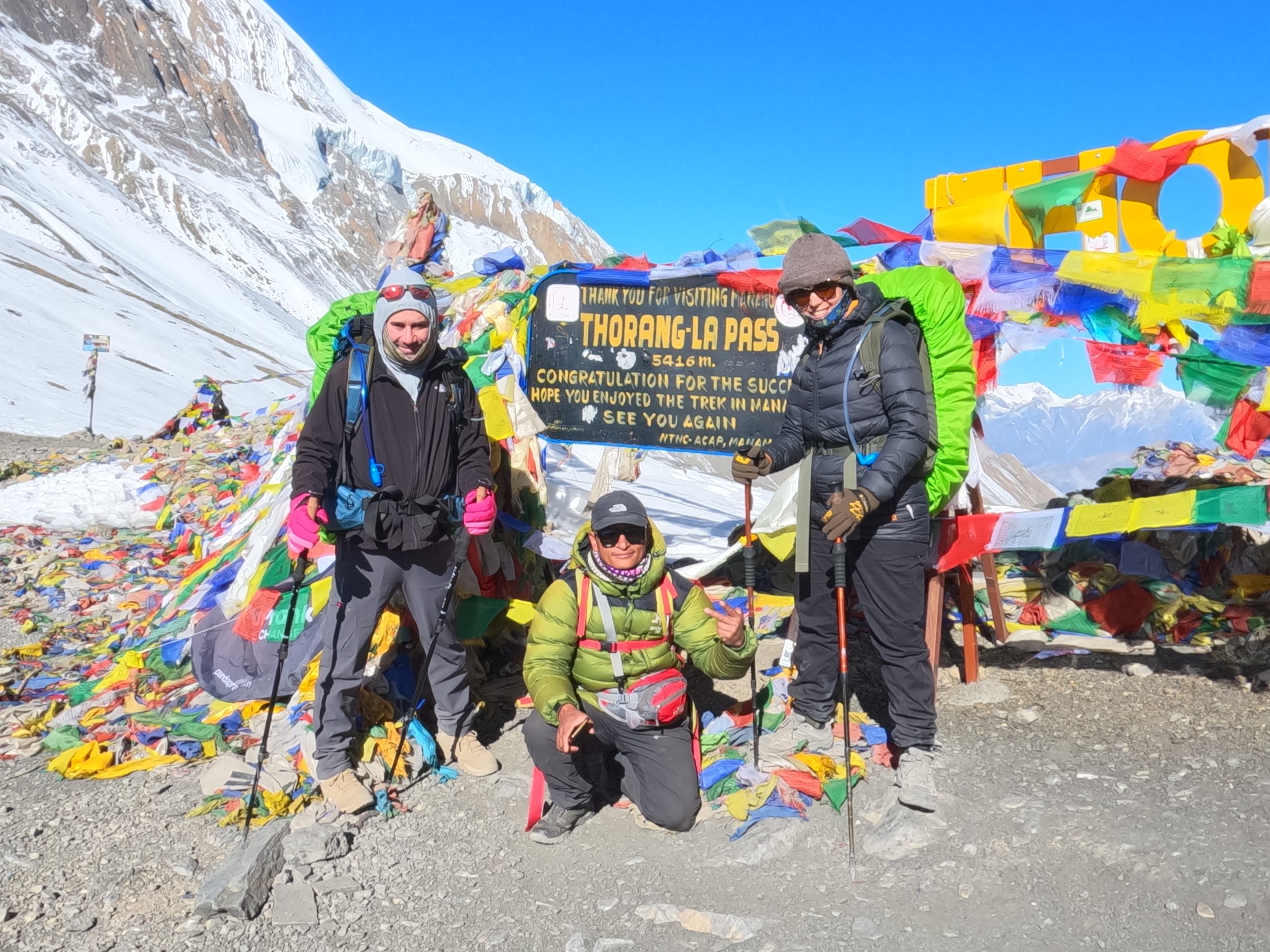
Majid, Sara and Shane
Annapurna Circuit Trek
Reviews from the globe

Hi! Im Sara, from Spain! Good morning! Yesterday we arrived from our 11-day trekking in Gokyo. There were 3 people from Spain, and I don’t know how to express how happy I felt. From the beginning, Himalaya Trip has been attentive to us, with a welcome at the hotel and...

Incredible!
Hi! Im Sara, from Spain!
Good morning!
Yesterday we arrived from our 11-day trekking in Gokyo.
There were 3 people from Spain, and I don’t know how to express how happy I felt.
From the beginning, Himalaya Trip has been attentive to us, with a welcome at the hotel and explanation of the route, rental of necessary equipment, etc.
The most important thing for us has been the ease and comfort with which Ramesh (our precious guide) has taken care of us at all time.
Attentive to the food, to make sure we didn’t get cold, adapting the route day by day according to the needs of the team.
I only have words of gratitude for Ramesh, who I would recommend for any trekking in the world.
In addition to being a great guide and knowing all the mountains of Nepal perfectly, he is a great person, with a big heart.
We hope to repeat in the not too distant future and hopefully it can be with him, since he is already part of our family.
Thank you for everything, from the bottom of my heart.
Thanks!!!!


Had an incredible experience doing the Mardi Himal trek with Himalaya Trip. Our guide Jay and our two porters Umesh and Masak were all simply incredible people. I’m a photographer so always have odd requests for weird areas to access for better angles or even simply just extending time in...
Couldn’t recommend enough
Had an incredible experience doing the Mardi Himal trek with Himalaya Trip. Our guide Jay and our two porters Umesh and Masak were all simply incredible people.
I’m a photographer so always have odd requests for weird areas to access for better angles or even simply just extending time in certain areas and all requests were met with so much help from the team. Highly recommend

I had an amazing time trekking with Surpa, particularly as this was my first solo trek. Beautiful views doing the Mardi Himal trek over 4 days, Surpa was a great guide who organised everything so well for me, kept me well fed, supported a good pace the whole way and...
Mardi Himal: fantastic trek & wonderful guide
I had an amazing time trekking with Surpa, particularly as this was my first solo trek. Beautiful views doing the Mardi Himal trek over 4 days, Surpa was a great guide who organised everything so well for me, kept me well fed, supported a good pace the whole way and always cheerful. Would recommend, and I would happily have him as my guide again in the future. The organisation and booking with Himalaya Trip was great, really responsive on emails and Harka was so helpful in organising everything and meeting me in Kathmandu for a briefing before the trip. Thanks so much!
Our 4 day Mardi Himal Trek with guide Milan and porter Plekta was a wonderful experience. The manager Harka Gurung met with us over coffee in Kathmandu and briefed us about expectations as this was our first trek. After that our guide met us at our hotel in Pokhara, helped...
Once in a lifetime experience in the Himalayas
Our 4 day Mardi Himal Trek with guide Milan and porter Plekta was a wonderful experience. The manager Harka Gurung met with us over coffee in Kathmandu and briefed us about expectations as this was our first trek. After that our guide met us at our hotel in Pokhara, helped us rent equipment, and handled all logistics in between. Our first time in the Himalayas was unforgettable between all the unbelievable landscapes and scenery, and we were lucky to have MIlan and Plekta with us to experience it all. I can’t begin to describe how ethereal sunrise is over the base camp, but hopefully you’ll be able to experience it soon!
TRIPS YOU MAY LIKE
Annapurna Base Camp With Poon Hill Trek
9 Days
Trekking
USD 625 per person
Annapurna Base Camp Trek
7 Days
Trekking
USD 449 per person
Annapurna Base Camp Helicopter tour
2 hours Days
USD 490 per person
Annapurna Circuit Trek
10 Days
Adventure Treks
USD 675 per person
Annapurna Circuit Trek with Poon Hill
14 Days
Trekking
USD 899 per person