Winter and Monsoon Special Offer! Get 5% off on all trekking packages in Nepal . Visit during June , July, August, December , January and February and take advantage of this limited-time deal.


Amazing Facts about Mount Everest
There are multiple mind-blowing facts about Mount Everest that an individual is unaware of. It is obvious that many of you have heard of Mount Everest and know it in general. Today’s blog will provide you with 15 Amazing Facts about Mount Everest. The gigantic Everest is shaped like an Egyptian pyramid and sits at an altitude of 8,848 meters from sea level. Multiple attempts were made to reach the summit of Everest, but it took around 30 years for people to reach the top. Here are some interesting insights about Everest that will amaze you.
Top 15 Amazing Facts about Mount Everest
Highest Peak in the world
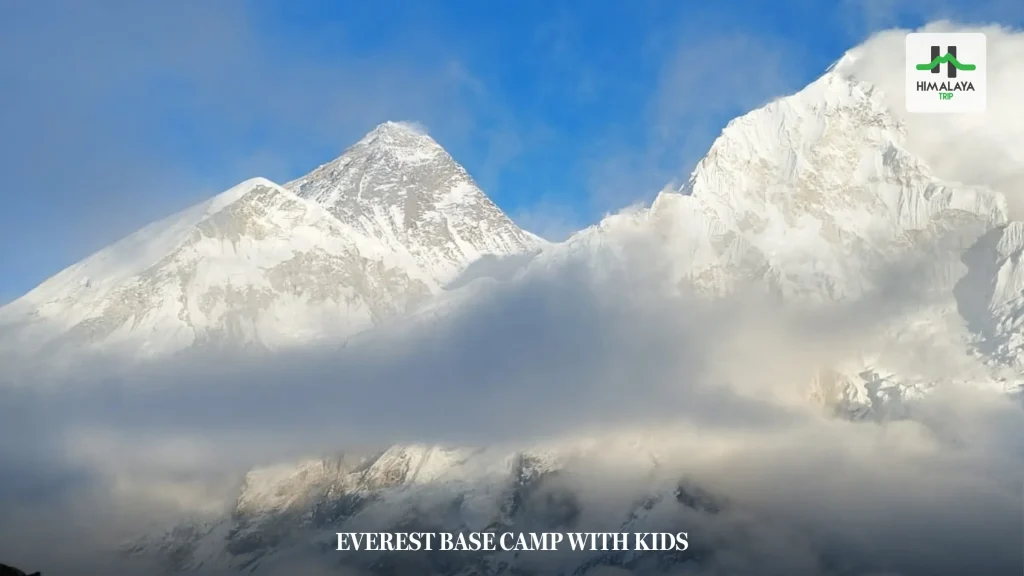
Mount Everest is the tallest peak in the World. It sits at an altitude of 8,848.86 meters from sea level. The world’s tallest peak borders two nations, Nepal and China, and the border runs across its summit point. Thousands of tourists trek to the Everest Base Camp yearly to witness the gigantic Everest from its base.

The Everest expedition is one of the most popular adventures in the world. There are two climbing routes to reach the summit of Mount Everest: the southern and the northern end. The south end of Nepal is the standard route to summit Everest. There are multiple names for Mount Everest. Nepali people call it ” Sagarmatha,” while the Tibetans call it “Chomolungma.”.
First Attempt to summit Everest
The British expedition team led by Lieutenant Colonel Charles Howard-Bury first attempted to climb Mount Everest. It was in the year 1921 AD. The British expedition team had a group of mountaineers, with Harold Raeburn as the mountaineering leader, and included George Mallory, Guy Bullock, and Edward Oliver Wheeler. Moreover, they also had a photographer and filmmaker, John Noel, on their team.
This was primarily a mapping and reconnaissance expedition to discover the climbing route. However, the expedition was unsuccessful because of the harsh weather conditions, and they could not reach the summit. It was May 29, 1953, when Sir Edmund Hillary of New Zealand and Tenzing Norgay Sherpa of Nepal made the first successful ascent of Mount Everest.
Death Zone on Mount Everest
An altitude of over 8000 meters is considered the “Death Zone on Everest. Generally, the oxygen level in the air is around 20% at residential altitudes. In the context of Mount Everest, the oxygen level above 6000 meters is around 10%. Finally, when you reach 8000 meters during your Everest summit, the oxygen level drops to 8%. At this altitude, your body cannot acclimate to the weather conditions, and you will need oxygen support. If you do not have the proper gear and oxygen support, you will die because of Hypothermia and Hypoxia.
There have been many deaths in this zone. An American mountaineer, Francis Arsentiev, is known as the sleeping beauty of Mount Everest, and she was one of the victims of the death zone. While returning from Everest, she was forced to stay a night above 8000 meters as she was slow to reach the top. She eventually died because of Hypothermia and Cerebral Edema. She was found lying on the snow where her guide rope was attached to her body.
Read More For Where Is Mount Everest Located?
High Death Rate:
The fatality rate during the expedition is about 1% on Mount Everest. The Everest climber will face several challenging ascents and descents during the summit. It is stated that over 340 people have died while trying to reach or while returning to the top of Mount Everest. The most interesting thing is that the majority of the dead bodies are still there on top. The leading causes of death are Hypoxia, Hypothermia, Avalanches, etc. There are a few climbers who died because of some unprecedented accidents like falls. Khumbu Glacier is claimed to be the scariest zone on the way to the summit.
2014 Avalanches
On April 18, 2014, a catastrophic ice avalanche struck the Khumbu Icefall on Mount Everest, resulting in the tragic deaths of sixteen Sherpas. The disaster occurred around 6:30 AM Nepal time on the peak’s south side, near the “popcorn field” at 19,000 feet (5,800 meters). The Sherpas were transporting supplies for climbers when the seracs on the western spur gave way.

Thirteen bodies were recovered within two days, but the remaining three were left unrecovered due to the perilous conditions. This incident marks the deadliest event in Everest mountaineering history, occurring in the same icefall where the 1970 Mount Everest disaster took place.
Traffic Jams
Interestingly, there will be a huge traffic jam to reach the highest mountain in the world. The photo by the famous mountaineer Nirmal Purja went viral, and there was a huge line of expeditions to climb Everest. There are specific seasons to climb the tallest mountain in the world. Every year, a specific number of tourists are permitted to climb to the summit of Everest. There will only be a few days in a particular season when the weather is favourable for climbing. As a result, there will be a huge crowd to summit Mount Everest. Moreover, the climbers have started leaving early for the ascent to avoid these traffic jams.
Environmental Impact
One of the most interesting facts about Mount Everest is that there are around 8000 kilograms of human faeces on the top of Mount Everest. These faeces or human poop does not decompose in frozen conditions. This excrement has polluted the mountain’s water resources. The drinking water that the climbers are using is being contaminated, and they are suffering from stomach illnesses. However, a new rule has been implemented, requiring the expeditors to carry human waste from the mountain. Pollution in the Everest region has been a concerning issue, and several organizations are collaborating with the government to minimize the environmental impact at Mount Everest.
Costly Expeditions
The Mount Everest expedition is one of the most expensive adventures in the world. The government of Nepal only allows a specific permit every year. Summiting to the top of Everest will cost you around $35,000 to $100,000. The cost depends on several factors, such as the expedition permit fees, Sherpas, no of days, the standard of the expedition, and many other expenses. The permit fees to reach the top of Mount Everest via the normal route will cost you $11,000. You cannot compromise on your climbing gear, which will cost around $6000-15000. Moreover, you must spend a lot on Sherpas, Camps/Tents, Food, Oxygen, Transportation, etc.
Sherpas Role to climb Mount Everest
The first thing that strikes our mind when we hear mountaineering is “Sherpa.”. These Sherpa people are native to the Himalayas of Nepal. One of the first people to summit the peak of Everest was a Sherpa, too. These people are extremely popular for mountain climbing. They work as your guide porters during your Everest summit. This has been the main source of their income.
Undoubtedly, Sherpas has been the best guide in the world. They are very skilful at climbing mountains. The Sherpa guides are paid over $5000 for the two-month expedition. Meanwhile, the Western guides will charge $50,000 at the same time. Moreover, they are not ordinary people. These Sherpas are extremely hospitable and innocent.
Extreme Weather
The extreme weather on Mount Everest poses severe challenges for climbers. The temperatures drop to -60°C (-76°F), and winds reach over 200 km/h (124 mph) in the Everest region. These conditions create a life-threatening environment where frostbite, hypothermia, and altitude sickness are common. Blizzards can last for days, reducing visibility to near zero, while avalanches triggered by heavy snowfall and shifting ice pose constant threats. Despite all these dangers, climbers continue to attempt the ascent to reach Mount Everest. Moreover, the weather in the Himalayas is unpredictable, making it more challenging to reach the summit of Mount Everest.
Helicopter landing on the top of Mount Everest
On May 14, 2005, French pilot Didier Delsalle landed his Euro copter AS350 B3 helicopter on Mount Everest’s summit, commemorating the 50th anniversary of the first ascent by Sir Edmund Hillary and Tenzing Norgay. Starting from base camp at 17,192 feet, he ascended to the 29,035-foot summit, staying for about two minutes. His helicopter had a powerful engine that made the ascent possible.
Later, this event was widely criticized all across the globe. Nepal’s government then banned flying to the top of Everest, stating environmental and safety concerns. However, the landing on the highest mountain on the planet is been recognized as one of the most daring adventures in mountaineering history.
The Two O’clock rule for Mount Everest climbers
There is a specific turnaround time during the Mount Everest expedition. This rule indicates that every climber should return no later than 2:00 PM. The weather on Mount Everest changes in the afternoon. The wind blows heavily, making it risky for the climber to climb the summit. No matter at what height the climber is, they should be on their way back after 2:00 PM. This rule is among the many safety protocols a mountaineer should follow while summiting Everest. This rule ensures that the climbers return to their camp before nightfall.
The summit of Mount Everest borders China and Nepal
The summit of Mount Everest lies on the border of Nepal and China. The boundary line runs across the summit of Mount Everest. This means the climbers who summit Mount Everest will technically cross Nepal and reach Tibet or vice versa. It depends on the route they’re coming from. There are two ends to climb Mount Everest. The southern end is from Nepal, and the Northern end is from Tibet. So, China and Nepal are the joint owners of the Mount Everest.
It takes more than two months to summit Mount Everest
Climbing Mount Everest is far from an ordinary adventure, often requiring over two months to complete the ascent and descent. This extended timeframe allows climbers to acclimate to high altitudes and wait for favourable weather conditions. Reaching Everest Base Camp at 5,364 meters takes just a few days, and most of the time is spent on the climbing route. The ascent and descent together can take up to two months or more. An extraordinary feat was achieved on May 21, 2004, when Pemba Dorje Sherpa set a world record by reaching the summit in just 8 hours and 10 minutes, marking the fastest ascent in history.
How old is the Mount Everest?
The age of Mount Everest is a subject of debate, with no definitive answer. However, research suggests that Everest is approximately 60 million years old, dating back to the formation of the Himalayas from the collision of the Eurasian and Indian Plates. In 1924, Noel Odell discovered marine fossils on Everest, indicating the mountain was once submerged under the ocean. The limestone and sandstone at its summit are considered submarine sedimentary rocks, possibly around 450 million years old. Despite these findings, geologists generally agree that the formation of Mount Everest itself began about 60 million years ago.
You Can Check

Everest Base Camp Trek
14 Days
Adventure Treks
USD 1,349 per person
Conclusion
Mount Everest is the highest mountain in the world. The new official height of Mount Everest is 8848.86 meters above sea level. Mount Everest was named after Sir George Everest, a British surveyor general of India. It was officially named by the Royal Geographical Society in 1865. The Everest expedition is one of the most popular adventures in the world. Despite being one of the deadliest climbs, many mountaineers climb the mountain every year. Interestingly, Mount Everest is located on the borderline between Nepal and China. Moreover, many trekkers trek to the Everest Base Camp to enjoy sweeping views of the Khumbu mountain range.
In summary, protecting and preserving our natural environment comes with numerous challenges. Despite these, the majestic Everest will always stand tall, symbolizing perseverance. One doesn’t need to summit this peak to experience a sense of accomplishment; there is much to gain from the small things you see or hear about Everest.