Winter and Monsoon Special Offer! Get 5% off on all trekking packages in Nepal . Visit during June , July, August, December , January and February and take advantage of this limited-time deal.


Culture In Manaslu Trekking Region
The culture in Manaslu Trekking region is among the most diverse and well-preserved in Nepal. The remote geography, close distance to the Tibetan border, and long restricted access to the region have shaped and protected the culture of Manaslu. Sitting under the shadow of the eighth-highest mountain in the world, Mount Manaslu, the region reflects a unique and rich blend of traditions, deep-rooted beliefs, and lifestyles.
Trekking through the Manaslu region, a rich living culture unfolds at every step. To say it specifically, you will step into three distinct cultural worlds. Every encounter is different, reflecting their own tradition, customs, and way of life. The Manaslu Circuit remained restricted to outsiders until 1992. Meanwhile, the Tsum Valley was only opened to visitors in 2008. The long isolation from the outside world for a decade helped preserve the region’s culture and customs. As a result, ancient customs, languages, and the Himalayan lifestyle and culture remain untouched by minimal outside influence.
The restricted history of Manaslu also makes the cultural experience feel more authentic than other commercialized regions like Everest and Annapurna. You can see traditional villages with age-old architecture, centuries-old monasteries that remain active centers, mani walls, and chortens. Visitors often find the entire journey more meaningful than just another route to conquer. In this blog, you will explore the cultural landscape of the Manaslu region in depth. From local ethnic communities to religion and sacred sites, you will discover a living heritage that defines the true essence of the Manaslu region. So, let us dive deeper into the culture in the Manaslu trekking region!
Table of Contents
People of the Manaslu Region
Let’s start with the locals of the Manaslu region. Here is a brief about the people in the Manaslu route:
Gurung People of the Lower Valley
The Gurung people mostly reside in the lower, subtropical valleys of the Manalsu region. They are one of the culturally and historically significant indigenous groups. The Gurung people are known for their deep-rooted traditions and strong community bonds. Historically, the Gurung men have served as Gurkha soldiers and have earned global recognition for their bravery. They reside in lower areas like the Soti Khola, Machha Khola, and Jagat. You will experience the Gurung culture, the first cultural layer of the Manaslu region.
Traditional Gurung houses are built of stone and mud and have slated roofs. The agricultural design reflects both practicality and a deep connection with the region. The Gurung ethnic group mostly leads a semi-agrarian lifestyle, combining agriculture with animal husbandry. They plant millet, maize, and rice on the hillside terrace fields. Similarly, they raise livestock like buffaloes, goats, and cows. While traversing the lower Manaslu trekking routes, you will see green terraced fields and traditional houses. Their lifestyle has largely remained untouched since ancient times.
The Gurung people follow a unique blend of Buddhist and animist traditions. They worship Buddhist deities, as well as nature and other spiritual deities. You can see fluttering and colorful prayer flags on the roofs of the houses. Similarly, there are small shrines in the Gurung villages. Along with the religion, the Gurung communities have their own unique language and attire. They speak Nepali, but their native tongue is Tamu Kyi. They also have their unique oral traditions, folk songs, and tales.

Gurung communities are well-known for their warm and friendly hospitality. They also have a strong sense of unity. During festivals like Tamu Loshar, the Gurung New Year, the whole community comes together for communal feasting, dance, and music. When you first start your trek in the Manaslu region, you will experience their warmth firsthand in the local teahouses. It will provide you with the first cultural introduction before you head deeper into the Tibetan-influenced cultures in the higher valleys.
Nubri People of the Mid and Upper Valley
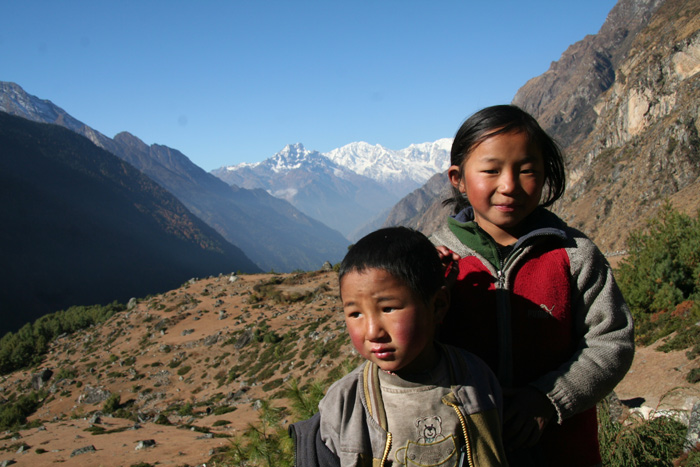
In the mid and upper areas of the Manaslu region, the cultural landscape shifts dramatically. You will come across the Nubri people. They reside in the upper Budhi Gandaki Valley and in villages like Namrung, Lho, Samagaun, and Samdo. The name Nubri means “western mountains” in the local dialect, and their culture reflects the deep influence of Tibetan Buddhism. The influence stems from the region’s proximity to Tibet and centuries of trade and migration.
In addition to the strong influence of Tibetan Buddhism, the Nubri culture is also shaped by the harsh mountain environment. At high altitudes, the land is rugged and barren, and the climate is colder, limiting agriculture. They mostly practice seasonal farming of hardy crops such as potatoes and barley. Hence, the community heavily relies on yak herding and trade. The higher routes were once part of the ancient trans-Himalayan trade route. Yak caravans are still a common sight in these areas.
The houses of the Nubri community reflect the harsh Himalayan environment and their deep-rooted Tibetan culture. The houses are built of stone and have flat roofs. To provide insulation against freezing temperatures and strong winds, the houses’ structures are rectangular, with thick walls. Similarly, the houses are multi-storied. The windows are usually made with wood and painted in traditional colors. While trekking along the mid valley of the Manaslu region, you can see clusters of stone houses forming closely connected villages.
Religion plays a central role in the lives of the Nubri people. For them, monasteries are not only places of worship but also hubs of communal gathering. The Manaslu Trek trails along the mid-region are dotted with colorful prayer flags, mani walls, and chortens. These offer a sense of spirituality and a glimpse at the Nubri culture. Like the Gurung people, the Nubri people also have their own unique language, customs, and attire. The community comes together during festivals like Lhosar (Tibetan New Year). They celebrate it with vibrant dances, rituals, and communal feasts. The Nubri is a living cultural heritage and symbol of resilience and adaptation. Centuries-old traditions shape their lifestyle and remain unchanged.
Tsumba People of Tsum Valley
The Tsum Valley lies in the restricted area of the Manaslu region. The Hidden Valley, also known as the “Sacred Himalayan Pilgrimage Valley,” is the homeland of the Tsumba people. They are one of the most isolated communities in Nepal with a well-preserved Himalayan culture. The Tsumba people live in high-altitude, remote areas such as Chhokang Paro, Nile, Mu Gompa, and Rachen Gompa. Their culture is also deeply influenced by Tibetan culture, and their religion heavily influences their lifestyle.
Since the Tsum Valley was only opened to visitors in 2008, the Tsumba culture and lifestyle feel untouched by time. Their daily lives revolve around spiritual practice, and they follow the principles of compassion and non-violence. The reason spirituality is strong in the valley is that the legendary Tibetan saint Milarepa visited and meditated here. As a result, hunting, animal sacrifice, and harming living beings have been forbidden traditionally. Religion is the way of life for the Tsumba people. Similarly, the sacred sites like Mu Gompa and Rachen Gompa play a crucial role in their lives.

The Tsum people speak their own dialect, closely related to Tibetan. Their language, culture, attire, and rituals differ even from those of the Nubri communities. But like the Nubri people, they mainly engage in trading, yak herding, and growing crops such as barley and potatoes. Similarly, their lifestyle is adapted to the high-altitude environment. They rely on seasonal cycles for survival. The traditional houses of the Tsumba people are made with stone, mud, and timber. These houses are designed to withstand cold temperatures, strong winds, and harsh winters.
The Tsumba community has a strong sense of equality and harmony. In ancient times, polyandry (brothers sharing one wife) was practiced to preserve family land, but it is less common today. Entering the Tsum Valley is like stepping back in time. Here, the world feels slower, quieter, authentic, and deeply spiritual. You can actually live and feel the ancient traditions, beliefs, and way of life. The Tsumba people are not only the residents of the valley but also the guardians of the ancient culture of the Manaslu region.
Religion Along the Trail: From Hinduism to Tibetan Buddhism
Trekking in the Manaslu region is a fascinating and layered spiritual journey into the Himalayas. The region is an example of religious harmony, with Hinduism, ancient Bon traditions, and Tibetan Buddhism coexisting in perfect harmony. The religion also gradually shifts with the landscape as you explore the Manaslu trails. In the lower valleys, Hinduism has a strong influence. There are small temples and shrines of Hindu gods and goddesses in the villages. In settlements like Soti Khola and Jagat, religious practices shift with animistic beliefs and local traditions. This reflects the cultural identity of the Gurung people.
As you move into the midvalley of the Manaslu region, the religious atmosphere shifts. You will start to notice the blend of Hinduism and Buddhism. In Himalayan villages like Deng and Namrung, you can clearly see these changes. Colorful prayer flags, mani walls inscribed with sacred mantras, and chortens are scattered along the trails. Similarly, you can also see prayer flags fluttering on the top of the stone-built houses’ roofs. Religion is not limited to monasteries, but also shapes the way local people live and interact with nature.
Tibetan Buddhist culture becomes more dominant in the higher altitude areas of the Manaslu region, such as Lho, Samagaon, and Samdo. You can see monasteries, chortens, and prayer wheels everywhere. Traversing through these villages, you can feel the deep spiritual atmosphere. The local community follows the teachings of Tibetan Buddhism, i.e., compassion, harmony, and karma. There are also traces of the Bon religion in Tsum Valley, an ancient religion that predates Tibetan Buddhism. The Bon religion’s key beliefs and practices revolve around nature worship, shamanic traditions, and ritual offerings. This progression of religion during the Manaslu Trek in Nepal makes it a powerful spiritual journey, not just a physical one.
Sacred Sites and Monasteries Along the Manaslu Trek
Now that we have discussed the local people, culture, and religion, let us dive into the sacred sites along the Manaslu route:
Pungyen Gompa near Samagaon
One of the most important and spiritually significant monasteries in the Manaslu region is the Pungyen Gompa. It is located near Samagaon in the Nubri Valley at an altitude of around 4,000 m. The gompa faces north toward Mount Manaslu, offering stunning views of the towering mountains and landscapes. The Pungyen Gompa is a powerful spiritual center for the Nubri communities, where Tibetan Buddhist rituals, ceremonies, and prayers are regularly performed.
The ancient Pungyen Gompa is believed to have been built during the early spread of Tibetan Buddhism in the Nubri region. Similarly, it is associated with the Nyingma Buddhism, one of the oldest schools of Tibetan Buddhism. The monks still follow the age-old practices at the monasteries. It is an active religious site for the Nubri people that reflects their deep spiritual connection with nature, mountains, and faith.
Mu Gompa in Upper Tsum Valley
Mu Gompa is one of the highest and most important monasteries in the restricted Tsum Valley. It sits at an altitude of 3,700 m above sea level. The long, demanding trail to the gompa passes through traditional villages such as Chhokang Paro and Nile. It is the major spiritual center for the Tsumba community. Surrounded by rugged cliffs and dry and barren landscape, Mu Gompa is isolated from the modern world. The remoteness, deep silence, and strong spirituality make it a powerful site of the Manaslu region.
The monastery follows traditional practices, and locals gather for religious ceremonies and blessings. Like Pungyen Gompa, Mu Gompa is also closely associated with the Nyingma tradition. There are around 20 monks who live here, performing prayer, meditation, and spiritual study. They perform daily rituals like chanting prayers, reciting sacred texts, meditating, studying Buddhist philosophy, and worshipping. Mu Gompa stands as a symbol of resilience that shows that faith can thrive even in the most challenging environments of the Himalayas.
Milarepa’s Piren Phu Cave
Another important sacred site in the Manaslu region is Milarepa’s Piren Phu Cave. Also known as the Pigeon Cave, it is located near the upper Tsum Valley, close to villages like Nile. It is tucked into a steep rock face, surrounded by rugged cliffs and alpine terrain. According to the legends, the revered 11th-century Tibetan yogi Milarepa meditated here. As a result, the cave is a highly sacred pilgrimage site for locals, monks, and pilgrims.
The entrance is decorated with colorful prayer flags. Inside the Piren Phu Cave, there are small Buddhist shrines, statues, and sacred inscriptions. There are rock formations that are believed to bear Milarepa’s handprints and footprints. Pilgrims light butter lamps and place offerings. Many also meditate here as the cave carries a strong sense of spirituality, devotion, and belief. Milarepa’s Piren Phu Cave remains a sacred site for reflection, meditation, and spiritual connection for the Tsumba people and Tibetan Buddhists in the region.
Mani Walls, Chortens and Prayer Flags Along the Trail
The sight of fluttering prayer flags, mani walls, and chortens is common along the Manaslu Trek trail. You might have noticed that we keep mentioning them above as well. These are not just decorations linked with Buddhism. They are also sacred Buddhist symbols and spiritual landmarks. The mani walls are long stone walls carved with mantras. These are inscribed with prayers for compassion and peace. You can see these inscribed stones lining the trails.

The chortens, or stupas, are spiritual markers often placed at village entrances, mountain passes, and important crossroads. These are spiritual structures that honor Buddha’s teachings, house relics, and symbolize the path to enlightenment. Similarly, colorful prayer flags are hung from ridges, suspension bridges, and house rooftops. These are believed to carry prayers into the wind and spread blessings across the valleys. The mani walls, chortens, and prayer flags reflect the sacred atmosphere of the Manaslu region, which blends into daily life and nature.

Manaslu Circuit Trek
11 Days
Adventure Treks
USD 849 per person
Languages of the Manaslu Region
The Manaslu region is also linguistically diverse. As you move through different elevations and cultural zones, there is also a shift in the language. The languages are part of the local cultural identity. It is deeply tied to their traditions and community. In the lower valleys, Nepali is the most widely spoken language. It is a common means of communication in public spaces like schools, markets, and accommodations. The Gurung people speak their Tamu Kyi, their native language.
As you move to the mid valley, the language becomes more Tibetan-influenced. The Nubri people speak Nubri, a Tibeto-Burman language. There are several dialects of the Nubri language, depending on the area. In a village like Samagaun, you will hear a local dialect known as Galle. It is specific to the area, and there are subtle differences in pronunciation and vocabulary. Moving to the remote Tsum Valley, the linguistic atmosphere changes again. The Tsumba people speak a Sino-Tibetan language known as Tsumke or Tsum. It is closely related to the Nubri language but distinct, with its own identity.
The different languages and dialects are rarely written down. They are mostly passed down orally, which makes them vulnerable and increases the challenge of their preservation. The languages of the Manaslu region are an important part of the heritage. Each language and dialect has its own pronunciation, vocabulary, and expressions. These have been shaped by geography, trade routes, and centuries of trade and cultural exchange with Tibet. The linguistic diversity adds another layer of richness to the Manaslu Trek for trekkers.
Festivals of the Manaslu Region
In the Manaslu region, where Tibetan Buddhism has a strong influence, two major festivals are celebrated. They are as follows:
Lhosar, the Tibetan New Year
Lhosar is widely celebrated among the Nubri and Tsumba communities in the mid and upper valleys. The festival falls between January and February, following the Tibetan lunar calendar. Lhosar is a time of renewal and purification. Like the Nubri and Tsumba people, the Gurung people also celebrate Lhosar. It is known as Tamu Lhosar and usually celebrated in December or January. The Gurung New Year follows Nepali calendar tradition.
The families prepare for the new year by cleaning their homes, preparing special foods, and performing rituals to remove negative energies. On the day of the festival, special ceremonies and rituals are performed in the monasteries. The monks also perform special masked dances. During the Lhosar festival, the locals also dress in their traditional costumes, exchange greetings, and feast together. Lhosar also reflects the strong community spirit, as people come together to pass down their culture to younger generations.
Saka Dawa, Buddha’s Birth, Enlightenment, and Death
The Saka Dawa is another important festival celebrated in the Manaslu region. It is a spiritually powerful and holiest festival in Tibetan Buddhism that marks three sacred events in the life of the Buddha: his birth, enlightenment, and death. Saka Dawa is celebrated on the same full moon day of the fourth lunar month in the Tibetan calendar. It falls in May or June on the Gregorian calendar. The festival is also considered the month of extraordinary merit.
In the villages of the Nubri and Tsum Valley, the locals engage in various acts of merit during the festive month. They visit monasteries, pray, fast, and light butter lamps. They also avoid harming any living beings and avoid eating meat. Prayer flags are hung across the trails. Similarly, the monasteries hold special ceremonies. The monks chant sutras and perform rituals for compassion and spiritual awakening. Visiting Manaslu during Saka Dawa feels even more spiritual than at any other time of the year.
Why the Manaslu Region’s Culture Is Better Preserved Than Everest or Annapurna
The main reason the Manaslu region’s culture is better preserved than that of Everest or Annapurna is its restricted access and controlled tourism. Unlike the two regions, Manaslu was closed to foreigners until 1992, while the Tsum Valley was opened to visitors only in 2008. Even now, the area is restricted and falls under government control. Trekkers must obtain a special permit and hire a licensed guide to trek in the area. The limited access has directly reduced mass tourism and helped to preserve the culture better.
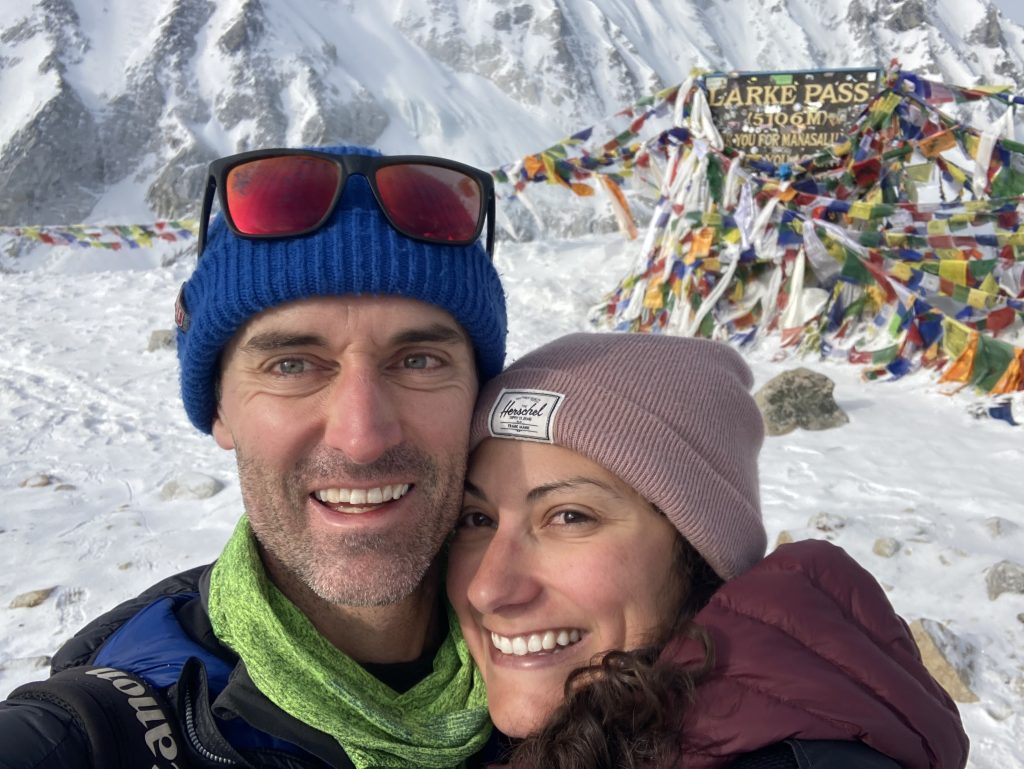
Amazing trek to Tsum Valley and Manaslu
My wife and I had such an incredible experience from start to finish with Himalaya Trip! We trekked the Manasly Circuit and the Tsum Valley and had the trip of a lifetime! Harka was great with booking and planning the trek. He was quick to respond, flexible, knowledgeable and honest. Our guide Ramesh and our porter Sandeep were both awesome. They genuinely cared about us having a great trip and they did everything they could to make sure we did. We feel so fortunate that Himalaya Trip was recommended to us and that we were able to book through them. They truly went above and beyond in everything and made our trip to Nepal unforgettable!


12 Days Manaslu Circuit Trek from Kathmandu
We have just got back from an amazing 12 day Manaslu circuit trek organised incredibly quickly by Harka. He was super responsive and kept us updated at every point. Our guide, Mr Jayaram was amazing – he had incredible insight into the area, was always enthusiastic and checked in with us about our welfare regularly. Mr Jayaram was great at setting a good pace, ensuring we could take in the sights and save enough energy for the high pass. He also altered the itinerary to give us a slightly shorter day which had the benefit of a better view of Manaslu. Our porter, Shiva, was a great guy teaching us the ways of Nepalese rummy. To note; the public bus to Soti khola is little short on leg room but we had a sofa bus on the return which was comfortable. Absolute 10/10 experience all round, thank you!


Again, wonderful experience
Thanks to Himalaya Trip going to Nepal feels like going home. I completed the Manaslu Circuit trek two weeks ago, just after the protests in the Kathmandu valley. That has been my second trek in Himalayas with Himalaya Trip, and again it was an awesome experience: exploring extraordinary places, foods, culture and traditions. My guide, Ramesh took excellent care of me and made sure I would see off-the-beaten-track places, forgotten villages and that I would try local specialities tourists normally do not have chance of trying. Everything was well thought of and organized and I felt completely satisfied and safe. It is the best time to go trekking now, as the skies are clear, weather is favourable and the life has come back to normal in the Kathmandu valley after the demonstrations. I am looking forward to booking my next trip with these guys next year!


guide, Jay was a really nice guy
Myself and three other guys who usually trek independently got together and used Harka’s company to organise aspects of our trek in Tsum valley. He responded to email enquiries promptly and did everything that was asked of him. He was personable and straightforward and immediately proved his worth before even leaving KTM when one of our group lost his passport and all his cash on the first day! Harka was able to sort out the issues with the Embassy and bank and made what could have been a total hassle a lot easier. Our guide, Jay was a really nice guy – professional, likeable and easy going. If you’re looking for a company to organise your trek, I can wholeheartedly recommend this one.
UK, April 2014

Manaslu circuit trek and Tsum valley
Harka provided us a confident and great guide for the Manaslu circuit trek and Tsum valley. We were 23 days in the mountains which was amazing. our guide was very reliable and helped with the meals and homestay accommodation. We also found him fun and a good companion for the journey. Overall we highly recommend Manaslu circuit and Himalaya Trip
UK, April , 2016


Excellent trekking company and guide Jayandra
We recently completed a 4 week trek in Manaslu and Tsum Valley with Himalaya Trip and Jayandra Gurung as our guide. Jayandra was very responsive to our email queries and got back to us quickly. On the trek, Jayandra was very conscientious about doing a good job and keeping us safe. He was patient and flexible with our suggestions. We specified wanted a guide who was flexible and responsive to our ideas and suggestions and Jayandra was excellent. Decisions were made together. He is easy going and very pleasent to be around. Jayandra went above and beyond by carrying fresh fruit for our dessert each night. What a treat! We were also able to visit Jay’s home in Kathmandu and his village while on the trek to meet his family. We really appreciated this opportunity. The head of the company, Harka, was also very helpful, and kept the communication flowing when Jay was out trekking with other clients. We had an excellent trek. No complaints at all.
Canada, Dec 2016

Lifetime memory thanks to Himalaya Trip / Guide / Porter
I did quite a bit of research for a reputable agency for my 16 day Manaslu Circuit trek. I emailed a number of different agencies, and got price quotes that ranged quite a bit. I decided to go with Himalaya Trip because the price was great, the communication was excellent, and equally important, the fixed prices quoted for things like a private jeep were exactly what the cost should be — this agency was not trying to hike up prices and make money off me like so many other agencies tried to do. I felt like I can trust these guys.
Our guide Jay, and porter Deep, were two really great guys. We shared a lot of laughs with them and they were near the top of the list of why this excursion was so great.
Jay was always looking out for us, making sure we’re ok, and safety was always his top priority. Our agency recommended crampons for the pass, and they came in handy. Most others that we passed on the trail did not have them.
If you’re looking to book a trekking trip or any other tour in Nepal, you will not go wrong with this company. Just email them and you will see … the communication alone will put you at ease.
FYI – many people like to “shop around” in Kathmandu for agencies because they will find a better price. We met some people who did that, and the price we paid with this agency was significantly lower than they ended up paying.
USA, March 2017

Magnificent Manaslu
The trip of a lifetime on one of the best treks in Nepal, professionally organized by Harka and his team at Himalaya Trip and especially my expert guide Shyam.
On arrival in Kathmandu Harka had all my permits ready. What followed was 17 days of pure adventure. Thanks to Harka. Himalaya Trip get a five star rating. Will be back again soon.
Ireland, Oct 2017

We just finished the Manaslu Circuit
We just finished the Manaslu Circuit. We booked with Harka and his team and it was perfect. The organization was very efficient: Harka is very responsive, and he answered all our (many!!) questions in no time.
Our guide Jayandra was the best. He is a wonderful guide, never trying to hurry, always being flexible and calm. We wanted the itinerary not to be too strict, as we like to take our time and walk as far as we get, not as far as the itinerary tell us. He helped us a lot, always showing us to the nicest locations in the villages and some great spots for our breaks. He always knew if there would be another good overnight option a little further down or if it was better to stay and most importand: He obviously always knew where to get the best Dal Bhat 😉 No request was ever too much trouble. We had a great trek!
Thanks a lot for the unforgettable time.
Germany, Nov 2017

Manaslu Circuit Trek was a Wonderful experience
The whole Manaslu Circuit trek was a Wonderful experience! We enjoyed it thoroughly. Our guide Om an our porter Ram were just pefect in assisting, organizing and telling us everything we wanted to know. The weather at the beginning of October was also perfect. Not to forget Harka, who organized everything very well from Kathmandu. I can highly recommend Himalaya Trip ! Rainer Goetzelman
, October 26, 2018


Manaslu trekking with Surpa (Guide-porter) and Min (porter)
We had a fantastic time doing the Manaslu trekking with Surpa and Min. Surpa was really knowledgable and always tried to find the best places to stay for us. His help and support were necessary to bring us up to the top of Larkya La pass while one of us had altitude sickness. Min, our porter, was also fantastic. Always happy and ready to play card games when done with the day. Not only it was a physical experience but also a human one. Thank you Himalaya Trip for that time. Highly recommend!
French, April 2019
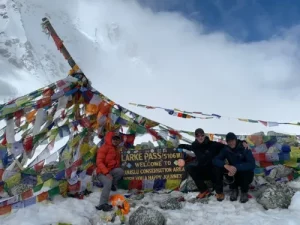
Wunderfull and unforgettable views and experiences Manaslu trekking including Larka pass 5106 meters.
We, father and son, did the 14 Days Manaslu Trekking in may 2022. We have very good experiences with Harka and Jay. They are very helpfull to make you a good time. From beginning to end they are pleased to help you to make up youre plans.
Germany, May 2022
Manaslu Circuit Trek with Himalaya Trip
We did the Manaslu Circuit Trek with Himalaya Trip and it was quite awesome. We had quite some luck because monsoon season was bit longer as usual. But it almost did not rain.
Big thanks to Jay our guide and Mesak our porter. They did a great job and were really flexible, so we could have influence in the program. Also open to all the question we had about Nepal and especially the valleys we were in.
Switzerland, September 2023

Himalaya Trip is as good as it gets
Himalaya Trip is as good as it gets! The owner, Harka Gurung is an extremely patent gentleman, very easy to communicate with, and his response time to email questions is great. Harka’s brother Hari was our guide to the Tsum valley and up to the Mu Gompa and Ani Gompa Monasteries. Both Harka and Hari very informative and professional.
I would highly recommend their services to anyone looking to trek in Nepal. Five out of five stars!
USA, May 2014In addition to limited access, the Manaslu region is less developed and less commercialized. The Everest and Annapurna regions have good accessibility and dense trekking networks. They are also commercially active. As a result, it has blended the local culture with modernization.On the other hand, the Nubri and Tsum Valley of the Manaslu region remain geographically isolated. The road access and infrastructure are limited. Hence, these areas still maintain their centuries-old culture and practices with minimal modernization. The Manaslu region is one of the few regions where a living Himalayan culture remains intact.
Conclusion
The culture in Manaslu trekking region is a unique blend of diversity, age-old traditions, and deep-rooted spiritual heritage. It remains untouched by mass tourism and modernization. Every ethnic community has its own distinct and rich cultural layer. The religion, traditions, customs, and language have been preserved and passed down from one generation to another. One can feel the diversity as one moves through the changing landscapes of the Manaslu region.
The Manaslu region offers not only an authentic Himalayan adventure but also a cultural and spiritual journey. It is a powerful and emotional experience. If you too want to experience them first-hand, Himalaya Trip is here for you. From Manaslu Circuit Trek to Tsum Valley Trek, check out our website for more information about trekking in the Manaslu region!