Winter and Monsoon Special Offer! Get 5% off on all trekking packages in Nepal . Visit during June , July, August, December , January and February and take advantage of this limited-time deal.


Best Viewpoints In The Langtang Region
When it comes to the best viewpoints in the Langtang region, there are several popular ones and some hidden spots. From the iconic Kyanji Ri to the quieter Tsergo Ri, the high mountain passes of Ganja La Pass and Laurebina Pass, the holy Gosaikunda Lake, and more, you will be treated with mesmerizing views that capture the true essence of the Himalayas!
The Langtang region is among the lesser-known and less commercialized destinations for trekking in Nepal. Located within Langtang National Park, it is the most accessible trekking region from Kathmandu. Its diverse trails take you through charming, traditional Tamang villages, Himalayan landscapes, and scenic viewpoints. These spots offer gorgeous sweeping views of the Langtang ranges, glacial valleys, and surrounding scenery. Whether you are a first-timer looking to start your Himalayan adventure or a seasoned trekker looking for a thrilling challenge, Langtang will not disappoint you.
There are multiple routes in the Langtang region that take you to different viewpoints. Depending on the spot, you can enjoy the iconic views of the Langtang ranges and landscapes from different angles. Each offers a unique perspective of the surrounding peaks. In this blog, we will take you through the must-visit and best viewpoints in Langtang region. We will also explain their difficulty and major highlights. Likewise, we will also provide you with practical tips and information necessary for trekking in the Langtang region. Now, let us begin!
Table of Contents
The Best Viewpoints in the Langtang Region
The Langtang region offers many viewpoints, each with unique and spectacular views. These viewpoints are located in different areas and at varying altitudes. They offer a perfect blend of quiet trails and raw Himalayan beauty. Likewise, every viewpoint offers diverse scenery that feels rewarding rather than repetitive. Here is a list of the best viewpoints in the Langtang region:
Kyanjin Ri (4,773 m)
The most accessible and popular viewpoint of the Langtang Valley is Kyanji Ri. It is located right above the spiritual hub of Kyanjin Gompa. The hike from the gompa to the viewpoint is moderately challenging. It is suitable for trekkers with reasonable fitness, including beginners. Kyanjin Ri is one of the best spots to watch the gorgeous sunrise and sunset views. It offers an up-close and grand view of Langtang Lirung. Similarly, you can enjoy grand views of Langshisha Ri and nearby snow ridges toward the Tibet border. Below, you can see the entire Langtang Valley with rivers, glaciers, rugged landscapes, and alpine meadows.

Tsergo Ri (4,984 m)
Another popular viewpoint in the Langtang region is Tsergo Ri, also known as Tserko Ri. It is located in the northeast of Kyanjin Gompa and is slightly more challenging than Kyanjin Gompa. The altitude of Tsergo Ri is also slightly higher. The hike is more demanding with steep trails and rocky ridges. However, anyone with reasonable fitness and proper acclimatization can take the hike. From the summit of Tsergo Ri, you can catch panoramic views of Langtang Lirung, Langtang Ri, and Dorje Lakpa. Likewise, you can witness the distant ridges of the Ganesh Himal range. You can see the Langtang Valley below, with rivers, glaciers, and rugged terrain.


2nd time with Himalaya Trip
I have just completed the Langtang Valley trek with Umesh as my guide. This is my second time using Himalaya Trip and they delivered a fantastic Nepal experience once again. Harka was a pleasure to deal with and makes all my trip arrangement’s stress free. Both trips Harka has provided me with 5star guides. My first trip in 2024 was with Surpa and for my recent Langtang trip was with Umesh. Both guides have been exceptional at making my Himalayan experiences an absolute pleasure. Thank You.


Very memorable Langtang trek with great guidance and wonderful views
We had a wonderful Langtang trek with Jay our guide and Home and Bishal our porters.we were looked after so well.we enjoyed such a genuine experience in the mountains at the tea houses and walking in all the different terrains and felt very safe at all times


Himalaya Trip is just brilliant
We had the most wonderful time with Jay, Home and Bisal on Langtang Gosaikunda trek. We felt safe at every moment, with our trek expertly guided by Jay. This allowed us to enjoy both the breathtaking scenery, as well as the company of our fellow travellers. We could not recommend Himalaya Trip more highly: from Harka meeting us at the airport, to our final (in some cases, tearful) farewells at the end of the trek, everything was just brilliant.


Wonderful langtang Gosaikunda trek
Wonderful 14 day trek along the stunning Lagtang valley & on to the majestic Gosaikunda lake. Truly varied trek taking you through lush forests, then close up to mountain peaks before ascending the high Larubina pass. We were recommended this trip by a friend who did it last year with this company. Harka’s advance organisation was excellent always answering our many queries ! Our guide Jai is super experienced and took our safely and well being seriously. Our two porters Home & Bisal always helpful and friendly. It’s a family team and means a warm team spirit along the way. Thank you everyone for a truly memorable experience in beautiful Nepal.


Langtang Valley was fabulous
Our Himalaya trip trekking up the Langtang Valley was fabulous. Being surrounded by the majestic mountains was an unforgettable experience. Himalaya trip really made the whole experience seem less and easy throughout
The booking process, welcome meeting at our hotel and briefing all seamless and with a friendly approach throughout
Jai our guide and Umesh our porter were brilliant, calm and assured and also extremely friendly and spending the week with them augmented our experience significantly. I recommend Himalaya Trip unreservedly – fantastic experience all round


Our trip to Langtang was fantastic
Our trip to Langtang was fantastic. Very well organised with lots of flexibilty to change our program based on how we coping with the conditions. Lots of care and attention and good humour from our guide Ramesh. Was my second trip with Himalaya trip this season and both were a delight. Highly recommend them.


Langtang Valley Trek 16 People Group
We 16 people group were led by Sr guide Jay for 9 days trek to Langtang national park. Jay led 2 assistant guides and 8 porters, they are a reliable team that we can count on for the whole trip. Highly recommended. The priority choice for climbing itinerary.


Langtang trip
16 of us recently did a Langtang trip with guide Jay and two assistants and 8 porters. We summit both Kyanjin Ri and Tserko Ri back to back. It’s really been a wonderful experience and everyone in the team was excellent. Highly recommended!


Langtang Trek
Our Langtang trek wouldn’t have been the same without our incredible guides and porters. From day one, Jay, Santoshi, Sandeep along with a team of porters were professional, kind, and deeply knowledgeable about the terrain, local culture, and safety. They paced the hike perfectly for our group, checked in on how we were feeling every day, and handled all logistics so we could focus on enjoying the journey.
I’m so grateful for their care and companionship. If you’re considering a trek in the Himalayas, I highly recommend going with this team. Their service is top-notch, and their presence makes the experience truly meaningful.
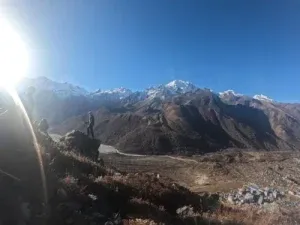
Top of the world!
Harka and our guide Joy organised a fantastic 12 day Langtang Gosaikunda trek. Throughout the challenging walk we were charmingly looked after and organised in relation to sleeping and eating. Our walk took us to a fantastic variety of locations with awe inspiring Langtang Himalayas views and scenery. We felt challenged throughout. It really was the trek of a lifetime.
UK, Nov 2023
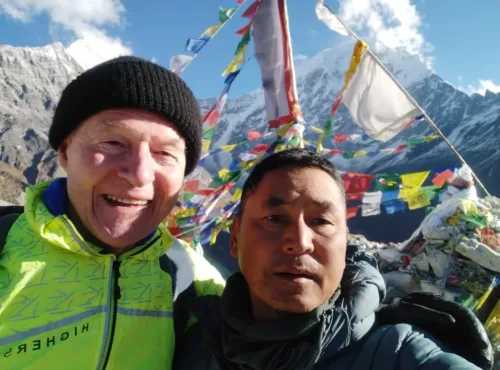
Third trek with Himalaya Trip – Langtang
This was my third trek with Himalaya Trip and as always it was a great experience. I was efficiently met at the airport by my guide, Ramesh, and then fully briefed at the hotel by Harka Gurung before having an acclimatisation day prior to setting off. A day on the road there and back to the start point is not too onerous as it is interesting to see varying local sights and agricultural methods.
The trek itself in November was an excellent time of year as the weather, whilst quite cold at night, was clear and fine offering fantastic views and a walking programme which was well within my capabilities as a not so young trekker. My guide, Ramesh, was superb and looked after me very attentively and always found excellent accommodation. And my porter, Sandeep, carried my kit uncomplainingly and always with a smile on his face. The views from Kyanjin Ri are particularly spectacular and Ramesh ensured I made it to the top even though I was a bit puffy in the thinner air.
I fully recommend this trek and Himalaya Trip as the Company charge fair prices for a a very efficient and friendly service. It was another unforgettable experience and my thanks to all the team for giving me a great time, I will come again! ”
UK, November 16, 2023
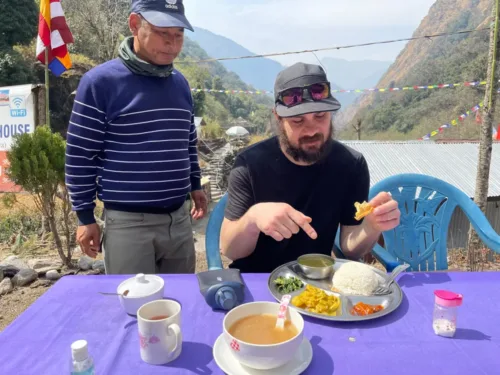
First trek in Nepal ( with my girlfriend )
This was my first trek in Nepal ( with my girlfriend ) and it was amazing. Communicating with Harka was easy, helpfull and quick.
At first, it was a bit nerve-wracking if everything was going to go well, if the altitude wasn’t going to hit me, if my fitness level was moderate enough – but to say the least, all went great. There were a few parts during the hike that were quite intense but our guide Ramesh supported us throughout. Ramesh was so kind and helpful, if there were wild animals ( monkeys, mountain goats and more ) he was the first to spot them and make sure the whole trip was a blast!
I would like to thank Himalaya Trip and Ramesh for this awesome trek and definitely till next time!
Netherlands, 27 Feb 2024
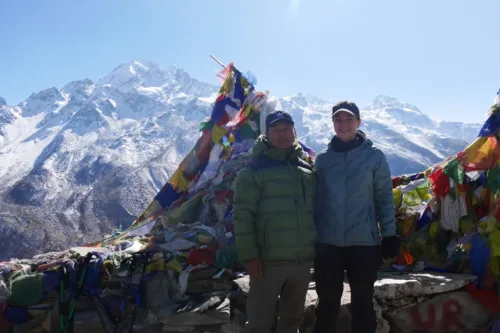
Well Organized Langtang valley Trip
Last week we went on the Langtang Valley Trek. The trip was well organised, from initial email contact and meeting with director Harka to discuss our schedule, to meeting our guide Ramesh and starting the trip. Himalaya Trip was flexible with our needs and we were able to book this trek last minute, which was great for us.
In total the trip lasted a week, this included two days of travelling from and to Kathmandu to Syabru Bensi, and five days of walking. During the trek, we adjusted the program a bit to suit our needs and abilities. The trek itself was beautiful; it was also physically challenging but truly thanks to Ramesh, we made our goal to get to Kyjanin Gompa and even Kyanjin Ri! Ramesh took good care of us, he was fun to have around and he told us interesting things about the places we visited and about the history of Nepal. Overall, we really had a good time and I hope we can do another trek in the future!
Netherlands, 27th Feb 2024
Ganja La Pass (5,122 m)
The Ganja La Pass is one of the highest points and a high mountain pass in the Langtang region. It is also one of the most challenging routes. Hence, it is more suitable for reasonably fit trekkers with proper acclimatization and high-altitude experience. Most trekkers cross the Ganja La Pass from Kyanjin Gompa. It is a demanding ascent on steep slopes, rocky paths, and snow-covered sections. The viewpoint offers spectacular views of the Langtang Himal and Ganesh Himal ranges. One can also see the vast Langtang Lirung glacier stretching below. Moreover, you can see the remote, rugged terrain between the Langtang and Helambu regions from a unique perspective.
Laurebina La Pass (4,610 m)
The Laurebina La Pass is another high mountain pass in the Langtang region, located above Gosaikunda Lake. It connects the Langtang Valley with the Helambu region. As the pass sits on a high ridge, the climb to its top is challenging. The trail is rocky and often covered with snow. Similarly, the high altitude and thin air make the ascent physically and mentally demanding. The thrill of climbing the pass is not the only reason trekkers take the difficult climb.

From the top of the Laurebina La Pass, you can get beautiful panoramic views of the Ganesh Himal range and distant peaks of Langtang Lirung and Dorje Lakpa. Likewise, you can see the turquoise waters of the Gosaikunda and the surrounding lakes.
Yala Peak Base Camp (4,800 m)
In this list of the best viewpoints in the Langtang region, the Yala Peak Base Camp is among the least-visited and quietest. It lies to the north of the Kyanjin Gompa, close to the Nepal-Tibet border. Usually, the base camp visitors are the climbers preparing to summit Yala Peak (5,732 m). Its trail is rocky and rugged with glacial terrain. The Yala Peak Base Camp is at a high altitude above 4,500 m, so the climb is undoubtedly challenging. But the elevation also makes the base camp an excellent viewpoint. You can get one of the most striking views of peaks like Langtang Lirung.
Similarly, you can get a close-up view of the Yala Peak along with its rugged ridgelines and glacial terrain. You can also enjoy stunning views of glaciers, snowfields, and the rocky alpine environment. You can also see the distant Tibetan plateau and Mount Shishapangma on clear days.
Gosaikunda Lake (4,380 m)
The holy Gosaikunda Lake is sacred to Hindu and Buddhist pilgrims. It is a beautiful alpine lake located in a high-altitude basin, surrounded by snow-capped peaks. As a result, the lake is one of the best viewpoints in the Langtang region. According to the Hindu mythology, Lord Shiva created the lake. On the other hand, Buddhists consider the lake a sacred and spiritually powerful site. They associate the lake with holy deities and the enlightened beings.From the Gosaikunda Lake, you can enjoy the beautiful turquoise waters of the lake.

It reflects the surrounding snow-capped mountains. Additionally, the lake, with its barren, rocky landscape, offers a spectacular view. The spiritual atmosphere, with gorgeous views, makes the entire experience feel almost otherworldly.
Gosaikunda Ridge (4,500-4,700 m)
Just above the Gosaikunda Lake is a high-altitude ridge known as the Gosaikunda Ridge. It is one of the most scenic viewpoints in the Langtang region. You can witness sweeping views of the surrounding mountain peaks, glacial valleys, and alpine lakes. You can see Langtang Lirung and Dorje Lakpa, along with nearby ridges that stretch towards the Tibetan border. Similarly, you can see the shimmering Gosaikunda Lake below as well as the glacial streams, meadows, and moraines. The ridge especially offers magical sunrise and sunset views. As the ridge is higher than the lake, it offers a high-altitude perspective that feels more remote and adventurous. It makes the views even more expansive and immersive.
Nagthali (3,165 m)
The lesser-known or hidden viewpoint in the lower Langtang region is Nagthali. It is a grassy hilltop, a short hike from the Thuman village. Despite its lower elevation, Nagthali offers stunning views of the Ganesh Himal and Langtang Himalayas. It is also a popular spot to watch beautiful golden sunrises and sunsets. The trail to the viewpoint lies along the Tamang Heritage route. It is a steep hike through forests and open ridgelines. Likewise, its lower elevation makes it more accessible for a wider range of trekkers. As it is a hidden viewpoint, Nagthali is less visited and free of crowds, making it perfect for enjoying relaxing scenery.
Ghodatabela (3,030 m)
Another viewpoint at a moderate elevation in the Langtang region is Ghodatabela. It is a scenic clearing in open alpine landscapes. The name “Ghodatabela” translates into “horse stable.” It lies along the main trail in the Langtang Valley, between Lama Hotel and Langtang Village. It is well-known for offering the first clear views of the surrounding mountains. The viewpoint is situated between Lama Hotel and Langtang Valley. It is the point on the Langtang Valley Trek where the dense, lush forest gives way to alpine meadows.
From here, you can see the striking contrast between the forest and the snow-capped mountains. You can see the Langtang range rise above the valley. Likewise, you can enjoy an expansive view of the meadows, green pastures, and the Langtang River.
Sing Gompa (3,250 m)
The final spot on our list of the best viewpoints in the Langtang region is Sing Gompa. Also known as Chandanbari, the gompa is famous as a cultural stop along the trail to Gosaikunda Lake. It is also well-known for its ancient monastery, yak cheese factory, stunning mountain views, and tranquil atmosphere. Sing Gompa is located between Dhunche and Gosaikunda. Its moderate altitude offers beautiful views of distant Himalayan peaks, such as the Ganesh Himal range. Similarly, you can see lush hills and green forests. The peaceful spiritual atmosphere of the gompa and the gorgeous scenery with fresh mountain air make it a perfect viewpoint to enjoy the natural beauty of Langtang.
About the Langtang Region and Why Its Viewpoints Are Special
The Langtang region is located in the Rasuwa district of Nepal and approximately 80 km north of Kathmandu. It is close to the capital city and the most accessible Himalayan trekking destinations. It lies within Langtang National Park, Nepal’s first Himalayan national park. The park is a conservation area established in 1976 and covers 1,710 sq. km. It holds diverse ecosystems ranging from subtropical forests to alpine tundra. Similarly, the Langtang area is rich in biodiversity and habitat for wildlife such as red pandas, Himalayan black bear, snow leopard, and more.
Several towering 7,000 m peaks, such as Langtang Lirung, Langtang Ri, and Ganesh Himal, are located in the Langtang region. Other notable peaks, such as Dorje Lakpa, Yala Peak, and Naya Kanga, also lie here. The region is close to Tibet. Hence, there is an influence of Tibetan Buddhism on the local culture in Langtang. While trekking in the Langtang region, you will enjoy diverse landscapes, rich biodiversity, and a rich cultural experience. You will trek from the subtropical forests and green terrace hills to alpine meadows and glacier moraines. The gorgeous views add an ever-changing visual experience to the Langtang trek.
Compared to other trekking regions, the Langtang region’s viewpoints are special because of their distribution across three main trekking routes. Every viewpoint offers a unique perspective on the Himalayas. The Langtang Valley Trek route takes you to iconic viewpoints such as Kyanjin Ri and Tsergo Ri. Meanwhile, the Gosaikunda Trek trail takes you to high-altitude lakes, ridges, and the Laurebina Pass. These viewpoints blend natural beauty with spirituality.On the other hand, the Tamang Heritage trail takes you to lower-altitude viewpoints like Nagthali. These spots offer accessibility and moderate altitude with rich cultural immersion.
These viewpoints of the Langtang region are also special because they offer a blend of raw Himalayan beauty with cultural and spiritual depth. Unlike commercialized regions like Everest and Annapurna, these viewpoints are free of mass tourism and feel untouched. Hence, the views themselves feel more intimate. The entire experience feels adventurous, memorable, and deeply rewarding.
Viewpoints by Trekker Type: Which One is Right for You
With so many viewpoints in the same region, it is easy to get confused about which one to choose. To help you make the right choice, we have classified them according to fitness level. Take a look:
For beginners or casual day hikers: Kyanjin Ri, Nagthali, Ghodatabela
For first-timers or those who prefer gentle treks, Kyanjin Ri, Nagthali, and Ghodatabela are perfect choices. These viewpoints are at moderate altitude with manageable ascent. One can enjoy beautiful panoramic views of the Langtang ranges and surrounding landscapes without extreme altitude risks. From Kyanjin Ri, you can see the towering panoramas over the Langtang Valley. Meanwhile, Nagthali and Ghodatabela offer scenic views of the lush forests, hills, and open meadows. These viewpoints are ideal for a relaxed hike.
For intermediate trekkers in reasonable shape: Tsergo Ri, Gosaikunda Ridge, Laurebina La
Those who are not afraid to take a little more adventure, have intermediate fitness, and good fitness can trek to slightly higher altitudes to the Tsergo Ri, Gosaikunda Ridge, and Laurebina La Pass. These viewpoints are not only located at higher elevations, but also involve steeper trails. The trekking hours are longer and more challenging. But with the challenge, the views become more rewarding. Tsergo Ri offers sweeping views of the Lantang Lirung and surrounding peaks. The Gosaikunda ridge offers glimmering views of the turquoise lakes, alpine landscapes, and the towering snow-capped peaks. On the other hand, Laurebina La Pass provides magical Himalayan views that feel unreal.
For experienced trekkers who want a challenge: Ganja La Pass, Yala Peak Base Camp
True adventure seekers and experienced trekkers can take the challenging trek to the Ganja La Pass and Yala Peak Base Camp. These require excellent fitness, meticulous preparation, endurance, and proper acclimatization. Due to the high elevation, steep trails, and rugged terrain, both viewpoints are better suited to seasoned adventurers. The Ganja La Pass is a remote mountain pass that requires glacier navigation. Given its isolated location, the views of the Himalayan panoramas feel untouched, raw, and incredibly rewarding. Similarly, the Yala Peak Base Camp is the gateway to climbing Yala Peak. It provides striking, close-up views of the Langtang Lirung and surrounding glaciers.
For pilgrims and spiritual visitors: Gosaikunda Lake, Sing Gompa
Aside from the adventurous experience and spectacular views, some viewpoints in the Langtang valley also offer a deep spiritual atmosphere. The Gosaikunda, a sacred alpine lake, has deep ties with Lord Shiva and Buddhist deities. Thousands of pilgrims visit the holy lake every year, especially during Janai Purnima. Bask in the spiritual atmosphere while observing the spectacular views. The entire experience feels very meditative. Sing Gompa or Chandanbari combines a tranquil monastery atmosphere with serene views of the forest hills and distant peaks. Additionally, it is home to a local yak cheese factory. Get a chance to experience local yak cheese while you take in the views.
Best Time to Visit Langtang Region Viewpoints
Nepal has four seasons, and each one turns the same viewpoints in Langtang region into a completely different experience. While each season offers its own unique beauty and views, choosing the right time is not just about the weather. It is also about the experience. Here is a brief on the seasons, so you can decide which one is the most ideal for you:
Spring (March to May): The season of color
Spring is one of the best times to visit the Langtang region. The season offers more than clear skies. The rhododendron forests in the subtropical areas burst into full bloom. Hence, the entire lower Langtang trail becomes a tunnel of vibrant red, pink, and white. It creates a gorgeous contrast between the snow-capped peaks above and the blooming forests below. Viewpoints like Kyanjin Ri, Nagthali, and Ghodatabela come alive with vivid colors. Similarly, the season offers a view of the unique and layered landscape.
The average daytime temperatures during spring are as follows:
- Lower elevations: 10°C to 20°C
- Higher elevations: -2°C to 12°C
Monsoon (June to August): The season of misty peaks
The summer or monsoon season in Nepal is often considered an unsuitable time for trekking. Due to heavy rainfall in most parts of the lower hilly region, the lower trails are wet and slippery. However, the landscape is at its most vibrant, with deep green forests and misty peaks. The clouds drift through the valley, sometimes covering the mountains while other times revealing them. The foggy, misty woods and the rising mountains make the views feel more cinematic. Monsoon is the time for adventurers who prefer solitude, raw nature, and mystical atmosphere.
The average daytime temperatures during spring are as follows:
- Lower elevations: 15°C to 22°C
- Higher elevations: 5°C to 12°C
Autumn (September to November): The season of clarity
The best and peak time to visit the Langtang region’s viewpoints is in autumn. It comes right after the monsoon season. Thus, the rain cleans the atmosphere, and the landscape looks more vibrant. It makes the mountain views appear closer and sharper. Autumn offers the best views of the spectacular snow-capped mountains. From viewpoints such as Tsergo Ri, Laurebina La Pass, and Ganja La Pass, you can see the peaks clearly, along with their ridgelines, icefalls, and shadows. The depth of visibility at this time of the year is excellent. It is the perfect time for photographers and anyone seeking a classic Himalayan view.
The average daytime temperatures during spring are as follows:
- Lower elevations: 12°C to 20°C
- Higher elevations: 0°C to 10°C
Winter (December to February): The season of frost & tranquility
With the start of winter, the high-altitude landscapes transform into a quiet snow wonderland. High-altitude viewpoints such as the Gosainkunda ridges, Tsergo Ri, and mountain passes are covered in snow. Visibility is brilliant, with the sky crisp and few clouds. The snow-capped peaks appear more defined. Additionally, the fresh snow on the peaks reflects sunlight that makes its ridges look sharper. The mountain views and surrounding scenery feel more intimate in winter. Moreover, the frozen trail and cold weather conditions add real challenges, perfect for adventurers.
The average daytime temperatures during spring are as follows:
- Lower elevations: 0°C to 10°C
- Higher elevations: -10°C to -2°C
Permits Information for Langtang Viewpoints
As all the Langtang Trek trails lie within the Langtang National Park, all trekkers must obtain the Langtang National Park Entry Permit. The park is a government-protected area. The park entry permit allows trekkers to access the area, where all the Langtang viewpoints are located.
Trekkers can obtain the permit from the Nepal Tourism Board office in Kathmandu through a registered trek agency or at entry checkpoints. There are several checkpoints along the route where one must show it to pass. The Langtang National Park Entry Permit not only provides access to the Langtang trekking trail but also to the conservation efforts in the Langtang region. The fees also help maintain trekking infrastructure and support the local community.
The Langtang National Park Entry Permit costs NPR 3,000 per person for non-SAARC Nationals and NPR 1,500 per person for SAARC Nationals.
How to Get to the Langtang Region
You have to drive from Kathmandu to Syabrubesi to get to the Langtang region. There is no airport in Langtang. Hence, you have to combine the road travel to reach the trailhead, then trek deep into the region. Here are different modes of transportation to reach the Syabrubesi:
Tourist and local bus
It is the most common mode of transportation and also the most cost-effective. Local buses are usually crowded, stop frequently, and are slower. However, it is the most budget-friendly option. On the other hand, tourist buses are slightly faster with comfortable seating. The tourist bus fare is slightly more than the local bus fare. The drive takes 6 to 8 hours, but it can vary depending on road conditions and traffic.
Those who want an authentic traveling experience can take a local bus. You will travel with locals and interact with them. If you want a slightly more comfortable and convenient travel experience on a budget, tourist buses are ideal. Tourist and local buses are the best option for solo and budget travelers.
Shared jeep/ microbus
The next option is shared jeeps and microbuses. These are faster than public and tourist buses. It usually takes 5 to 7 hours to travel between Kathmandu and Sybarubesi. However, these modes of transportation are better suited to small groups. Seating is limited, and you have to share your space with other travelers. The shared jeeps and microbuses are suitable for small groups or solo travelers who want a balance between cost and comfort.
Private jeep/ car
The most comfortable, convenient, and fastest mode of transportation from Kathmandu to Syabrubesi is by private jeep or car. The travel time between the two points ranges from 5 to 6 hours. Similarly, the departure time is flexible, and you can make stops along the way as you need. Although convenient, hiring a private jeep or car is more expensive than traveling by buses or shared jeeps and microbuses. This mode of transportation is more suitable for travelers who want speed and comfort and have a flexible budget.