Winter and Monsoon Special Offer! Get 5% off on all trekking packages in Nepal . Visit during June , July, August, December , January and February and take advantage of this limited-time deal.

Annapurna Base Camp Trek During Winter
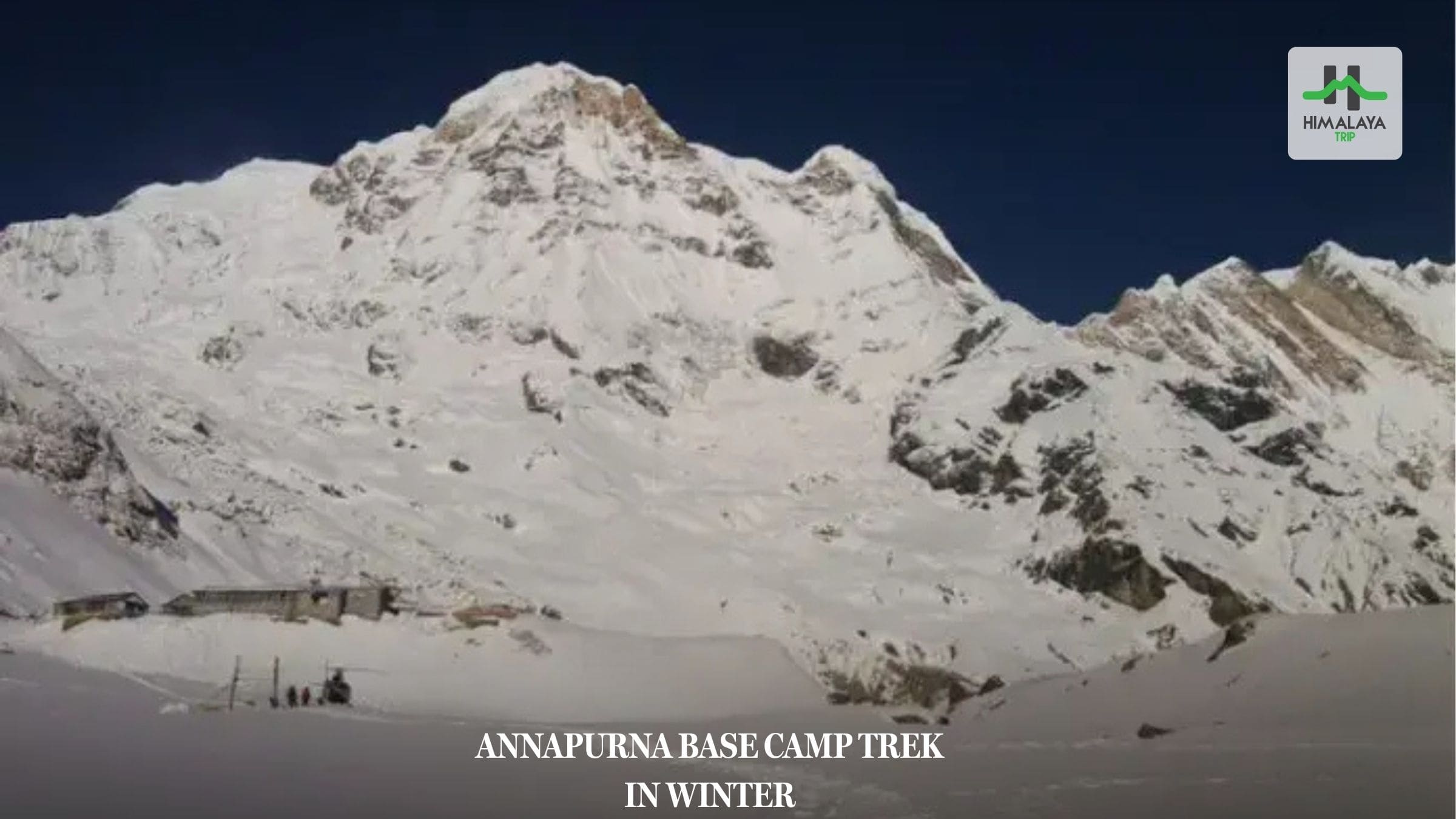
If there is any classic trek that you need to take during winter at least once, it is the Annapurna Base Camp Trek. It is like stepping into an entirely new world, serene, mesmerizing, and a winter paradise. The usually crowded ABC trail is quiet. Additionally, the landscapes of higher altitude are covered by snow like a fluffy white blanket. The vistas of Annapurna mountain range look even sharper and more distinct in winter.
Winter is considered an off-season for trekking. The cold weather, snow, and other weather-related issues scare away trekkers. So, the ABC trekking trail is quiet and the activities in the teahouses are also slow. The busy route sees very few trekkers at this time of the year. However, these reasons are precisely why the Annapurna Base Camp Trek during winter is ideal for those seeking a unique and serene experience.
The entire Annapurna landscape feels untouched and timeless. Although the winter weather creates challenges, it also heightens the sense of raw adventure. The upper valleys and villages turn white, waterfalls freeze into ice sculptures, and the sky looks brilliantly clear. Similarly, the teahouse stay feels more personal and warmer. Nothing beats the feeling of sipping warm tea in cold evenings, while listening to local stories.
In this blog, we are exploring everything that makes the Annapurna Base Camp Trek during winter a cinematic journey and an ultimate Himalayan adventure. So, make sure you read until the end!
Table of Contents
Is the Annapurna Base Camp Trek Possible in Winter

It may sound wonderful to enjoy trekking on the tranquil, frozen landscapes of the Annapurna region. But some may wonder whether it is actually possible, safe, and practical. The answer is yes! ABC Trek in winter is not only a frozen fantasy, but actually achievable.
The trail to base camp is demanding, and during winter, it can be icy, slippery, and covered with snow. Similarly, the nights are colder and you need to carry extra clothes. There are risks of temporary blockages along the route or avalanches. However, compared to other treks like the Everest Base Camp Trek or the Annapurna Circuit Trek, the Annapurna Base Camp Trek has a moderate elevation. It is one of the safer high-altitude treks in winter with a maximum elevation of 4,130 m. There are also well-established teahouses and a relatively strong local infrastructure. Despite snowfall in areas such as Deurali, Machhapuchhre Base Camp (MBC), and Annapurna Base Camp (ABC), the trails remain open throughout the winter.
During heavy snowstorms, there can be short-term pass blockages. But these blockages are usually temporary. It only closes for a few hours, and in some extreme cases, for a couple of days. Local authorities and communities residing along the route work together to monitor and update the trekking trail. The Annapurna Base Camp Trek in winter is a complete blend of serenity and adventure. Trekkers must be physically fit and mentally prepared to adapt to the cold Himalayan winter. With proper preparation and the right clothing and gear, the frozen fantasy is possible.
What Changes on the Annapurna Base Camp Route in Winter?
The winter trek to Annapurna Base Camp is not only about snow-covered landscapes. There is a significant change in the route, and the entire experience feels different. From Deurali to the base camp, the entire stretch becomes icy, including the stone staircases. The narrow sections turn into “snow tunnels,” carved by the cold and heavy Katabatic winds from the mountains. You will come across only a few trekkers and mule caravans. Likewise, the villages and teahouses along the route seem slow and quiet. It is so silent that you might even hear snow falling.
ABC Trekking in winter is like a meditative journey. The lush forests, especially between Sinuwa and Deurali, change drastically. The green leaves of the trees are covered in frost, and the branches are lined with snow. While trekking in the morning, dense fog covers the trail and the forests. You will hear only your breathing, and it feels like stepping into a dreamy movie scene. The sunrises and sunsets look more magnificent due to the sharper winter lights. No haze blocks your views. Therefore, you can also get crystal-clear views of the Annapurna I, Machhapuchhre, Annapurna South, Hinchuli, and more. Winter is the perfect time to capture the ideal golden-hour photographs.
The changes on the Annapurna Base Camp route in winter are not only a visual transformation. There is a physical change on the trail, a change in sound, a shift in the crowd, and even lights and colors. The winter season changes the entire trek experience and elevates it into something more memorable.
Teahouse Availability & Comfort During Winter ABC Trek

The trails of Annapurna Base Camp in winter are open, so teahouses also remain open. Locals run the teahouses, and they heavily rely on trekking for their income. So, they keep the facilities running. However, as mentioned before, they operate in a slow mode. There is also a change in the entire teahouse experience. The teahouses in the lower regions are fully operational. As you move to a higher elevation, availability can be limited, depending on the snowfall. The facilities are basic, and the meals are home-cooked in a simpler style. It is far from luxury, but the hospitality feels more authentic.
More rooms are available, but the insulation is usually poor. During freezing nights, you will need an extra blanket or sleeping bag to keep you warm. Similarly, the water bottles may freeze at night, and you may wake up to frost on the windows. Hot water is available, but it becomes scarce as you move to higher altitudes. In mid-region like Sinuwa and Dovan, solar is used. Hence, you can sometimes get hot bucket water, but it is expensive. In higher regions like the Himalaya, Deurali, MBC, and ABC, there are almost no hot showers. Winter also reduces power availability as weak sunlight causes solar panels to produce less power. Thus, the charging price may rise slightly.
Staying at the teahouses is a more enriching experience. You will enjoy a more traditional teahouse stay experience, offering more opportunities to interact with the locals. Sitting near the fire stove in the dining area after a long, cold-weather trek feels very warm and comforting. There are very few fellow trekkers, and you can chat with the owner or the local. You can hear stories about their lifestyle, folklore, mountain stories, and more. It feels like a different culture when you trek to ABC in winter.
Tips for Capturing Annapurna’s Winter View & Panoramas
Want to take mesmerizing photographs of the snow-covered landscapes and vistas of Annapurna like a pro? Follow these tips:
- Snow acts like a giant reflector, so use it as a natural light booster. Keep the sun at your back while taking photos. The sunlight will hit the snow, bounce off it, and light onto your photo object. It reduces strong shadows, making the picture appear cleaner and sharper.
- The winter sunlight between the Himalaya and the Deurali area creates fog bursts when the winter sunlight hits the river. The fog bursts only stay for a short time, so set your camera to burst mode to capture them. It created mystical and dramatic photographs with volumetric light rays.
- Want to capture the best sunrise pictures? Then, get to the sunrise viewing spot 20 minutes before sunrise. A beautiful pink glow appears on the mountains usually 10 to 18 minutes before sunrise during winter. The cold and dense air mixes with the early morning light to create the best Alpenglow.
- 8:30 to 10 AM is the best time to capture the best and super clear photos of the Annapurna Base Camp’s landscape in winter. During this time, the Annapurna Sanctuary bowl holds minimal dust. The cold air pushes air downward, so the views are super clear. The skies look deep, with a clean, blue hue, and shadows are sharp.
- Use the natural ice formations like frozen waterfalls, icy river edges, and sheets of hanging ice to capture mind-blowing photos. Use a wide-angle lens and place it in front while taking pictures. You can capture more professional and interesting mountain photos this way.
- Winter nights at ABC offer a chance to capture stunning photos. As the skies are very clear, the moonlight adds a natural glow to the snow. You can capture Orion’s Belt above Annapurna I, or star trails around Machhapuchhre. Similarly, you can also capture the Milky Way arc in December. The best time to capture this galactic marvel is 45 to 90 minutes before moonrise.
- Last but not least, do not forget to protect your lens from snowflakes. The afternoon winds can blow snowflakes, which can land on your lens. Angle your camera downward and shake gently, rather than wiping it with your hands or tissues. It avoids your lens from being scratched. You can also carry a soft lens brush for cleaning.
Winter Hardships and Survival Guide For the ABC Trek
When it comes to the challenges of the ABC Trek in winter, most blogs and guides only discuss the demanding cold trail and high altitude. However, there are hidden challenges that only seasoned trekkers and experienced guides are aware of. Here are the hidden hardships and a survival guide for the winter Annapurna Base Camp journey, so you do not have to learn it the hard way:
Deurali feels colder than ABC
It might come off as a surprise, but yes, Deurali is colder than Annapurna Base Camp. Although the base camp (4,130 m) sits at a higher elevation, Deurali (3,200 m) feels colder due to the “cold trap” effect. The effect is the result of the valley’s narrow shape and airflow. Deurali sits at a shaded gorge. There is limited direct sunlight in winter, so the temperature is colder. The cold air becomes trapped in the valley, blocking wind movement. As a result, the mornings, evenings, and especially nights are freezing. Humidity also builds up in the valley. It further makes the cold feel sharper than the dry cold at the base camp.
Here are some ways to survive the cold weather of Deurali:
- If you are sensitive to cold, stay at the Himalaya rather than the Deurali.
- If you want to stay overnight at Deurali, choose teahouses on the upper slope.
- Wear warm clothing, both indoors and outdoors.
- While staying at the teahouse in Deurali, keep moving to stay warm. Avoid sitting in cold rooms.
Invisible ice sheets on the Deurali to MBC trail
The ABC route from Deurali to Machhapuchhre Base Camp (MBC) is covered with invisible ice sheets in winter. These sheets are often covered with snowfall, which makes it trickier to spot. At a glance, it appears to be normal snow, but underneath lies a slippery surface. The route runs through a narrow and cold gorge. Sunlight briefly reaches here, during which the snow melts. It then freezes instantly, creating black, ice-like patches. The water dripping from cliffs also freezes overnight and adds more hidden ice on the trail. These ice sheets make the paths slippery and can lead to slips, ankle twists, or falls. Trekking poles also don’t grip on ice, so balancing yourself can be difficult.
Some tips to cross the icy and slippery trails are as follows:
- Avoid early morning trek and start after the sun softens the trail in late morning.
- Use microspikes or crampons to cross these sections.
- Use your trekking pole to test suspicious patches before stepping in.
- Take short and controlled steps. Follow the footprints of the guide and porters, as they are experts in navigating the trail.
Afternoon wind tunnel effect after Chhomrong (2-3 PM)
Afternoon winds are common in every season, but their pattern and strength vary. In winter, the wind hits you harder. The trail from Chhomrong goes through exposed ridges and funnel-shaped valleys. Around 2-3 PM, the warm air from lower areas rises, and cold air from the Annapurna Sanctuary comes down. As a result, the two air masses collide along the ridgelines and create a natural wind tunnel. The shape of the valley further accelerates the wind, transforming it into strong gusts. The sudden and strong gust of wind makes it harder to walk. Similarly, there is a significant drop in temperature. Dust and loose snow may also blow into your face, making it harder to trek.
So how can you avoid the afternoon wind tunnel effect after Chhomrong during the ABC Trek? Here’s how:
- Start your trek early for the lower-exposed sections, where the trail is not icy. It allows you to clear the windy ridges before 2 PM.
- Layer up before the gust of wind hits you.
- Wear sunglasses and buffers to avoid getting your face hit by dust or loose snow.
- If the wind is too strong, pause and let the gusts pass.
High albedo snow effect drains battery faster
You might’ve noticed that the battery of your electronic devices dies faster in winter. While trekking to the higher altitude areas of the ABC Trek route, the batteries die faster. Lithium batteries also drain quickly in cold environments. The reason is the high albedo snow. Albedo refers to the amount of sunlight a surface reflects. In winter, fresh snow reflects 80 to 90% of the sun’s light. It creates a high “light bounce” effect that causes rapid heating/ cooling cycles of your electronics. As a result, your devices try to regulate the temperature, which drains more power. The battery drains 2 to 3 times faster in such conditions.
Here are some tips to protect your battery during the winter Annapurna Base Camp Trek:
- Keep your phone and batteries in an inner jacket pocket, close to your body heat.
- Use battery saver mode and insulated battery bags. You can also wrap the extra batteries in warm clothing, such as wool socks.
- Dim the brightness of your phone and turn off auto-brightness.
- Carry a power bank and charge your devices during breaks.
Avalanche risk near Hinku Cave
One of the dangers of high-altitude trekking in winter is the risk of an avalanche. Along the route of Annapurna Base Camp, the trail near Hinku cave (3,100-3,200 m) is the most avalanche-prone area. The altitude is not exactly high, but its terrain and steep walls on both sides make it risky. When it snows, the upper slope does not hold it and often collapses downhill. The steep walls and narrow valleys cause the snow to drop straight on the trail. Additionally, the temperature change between morning and afternoon can cause the snow layers to break. These increase the risk of avalanches.
To cross the Hinku cave section safely during winter, here are some ways:
- Check the trail and avalanche conditions with the guide, locals, or teahouses.
- Avoid this route for 24 to 48 hours after recent snowfall.
- Cross the narrow avalanche corridor section swiftly. Only trek in late morning, when the trail is completely visible.
- If you hear any cracking snow or movement, move out of the zone immediately.
Frozen water sources at higher altitudes
As you move to a higher elevation, the temperature also drops significantly, especially in winter. Hence, almost all natural water sources are frozen solid. Even taps and water pipes get frozen completely at night. The sub-zero temperature from late afternoon until mid-morning causes the water sources to freeze easily. Most teahouses use water that flows down naturally or gravity-fed water systems. It also causes the water to freeze faster. These can make it harder for trekkers to get water whenever they need it. Your water bottle may also freeze if you leave it outside your backpack. Cold temperatures can reduce thirst, and trekkers can get dehydrated faster.
Here’s how you can deal with frozen water sources at higher altitudes:
- Carry a thermos and ask the teahouses to top up hot water in the morning.
- Keep your water bottle inside your backpack or jacket.
- Use an insulated bottle cover if you are carrying metal bottles.
- Stay hydrated and drink even if you are not thirsty.
Limited heating at teahouses
Most teahouses along the Annapurna Base Camp trekking route at higher altitudes only provide basic facilities. In winter, they have limited heating options. They only have wood-burning stoves in the communal dining space. These stoves consume fuel quickly, and it is neither practical nor safe to run them all night. So, the heating is usually shut off around 9 PM. The rooms are also poorly insulated, and heat dissipates quickly. At night, the temperature in areas like Deurali, MBC, and ABC can drop to -15°C or lower. Hence, the rooms are cold, and you may not get a good night’s sleep. Wet clothes and boots may also freeze during nighttime.
To cope with the limited heating and cold nights at teahouses, follow these tips:
- Carry a sleeping bag (rated -15°C to -20°C for winter) and wear thermal layers to bed.
- Use hot water bottles, fill them with warm water, and place them in your sleeping bag.
- Drink warm tea or soup before going to sleep. It helps to maintain your body heat.
- Choose a room away from windows or drafts. Keep your socks, gloves, and hats close to your body to stay warm.
Cold weather kills your appetite
High altitude paired with cold weather suppresses one’s appetite. Your body burns more calories in winter and needs more energy. However, the cold weather suppresses the signals of thirst and hunger. It also reduced blood flow to the stomach, which slows digestion. Your body focuses more on staying warm than on digestion. When you do not eat properly, energy deficits cause fatigue faster and an increased risk of dehydration. Low-energy and cold muscles can increase the risk of trekkers getting injured during the winter ABC Trek.
Here are some tips to keep yourself fueled despite the cold weather and loss of appetite:
- Eat small, frequent meals rather than large meals at a time.
- Eat easy-to-digest foods like dal bhat, soups, noodles, etc., and avoid heavy and greasy foods.
- Drink warm fluids to stimulate your appetite and stay hydrated.
- Carry high-calorie energy bars and snacks, such as nuts or dried fruits.
Cost of Annapurna Base Camp Trek During Winter
The cost of the standard Annapurna Base Camp Trek during winter can range from USD 500 to USD 1,200 per person. Compared to other seasons, the cost structure of the winter ABC Trek is different. The cost may vary depending on the trek duration, group size, and services provided. Similarly, factors such as snow-dependent logistics and winter-only local services can also influence the price.
There are fewer trekkers, and the teahouses are usually quieter in winter. The room cost is low, but daily expenses can actually increase. There are challenges like winter fuel shortages, charging limitations, possible snow delays, etc. You may need to spend more on hot water (for showers and drinking), extra meals or hot drinks, charging electric devices (as batteries drain faster), and winter gear rental. The cost of guides and porters also rises as there are only a few who work in winter.
Here is a cost breakdown for the winter ABC Trek:
| Factors | Winter Cost | Notes |
| ACAP Permit | ~USD 30 per person | Mandatory for all foreign trekkers |
| Accommodation and meals | ~USD 25 to 35 per day | Fuel scarcity increases the price of food and hot water |
| Snacks and hot drinks | ~USD 5 to 10 per day | Higher energy burn requires more food intake |
| Guide | ~USD 30 to 40 per day | Only a few guides are available, and seasonal hazards increase the fees |
| Porter | ~USD 22 to 30 per day | Heavier luggage and seasonal hazards increase the fees |
| Transportation (Pokhara to Nayapul or Siwai) | ~USD 20 to 40 | Winter road conditions increase the transportation cost |
| Internet and charging | ~USD 10 to 20 per day | Low solar output increases the charging price |
| Gear rental | ~USD 25 to 50 | Gaiters, sleeping bags, microspikes, etc. |
| Emergency buffer day | ~USD 40 to 70 | Heavy snow at higher altitude areas can cause delays |
Understanding the real cost of ABC Trek in winter allows you to plan and budget smartly. With the right budget and expectations, you can also trek more confidently. It makes your journey more comfortable and rewarding.
Permits Required for the Trek
You will need an Annapurna Conservation Area Permit (ACAP) for the Annapurna Base Camp Trek. It is mandatory to obtain a permit to trek within the Annapurna Conservation Area. The permit ensures the safety of trekkers, promotes environmental conservation, facilitates tourism management, maintains trails, and supports local communities. There are several checkpoints along the ABC route, like Birethanti, Gorepani, etc., where you will need to show the ACAP for entry. You will need the following documents to obtain ACAP:
- Passport copy
- 2 passport-size photos
The ACAP costs NPR 3,000 per person (~USD 30) for all season, including winter. The permit can be obtained from the Nepal Tourism Board in Kathmandu or Pokhara.

Annapurna Base Camp Trek
7 Days
Trekking
USD 449 per person

Annapurna Base Camp Helicopter tour
2 hours Days
USD 490 per person
Preparation and Gear for Winter Trek
Preparation is the key to a successful and safe Annapurna Base Camp Trek in winter. Since the weather is colder and harsher, you will need to pack proper clothing and gear. However, you must also be careful so as not to overpack. Trekking with a heavy backpack is more strenuous. There is a risk of injuries. Here is how you can prepare for the journey:
Physical and mental preparation
Annapurna Base Camp Trek demands reasonable fitness and health from trekkers. You must be physically and mentally prepared for the moderately challenging trails. For the ABC Trek in winter, you need to be prepared even more. There is no need for technical climbing skills. However, you must have good stamina, leg strength, endurance, altitude readiness, and mental resilience. The long hours of trekking in cold weather and the snowy upper trail will put your fitness to the test.
Trekking in normal weather conditions for 4 to 7 hours on average for multiple days is demanding. In winter, the body burns more energy due to the cold temperature. As a result, the body has to work harder to generate heat and prevent hypothermia. You will feel more burned out and dehydrated faster.
It can be difficult to maintain your pace. Similarly, the snowy and icy trail increases the physical toll. The physical demand ultimately affects your mental stability. You can feel more stressed due to the increased challenges. Extreme cold can also reduce motivation. You may feel anxious, drained, or irritated. All these challenges and more are exactly why all trekkers must be physically and mentally prepared for the ABC Trek.
If you truly want to undertake the Annapurna Base Camp Trek in winter, start preparing 2 to 3 months before the journey. To build physical fitness for the journey, focus on cardiovascular, leg strength, endurance, and core training. Exercises such as running, jogging, cycling, hiking, swimming, and brisk walking are excellent for cardiovascular health. Likewise, squats, lunges, step-ups, and deadlifts help strengthen the legs and improve endurance. Planks, leg raises, and back extensions build your core and balance. Practicing yoga and deep breathing techniques prepares you for high-altitude trekking.
As mental preparation is equally important, you also need to train for it. Research about the trail condition and challenges. Familiarize yourself with the route, daily trekking hours, challenging sections, and lodging facilities. Winter ABC Trekking means you have to tackle cold mornings, short daylight hours, snowy or icy trails, cold rooms, and limited hot showers. So, train your mind to be ready for the discomfort. You must remain calm and positive at all times. Meditation and setting realistic expectations also build mental resilience. Proper preparation makes the trek to ABC in winter a more manageable, safer, and exciting adventure.
You can check: Is Annapurna Base Camp Trek Safe?
Clothing and gear list
Clothing:
- Thermal base layers (top and bottom)
- Mid-layer (fleece jackets, sweaters, or hoodies)
- Windproof/ waterproof shell jacket
- Down jacket
- Windproof/ waterproof shell pants
- Warm trekking pants
- Warm trousers
- Sun hat and warm beanie
- Neck gaiter or buff
- Insulated gloves with an inner liner gloves
- Merino wool socks
- Comfortable, waterproof, and insulated trekking boots
- Gaiter
Equipment & Gear:
- 30-40L daypack with rain cover
- Rucksack
- Trekking poles
- Headlamp with extra batteries
- Thermal water bottle
- Sleeping bag (rated to -15°C to -20°C) with liner
- Microspikes or mini-crampons (for icy sections)
- Toiletries (toothbrush, toothpaste, biodegradable soaps, wet wipes, toilet paper, etc.)
- Sunglasses
- Sunscreen SPF 50 and lip balm with SPF
- Power bank with universal adapter
- First-aid kit (pain relievers, Diamox or acetazolamide, blister tape, etc.)
- Energy bars, dried fruits, or nuts
- Other personal items (books, journals, card games, etc.)
Conclusion
Annapurna Base Camp Trek during winter is for those who want to experience pure solitude. It is a magical time of the year, which transforms the entire landscape of the Annapurna region into a visual masterpiece. The trek at this time of the year is more than reaching the base camp at 4,130 m. It is about being a part of a journey so extraordinary that only a handful of trekkers have experienced. It is the perfect adventure for adventure seekers or seasoned trekkers.
The winter season brings extra challenges to the ABC Trek. It requires more preparation, training, mental readiness, and additional gear. However, it also rewards you with an equally pristine Himalayan atmosphere, clear views, and enriching cultural immersion. You will get to see a whole new side of the Annapurna, which is only possible during winter. So, if you too want to journey into the winter wonderland of the Annapurna Base Camp route, contact us here at Himalaya Trip. We will bring your frozen fantasy to a real-life, unforgettable adventure!