Winter and Monsoon Special Offer! Get 5% off on all trekking packages in Nepal . Visit during June , July, August, December , January and February and take advantage of this limited-time deal.

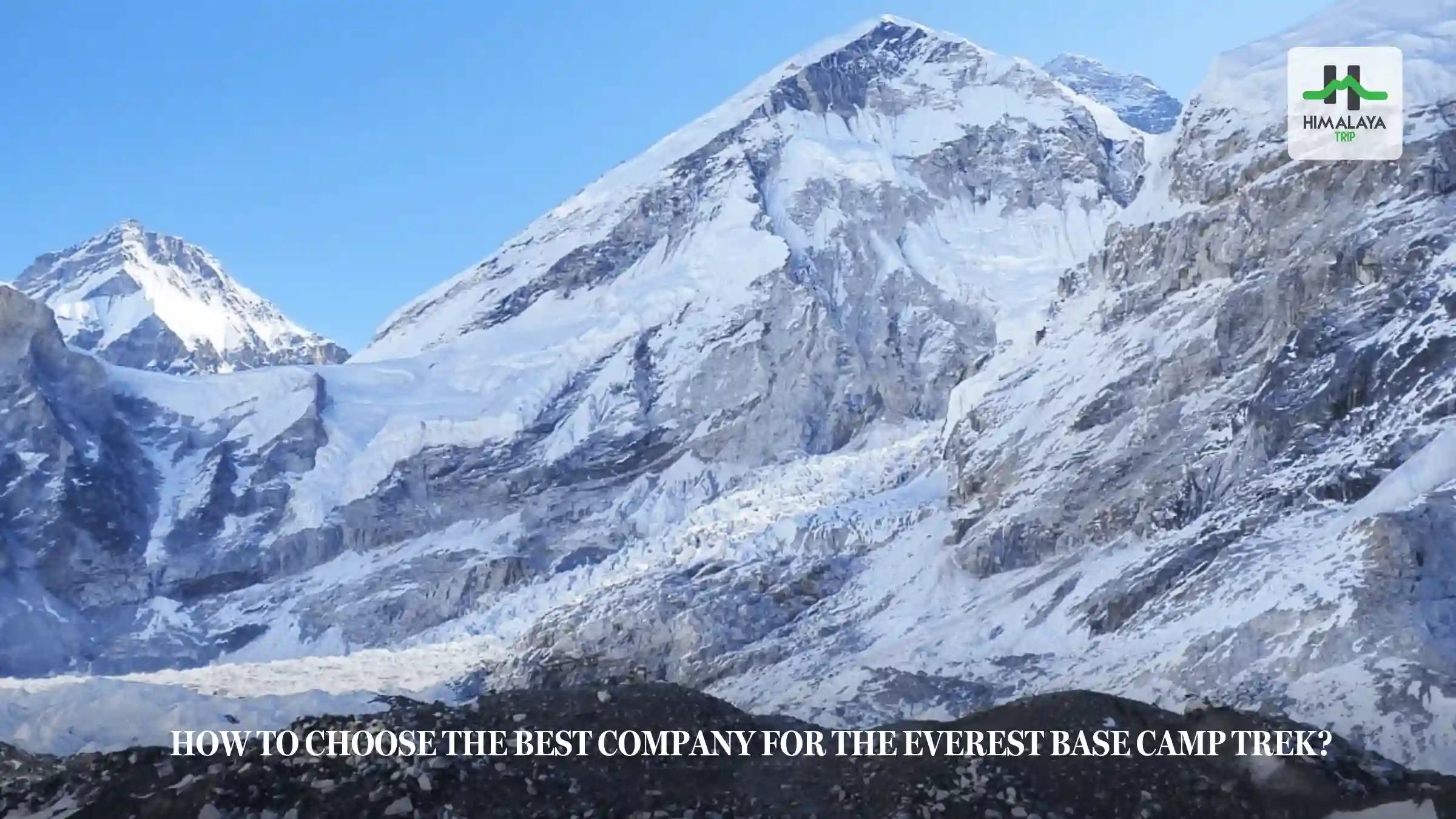
How to Choose the Best Company for the Everest Base Camp Trek?
Choosing the best company for the Everest Base Camp trek needs a few important checks. Make sure the company has a valid license from Nepal’s Department of Tourism and is a member of the Trekking Agencies’ Association of Nepal (TAAN). Choose a trekking itinerary with at least two rest days to adjust your body to the high altitude. Also, check that your guides have first-aid training and carry equipment to monitor your oxygen levels.
Ask for a clear breakdown of all costs and make sure porters are not asked to carry more than 20–25 kg. More than 200 registered trekking companies operate in Nepal, along with many unregistered agents and foreign booking companies. Trek packages for the 130-kilometer round trip to Everest Base Camp (5,364 m) can cost anywhere from USD 800 to over 4,000 per person.
Table of Contents
What Makes a Good Everest Base Camp Trek Company?
A good company does six things well. Each one is easy to check before you book, if you know where to look.
- It is registered and licensed: A real company holds a registration certificate and a tourism license from Nepal’s government, and it shows them to you.
- Its guides are experienced and trained: Guides hold a government trekking guide license, know first aid, and have walked the Khumbu many times.
- Its pricing is clear: You see, in writing, what the price includes and what it leaves out.
- It has a safety plan: The trip has rest days for altitude, the guide monitors your health, and there is a plan for rescue.
- It treats porters and staff fairly: Porters get a fair wage, insurance, proper gear, and a load they can carry.
- Its reviews are real and recent: Past trekkers describe named guides, real dates, and real problems that the company solved.
10 Things to Check Before You Book
1. Is the company registered and licensed in Nepal?
Ask for the company’s registration number and tourism licence, and check that the name on them matches the name on the website. A Nepali trekking company should be registered with the Office of the Company Registrar and licensed by the Ministry of Culture, Tourism and Civil Aviation. Membership of the Trekking Agencies’ Association of Nepal (TAAN) is another good sign. A company that hides its documents, or sends only a logo, has given you your answer.
2. Are the guides trained and certified?
Ask who your guide will be, and how many times they have led the Everest Base Camp trek. A licensed guide has passed government training. Ask too whether the guide carries a first aid kit and a pulse oximeter, the small clip that measures the oxygen in your blood. These two things show how the company actually takes care of you during the trek, not just what they promise.
3. What does the price include and leave out?
Two offers at different prices cover different things. Line them up and check each of these: Lukla flights, permits, hotel nights in Kathmandu, meals on the trek, guide and porter wages and insurance, airport transfers, and government tax. Then look at what is left out: drinks, hot showers, charging, Wi-Fi, tips, and travel insurance. The cheaper offer is only cheaper if it covers the same trip.
4. How big are the groups?
Ask for the largest group size and how many guides lead it. A big group moves at the speed of its slowest member, and one guide cannot watch everyone. If you want your own speed, ask for a private trip: many local companies run them on any date for two or more people.
5. What is the plan for altitude sickness?
Everest Base Camp is at 5,364 m, and Kala Patthar is at 5,545 m. Altitude sickness is the main risk on this trek, so ask how the company prevents it and what happens if you get it. A good answer names the rest days, describes daily health checks, and says clearly that the guide will take you down if your symptoms get worse.
6. Is there a helicopter rescue plan?
Most companies do not include rescue in the price; your travel insurance pays for it. So ask a different question: what does the company do when a rescue is needed? A good company checks your insurance before the trek, has a 24-hour phone line, and knows how to call a helicopter from any village on the route.
7. Are porters paid fairly and given proper gear?
Porters carry your bags up to Gorak Shep in the same cold you walk through. Ask how many trekkers share one porter, what the porter carries, and whether the company pays for the porter’s food, bed, gear, and insurance. A company that cannot answer this treats its staff as a cost to cut.
8. What do past trekkers say?
Read reviews on more than one site, and read the recent ones first. Useful reviews name the guide, give the month, and describe a problem: a canceled Lukla flight, a sick trekker, a change of plan. Look at how the company handled it. Five stars with no detail tell you little.
9. Is the trek plan slow enough for your body to adjust?
Count the days. Most trekkers need about 12 to 14 days for the classic trek from Lukla and back, with rest days in Namche Bazaar and Dingboche. A 9- or 10-day plan without those rest days saves money and raises the risk of altitude sickness. Ask why each rest day is where it is.
10. How easy is it to reach and talk to the team?
Send an email or message with three of the questions at the end of this guide. Note how fast they reply, whether a person answers your actual questions, and whether they push you to pay. The way a company answers before you book is the way it will answer when your flight is canceled.
Local Company vs International Agency: Which Is Better?
An international agency sells the trip in your home country. In almost every case, a local Nepali company runs it on the ground: the guides, porters, lodges, and flights. So the real choice is whether you book through a middleman or directly.
| Aspects | Local Nepal company | International agency |
|---|---|---|
| Who runs the trek | The same company you book with | Usually a local partner in Nepal |
| Price | Lower, with no agent’s margin | Higher, to cover the agency’s costs and margin |
| Contact before the trip | Direct with the people who run the trek | Through the agency, then passed to Nepal |
| Changes on the trail | Decided on the spot by the local team | Checked with the agency first |
| Protection if things go wrong | Nepal’s rules and the company’s own terms | Covered by consumer law at home |
| Best for | Trekkers who want value and direct contact | Trekkers who want home-country protection and one bill for the whole holiday |
How Much Does the Everest Base Camp Trek Cost With a Company?
A budget trek with a local company starts at about USD 1,249 to 1,499 per person. Mid-range treks with more comfortable lodges run up to about USD 2,600. Premium trips, with better lodges and a helicopter flight back, cost USD 3,000 to 5,000 or more. A full package includes the Lukla flights, both permits, a licensed guide, porters, lodges and meals on the trek, and hotel nights and transfers in Kathmandu. For example, our own 14-day Everest Base Camp trek is USD 1,499 for one person and less per person for groups.
Plan for the costs a package leaves out: your Nepal visa (USD 30 for 15 days, USD 50 for 30 days), travel insurance that covers helicopter rescue above 5,000 m, your gear, drinks and hot showers on the trail, and tips for your guide and porter. A low price means a shorter plan with no rest days, a porter with no insurance, a lodge you did not expect, or “extras” you learn about in Lukla.
Is It Safe to Trek to Everest Base Camp With a Company?
Yes, for most healthy people who follow a good plan. The real risks are altitude, cold, and the weather around Lukla airport, not the trail itself. Good companies treat altitude sickness as something to catch early. Headache, nausea, dizziness, poor sleep and loss of appetite are the first signs. A guide who checks you every evening and morning can spot them before they become dangerous, and will slow the plan, add a rest day, or take you lower.
Your insurance is part of your safety plan. Buy a policy that covers trekking up to 5,600 m and helicopter rescue, and send it to your company before the trek. Season matters too. Spring (March to May) and autumn (September to November) bring the safest weather. Winter brings snow and hard cold at the higher villages, and the monsoon (June to August) brings rain, leeches, and more canceled flights. A good company will tell you honestly what your dates mean.
Guided Trek or Independent Trek: What Should You Choose?
For most first-time visitors to Nepal, a guided trek is the more convenient choice. However, experienced trekkers may prefer the freedom of going independently. Compare the two options below to decide which suits you best.
| Features | Guided trek with a company | Independent trek |
|---|---|---|
| Permits, flights and lodges | Arranged for you | You arrange them yourself |
| Altitude safety | A guide watches your health every day | You watch your own symptoms |
| Help in an emergency | Guide, company phone line and rescue plan | You find help yourself |
| Cost | Higher | Lower |
| Freedom | Fixed plan, with changes agreed with your guide | Full freedom over pace and route |
| Best for | First-time trekkers and anyone above 5,000 m for the first time | Experienced high-altitude trekkers |
Red Flags to Avoid When Choosing a Trek Company
- Prices that look too low: A price far below other local companies means something is missing: rest days, porter insurance, or the flights.
- No license number or office address: A real company in Kathmandu has both and shows them.
- Pressure to pay in full right away: A deposit is normal. Full payment months ahead, with no written terms, is not normal.
- No clear cancellation or refund rules: You should see in writing what happens if you cancel, or if Lukla flights stop.
- Fake or copied reviews: Watch for reviews with no names, no dates, the same wording on several sites, or praise with no detail.
- No details about guides or safety: If the company cannot name your guide, or say what happens if you get sick, walk away.
Best Time to Book Your Everest Base Camp Trek
The best time to book your Everest Base Camp trek is 3–6 months in advance if you plan to trek during the popular spring (March–May) or autumn (September–November) seasons. Lukla flights and the better lodges fill first, and a good guide is booked months ahead. Winter and the monsoon suit trekkers who want quiet trails and can accept cold or cloud.
| Season | Months | Trail and weather | When to book |
|---|---|---|---|
| Spring | March to May | Clear mornings, rhododendrons, busiest with Everest expedition season | 3 to 6 months ahead |
| Autumn | September to November | The clearest views of the year, stable weather, busiest trail | 3 to 6 months ahead |
| Winter | December to February | Very cold at night, clear skies, uncrowded trail, some lodges closed | 1 to 2 months ahead |
| Monsoon | June to August | Rain, cloud, and more flight delays, very quiet | A few weeks ahead |
Why Choose Us for Your Everest Base Camp Trek
Himalaya Trip Pvt. Ltd. is a local trekking company in Kathmandu, registered on 14 March 2012. Our founder, Harka Gurung, started as a trekking porter in 2004 and became a licensed guide before he founded the company. He has worked in Himalayan tourism for over 22 years, and since 2012, we have organized trips for over 5,000 trekkers.
- Our license and experience: We are registered with the Office of the Company Registrar, licensed by the Ministry of Culture, Tourism and Civil Aviation, and members of TAAN, the Nepal Mountaineering Association, and the Adventure Travel Trade Association.
- Our guides: Every Everest Base Camp trek is led by a licensed, English-speaking guide.
- Safety on every trek: Your guide carries a first aid kit and checks your oxygen and pulse every day with a pulse oximeter. The plan has rest days in Namche Bazaar and Dingboche, and our emergency line is available 24 hours a day for your whole trek.
- Fair care for our team. One porter carries for every two trekkers. We pay our guides’ and porters’ wages, food, beds, gear, and insurance, and through the Himalaya Trip Foundation we train our staff in first aid and support their families.
- What makes our trip different: Private trips on any date for two or more people, fixed departures for solo trekkers, a 20% deposit with the balance paid before your trip, and a clear price that covers your Lukla flights, permits, guide, porter, lodges, and meals.