Winter and Monsoon Special Offer! Get 5% off on all trekking packages in Nepal . Visit during June , July, August, December , January and February and take advantage of this limited-time deal.


Everest Base Camp Trek Cost
The Everest Base Camp trek is one of Nepal’s most commercialized treks, making it among the most expensive. Your trekking experience will depend upon how much Everest Base Camp Trek costs you have budgeted and how much you actually incur. Many factors influence your trek, such as the season, the services you choose, the route, the type of accommodation, meals, transportation, tour operator, travel insurance, flight tickets, and trekking gear. While trekking can be enjoyable, good planning and management make it more memorable.
The cost of trekking to Everest Base Camp (EBC) varies based on service level, duration, and whether you go with a guided tour or independently. Budget for permits, flights to Lukla, accommodation, meals, and possibly a guide and porter. To save money, consider independent trekking, which offers more freedom but requires more planning. Organized tours simplify logistics, often including permits, flights, accommodation, and meals, but can be pricier.
Table of Contents
Everest Base Camp Trek Cost Factors
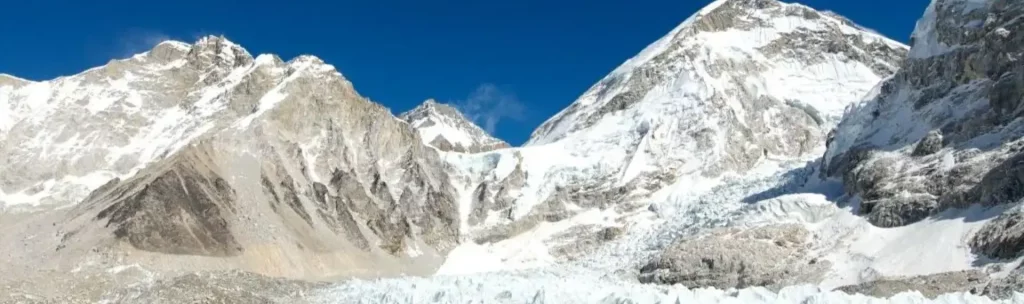
Trekking to Everest Base Camp Trek is a once-in-a-lifetime opportunity for adventurers from all over the world. However, it is important to understand the cost of this trek and the factors affecting the overall cost. The expenses can fluctuate significantly depending on your choices, from the type of trek you opt for to the time of year you travel. Here’s a breakdown of the key cost factors to consider when planning your EBC adventure:
Flights (International and Domestic)
The journey to EBC typically begins with an international flight to Kathmandu, Nepal. These costs vary greatly depending on your departure location and the time of year. Once in Kathmandu, a domestic flight to Lukla is essential for most trekkers. This domestic flight, known to be one of the most thrilling flights in the world, is also a significant cost factor. The price of these domestic flights can also change depending on the season. Also in recent times, flights have been rerouted from Kathmandu to Ramechhap during peak times, which requires overland travel to Ramechhap, adding additional cost to the trip.
Permits and Fees
Trekking in the Everest region requires specific permits, including the Sagarmatha National Park entry permit and the local Khumbu Pasang Lhamu Rural Municipality permit. These fees contribute to conservation efforts and support the local community. It is very important to ensure you have the correct and up-to-date permits before starting the trek.
Accommodation and Food:
Along the EBC trail, you’ll primarily stay in teahouses offering basic accommodation and meals. The cost of these services increases as you ascend to higher altitudes due to the logistical challenges of transporting supplies. The level of comfort you seek will also influence your spending. Also, food and drink prices rise dramatically the higher in altitude you travel.
Guides and Porters:
Hiring a guide and/or porter can significantly enhance your trekking experience. Guides provide valuable local knowledge, ensure your safety, and assist with logistics while porters carry your heavy gear. The cost of these services varies depending on the guide’s experience and the number of porters you hire. Employing local guides and porters also supports the local economy.
Trekking Clothes and Equipment
The Everest Base Camp Trek takes trekkers to high-altitude mountains with harsh, changing weather, where they will need appropriate clothing, gear, and equipment. You can choose to buy or rent clothes and gear. The expert recommends buying trekking clothes and renting gear and equipment, especially if you are planning to trek budget-friendly. Quality clothing and gear are important for your comfort and safety.
Everest Base Camp Cost Breakdown Chart
| Factors | Cost Breakdown |
| Flight tickets | Book in advance for reasonable ticket price deals. |
| Nepal Visa Fee | Buy from a trusted, reliable, cost-effective company that covers helicopter rescue in case of emergency. |
| Travel Insurance | Compulsory to buy, and the price rate is fixed. |
| Flight (Airplane vs. Helicopter) | Round trip Kathmandu-Lukla-Kathmandu flight costs USD 415 while sharing a Helicopter one-way costs USD 500/person. |
| Accommodation | Go for healthy, hygienic local vegetables, Nepali, or sherpa foods, or minimize the consumption of continental foods. |
| Everest Trek Permits | Go for healthy, hygienic local vegetables, Nepali or sherpa foods, or minimize the consumption of continental foods. |
| Foods/Meals | The increase in cost is determined by duration, route, services, group sizes, personal expenses, and additional expenses. |
| Drinking Water | Select a budget-friendly hotel and teahouse stay to save on costs. Luxurious Lodges or Hotel are available. |
| Trek Seasons | Carry a water bottle and use water solution kits (iodine tablets or water filters) rather than purchase mineral water. |
| Tips for Guide and Porters | Off-season trek costs are more reasonable than peak-season treks, but views are better during peak seasons. |
| Tour Operator | The standard tipping rate is 10 to 15% of your tour cost. However, tipping is a personal choice depending on how much you are happy or satisfied with their service during the trek. |
| Trek Packages | Better to choose a local operator over an international operator. Both choices are available. |
| Trekking Equipment | Purchase or rent option available |
Everest Base Camp Trek Video
Estimated Total Cost Based on Trekking Style
The total cost of an Everest Base Camp trek varies significantly depending on your trekking style, ranging from budget to luxury experiences. Budget treks, typically costing $1,000 to $1,800 USD, prioritize essential services and basic accommodations in teahouses. Standard treks, averaging $1,200 to $2,000 USD, offer a balance of comfort and affordability, often including a guide and porter.
Luxury treks, priced from $3,000 to $5,000 USD or more, provide premium services like helicopter transfers, high-end lodges, and personalized itineraries. Key cost factors include permits, flights to Lukla, accommodation, meals, guide and porter services, and personal expenses. Choosing local operators can often reduce costs compared to international agencies while opting for independent trekking without a guide or porter can offer the most budget-friendly option, though it requires greater self-reliance.
Trek Independently or with Operator
Choosing between a tour operator and an independent trekking significantly impacts cost. Tour operators provide comprehensive packages, including permits, guides, accommodations, and meals, offering convenience and safety. This option is generally more expensive. Independent trekking, conversely, allows for greater flexibility and potential cost savings, as you manage all logistics yourself. However, it requires extensive planning and carries increased risks. Local knowledge and permit acquisition can be more difficult to acquire independently.
Level of Luxury
The level of comfort you seek directly influences your expenses. Budget treks focus on basic teahouse accommodations and simple meals, minimizing costs. Standard treks balance comfort and affordability with more comfortable teahouses and varied meal options. Luxury treks prioritize premium services, including higher-end lodges, gourmet meals, and potentially helicopter transfers, resulting in significantly higher costs.
Trek Duration
The length of your EBC trek directly correlates with its cost. Longer treks, typically spanning 12 to 14 days, allow for better acclimatization and exploration but incur higher expenses for accommodations, meals, and potential guide/porter services. Shorter treks can reduce costs but may compromise acclimatization and increase the risk of altitude sickness.
Guide vs. Solo Trek
Hiring a guide and/or porter adds to the overall trek cost. If you are a beginner, hiring guides and porters is recommended since they help in navigation, ensure safety, provide valuable local and cultural knowledge, and carry heavy bags that will make your trek easier. However, this will incur extra costs. If you are an expert trekker, you might not want to hire guides and don’t incur extra costs.
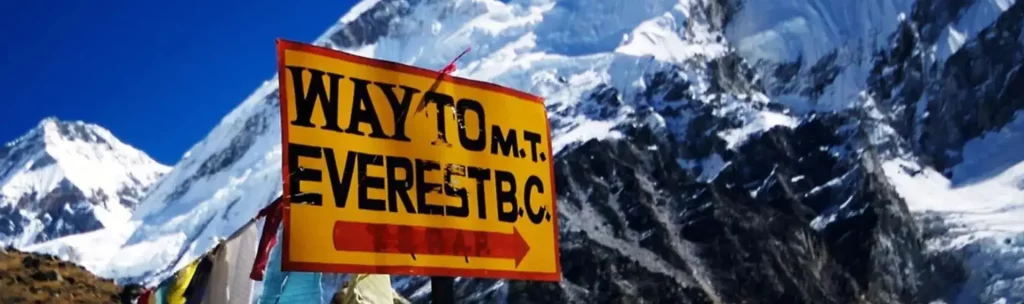
Trekking Permits for Everest Base Camp Trek
Sagarmatha National Park permit and Khumbu Pasang Lhamu Municipal permit are compulsory trekking permits for the Everest Base Camp trek. The permit costs are fixed and are as follows:
Trekking Permits (Everest Base Camp) costs
Sagarmatha National Park (SNP)
Sagarmatha National Park, a UNESCO World Heritage Site in Nepal’s Khumbu region, spans 1,148 square kilometers and is home to endangered species like the snow leopard and red panda. It features some of the world’s highest mountains and glaciers, alongside the Sherpa community. You need a Sagarmatha National Park Permit to trek in the Everest region. You can get this permit at the Lukla checkpost or the Lukla permit counter. Previously, permits were obtained in Monjo after trekking from Phakding to Namche Bazaar. You can also acquire permits in Kathmandu through trekking agencies or directly from the Department of National Parks. Remember to bring your passport; children under 10 enter for free.
Costs
- For Foreigners: NPR 3000 (Approx. USD 30)
- For SAARC Nationals: NPR 1500 (Approx. USD 15)
Khumbu Municipality Permit
To go to Everest Base Camp, you need a permit called the Khumbu Pasang Lhamu Rural Municipality Permit or Khumbu Trekking Permit. This permit is required for all trekkers visiting the Khumbu region, which includes places like Namche Bazaar, Tengboche, and Dingboche. On your first trekking day, you can get the permit at the Lukla Checkpost (Khumbu Pasang Lhamu Rural Municipality Office). You can obtain the permit at the Monjo checkpoint if you start your trek from Jiri or Salleri.
Costs
- For Foreigners: NPR 2000 (Approx. USD 20)
- For SAARC Nationals: NPR 1000 (Approx. USD 10)
Food/Meal cost during Everest Base Camp Trek
When budgeting for the Everest Base Camp (EBC) trek, food costs are a significant factor. Prices increase as you ascend due to the logistical challenges of transporting supplies to higher altitudes. In lower elevations like Lukla, meals are relatively more affordable, but as you progress towards Gorak Shep, the highest settlement before EBC, prices can significantly rise. Expect to pay anywhere from $20 to $45 per day on food, depending on your choices and altitude. Common meals include the staple Nepali dish, Dal Bhat, which is often a cost-effective and filling option.
The menus in tea houses along the trail offer a variety of dishes, including local Nepali cuisine and some Western options. However, it’s important to note that the variety and availability of certain foods can diminish at higher altitudes. Also, prices for beverages such as tea, coffee, and bottled water also increase as you gain elevation. To manage costs, consider sticking to local dishes like Dal Bhat, carrying your own snacks, and using water purification methods instead of relying solely on bottled water.
Food/Meals cost
| Food in Kathmandu costs USD 25- USD 35 (per day) for a normal meal at a budget-friendly place. Food in Kathmandu costs USD 50- USD 100 (per day)- a normal meal at a luxury place. Food in teahouses costs USD 25- USD 35 (per day)- a normal meal (during the trek). Food in Luxury lodges costs USD 60- USD 100 (per day)- a normal meal (during the trek). Note: Prices can increase as the altitude rises during the trek. An additional charge applies for extra meals or drinks. |
Drinking Water Cost for Everest Base Camp Trek
Budgeting for drinking water is crucial when planning an Everest Base Camp trek, as costs increase significantly with altitude. Bottled water is available at lower elevations, but it becomes more expensive as you ascend due to the logistical challenges of transporting it. A more economical and environmentally friendly option is to purchase boiled water from teahouses. However, even this cost rises as you go higher. Therefore, it’s essential to factor in a substantial portion of your budget for hydration.
Trekkers planning to trek the EBC must be wary of safe drinking water and take water purification tablets with them. Portable water filters can also be bought in Kathmandu before the trek. Though they require an initial cost, they offer a long-lasting way to get safe drinking water and help reduce plastic waste in the Everest region.
Drinking Water costs
| Mineral water in Kathmandu costs: USD 1 (for 2 bottles) Mineral water costs: USD 2-USD 4 (per bottle)- (during the trek) Boil water costs: USD 2-USD 4 (during the trek) |
Everest Base Camp Trek Packages
The trek packages also determine the cost of the trek. The trek duration, trek route, preferred services, personal expenses, and additional expenses during the trek can increase the trek costs. These factors should be wisely considered and calculated to have a cost-effective Everest Base Camp trek.

Everest Base Camp Trek
14 Days
Adventure Treks
USD 1,349 per person

Everest Base Camp Trek With Helicopter Return
12 Days
Trekking
USD 1,949 per person

Everest Base Camp Helicopter tour
1 Days
USD 1,225 per person
Trek Packages
| Trek Duration | Standard duration=12 days, Extra days add additional costs |
| Trek Route | The overland route takes longer days (Salleri, Jiri route) |
| Services | The luxury package is expensive compared to the budget-friendly standard package. |
| Additional expenses | Your personal expenses, During the trek (hot shower, use of the internet, extended trek days, extra drinks and meals) |
| Group sizes | Large group sizes: Trek cost per person is reasonable. |
Everest Base Camp Trek Cost of Himalaya Trip
We, Himalaya Trip, is a reputed company providing the best and most satisfactory services for the past 12 years. We serve 200 trekkers annually and our repeat customers are a testament to our quality services. To fit different class trekkers, we have designed a standard Everest Base Camp Trek package and a luxury Everest Base Camp Trek package. The cost for both standard and luxury packages varies.
The total cost depends on factors such as the number of people in a group, the time of the year, and the type of accommodation chosen in Kathmandu. If travelers plan to trek in larger groups, travelers can generally enjoy the lower costs per person. The standard 12-day Everest Base Camp trek costs USD 1199 per person. Himalaya Trip offers a comprehensive Everest Base Camp Trekking Package at reasonable rates. For further detailed information, reach out to us.

Everest Base Camp Trek Itinerary and Distance KM and Hours
| Day | Trek Destination | Distance | Duration |
| 1 | Lukla to Phakding | 8 kilometers | 4 Hrs. |
| 2 | Phakding to Namche Bazaar | 11 kilometers | 5-6 Hrs. |
| 3 | Namche Bazaar Day Hike | 7 kilometers | 3-4 Hrs. |
| 4 | Namche Bazaar to Tengboche | 9 kilometers | 5-6 Hrs. |
| 5 | Tengboche to Dingboche | 10 kilometers | 6 Hrs. |
| 6 | Dingboche Acclimatization (Day Hike) | 6 kilometers | 3-4 Hrs. |
| 7 | Dingboche to Lobuche | 8 kilometers | 5-6 Hrs. |
| 8 | Trek to Gorakshep, EBC Day Trip | 11 kilometers | 8-9 Hrs. |
| 9 | Hike to Kalapatthar, Trek to Pheriche | 16 kilometers | 7-8 Hrs. |
| 10 | Pheriche to Namche Bazaar | 19 kilometers | 7-8 Hrs. |
| 11 | Namche Bazaar to Lukla | 19 kilometers | 7-8 Hrs. |
Everest Base Camp Trek cost of 12 days standard package
| Number of Pax | Cost per person |
| 2-4 | US $1199 |
| 5-9 | US $1149 |
| More than 10 | US $1099 |
Conclusion
Hence, trekkers planning to enjoy the EBC trek must decide beforehand if they want a budget-friendly or luxury trek. The cost of the Everest Base Camp trek can range from $1199 to $5,000 USD. Several factors can affect this price, including the package type and your chosen services. Knowing these costs and planning ahead can help you prepare for an amazing adventure to one of the world’s most famous trekking spots.


Good Experience of Himalaya trip’s EBC trek – 14 days
It is amazing and good experience to join Himalaya trip’s EBC trek – 14 days. The tour guard – Jay and the porters are well arrangement and caring. They skillfully managed our changing circumstances and ensured our safety. And, really appreciate their efforts in making the trip a success.


Unforgettable Everest Base Camp Trek with Jay and His Amazing Team!
I recently completed a 14-day Everest Base Camp trek that left me speechless, thanks to the exceptional guidance and care provided by Jay, our guide, and his remarkable porter team. Jay’s thoughtfulness, professionalism, and adaptability were evident throughout the journey as he went above and beyond to ensure our safety and enjoyment. His extensive knowledge of the region and ability to provide alternative options based on different scenarios were invaluable. The porters were incredible too, carrying our loads with diligence and always greeting us with warmth. Together, Jay and the porters formed a fantastic team that made the entire experience seamless and joyous. I highly recommend Jay and his team to anyone planning an Everest Base Camp trek. Their expertise, care, and positive energy will make your adventure truly unforgettable. Thank you, Jay, and the incredible porter team, for an incredible journey!

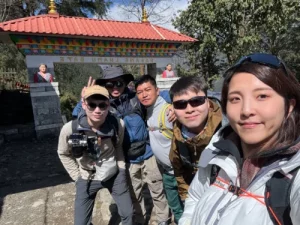
Unforgettable EBC Trek with Jay
I recently completed a 14-day Everest Base Camp trek that left me speechless, thanks to the exceptional guidance and care provided by Jay, our guide, and his remarkable porter team. Jay’s thoughtfulness, professionalism, and adaptability were evident throughout the journey as he went above and beyond to ensure our safety and enjoyment. His extensive knowledge of the region and ability to provide alternative options based on different scenarios were invaluable. The porters were incredible too, carrying our loads with diligence and always greeting us with warmth. Together, Jay and the porters formed a fantastic team that made the entire experience seamless and joyous. I highly recommend Jay and his team to anyone planning an Everest Base Camp trek. Their expertise, care, and positive energy will make your adventure truly unforgettable. Thank you, Jay, and the incredible porter team, for an incredible journey!
Hong Kong, 2024

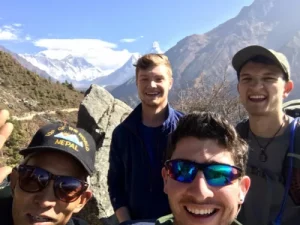
Everest Base Camp Trekking – 14 Days
Was referred to Harka by a friend who had done the 14 Days EBC Trek a few months before, and he was very easy to contact and quick to respond. We were a bit uneasy about booking with someone from the other side of the world, but Harka proved himself to be honest, professional, and reputable while organising our trip for us. Once we were in Kathmandu, he was easy to meet up with and was quick to help us out with anything we needed. Our guide, Mr. Dil, who met us in Lukla, was what really made our trip as amazing as it was. He was extremely knowledgable on the mountains and mountain passes, as well as getting us into tea houses and our flight home. He was very professional, friendly, and easy to work with, even though his English was a bit broken. Overall, it was an incredible trip, and I wouldn’t hesitate to book with Harka again. If you do the EBC, ask for Dil, he’s the man.
Canada, November 2018

Private trek to Everest Base Camp
I booked a private trek to Everest Base Camp so it was just myself and my guide / porter trekking together for 14 days. As a solo traveller I always invest a lot of time in to researching the company I book with, it was important to me to do this with a Nepalese tour company and the previous reviews were so encouraging and positive I decided to contact Himalaya Trip to see what they had to offer.
Harka responded almost immediately despite the time difference and sent me detailed information on the Everest Base Camp trek. He answered all my questions and always replied quickly which continued to give me confidence. They were also very competitively priced compared to other local companies and along with the great reviews I had a good feeling that Harka and his team would be the ones to get me to EBC.
Harka met me at the airport, took me to my hotel and helped get me any last minute bits I needed for the trek in Kathmandu. He made everything very easy and I felt safe and reassured the whole time which is important to me as a solo female traveller.
My guide / porter was called Dil and he was the man I was spending 14 days with trekking to EBC. Dil was fantastic, he looked out for me every step of the way, regularly checking in to ensure I was ok and did everything to make my experience on the trek as comfortable and as safe as possible. Dil was so knowledgable about the area and the mountains he would point out everything along the way. Despite him speaking broken English we could quite easily chat and communicate without any problems.
The trek was an incredible experience and one of the toughest yet most amazing things I’ve ever done and part of that was down to the efficiency and professionalism of Harka and his team. I didn’t have to worry or think about a thing, just getting to EBC.
UK, Nov 2018
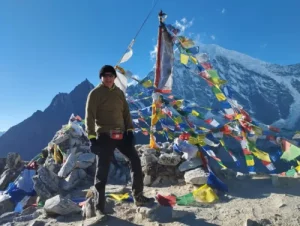
Great time on my walk to Everest Base Camp
I had a great time on my walk to Everest Base Camp from Himalaya Trip Team.
I have many positive comments and the main ones are:
– You were very efficient and helpful before I arrived, answering all my questions promptly and effectively so I knew what to expect when I arrived.
– I was met at the airport as planned, had a good briefing from you at the hotel and the hotel was comfortable.
– Everything happened as planned and it was a good timetable enabling me to to walk at my own pace and to properly acclimatise to altitude on the way up.
– My guide, Om Gurung, was excellent and very attentive. He obtained single accommodation for me every night and always checked that I had everything I needed before he looked after himself. When I was unwell on the way down he carefully monitored me, gave me throat tablets and did everything he could to ensure I was comfortable.
– My porter, Bikas, also did a very good job and was always helpful and pleasant.
– The standard of the lodges was good. The only comment is that often the washing facilities were sometimes very limited and at some lodges only consisted of a tap low down beside the toilet! This is not a comment about your company as I think it applies whichever company one uses. It is just difficult to understand why the washing facilities are often so limited and in short supply when all other features of the lodges are very comfortable!
– The price of the trek was competitive compared to some companies but the standard of care was equally good.
Uk, November 8, 2019

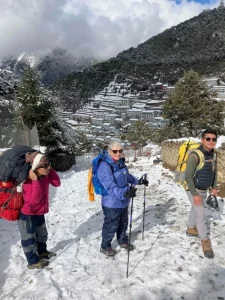
Trek to Everest Base Camp Experience
We had used Harka and his team previously in 2014 so knew to expect great service! Jay as guide and vicus as porter we had a private trek on EBC trek ! We had extreme weather conditions and jay made sure we stayed safe at all times !
Australia, March 2023

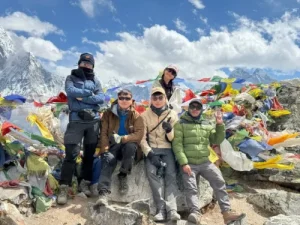
Good Experience of Himalaya trip’s EBC trek
It is amazing and good experience to join Himalaya trip’s EBC trek – 14 days. The tour guard – Jay and the porters are well arrangement and caring. They skillfully managed our changing circumstances and ensured our safety. And, really appreciate their efforts in making the trip a success.
Hong Kong, 04/2024
Whether you want a luxury experience or a budget-friendly option, this guide helps you navigate your journey. For a good price and top-notch services with a 99% success rate, consider booking with HimalayaTrip. Our experienced team ensures a safe, enjoyable, and unforgettable trekking experience.