Winter and Monsoon Special Offer! Get 5% off on all trekking packages in Nepal . Visit during June , July, August, December , January and February and take advantage of this limited-time deal.

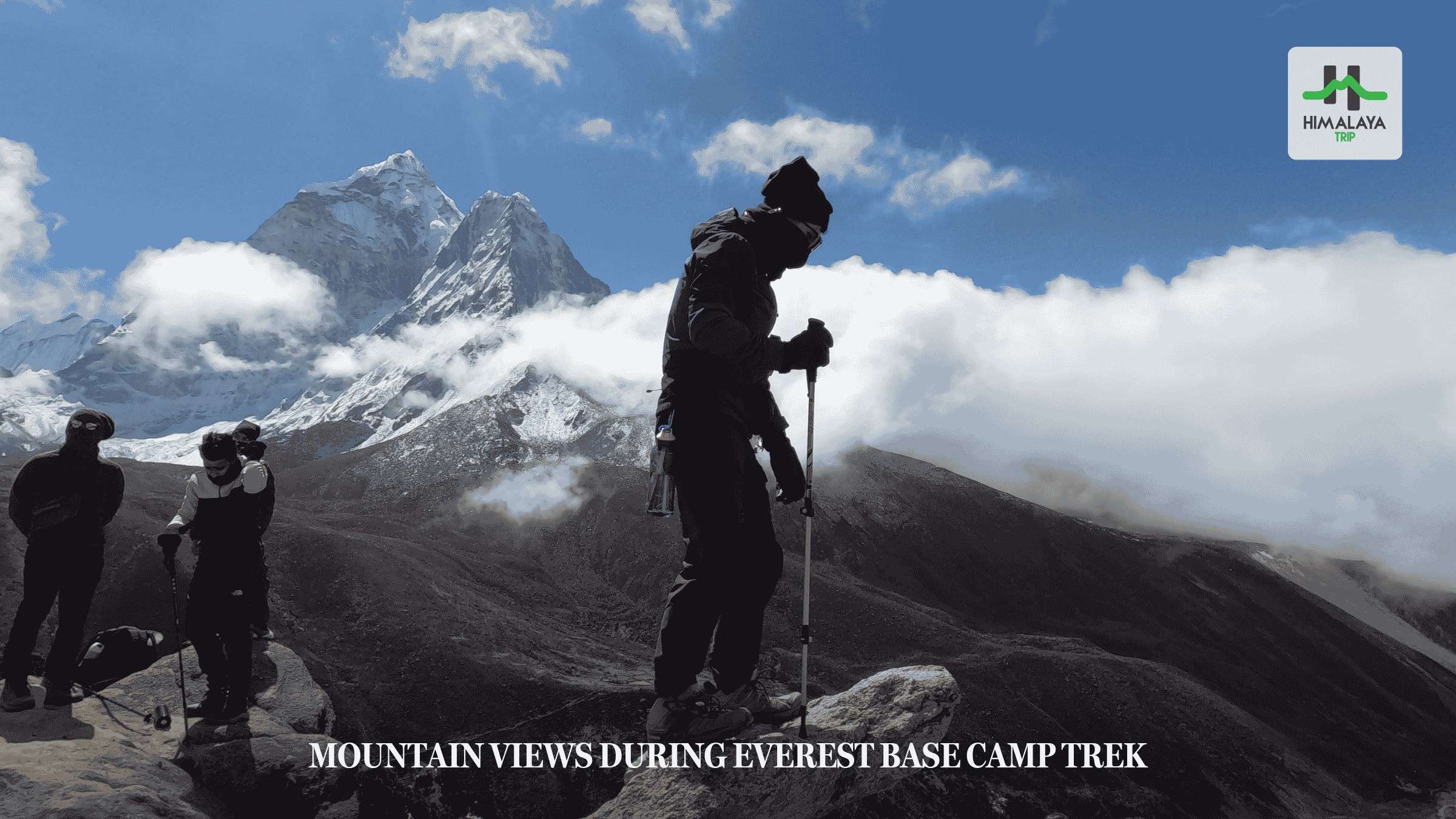
Mountain Views During Everest Base Camp Trek
Ask anyone to name the most iconic trek in Nepal, and chances are, the Everest Base Camp (EBC) Trek will be the answer. Its classic trail follows the footsteps of Sir Edmund Hillary and Tenzing Norgay Sherpa to the foothills of the world’s tallest mountain. It is popular for its adventurous trails, scenic landscapes, and cultural experiences. The EBC Trek is also popular for one more thing, and that is the mesmerizing mountain views.
Some of the highest mountains in the world are located in the Everest or Khumbu region. From the moment you arrive, towering Himalayan giants surround you. When on the Everest Base Camp Trekking trail, you will get to witness the changing perspectives of the snow-capped vistas. Moreover, the mountain views are not limited to the trail or a single viewpoint. You will come across several viewpoints that offer excellent mountain views of iconic peaks like Everest, Lhotse, Nuptse, Pumori, Ama Dablam, Cho Oyu, and more.
Each village, ridge, or valley offers unique mountain views. Whether catching your first panoramic Himalayan view from Namche Bazaar or standing at Kala Patthar, admiring Everest in full glory, the mountain scenery is unforgettable. The mountains will accompany you throughout the journey, making the trek a truly immersive mountain experience. Let us dive into the world of the Himalayan giants and explore the mountain views on the EBC Trek!
Table of Contents
Mount Everest – The World’s Highest Mountain
When it comes to the mountain views during the Everest Base Camp Trek, Mount Everest (8,848.86 m) undoubtedly steals the show. It is also the most sought-after sight while on the trail. Locally, the mountain is called “Sagarmatha”, which means “the head in the great blue sky,” and “Chomolungma” in Tibetan, which means “holy mother.” The mountain belongs to the Mahalangur Himalaya range. Everest is not only a giant peak to the locals of the Khumbu region. It also holds deep cultural and spiritual significance.
The iconic peak does not appear right away and remains hidden at lower elevations. Once on the EBC trail, you will catch the first glimpse of Everest at a distance upon reaching Namche Bazaar. The view evolves gradually along the route, building excitement and anticipation. The best spot to catch a view of Mount Everest at an early stage of the EBC Trek is the Everest View Hotel. You can witness the mountain at the far horizon with other snow-capped giants, which provides you with a real sense of Everest’s massive scale.
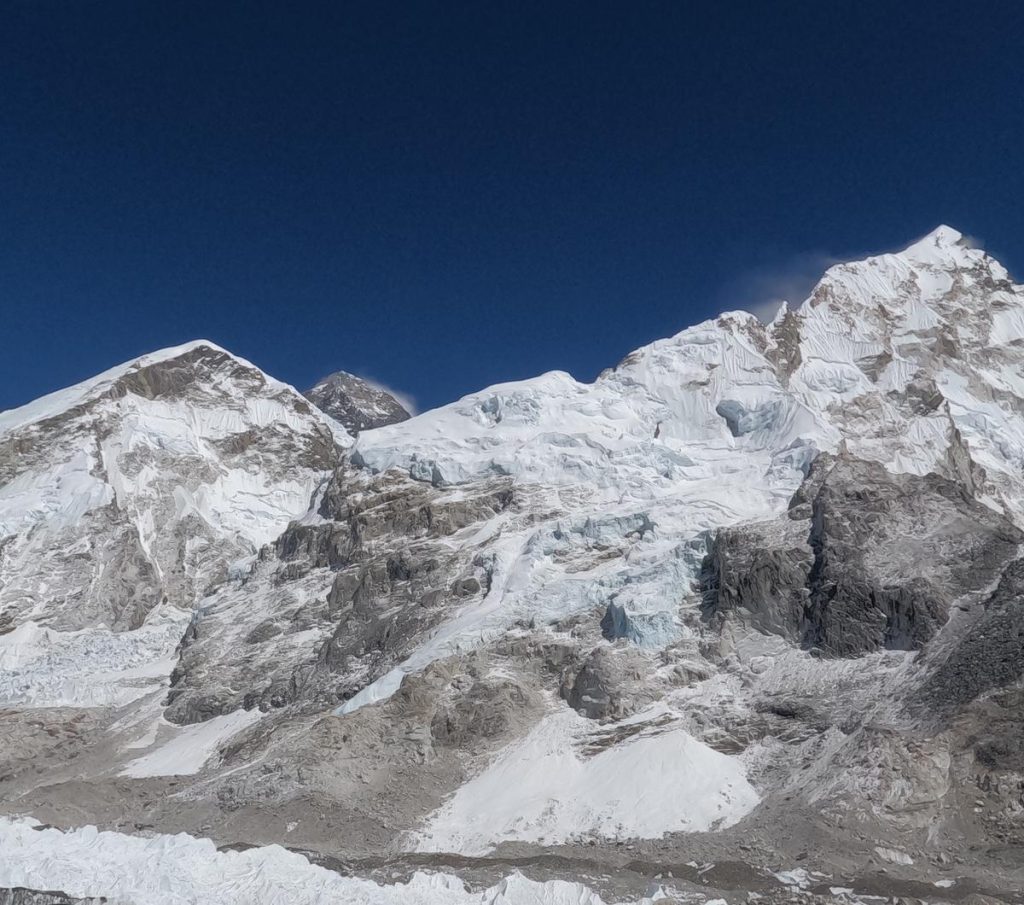
Ascending to Tengboche, the mountain views start to become more immersive. The perspective also changes significantly. Many trekkers think they will catch an iconic view of Everest from Everest Base Camp. But it is from Kala Patthar that you will get the most grand and unobstructed view of Everest. The view is especially magical during sunrise. The peak turns golden with the first rays of the sunlight, making the view unforgettable. It may come as a surprise to some, but Everest does not always appear as a single peak. It appears alongside other Himalayan peaks such as Nuptse and Lhotse.
Lhotse – Everest’s Massive Neighbor
The next mountain viewed during the Everest Base Camp Trek is Mount Lhotse (8,516 m). It is the fourth-highest peak in the world and also the most visually memorable peak in the Everest region. Lhotse really stands out for its huge south face, which looks like a steep mountain wall. It is also part of the Mahalangur Himalaya range. It is connected to Everest via the South Col, and both giants are neighbors. The name Lhotse is a Tibetan word meaning “South Peak.”
While on the EBC Trek, the view of Lhotse becomes clearer from the upper trails near Tengboche and Debuche. You will start to see it rise like an icy wall behind the surrounding ridgelines. Mount Lhotse becomes more visible from Dingboche and Chhukung Valley as the landscape shifts into wider alpine valleys. You will really get an idea of its huge size. Then, you will reach Everest Base Camp. From here, you will get the best close-up and spectacular view of Mount Lhotse. It rises almost straight up from the Khumbu Glacier, like a massive wall of ice and rock.
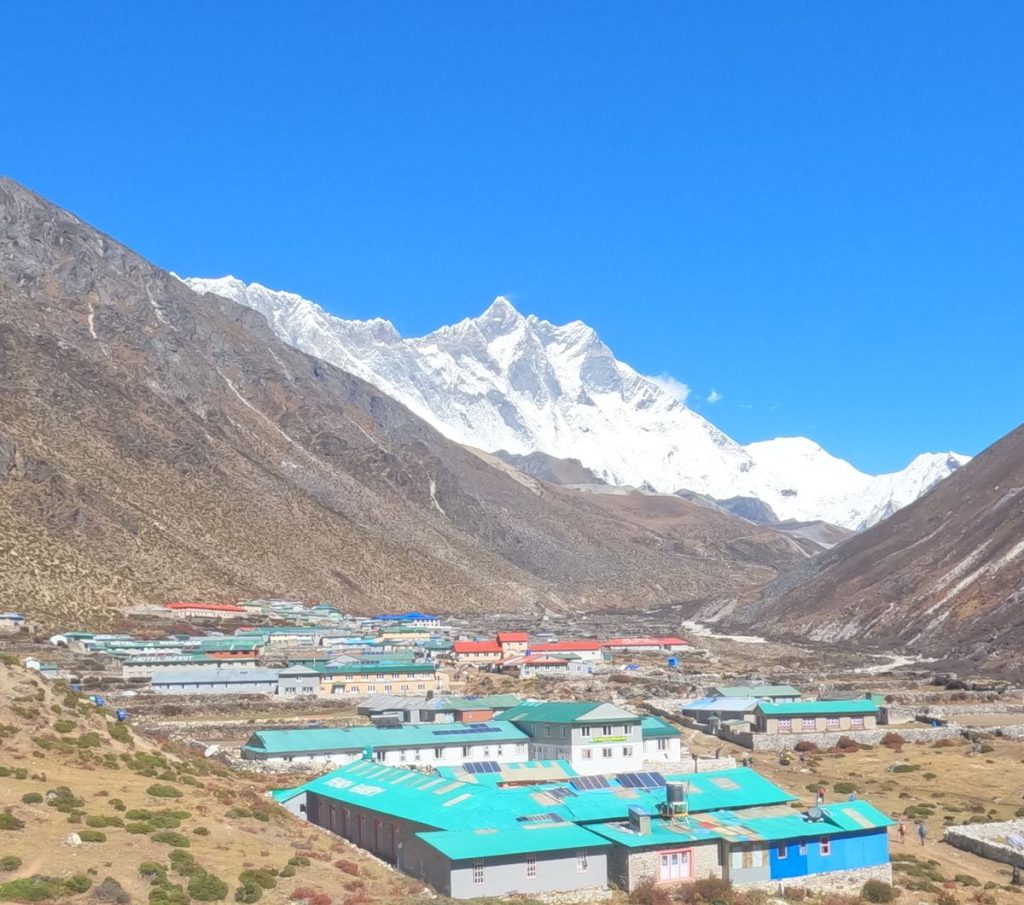
You can also enjoy the sweeping view of Lhotse beside Everest from Kala Patthar. What makes it visually memorable during the trek is the combination of its shape and size. Many trekkers mix up Lhotse for Everest, as both peaks sit side by side. It is one of the most frequently visible peaks along the EBC Trek route. Mount Lhotse adds scale and depth to the whole Himalayan scene. It will be one of the most memorable views during the Himalayan adventure.
Nuptse – The Mountain That Dominates Everest Base Camp
To many trekkers on the EBC Trek route, the long and jagged ridges of Mount Nuptse (7,861 m) leave a lasting impression. It is among the mountains that are clearly visible from the upper Khumbu Valley. It runs across the skyline southwest of Everest. Like Everest and Lhotse, Nuptse is also part of the Mahalangur Himal and connected to the massif. Its name also comes from a Tibetan word meaning “West Peak.”
Nuptse is not an 8,000-m peak, but its steep rock walls and rugged ridgeline stand out during the Everest Base Camp Trek. But you have to wait for the view. It gradually reveals itself as you move above the Namche Bazaar. You can get the first clear view of Mount Nuptse from the Everest View Hotel or the EBC Trekking trail between Namche Bazaar and Tengboche. Still, at this point, you will see the mountain as a cluster of snow-capped peaks. It is only from Dingboche, Lobuche, and especially Gorak Shep that Nuptse takes the center stage.
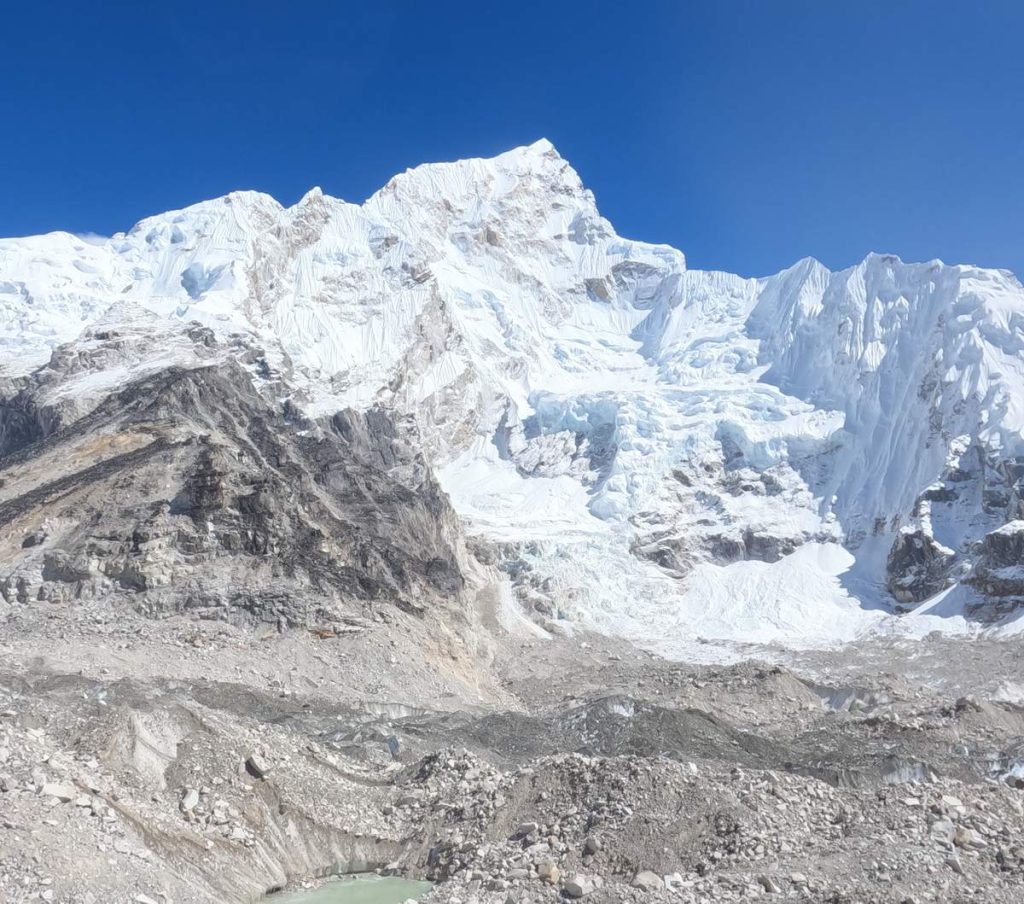
The mountain view becomes increasingly dominant. Then, upon reaching Everest Base Camp, you will see Nuptse’s ice-covered walls rise above the Khumbu Glacier. The sight is truly spectacular. It appears even larger than Everest, as the world’s tallest mountain partially hides behind the surrounding mountains. Nuptse, on the other hand, stands tall above the valley, with its massive ice faces and rocks fully visible. Its scale, closeness to the trail, and powerful presence make it one of the most memorable views on the EBC Trek.
Ama Dablam – The Matterhorn of the Himalayas
One of the most memorable mountains on the EBC Trek is Ama Dablam (6,812 m). It does not dominate the skyline, but rises sharply in a pyramid shape. The name Ama Dablam comes from Tibetan words meaning “Mother’s Necklace.” The mountain’s long ridges on each side look like a mother’s arm gently hugging her child. On the southwest face, its hanging glacier looks like a traditional pendant “Dablam” worn by Sherpa women. The shape closely resembles the famous Matterhorn in Europe. Hence, it earned the nickname the “Matterhorn of the Himalayas.”
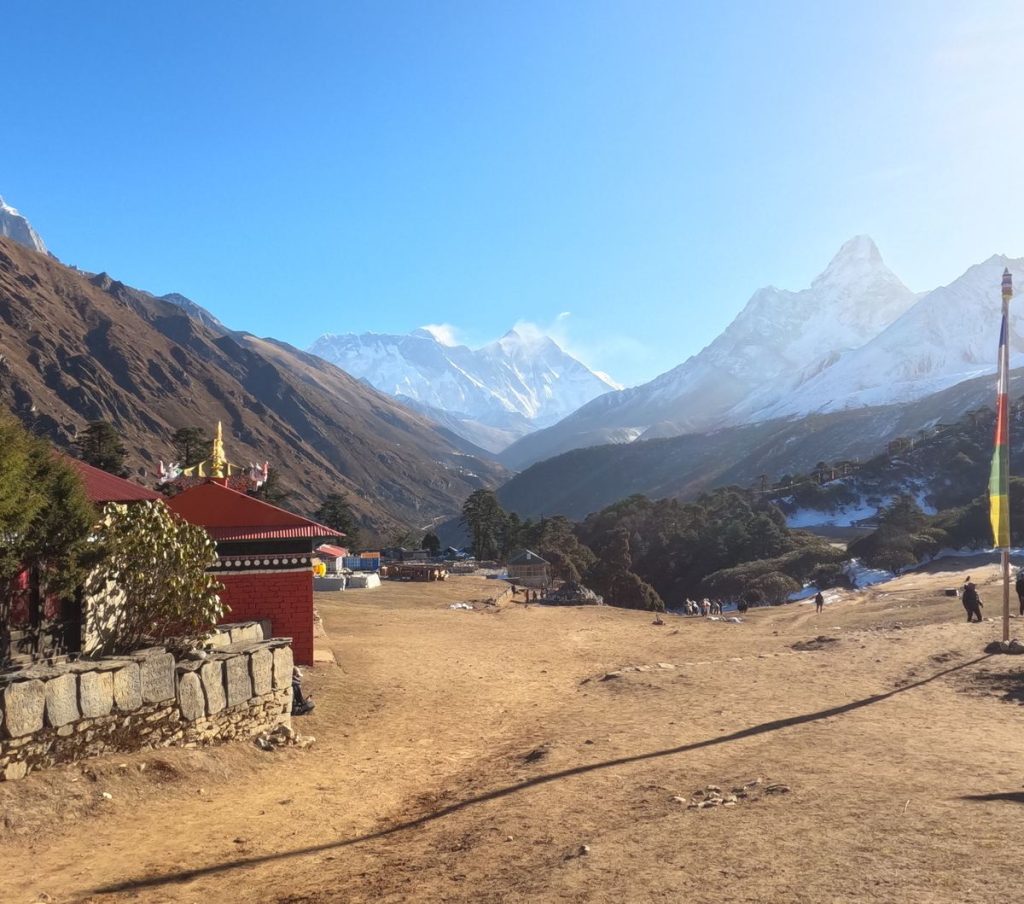
Ama Dablam is a sacred mountain for the Sherpa community. They associate it with protection, motherhood, and spiritual guardianship. The mountain first appears repeatedly along the trail between Namche and Tengboche. It is also visible from the Everest View Hotel, where it stands out alongside Everest and Lhotse. The Tengboche Monastery is the best viewpoint for catching a glimpse of Ama Dablam. It is one of the most iconic scenes of the EBC Trek.
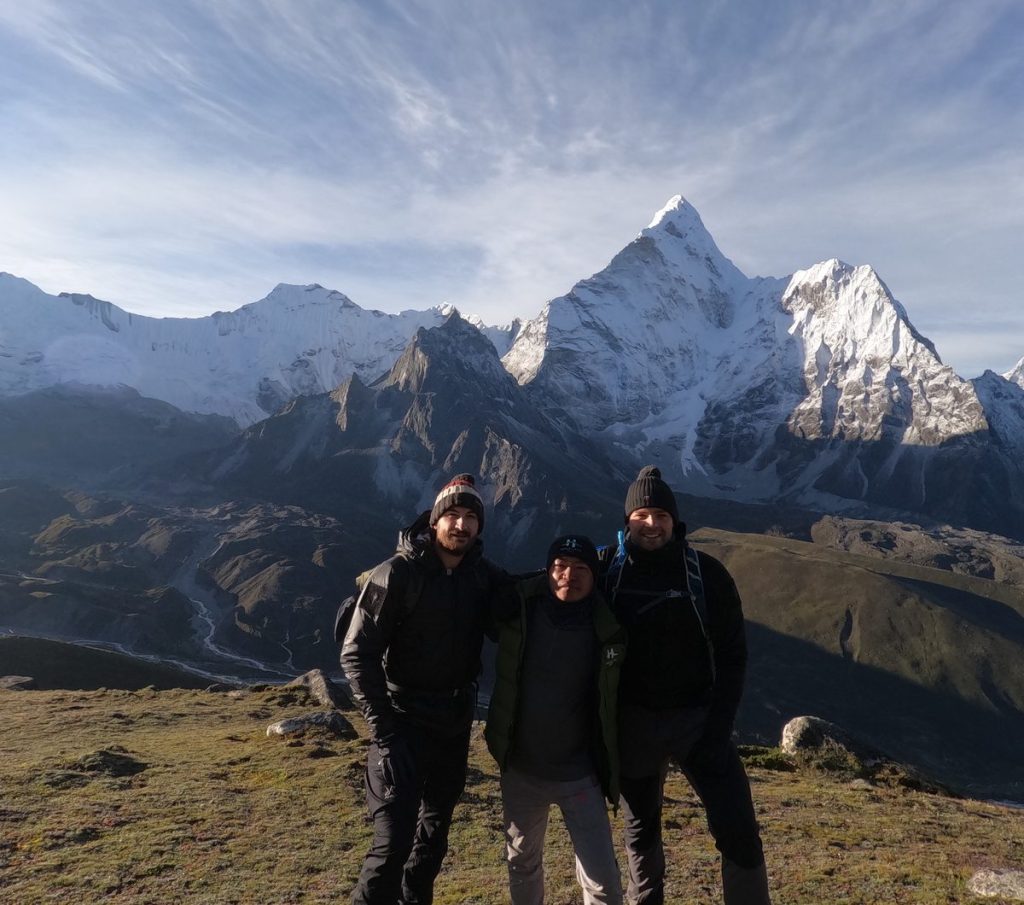
The mountain’s ridgeline appears nearer from the Dingboche and Pangboche trails. Especially from Pangboche and upper Deboche, it seems you can reach out and touch Ama Dablam in the morning light. What makes the peak more memorable than most peaks during the EBC Trek is its constant presence. It appears and disappears behind ridges. But it is present throughout the trek, accompanying you in the journey. Ama Dablam’s shape, size, and symmetry make it one of the most visually beautiful peaks.
Thamserku and Kangtega – The Gateway Peaks of the Khumbu
The mountains we mentioned above are mostly only visible once you ascend above Namche. However, two quiet peaks are visible from the lower and middle sections of the EBC Trek trail. They are Mount Thamserku (6,623 m) and Kangtega (6,782 m). These two peaks are less popular than Everest, Lhotse, Nuptse, and Ama Dablam. But their sight announces your entry into the region. They stand tall like two guardians at the entrance to upper Khumbu. Thamserku and Kangtega are visible from the very start of the EBC Trek.
Trekking along the Dudh Koshi River Valley, you can see the two peaks rise above the skyline. Thamserku appears right after Lukla, along the trail to Namche Bazaar. Meanwhile, Kangtega is visible from Namche Bazaar. The Mount Thamserku is notable for its sharp, glacier-cut ridges. Kangtega has an impressively wide and saddle-shaped summit ridge. Together, they are considered natural gateway peaks of the Everest region.
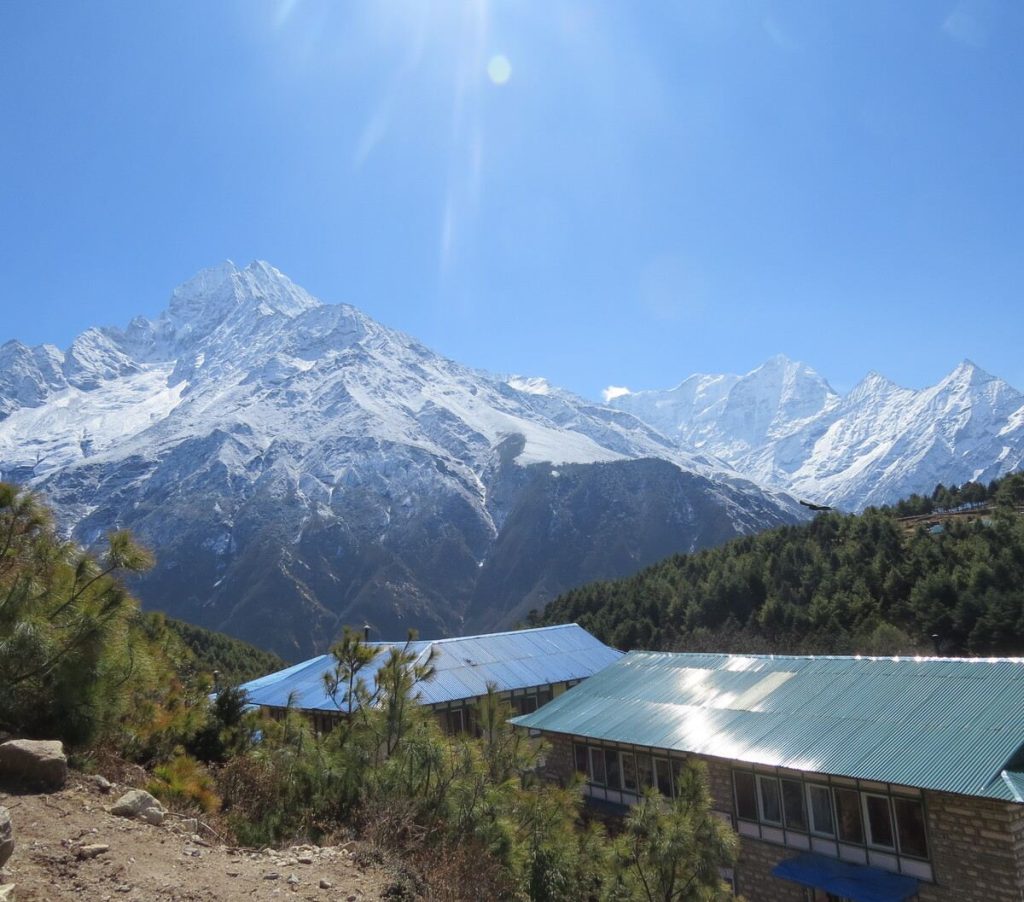
Unlike other mountains, Thamserku and Kangtega are not memorable for their size, but for their timing. You will catch their sight even before Lhotse, Everest, or other towering peaks. They mark the beginning of the classic trek adventure. Similarly, they accompany you as you move from lower forest landscapes to the alpine meadows. The two mountains add depth and scale to early Everest viewpoints.
Pumori – The Daughter of Everest
One of the most beautiful mountains you will see on the Everest Base Camp Trek is Pumori (7,161 m). It is nicknamed the “Daughter of Everest” for its proximity to Mount Everest. Pumori in the Sherpa language translates to “Unmarried Daughter.” The mountain stands out for its clean, symmetrical, and pyramid-like form. The view is even more spectacular when the morning light hits the snow-covered faces of Pumori. It glows against the dark landscapes.
Pumori becomes visible only when you reach the upper Khumbu region, around Lobuche. You can only see it once you enter the glacial, high-altitude area. The mountain appears west of Everest. The best viewpoint to watch Pumori in its true form is from Kala Patthar. It towers above the Khumbu Glacier. While Everest draws the most attention, Pumori also catches your eye with its elegant shape. The mountain stands alongside Lhotse and Nuptse, creating a layered Himalayan scene.
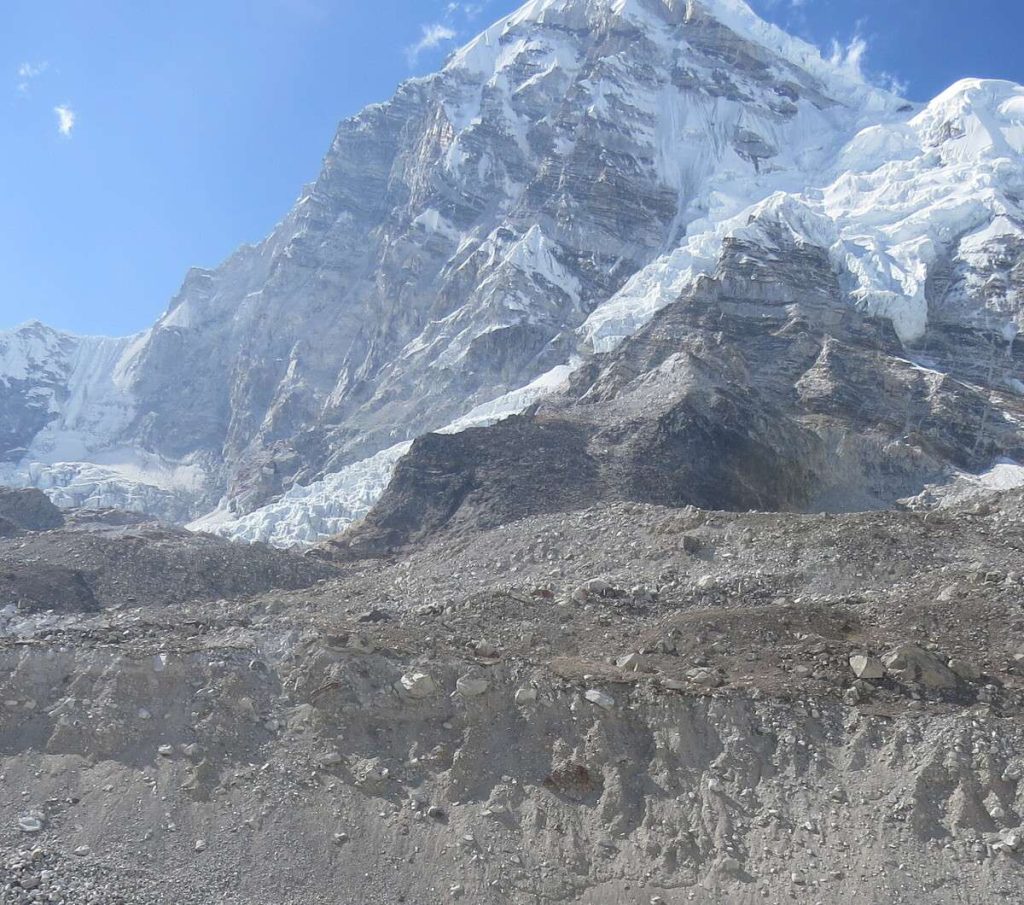
Mount Pumori is a popular climbing peak and a favorite of photographers. The mountain’s appearance changes throughout the day with the sun’s position. It glows warmly at sunrise, looks sharp at midday, and becomes deeply layered during sunset when long shadows fall across its ridges. The perfect shape, position, and visual make Pumori one of the most memorable mountain views during the Everest Base Camp Trek among the legendary peaks.
Cho Oyu – The Sixth-Highest Mountain in the World
The next mountain that you can see on the trail to EBC is Cho Oyu (8,188 m). It is the sixth-highest mountain in the world. The mountain name means “Turquoise Goddess.” Unlike the other peaks we mentioned earlier, Cho Oyu is more distant. It does not have a sharp ridgeline but rather has a broad, massive shape with gentle slopes. Hence, the mountain looks softer and gentler. The beauty of Mount Cho Oyu lies in its massive scale and presence.
You will not see Cho Oyu on the Everest Base Camp trail. It is visible from higher viewpoints on clear days. You can catch a glimpse of the peak from Kala Patthar or high ridges above Lobuche and Gorak Shep. Usually, the mountain appears on the far western horizon. Cho Oyu appears as a massive wall of ice and snow, rising beyond the main Everest peaks. It can be spotted far to the west, where it merges with the distant Himalayan range.
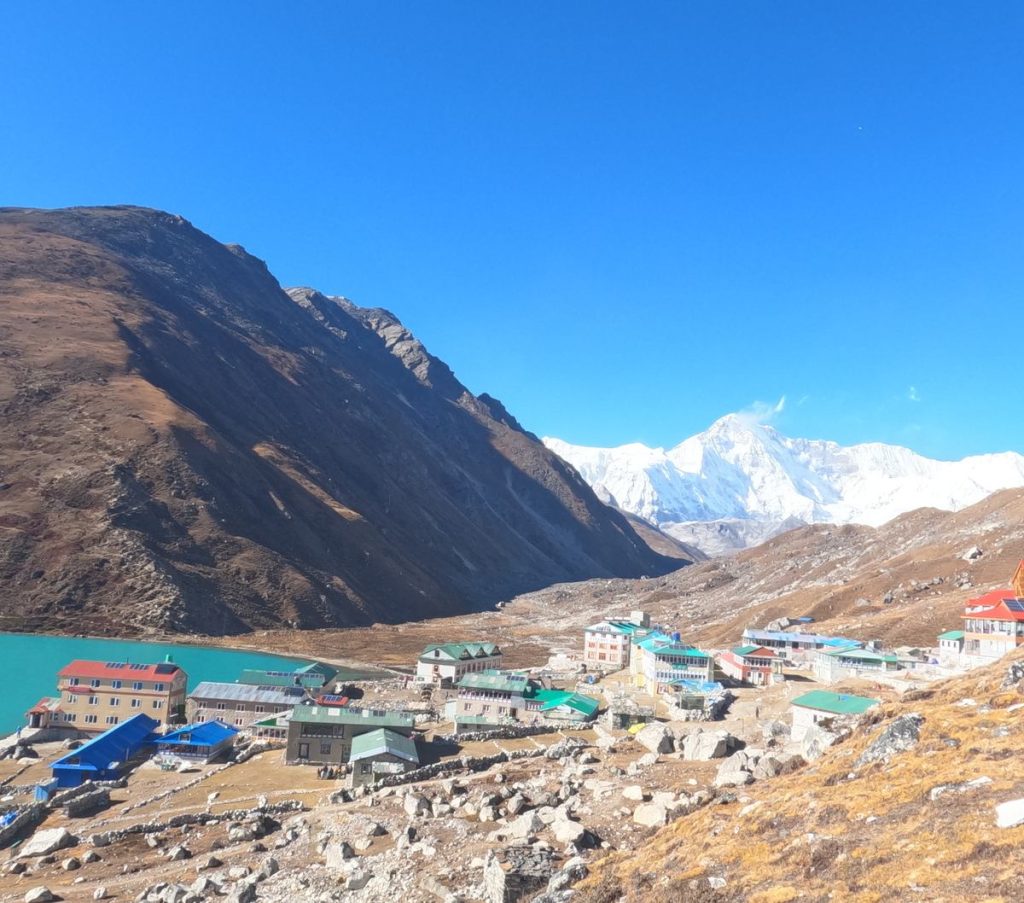
The sense of distance is exactly what makes Mount Cho Oyu more attractive. It may be far, but its powerful presence adds depth to the entire Himalayan panorama. As it is one of the fourteen 8,000-m peaks in the world, it is an important part of the mountaineering world. Its faraway view is also enough to connect it to the Everest region. Similarly, Cho Oyu shows how Everest is connected to other towering giants that stretch across Nepal and Tibet.
When Do the Best Mountain Views Appear on the Everest Base Camp Trek?
You may catch your first best mountain view from the aircraft’s window seat during the flight to Lukla. Although the mountains look small and distant, you will fly at eye level with the Himalayan peaks. It gives you the first glimpse at the massive scale of the Himalayas. Once you land at Lukla Airport, you may see the Himalayan ranges in the distance. But the view is highly dependent on the weather conditions.
In the first few days of the Everest Base Camp Trek, you will trek through forests of rhododendron, conifers, suspension bridges, and Sherpa villages. During this time, you can get occasional views of the snow-capped peaks. The high mountains remain partially hidden or visible only at a distance. When you climb to Namche Bazaar, you will get your first clear view of Mount Everest on a clear day. From here onwards, the mountain view continues to get closer, bigger, and more incredible.
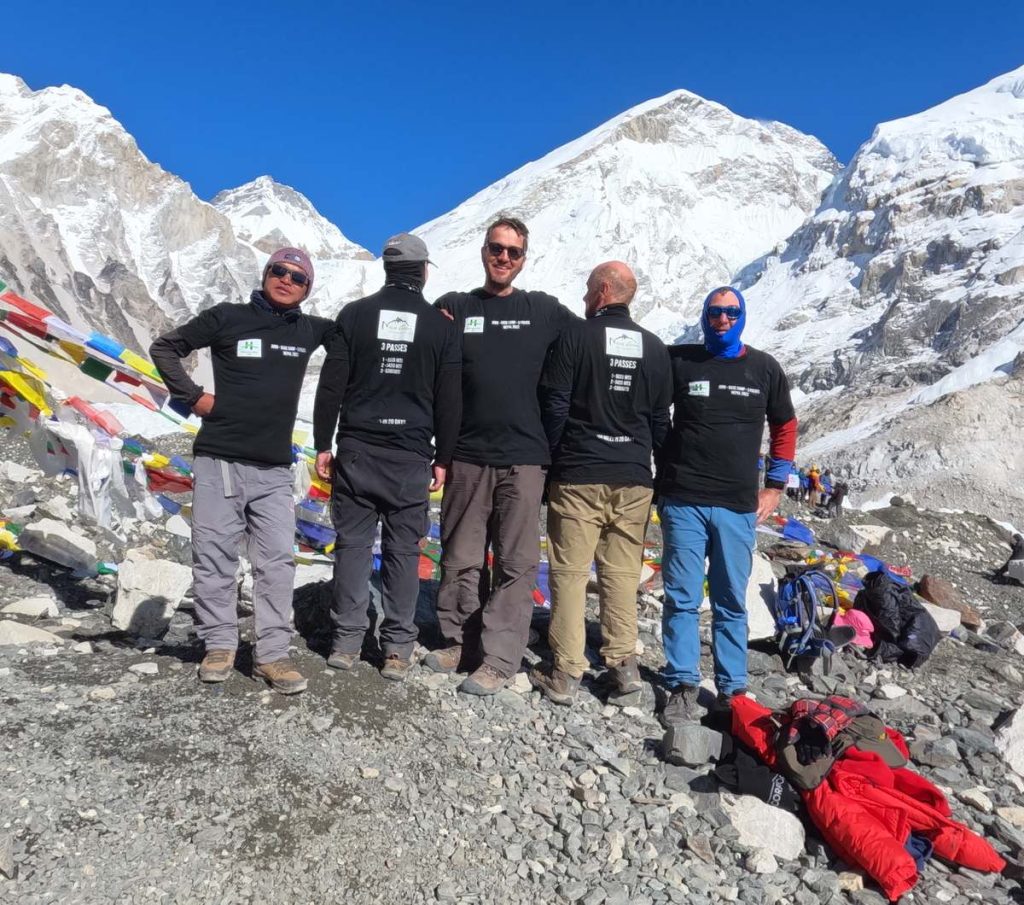
The EBC Trekking trail opens to alpine meadows and glacial landscapes as you ascend to higher elevations. From the clear openings, you will start to get closer and full views of the snow-capped Himalayas. You can enjoy some of the best mountain views from Dingboche, Lobuche, and Gorak Shep. But the iconic Himalayan scenery is visible from none other than the Everest Base Camp and Kala Patthar.
The beauty of the Everest Base Camp Trek is that each day offers a new angle of the snow-capped mountains. The scenery is not limited to a single viewpoint, and it is incorporated throughout the trail. As you move deeper into the Khumbu region, the views of the mountains also become more rewarding and memorable.

Everest Base Camp Trek
14 Days
Adventure Treks
USD 1,349 per person

Everest Base Camp and Gokyo Lakes Trek
15 Days
Adventure Treks
USD 1,449 per person

Everest Three Passes Trek
17 Days
Adventure Treks
USD 1,549 per person
Viewpoints on the Everest Base Camp Trek
The mountain views are visible throughout the Everest Base Camp Trekking trail, but from the viewpoints, you can watch them in full scale. They offer clear, wide views and better perspectives of the towering giants. Every viewpoint offers a different angle of the mountains and the diverse landscapes of the Khumbu region. Here are some popular viewpoints on the EBC Trek route:
Kala Patthar
The most iconic and best viewpoint on the Everest Base Camp Trek is Kala Patthar. It is situated at an altitude of 5,550 m, the highest point of the journey. The viewpoint offers the best up-close view of Mount Everest, almost like face-to-face. While most may think that the base camp offers the best view of the world’s highest mountain, it is actually not true. The mountain is partially hidden behind other peaks. From Kala Patthar, the view is unobstructed. Everest stands tall, and you can also see panoramic views of Nuptse and the snow field. The viewpoint is especially popular for catching the sunrise.
Hotel Everest View
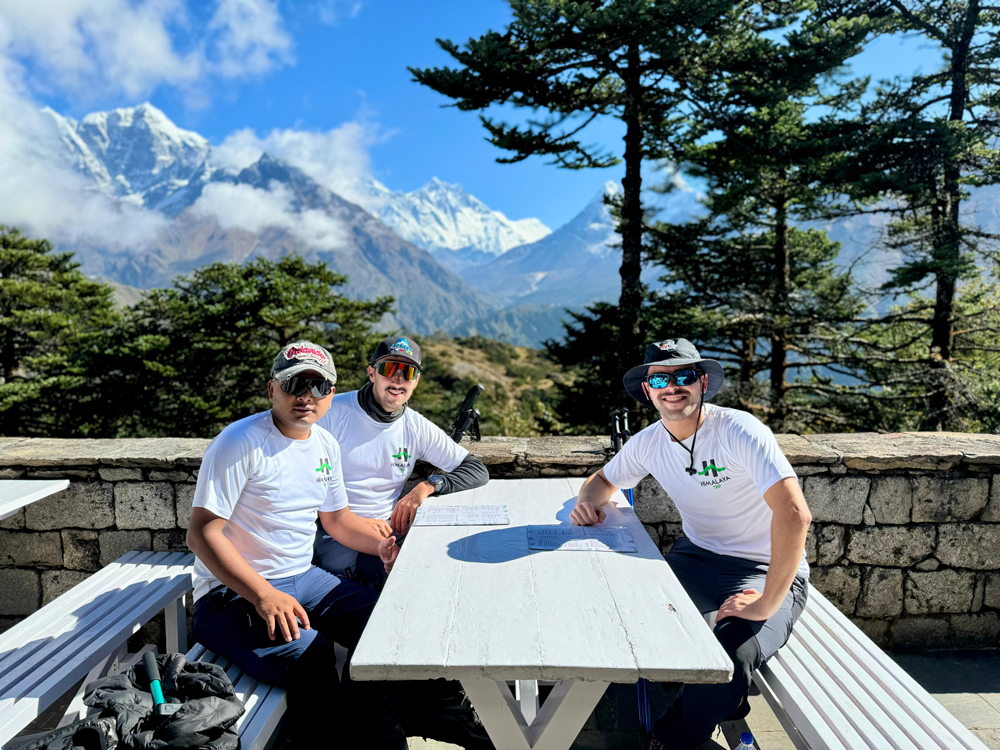
One of the earliest viewpoints along the Everest Base Camp Trek is the Hotel Everest View. It is located right above the Namche Bazaar, at an altitude of 3,880 m. The hotel offers open-terrace views from which you can catch your first glimpse of Mount Everest. Similarly, you can see other Himalayan peaks such as Lhotse, Nuptse, Thamserku, and Ama Dablam in a wide panoramic view. The viewpoint is also often called the first luxury viewpoint of Mount Everest. You will hike to the Everest View Hotel while acclimatizing at Namche.
Namche Bazaar
Namche Bazaar is another viewpoint along the Everest Base Camp route. It is famous as the Sherpa Capital and the main trading hub of the Khumbu region. Namche sits at an altitude of 3,440 m in a natural amphitheater-like shape on the mountain slope. The town is one of the first places to see Mount Everest and other surrounding peaks at a far distance. Namche is a crucial acclimatization stop for every Everest trek. There are several viewpoints and nearby ridges around the village from which you can enjoy wide panoramic Himalayan views.
Tengboche Monastery
The Tengboche Monastery at an altitude of 3,860 m is a spiritual center of the Khumbu region. It is also an excellent viewpoint during the EBC Trek trail. The monastery sits against the backdrop of Mount Ama Dablam. The Matterhorn of the Himalayas is clearly visible, with its sharp, pyramid-shaped edges. Meanwhile, Mount Everest appears in the distance, along with Lhotse and Nuptse. The spiritual atmosphere, paired with the gorgeous Himalayan scenery, makes Tengboche Monastery one of the best viewpoints of the Everest region.
Why the Everest Base Camp Trek Offers Some of the Best Mountain Views in the World
The Everest Base Camp Trek is not only about seeing Mount Everest, but also about how the entire landscape constantly changes with every step. There are only a few trekking routes around the world that offer a view of the giant Himalayas, rising altitudes, and changing landscapes. The views evolve with the altitude and location. The towering Himalayas feel distant in the lower valleys. As you move to the higher point, the same Himalayas come closer, become more defined, and begin to dominate the skyline.
Another reason the mountain scenery of the EBC Trek is among the best is that so many high mountains are clustered so closely together. In only a few days on the trail, peaks like Everest, Lhotse, Nuptse, Ama Dablam, Pumori, and Thamserku begin to reveal themselves from different angles. What makes the view more special is that you can see multiple 8,000-m peaks in a single sweeping view. Especially near Gorak Shep and Kala Patthar, the panoramic view is even more powerful.
It is not just the altitude that offers the best mountain views in the world during the Everest Base Camp Trek. The trail is designed to showcase the constantly changing views of the mountains. Hence, the entire trek journey becomes an immersive experience. Every day, the skyline reshapes and unfolds incredible scenery. The whole journey feels less like reaching one place and more like moving through ever-changing views.
How Mountain Views Change Throughout the Trek
We keep mentioning that the views of the mountains change throughout the EBC Trek. But how does it change exactly?
Starting from Lukla, you will trek on the trail in the lower Dudh Koshi Valley. At this point, the mountains are partially hidden. The trail goes through dense forests, so you can occasionally see the Himalayas from clearings. You may also get sudden glimpses between valleys. Even when they are visible, the peaks sit at a distance like a backdrop. You will start to see Thamserku or Kusum Kanguru peaks, which become sharper as you move higher.
Moving towards Namche Bazaar, the valley becomes steeper, and the forests start to thin out. This is the point from where you will get the first real sense of the massive scale of the Himalayas. The peaks still do not dominate the sky yet, but Everest, Lhotse, Nuptse, and Ama Dablam enter the frame. As you ascend to Tengboche, the mountain view becomes more layered and eye-catching. Ama Dablam is more notable for its unique pyramid shape. Everest and Lhotse are still visible but feel distant.
From Dingboche, the landscape changes completely to open, high-altitude terrain. Trees completely disappear, and vegetation becomes sparse. On the other hand, you will start to feel the dominant presence of the snow-capped giants. Mount Nuptse becomes closer, so it starts to look massive. Similarly, Everest becomes part of the mountain landscape with ice, glaciers, and ridges.
The visual feast reaches its peak when you are near Gorak Shep and step into the Everest Base Camp and Kala Patthar. The three neighbors, Everest, Lhotse, and Nuptse, stand side by side in a single sweeping view. This unique change of view makes the EBC Trek a true classic mountain adventure.
Best Time for Clear Mountain Views During Everest Base Camp Trek
Spring (March to May) and autumn (September to November) offer the most favorable weather conditions with clear skies. Hence, trekking at these times is best for enjoying the clear mountain views during the Everest Base Camp Trek. However, it is also important to understand that season is not the only factor that influences how visible the scenery is. How the air, light, and weather interact with the Himalayas also impacts how the mountains look.

Here is how clear the mountain views are during each season:
- Spring or pre-monsoon season (March to May): It is one of the best seasons with great visibility. The mornings are crisp, and the skies are clear. Additionally, fresh snowfall on the peaks adds contrast, making the ridgelines look sharper. Ama Dablam looks especially clear during this period. Note that while the mornings are stable and clear, the clouds build up in the afternoon. It can reduce the visibility and the mountain view.
- Autumn or post-monsoon season (September to November): It is the peak season for EBC Trekking, as visibility is at its best. The weather is the most stable. It offers the clearest long-range visibility to witness the best mountain views. The monsoon rain cleanses the atmosphere of dust and haze. Therefore, the Himalayan giants appear very sharp and close. The light is also more stable, giving the peaks a more solid and deeper appearance.
- Summer or monsoon season (June to August): It is the time with the least clarity and limited visibility. Rain, clouds, and haze often block the view. However, when the clouds part, the mountains can appear suddenly. The view is brief, but the mountains look extremely beautiful and visually pleasing.
- Winter season (December to February): It is an underrated time for EBC Trekking, but it offers the clearest skies of all seasons. The mornings are especially clear. Although the weather is cold and there is snow at higher elevations, the Himalayas look clean and striking. The fresh snow gives the peaks a crisp and sharp outline as the light spreads across them.
Conclusion
The Everest Base Camp Trek is more than just an adventurous trail. It is a journey into the heart of the Khumbu region that will also change your view of the mountains. You may arrive at Lukla with the thought of seeing Mount Everest up close. At the end of the journey, you will leave with a dozen other mountains etched on your memory. One moment, you will be staring at the jagged vista of Ama Dablam, and the next moment, you will be facing the steep ice walls of Nuptse. Throughout the trek, the mountains never sit still.
At the end of the journey, you will have hundreds of photos of the mountain views during the Everest Base Camp. From the first glimpse of distant peaks from Namche to clear and up-close views from Kala Patthar, each moment becomes unforgettable. If you too want to experience the constantly changing mountain views personally, Himalaya Trip is here for you. We will make your dream trip a reality, exactly the way you want it to be!