Winter and Monsoon Special Offer! Get 5% off on all trekking packages in Nepal . Visit during June , July, August, December , January and February and take advantage of this limited-time deal.

Manaslu Circuit Trek in Autumn: Weather, Best Time & Travel Tips
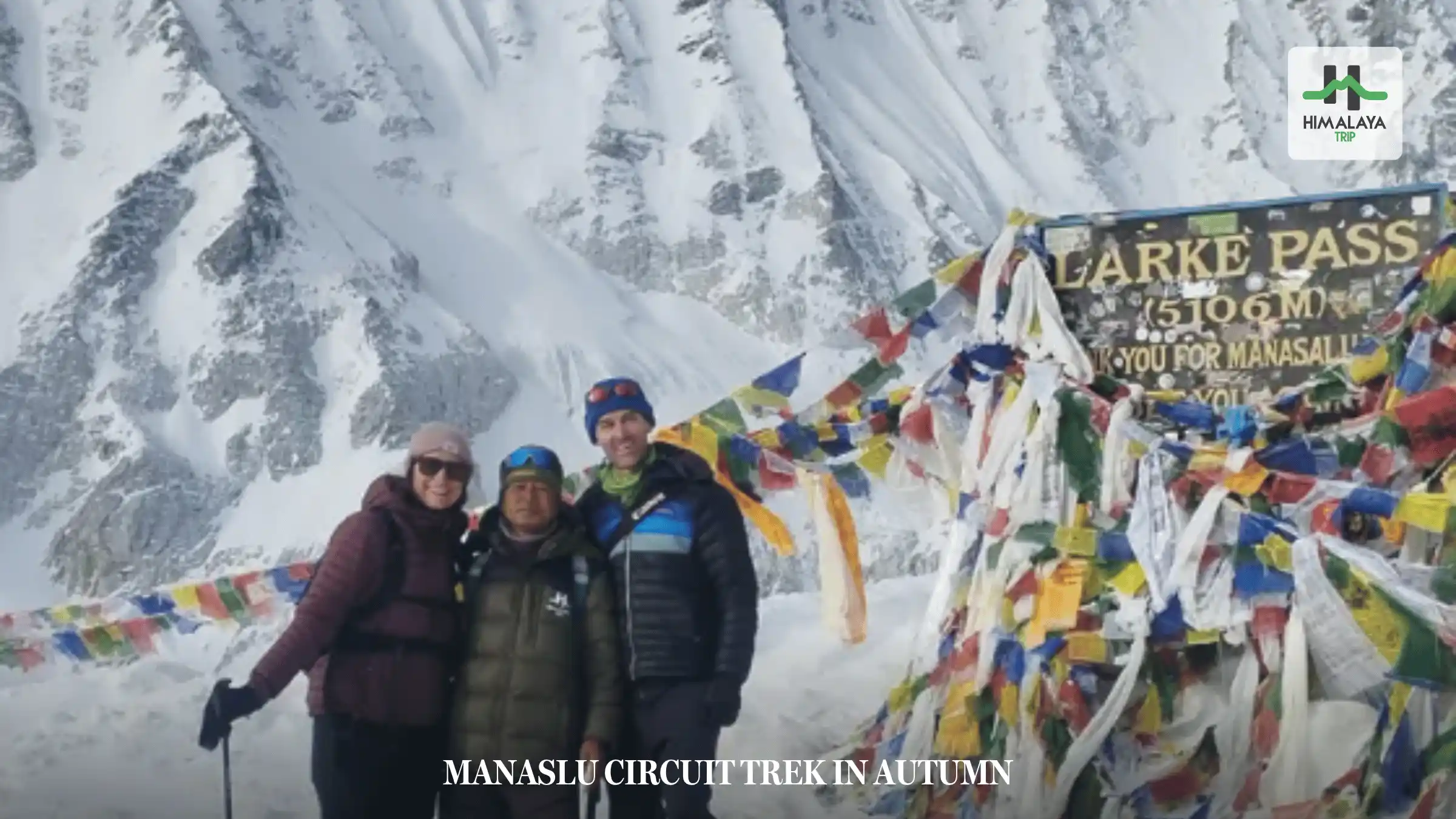
Autumn, from late September to November, is the best time for the Manaslu Circuit. The monsoon has cleared, the skies are at their clearest, and Larkya La Pass (5,106 m) is at its safest to cross. Compared to the Everest and Annapurna routes, Manaslu is uncrowded, which makes it a good choice for trekkers who want to explore nature and mountain villages.
However, trekking in the Manaslu region needs careful planning. Since it is a restricted area, you cannot go alone and must follow government permit rules. Permit costs may also change depending on the season and length of the trek, so choose the right month, walk at a comfortable speed, and give enough time for your body to adjust to the high altitude. Good preparation will keep you safe and let you enjoy the trek without unnecessary problems.
Table of Contents
Manaslu Circuit Weather in Autumn: Month by Month
Autumn weather on the Manaslu Circuit moves from the last of the rain in early September to cold days in late November. The figures below are average day and night temperatures for the region, and remember the pass is colder than any village on this table.
| Month | Night and Day temperature | Sunshine | What you’ll find |
|---|---|---|---|
| September | 7°C to 21°C | About 7 hours | The rain ends, the hills are green, some trails are still wet in early September |
| October | -2°C to 20°C | About 7 hours | The clearest and busiest month, dry trails, little or no rain |
| November | -3°C to 12°C | About 7 hours | Cold and uncrowded, with the clearest air of the year |

How Hard Is the Manaslu Circuit in Autumn?
The Manaslu Circuit is a challenging trek, and autumn does not make the distance shorter. You’ll walk about 177 km in 11 days, mostly 5 to 8 hours a day, with one long day of 8 to 9 hours over Larkya La Pass. The trail climbs from 869 m at Machha Khola to 5,106 m at the pass. The real toughness is altitude, not technique: no climbing skills are needed, but your body must adjust slowly. That is why the itinerary keeps a full rest day at Samagaon and short walking days from there to the pass.
We do not recommend the Manaslu Circuit as a first trek. A fit beginner who has done long day hikes can manage it with a guide and a slow speed, but the Annapurna region is a better choice for a first-time trekker. To prepare, train for 8 to 12 weeks before you fly, walk or hike for 3 to 5 hours with a loaded daypack once a week, add stairs or hill repeats twice a week, and build leg strength with squats and lunges. In the last month, do two long hikes on back-to-back days, since that is what the trail needs of you every day.
Highlights of the Manaslu Circuit in Autumn
The trail traverses five geographies in under two weeks, and autumn shows each one at its best.
- Soti Khola to Machha Khola: The Budhi Gandaki River flows between deep gorges, and the forest paths stay green after the monsoon.
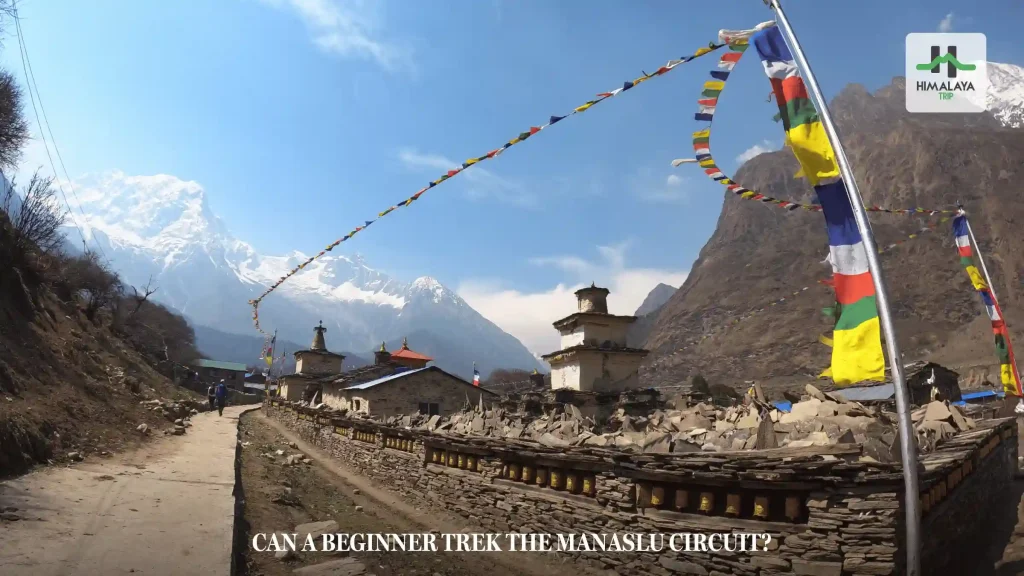
- Deng to Samagaon: Tibetan-style villages with prayer flags, mani walls and chortens, and the first full views of Manaslu from Namrung onward.
- Samagaon and Birendra Lake: A Nubri village under Manaslu, and a glacial lake filled by melting mountain ice.
- Larkya La Pass sunrise: First light on Kangguru (6,781 m), Annapurna II (7,937 m), Cheo Himal (6,807 m) and Gyaji Kung (7,030 m).
- Optional side trip to Tsum Valley: Add 5 to 6 days from Lokpa to visit Mu Gompa and the remote valley near the Tibetan border.
Crossing Larkya La Pass in Autumn
The pass day starts in the dark; you’ll leave Dharamsala (also called Larkya Phedi) before sunrise, around 4 am. The early start matters for two reasons: the morning is the calmest part of the day, and the wind picks up on the pass by late morning. The climb takes around 4 to 5 hours on a rocky path, while the descent to Bhimthang is long, with some icy areas where crampons and trekking poles help. In October and November, Dharamsala can get extremely cold, with freezing temperatures, some snow on the pass, and strong winds that make it feel even colder.

The night before the pass is the hardest night of the trek. Dharamsala has only a few basic lodges, situated at 4,460 m, and is cold. Sleep in your warmest clothes and drink plenty of water. Your guide checks your oxygen level and pulse with a pulse oximeter every day, and watches the weather the evening before. If snow is falling, the wind is too strong, or anyone in the group shows signs of altitude sickness, the guide will wait a day or turn back.
Permits for the Manaslu Circuit in Autumn
You need four permits for the Manaslu Circuit, and in autumn the restricted area permit costs more than at other times of year. All of them are arranged in Kathmandu through a registered trekking company.
| Permit | Autumn (September to November) | December to August |
|---|---|---|
| Manaslu Restricted Area Permit | USD 100 per person for the first 7 days, then USD 15 per extra day | USD 75 per person for the first 7 days, then USD 10 per extra day |
| Manaslu Conservation Area Permit | About NPR 3,000 (non-SAARC), about NPR 1,000 (SAARC) | Same |
| Annapurna Conservation Area Permit | About NPR 3,000 (non-SAARC), about NPR 1,000 (SAARC) | Same |
| Chumnubri Rural Municipality Permit | About NPR 1,000 | Same |
Note: Our trip price includes all four permits. You just need a passport, a Nepal visa, and passport-size photos to apply.
Manaslu Circuit Trek Cost in Autumn
11-day Manaslu Circuit Trek package costs USD 949 for one person, USD 849 each for 2 to 4 people, USD 799 each for 5 to 9 people, and USD 749 each for 10 or more. A premium trek with private jeeps, hot drinks, hot showers, Wi-Fi, and charging included costs more. The standard package includes three meals a day on the trek, teahouse rooms, a licensed English-speaking guide, porters, all permits, public transport, airport pick-up and drop-off, a pulse oximeter and a first aid kit.
Some costs are always extra. Plan for trekking gear, tips for your guide and porter (10 to 15 percent of the trek cost is the usual rate), drinks and bottled or boiled water, hot showers, charging (about USD 1 to 2 per time), Wi-Fi, meals in Kathmandu, and travel insurance that covers helicopter rescue. Prices rise in October for two reasons: the restricted area permit costs USD 25 more for the first week, and demand for guides, jeeps and rooms peaks in the same few weeks.
How Crowded Is the Manaslu Circuit in Autumn?
October is the busiest month on the Manaslu Circuit, and the busiest weeks fall around the Dashain and Tihar festivals. Late September and the second half of November are uncrowded, with clear weather on most days. Even at its busiest, the Manaslu Circuit is far quieter than the classic Everest and Annapurna routes. The restricted area permit and the guide rule keep numbers down.
Busy weeks still matter at the teahouses. Villages such as Samdo and Dharamsala have only a few lodges, so rooms fill early in October. Private rooms are available when space allows, but during busy seasons, you may have to share a room. Your guide will arrange accommodation in advance each day. Compared with the Annapurna Circuit, which has roads in its lower valleys and far more trekkers, Manaslu feels remote and wild.
How Early Should You Book for Autumn 2027?
Book three to six months ahead for an October departure, and at least a few weeks ahead for late September or November. We need your passport and travel details in advance to arrange the restricted area permit. Booking early also secures your guide and your jeep or bus seats before they become fully booked during the busy season.
October fills first because it has the best weather and the festival season, and guides, transport, and teahouse rooms are limited in the Manaslu Valley. Booking early gives you the dates you want, a guide you can talk to before you arrive, and time to plan side trips such as Tsum Valley. You can confirm your booking by paying a 20% deposit, with the remaining amount paid in Nepal before starting the trek.
Safety and Health Tips for Autumn
Most problems on the Manaslu Circuit come from climbing too fast, the cold at night, or the trail itself. These steps keep you safe in autumn.
- Know the signs of altitude sickness: Headache, nausea, dizziness, loss of appetite, and poor sleep. Tell your guide at once and do not climb higher until they pass. Above 3,000 m, sleep no more than 500 m higher each night.
- Dress in layers for cold nights: A base layer, a fleece, a down jacket, and a windproof shell. Nights at Samdo and Dharamsala drop below freezing in October and November, and bedrooms are not heated.
- Watch for landslides, narrow bridges and trail damage: The lower valley has landslide areas, and parts of the trail were rebuilt after the Budhi Gandaki flood, therefore, cross suspension bridges one group at a time and follow your guide’s lead.
- Get travel insurance with helicopter rescue cover: The policy should cover trekking and helicopter evacuation up to 6,000 m. Check that the insurer can pay the rescue company directly.
- Drink 4 to 5 liters a day: Clean all water from taps and streams with a filter or purification tablets.
Food, Water and Tea Houses on the Manaslu Circuit
Teahouses on the Manaslu Circuit are simple and family-run lodges. Rooms have two beds with pillows and blankets, and bathrooms are mostly shared. In Samagaon and Bhimthang, some rooms have private bathrooms, while Samdo and Dharamsala have shared toilets. The bedrooms are not heated, so trekkers gather around the stove in the dining room to stay warm in the evening.
Meals are freshly prepared from a small menu, with dal bhat being a popular choice because it is fresh, filling, and comes with extra servings. Most villages are Buddhist, and meat is scarce, so plan to eat vegetarian. Carry a reusable bottle and a filter or purification tablets, since plastic bottles are not allowed in the conservation area. Electricity is available in larger villages like Namrung, Samagaon, and Samdo, but charging your devices costs around USD 1–2. Wi-Fi is available in some villages such as Namrung and Samagaon, while phone signals become weak above Samagaon.
Manaslu Circuit in Autumn vs Spring
Autumn and spring are both good seasons for the Manaslu Trek, with autumn providing clear mountain views and spring bringing colorful flowers.
| Autumn (September to November) | Spring (March to May) | |
|---|---|---|
| Weather and views | Dry, firm, and the clearest skies of the year | Mild and stable, with some afternoon haze |
| Temperature | Day 8°C to 20°C, night 0°C to -3°C | Day 7°C to 18°C, night 6°C to -6°C |
| Crowds | Busiest in October | The second busy season of the year |
| Permit fee | USD 100 for the first 7 days | USD 75 for the first 7 days |
| Nature | Crop Harvest and festivals | Rhododendron forests in bloom, March to April |
Conclusion
Choosing the right time for the Manaslu Circuit Trek in autumn depends on the weather, cold temperatures, and how busy the trails are. Late September attracts fewer trekkers, October brings the clearest mountain views and better trail conditions, while early November offers fresh, cool weather with fewer people on the trail.
Whatever time you choose, arrange your permits at least two months in advance, include two rest days at Samagaun and Samdo to adjust your body, and check trail and bridge conditions before leaving Kathmandu. If you are planning this trek, contact the Himalaya Trip team for help with choosing your dates, arranging permits, and finding a licensed local guide.