Winter and Monsoon Special Offer! Get 5% off on all trekking packages in Nepal . Visit during June , July, August, December , January and February and take advantage of this limited-time deal.

Phakding
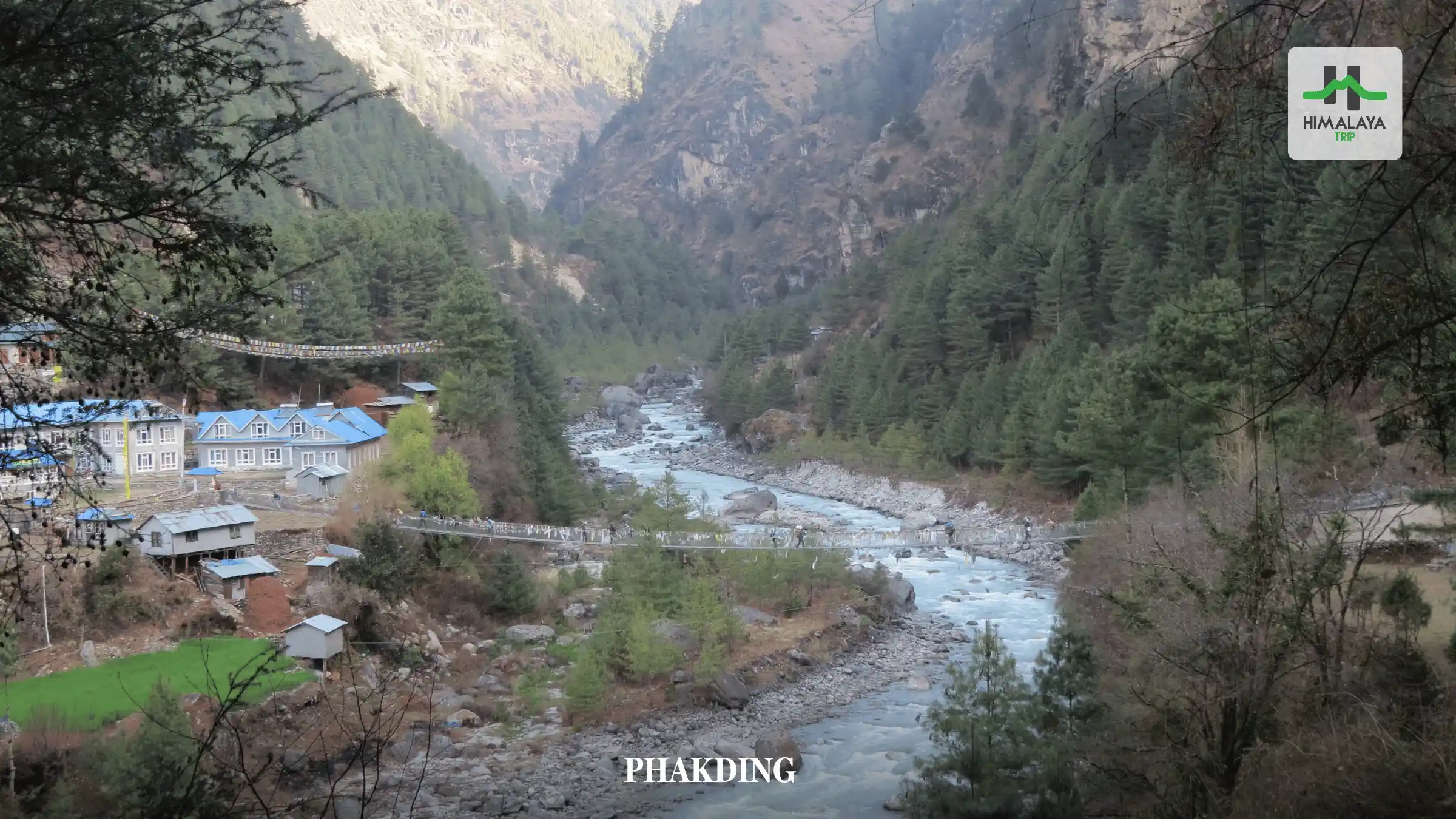
Phakding is a Himalayan village situated at an altitude of 2,610 m (8,563 ft) along the Dudh Koshi River in the Solukhumbu district of Nepal. It is the standard overnight stop on day one of the Everest Base Camp Trek after the short trek from Lukla. The village has several teahouses and lodges where trekkers rest before continuing toward Namche Bazaar.
Phakding lies in a green valley surrounded by green hills, pine forests, stone houses, and suspension bridges over the Dudh Koshi River. You can also see local Sherpa life in the village as families run teahouses, shops, and other services for trekkers.
For most trekkers, Phakding is the real start of the Everest Base Camp journey. The first night here gives you time to rest after the Lukla flight and prepare for the longer walk to Namche Bazaar.
Table of Contents
Phakding Altitude and Elevation
Phakding is situated at an elevation of 2,610 m above sea level. The village is about 230–250 m lower than Lukla, which stands at around 2,860 m. This means you descend after landing at Tenzing-Hillary Airport before spending your first night at a lower elevation in Phakding.
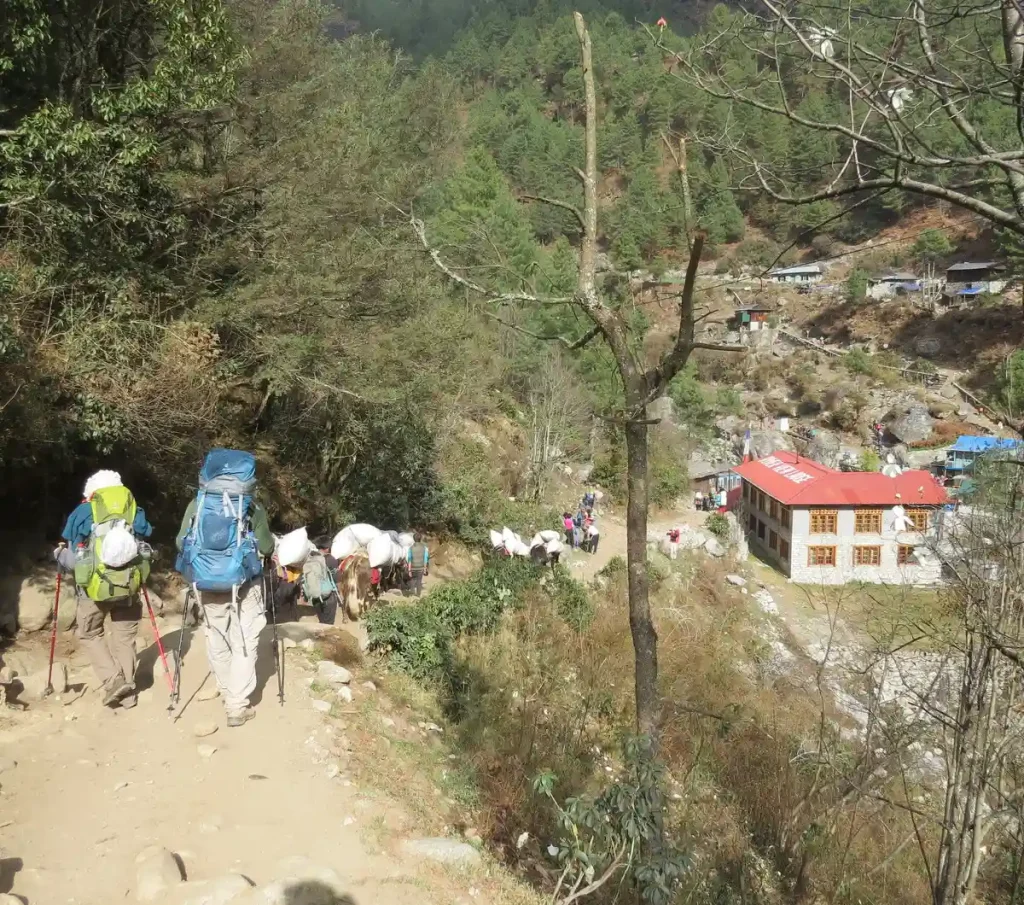
The altitude also makes Phakding an important stop before the climb to Namche Bazaar. From Phakding, the trail climbs to 3,440 m at Namche Bazaar, with about 830 m of elevation gain over roughly 10–12 km. The lower altitude and warmer temperature make Phakding feel greener and more comfortable than the higher villages ahead.
How Far Is Phakding from Lukla
The trail connecting Lukla to Phakding covers a distance of 8 km. The path consists of dirt tracks, stone steps, and suspension bridges crossing the Dudh Koshi River. Unlike most trekking stages in high mountains, this area faces a net elevation loss. The table below provides a clearer overview.
| Trek Stage | Distance | Starting Altitude | Ending Altitude | Net Elevation Change | Average Duration |
| Lukla to Phakding | 8 km | 2,860 m | 2,610 m | -250 m | 3 to 4 hours |
Phakding to Namche Bazaar: Distance, Time & Difficulty
The Phakding to Namche Bazaar trek covers about 10.5–11 km (6.5–7 miles) and takes around 5–6 hours for most trekkers. The overall difficulty is moderate to challenging, with the final climb toward Namche making this one of the more demanding days in the lower Everest region.
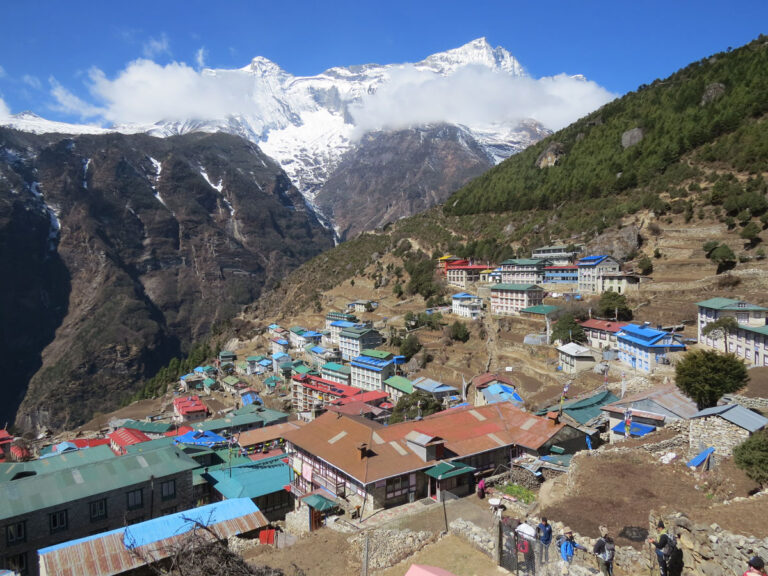
The first part of the trail follows the Dudh Koshi River through Benkar, Chumoa, and Monjo before reaching the Sagarmatha National Park entry point. After Monjo, the trail traverses Jorsalle and crosses several suspension bridges before reaching the Hillary Suspension Bridge. The final 2–2.5 hours take you up a steep climb on stone steps through rhododendron forest toward Namche Bazaar.
Accommodation in Phakding Village
Accommodation in Phakding ranges from basic teahouses to comfortable lodges and premium properties. Take a look at the table below for a better understanding of the available accommodation options.
| Lodge Tier | Average Price (Per Night) | Room Features | Amenities |
| Budget Teahouses (Standard) | NPR 500 – 1,000 (USD 3 – 7) | Twin beds, shared bathroom, basic blankets | Shared hot shower, paid Wi-Fi, paid device charging. |
| Mid-Range Lodges | NPR 1,500 – 3,000 (USD 10 – 20) | Private twin rooms, optional attached bath. | Hot running water, garden views, on-site dining |
| Luxury Lodges | NPR 1,5000 – 3,0000+ USD 100 – 300+ | Premium en-suite rooms, plush bedding. | Electric blankets, free Wi-Fi, premium dining, organic food. |
Things to Do in Phakding
Phakding is more than a place to spend your first night on the Everest Base Camp trek. You can use your free time to visit a monastery, explore Buddhist sites, and enjoy local food.
- Visit Rimijung Monastery: Take a short walk to Rimijung Monastery for views of the valley and Kusum Kanguru.
- Walk Over Suspension Bridges: Cross the suspension bridges decorated with colorful Buddhist prayer flags over the Dudh Koshi River.
- Spin Riverside Prayer Wheels: Walk beside the river and turn the traditional prayer wheels clockwise as you pass.
- See Mani Stone Walls: Look at stone walls sculpted with the Buddhist mantra “Om Mani Padme Hum” along the trail.
- Enjoy Dal Bhat: Try a traditional plate of rice, lentils, vegetables, and curry at a local teahouse.
- Watch Local Animal Caravans: Look out for yaks, dzos, and mules that carry supplies on the Everest trail.
- Spot Himalayan Birds: The forests around Phakding are home to birds such as Himalayan griffons and pheasants.
Does Phakding Help With Acclimatization?
Yes, staying in Phakding adjust your body to higher altitude before the climb to Namche Bazaar. After flying from Kathmandu at about 1,400 m to Lukla at 2,860 m, you descend to 2,610 m for your first night. This lower sleeping altitude gives your body more time to acclimatize.
Phakding also provides a useful break before the major climb to Namche Bazaar. The next day’s route gains about 830 m, so spending a night at 2,610 m lets you rest after the Lukla flight and first walk. However, one night in Phakding does not fully prevent altitude sickness. You still need to walk at a slow pace, drink enough water, eat well, and pay attention to symptoms such as headache, nausea, dizziness, or unusual tiredness.
Culture & Local Life in Phakding
Culture and local life in Phakding Nepal are connected to Sherpa traditions, Buddhism, farming, and the trekking trade. The village lies on the main route to Namche Bazaar, so many families run teahouses, lodges, shops, and small services for trekkers. At the same time, local families maintain traditional practices and use the monasteries, prayer spaces, mani walls, and chortens as part of daily life.
Buddhism is visible throughout Phakding. Rimijung Monastery is one of the local religious sites where people gather for prayers and other Buddhist practices. You can also see mani walls crafted with “Om Mani Padme Hum”, white chortens, and colorful prayer flags around the trails and the village.
Traditional homes in Phakding use stone walls and wooden beams and have spaces for household goods and livestock. Families also grow mountain crops such as potatoes, barley, and radishes where the land allows. Yak, dzos, and mule trains are also a familiar sight on the trail as they carry food, fuel, and other supplies toward villages higher in the valley.
Weather and Temperature in Phakding
Weather in Phakding village is much milder than in higher-altitude places such as Namche Bazaar and Everest Base Camp. Phakding is located in a lower valley near the Dudh Koshi River, so extremely cold conditions are less common here except during the winter months.
| Season / Months | Average Daytime High | Average Nighttime Low |
| Spring (March – May) | 18°C – 20°C (64°F – 68°F) | 2°C – 4°C (36°F – 39°F) |
| Summer / Monsoon (June – August) | 19°C – 21°C (66°F – 70°F) | 11°C – 14°C (52°F – 57°F) |
| Autumn (September – November) | 15°C – 19°C (59°F – 66°F) | 3°C – 8°C (37°F – 46°F) |
| Winter (December – February) | 10°C – 14°C (50°F – 57°F) | -3°C to -6°C (26°F – 29°F) |
Conclusion
Phakding is an important first stop on the Everest Base Camp Trek because it provides a manageable first trekking day with a comfortable place to rest at 2,610 m. Set beside the Dudh Koshi River, the village has teahouses, lodges, food, Wi-Fi, charging facilities, and access to local Sherpa culture. You can explore monasteries, mani walls, prayer flags, suspension bridges, and village trails before preparing for the tougher climb to Namche Bazaar.