Winter and Monsoon Special Offer! Get 5% off on all trekking packages in Nepal . Visit during June , July, August, December , January and February and take advantage of this limited-time deal.

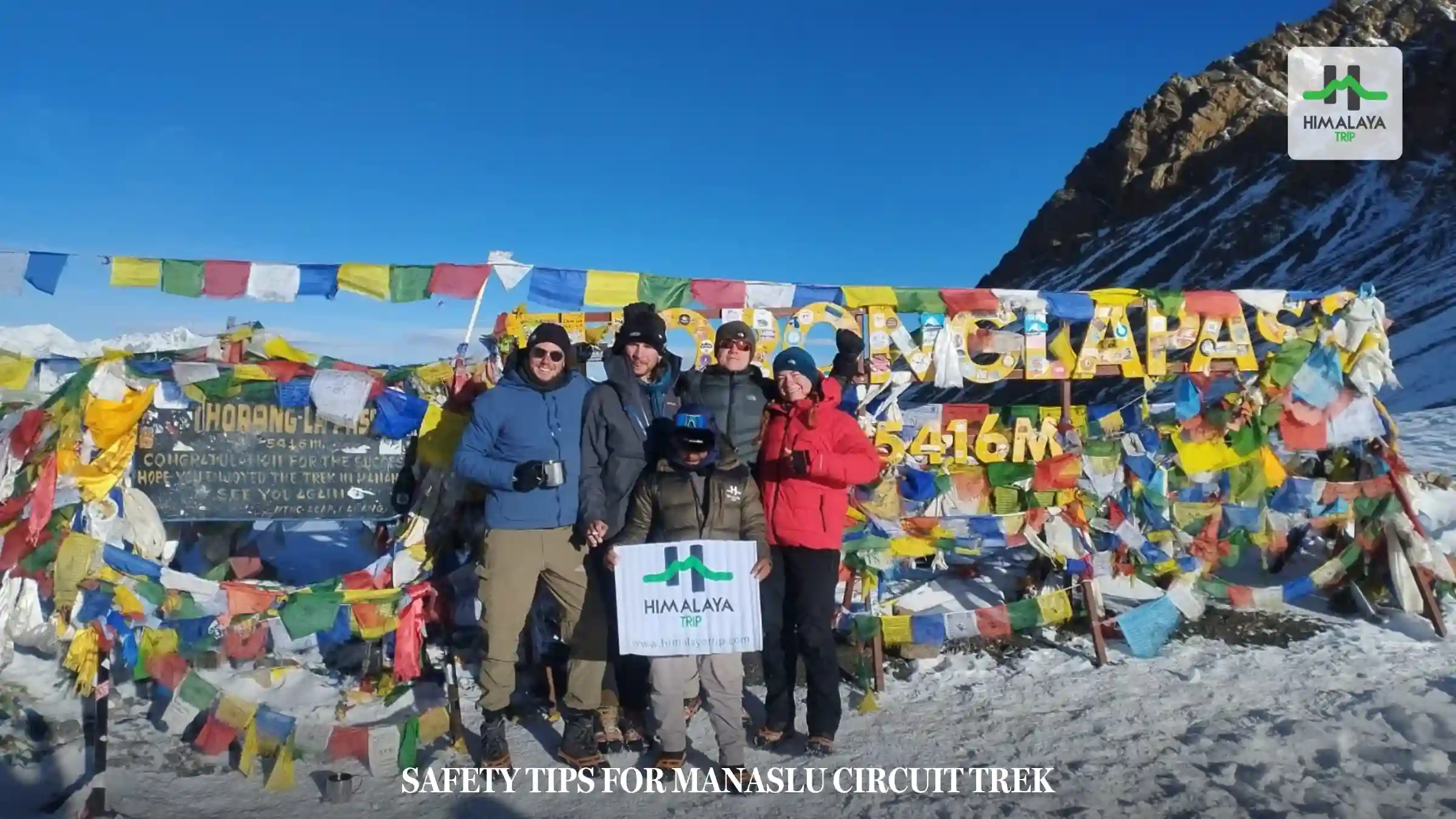
Safety Tips for Manaslu Circuit Trek
The main safety tips for the Manaslu Circuit Trek are to climb slowly, stop climbing when you feel altitude symptoms, trek with a licensed guide, take a mandatory acclimatization day at Samagaon (3,530 m), carry high-altitude evacuation insurance up to 6,000 m, and check snow conditions before you cross Larkya La. Once you are above 3,000 m, sleep no more than 500 m higher each night and add a rest day for every 1,500 m you gain.
The Manaslu Circuit is increasingly popular, but its remote geography and quickly changing mountain weather mean that careful preparation is essential, particularly on the higher areas of the route. The Manaslu Conservation Area recorded a record 12,512 foreign visitors in the 2024/25 fiscal year, while Larkya La, the highest point of the trek, reaches 5,106 m and can become hazardous when heavy snowfall affects the pass, as happened in late September 2026.
Table of Contents
High Altitude and Acclimatization Safety
The single biggest hazard on the Manaslu Circuit is Acute Mountain Sickness (AMS). Your journey starts as low as 869 m at Maccha Khola and ascends to 5,106 m at Larkya La Pass, where you’ll gain over 4,000 m of elevation in just a week.
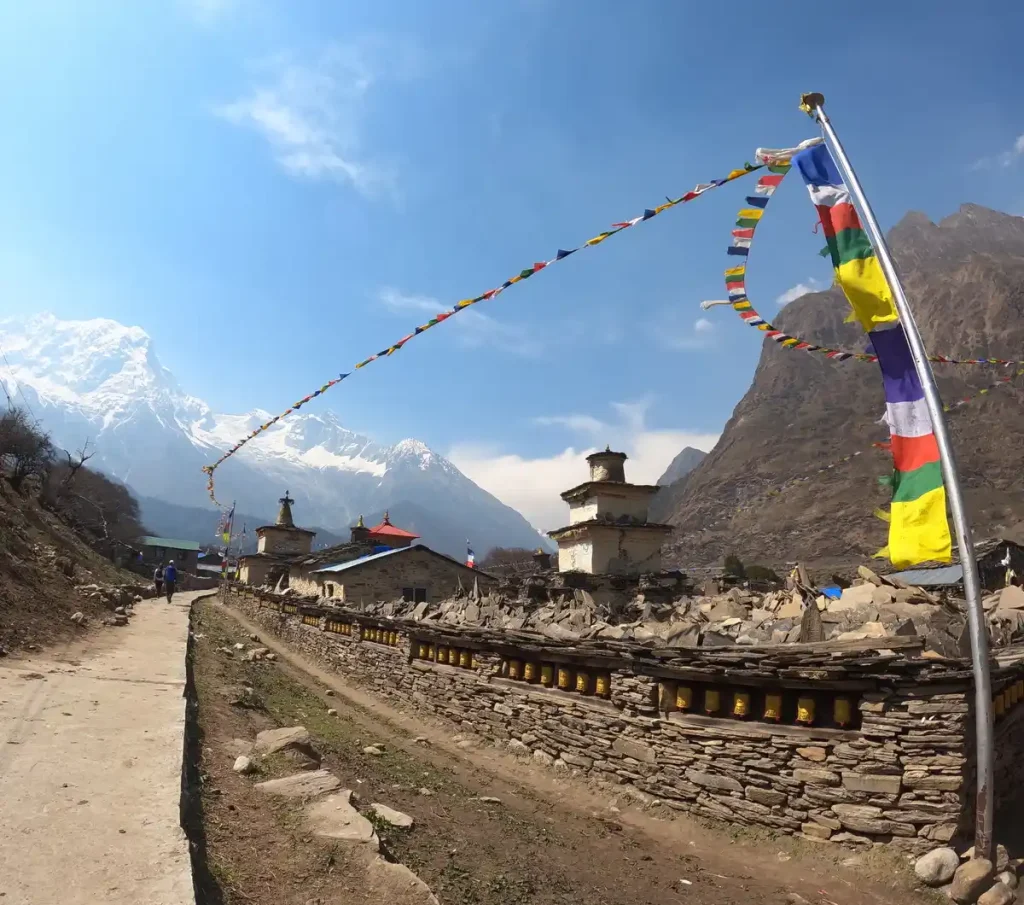
At the summit of Larkya La, atmospheric pressure drops, leaving roughly 50% less oxygen per breath compared to sea level. The points below show how elevation changes on the route and where altitude-related risks become more serious.
| Elevation | Location | Main Risk / Importance |
|---|---|---|
| 5,106 m | Larkya La Pass | Extreme altitude, AMS, and sudden storm risk |
| 3,875 m | Samdo | Rapid elevation gain; higher risk of altitude sickness |
| 3,620 m | Samagaon | Important acclimatization stop before gaining more altitude |
| 1,804 m | Deng | Transition from lower to mid-altitude terrain |
| 869 m | Machha Khola | Starting point and trek base |
Essential Acclimatization Rules
To protect yourself against altitude illness, follow these field-tested guidelines:
- Follow the 500 m Rule: Above 3,000 m, limit your net sleeping elevation gain to no more than 300 to 500 m per day.
- Climb High, Sleep Low: Gain elevation during daytime acclimatization hikes, then descend to a lower altitude to sleep.
- Mandatory Samagaon Rest Day: Spend at least two nights at Samagaon (3,530 m). Use the middle day to hike up to Manaslu Base Camp (4,800 m) or Pungyen Gompa (4,000 m) before returning to Samagaon to sleep.
- Stay Hydrated: Drink 4 to 5 liters of fluid daily (water, clear soups, and oral rehydration salts)
- Avoid Alcohol and Sedatives: Alcohol and sleeping pills can slow your breathing and reduce the amount of oxygen your body gets while sleeping at high altitudes.
Trail Hazards and Safety Tips On the Route
The Manaslu Circuit passes different types of land, so the risks can change as you move along the route. The main trail hazards in each section are shown in the table below:
| Lower Gorge(Soti Khola to Deng) | Mid-Altitude Forests (Deng to Samdo) | High Pass Zone (Samdo to Bimthang) |
|---|---|---|
| Active landslide areas | Dense forest trails | Glacier and rocky moraine crossings |
| Delays caused by pack mule traffic | Wooden bridge crossings | Whiteout conditions and strong winds |
| High heat and humidity | Falling temperatures | Sub-zero temperatures |
Staying Safe from Landslides and Falling Rocks
The gorge part on the Budi Gandaki River between Jagat and Deng contains unstable cliffs prone to rockfalls. Monsoon rains and seasonal freezing continuously loosen the rock face.
- Watch for Falling Rocks: Pay close attention to falling stones, which signal an incoming rockfall.
- Move Quickly Through Active Zones: Never stop to take photos, rest, or adjust your pack inside rockfall zones.
- Keep Your Helmet Handy: If you’re trekking right after the monsoon (late September) or during early spring (March), wear a light climbing helmet.
Staying Safe Around Mules on the Trail
Mule caravans are the primary transport system for supplies in the lower Manaslu region. Getting struck by a loaded mule on a mountain path can cause serious falls. Follow these safety tips to stay safe around them:
- Always Stand Mountain-Side: When you hear mule bells, immediately step off the trail onto the incline/wall side (mountain-side). Never stand on the cliff-edge side.
- Wait Patiently: Give the entire caravan space to pass completely before stepping back onto the path.
Safely Crossing Larkya La Pass
Crossing Larkya La Pass is one of the main highlights of the Manaslu Circuit, but it is also the hardest and most risky part of the trek. The high altitude, freezing temperatures, and strong winds make it important to start early and move carefully. The schedule for crossing Larkya La Pass is shown below:
| Time | Location / Activity | What to Keep in Mind |
|---|---|---|
| 4:00 AM | Depart Dharamsala | Wear warm clothing, use a headlamp, and be prepared for extreme cold |
| 6:00 AM | Reach Moraine Ridge | Keep a steady pace and drink water regularly |
| 8:00 AM | Reach Larkya La Pass | Take quick photos, have some energy food, and start down before strong winds develop |
| 1:00 PM | Arrive at Bimthang | Complete the long descent, warm up, eat, and rest |
Weather and Safety in Different Seasons
Conditions can change greatly throughout the year, affecting trail conditions, temperatures, and the risks you may face. The table below shows the main weather conditions and risks for each season:
| Factor | Autumn (Sep–Nov) | Spring (Mar–May) | Winter / Monsoon |
|---|---|---|---|
| Trail Safety | High | Moderate to high | Low |
| Pass Conditions | Clear and stable | Snow conditions can change | Heavy snow and landslides |
| Night Temperature at Pass | -5°C to -15°C | -5°C to -10°C | Below -20°C |
| Main Risks | Crowded lodges | Afternoon storms | Avalanches and |
Essential Safety Gear Checklist
Having the right gear is important for staying warm, safe, and prepared during the Manaslu Circuit in remote areas where help may not be nearby. The essential safety gear for the trek is listed below:
| Altitude & Weather | Footwear & Traction | Medical & Hygiene |
|---|---|---|
| Down jacket rated to -15°C | Broken-in trekking boots | Personal first-aid kit |
| Four-season sleeping bag rated to at least -10°C | Microspikes or crampons | Diamox (acetazolamide), if prescribed or advised by a medical professional |
| Waterproof hard-shell jacket | Trekking poles | Water purification tablets or filter |
| UV-400 sunglasses | Gaiters for snow | High-SPF sunscreen |
| Warm wool socks | Hydration salts |
Water Purification Rules
Never drink unfiltered tap, river, or stream water on the trail. Water sources in the lower valleys can carry agricultural runoff and bacteria.
- Use Dual Treatment: Combine a hollow-fiber water filter (like a Sawyer Squeeze) with chlorine dioxide tablets or an ultraviolet purifier (Steripen).
- Avoid Single-Use Plastics: Plastic water bottles are banned in parts of the conservation area to reduce waste. Carry reusable insulated flasks or durable bladders.
Emergency Protocols and Helicopter Evacuation
In a serious emergency such as severe altitude sickness, a deep fracture, or sudden appendicitis, a helicopter may be the fastest way to reach medical care. Remote mountain areas have limited road access and health facilities. If a trekker cannot safely continue or needs urgent treatment, the trekking team can arrange a helicopter evacuation when required. Quick action can be important when a serious condition gets worse at high altitude.
Before trekking in Nepal, check that your travel insurance covers high-altitude trekking and emergency helicopter evacuation. The policy should cover helicopter rescue up to 6,000 m and should not stop coverage at 3,000 m or 4,000 m. Also check whether the insurer can pay the helicopter rescue company directly. This can help you avoid a large upfront payment during an emergency.
Health, Hygiene, and Illness Prevention
Medical facilities on the trail are minimal. Beyond small health posts at Philim and Samagaon, professional medical support is unavailable until you reach major cities.
- Preventing “Khumbu Cough”: Cold, dry mountain air irritates vocal cords and lungs. Wear a buff or neck gaiter over your mouth and nose above 3,000 m to warm and humidify the air you breathe.
- Hand Hygiene: Wash hands thoroughly with soap before meals and use alcohol-based sanitizer frequently. Gastrointestinal infections are a cause of early trek cancellations.
- Blister Management: Cover sore spots on your feet with moleskin or tape as soon as they appear to prevent blisters from forming.
The Dangers of the Manaslu Circuit Trail
While the route lacks the heavy commercial crowds of Everest or Annapurna, its remote landscape can create a serious risk. As you trek beside the Budi Gandaki River, the terrain transitions from subtropical river gorges to high-altitude ice fields. Every year, trekkers encounter life-threatening situations due to elevation shifts, rockfalls, mountain weather, and limited emergency communication.
The trek needs 6 to 8 hours of daily walking across 177 km of remote terrain. Without proper planning, disciplined pacing, and safety protocols, what should be a journey of a lifetime can quickly turn into a medical emergency. Until 1991, the region was closed to foreign visitors, but today it is one of Nepal’s most popular restricted trekking areas, taking trekkers around Mt. Manaslu (8,163 m), the eighth-highest mountain in the world.
Your safety checklist before you go
Use these safety tips for the Manaslu Circuit Trek as a checklist:
- Choose an itinerary that sleeps no more than 500 m higher per night above 3,000 m, with a rest day per 1,500 m gained.
- Talk to your doctor about acetazolamide and emergency medicine.
- Book a licensed guide through a registered agency and get the rescue plan in writing.
- Never sleep higher with symptoms, and go down if they worsen.
- Add a spare day for Larkya La.
- Insure for 5,106 m and helicopter evacuation, and keep the insurer’s number.
- Ask about trail and pass conditions each morning.
- Ask which trail sections are prone to slides, and avoid walking right after heavy rain or snow.
If you are ready to plan, contact Himalaya Trip and ask for a Manaslu Circuit itinerary built on these safety tips for the Manaslu Circuit Trek.