Winter and Monsoon Special Offer! Get 5% off on all trekking packages in Nepal . Visit during June , July, August, December , January and February and take advantage of this limited-time deal.

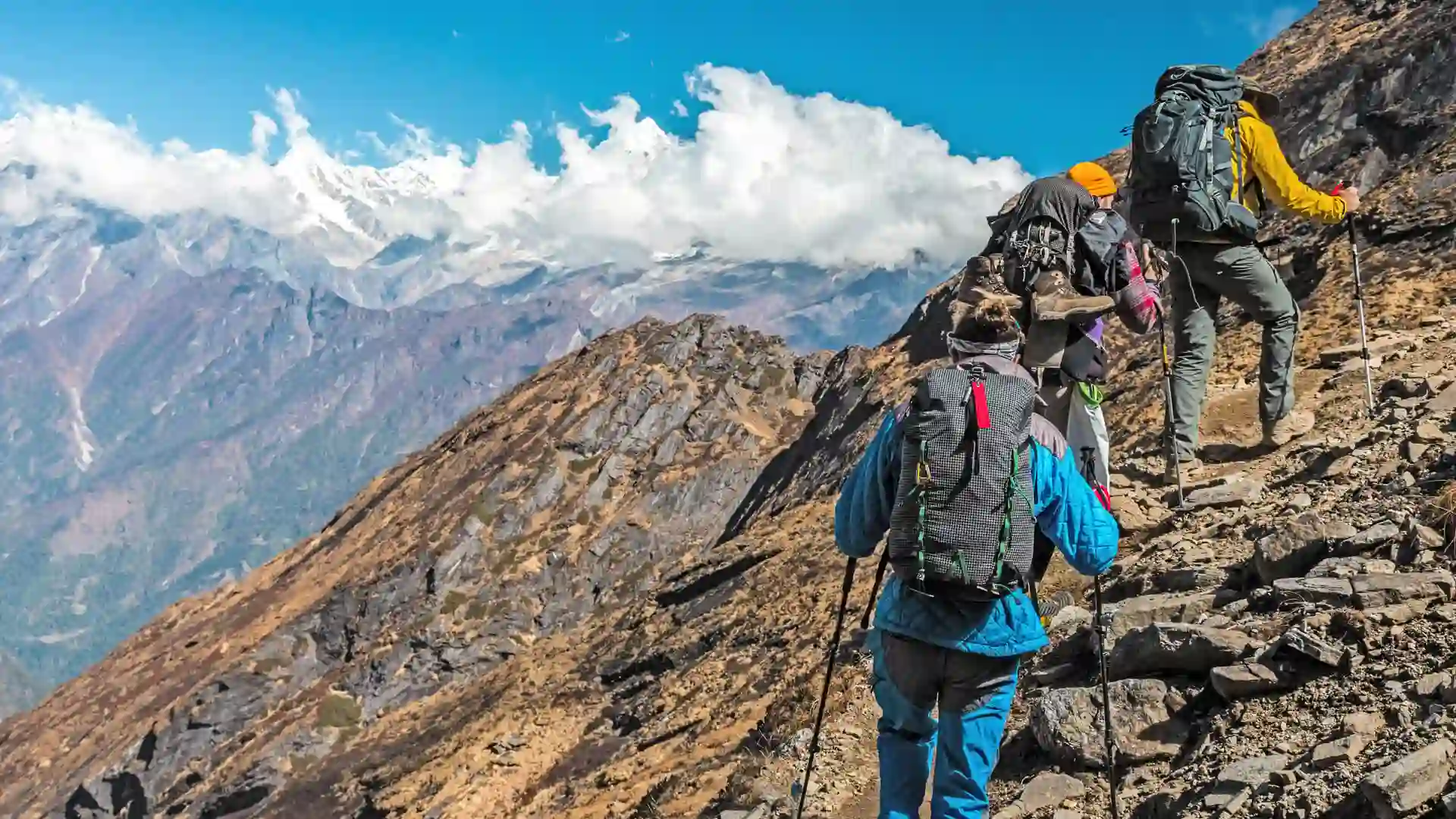
How Much Does it Cost to Trek in Nepal?
What would you say if someone asked, “What is the most integral part of trekking in Nepal?” While the stunning mountains, varied landscapes, and cultural exploration are all the key highlights, the most crucial aspect comes down to one thing- budget. Budgeting is as equally important as any other phase of preparation. Without budgeting, the chances are you will end up in chaos and, even worse, maybe a scam. So, you have to take a moment and ask yourself, “How much does it cost to trek in Nepal?” But why is it important to ask that question?
Knowing the prices before trekking in Nepal is essential as it will help you avoid unwanted expenses. It allows you to decide on the proper treks, accommodations, and transportation based on your financial situation. Being aware of all the costs also opens the doors for flexibility. You will learn to adjust for the affordable means to fulfill your dream of trekking in the Himalayas. Some essential areas of expenditure determine the trekking cost that you cannot overlook. And what are those? Let’s find out.
Table of Contents
Essential Costs to Prepare for Your Trek in Nepal
The trickiest part is determining the cost during the preparation phase of the trek. You shouldn’t rule out some essential expenses, such as food, accommodation, and transportation. But how is it so tricky if we shouldn’t miss to include these costs in budgeting? It’s because these essential costs depend on various factors. Some of them are;
- Your trekking destination
- Duration of the trek
- The season you are trekking in
- Additional services you take along the trek
- Accommodations and food before you start the trek.
You can deduce the estimated amount after looking into the factors mentioned above. Besides, here are some essential costs to prepare for your trek in Nepal.
Trekking Permits Cost
Most of the treks in Nepal lie either inside the National Park or Conservation area. For example, the Everest Base Camp Trek lies in the Sagarmatha National Park, and the Annapurna Base Camp Trek lies inside the Annapurna Conservation Area. These are the protected areas with diverse wildlife and vegetation. You need National Park or Conservation Area permits to enter or trek in these areas. You must also obtain special trekking permits before trekking to the restricted areas. Besides these, you also need to get the Trekkers Information Management System Card (TIMS card) to trek anywhere in Nepal. The TIMS card ensures your safety and helps the authorities locate you in emergencies.
The price of the permits depends upon your nationality. The permits would be cheaper if you are from any SAARC country. For example, the permit fee for TIMS for SAARC nationals is NPR 1,000, while it costs NPR 2,000 for non-SAARC nationals. The cost of permits for protected areas is such that SAARC nationals pay half the amount compared to non-SAARC nationals. However, this is not true with the Restricted Area Permit (RAP).
The prices of the permits with their types are in the table below;
| Trekking Permit Types | Purpose of the Permit | Cost for SAARC Nationals | Cost for Non-SAARC Nationals |
| TIMS Card | For trekker’s safety and to locate them in emergency situations | NPR 1,000 (~$8) | NPR 2,000 (~$15) |
| National Park Permit | To enter the National Parks | NPR 500 (~$4)- NPR 1,500 (~$11) | NPR 1, 000 (~$8) – NPR 3,000 (~$23) |
| Conservation Area Permit | To enter the Conservation Areas | NPR 500 (~$4) – NPR 1,000 (~$8) | NPR 2,000 (~$15)- NPR 3,000 (~$23) |
| Restricted Area Permit | To enter the restricted areas | USD 20 to USD 500 per person (this price is for the first 7 or 10 days, after which you will have to pay on per day basis) | |
Accommodation Cost
You will mostly encounter three accommodations in your trekking routes: teahouses, lodges, and hotels. While hotels run on the business model, teahouses and lodges are family-run accommodations. The accommodation cost varies depending on the region, amenities you receive, and altitude. While you might find hotels in the popular trek like Annapurna Base Camp Trek, it is hard to find many hotels in the least popular trek like Manaslu Circuit Trek. Hence, you must rely on teahouses on most trekking trails.

Annapurna Base Camp Trek
7 Days
Trekking
USD 449 per person

Everest Base Camp Trek
14 Days
Adventure Treks
USD 1,349 per person

Manaslu Circuit Trek
11 Days
Adventure Treks
USD 849 per person

Mardi Himal Trek
4 Days
Adventure Treks
USD 310 per person
The rooms in teahouses are cheaper than the hotels as they intend to earn from the food you eat rather than the accommodations, making it one of the affordable accommodation options. The room costs anywhere from USD 5 to USD 15 per night in teahouses. Remember that if you stay in the teahouses, the amenities are limited, and you have to pay for services like charging wi-fi and hot showers. However, if you stay in a hotel or lodge, you will pay a few extra bucks for the comfort. The hotels might charge you anywhere from USD 30 to USD 50 per person for one night. In contrast to teahouses, hotel amenities have prices included in the package.
The table below provides the approximate price range for accommodations for different trekking destinations in Nepal.
| Trekking Region | Cost of Accommodation Per Person (per night) |
| Everest Region | $5 – $30 |
| Annapurna Region | $5 – $25 |
| Langtang Region | $5 – $20 |
| Manaslu Region | $10 – $40 |
| Upper Mustang | $10 – $40 |
| Kanchenjunga Region | $10 – $35 |
Note: Camping is another accommodation option. However, the camping price might exceed that of hotels and tea houses.
Food Costs
Food makes up much of your trekking expenditure regardless of the destination. Let us understand this with a quick example. Say you eat three meals daily, and one meal costs around $8. Then, for three meals, it would cost $24. Assuming $24 per day, it would cost you $168 for 7 days, $240 for 10 days, and $360 for 15 days. This amount is just an approximate value as the cost of food depends highly upon the altitude. A longer trek like the Everest Base Camp Trek would cost around $300 to $450 for the food.
Due to the remoteness of the location and unavailability of transportation, it has to be carried by humans to higher elevations. So, with the increase in altitude, the food price also increases. The cost of food also depends upon the kind of food you eat. Most international cuisines like Spaghetti and Burgers are more expensive than the traditional Nepalese dal, bhat, and tarkari. Besides, the price also depends on the number of meals you have daily. Here is the approximate price range for food per person per day in different trekking areas of Nepal.
| Trekking Region | Food Cost Per Person (Per Day) |
| Everest Region | $25 – $40 |
| Annapurna Region | $15 – $30 |
| Langtang Region | $13 – $25 |
| Manaslu Region | $20 – $35 |
| Upper Mustang | $20 – $30 |
| Kanchenjunga Region | $25 – $40 |
Transportation Cost
Like food and accommodation, transportation is another aspect you should not rule out while budgeting your trek. You need various means of transportation to reach the starting point of the trek. There are mainly three options to get the starting point;
- Local or Tourist Bus
- Private Jeep
- Aeroplane
The airplane is the most expensive mode of transportation, while local buses are the cheapest. Depending on your trek, you might have to travel by air or road. For example, if you are trekking in the Kanchenjunga region, you must take a plane to Bhadrapur from Kathmandu and then ride to Taplejung. The price depends on the mode of transport, the distance, and your preference.
Here is the price breakdown for different means of transportation (one-way) to reach other regions. Note that the price below is not an actual price but an estimation.
| Trekking Region | Cost of the Jeep or Bus (Cost per Person) | Cost of a Flight (per Person) |
| Everest Region | $10 – $30 | $150 – $200 (Lukla flight) |
| Annapurna Region | $8 – $20 | $30 – $60 (Kathmandu to Pokhara) |
| Langtang Region | $5 – $15 | Not applicable |
| Manaslu Region | $10 – $25 | Not applicable |
| Upper Mustang | $20 – $50 | $60 – $150 (Kathmandu to Pokhara to Jomsom) |
| Kanchenjunga Region | $20 – $40 | $50 – $75 (Kathmandu to Bhadrapur) |
Guide and Porter Costs
Since April 1st, 2023, no Free individual trekkers have been allowed to trek in protected and restricted areas of Nepal. A licensed trekking guide through government-registered agencies must assist them. Guides are licensed professionals who ensure your safety and help you in navigation during the trek. On the other hand, a porter is someone who carries your luggage, allowing you to trek with minimal weight. Both guides and porters are crucial for a safe and sound trekking experience.
The price of the guides mostly depends upon two factors: the region you are trekking in and the experience of the guide. Most experienced trekking guides in the popular areas may cost you around USD 30 per day on average. For example, if you are trekking in the Annapurna region, the guide will cost you anywhere from USD 20 to USD 30 per day. The prices of porters are not as high as those of guides. Their charge ranges from USD 10 to USD 25 per day. Note that the price doesn’t include the tips you give to the guides and porter at the end of the trek.
Here is the approximate price range of guides per day for the different trekking destinations.
| Trekking Region | Cost of the Guide Per Day |
| Everest Region | $25 – $40 |
| Annapurna Region | $20 – $30 |
| Langtang Region | $20 – $30 |
| Manaslu Region | $25 – $40 |
| Upper Mustang | $30 – $50 |
| Kanchenjunga Region | $30 – $50 |
Trekking Clothes, Gears, and Equipment
Another area of expenditure for trekking in Nepal is clothes, gear, and equipment, which are essential for a safe and comfortable trekking experience. The cost of clothing and gear varies based on your trekking style and whether you already possess any equipment. For a successful trek, you need many things, from boots to poles. The equipment price might even exceed the cost of an actual trek if you are not careful about it. Instead of buying every item, you can rent some items like sleeping bags, poles, and bags. Here is a brief breakdown of the prices of gears and necessary equipment;
| Category | Price |
| Base Layer | $15 – $50 |
| Gloves, Hat, Bluffs | $10 – $40 |
| Trekking Pants | $ 20 – $50 |
| Sleeping Bags | $40 – $150 |
| Trekking Poles | $10 – $ 50 |
| Trekking boots | $40 – $100 |
Note: The price above mentioned are the approximate value.
Additional Costs to Consider
Beyond the primary expenses like permits, food, accommodations, guides, porters, and equipment, you must consider additional costs while budgeting your Nepal trekking costs. Here are a few of them;
- Travel Insurance— Obtaining a trekking permit is essential, as it can be used in emergency evacuation and save you thousands of dollars. Travel insurance generally ranges between $80 and $150, depending on the company and policy.
- Excess Laugage— It happens so often that the weight of the luggage exceeds that of the amount allowed by the airlines. In such cases, you must pay extra money to cover the luggage.
- Tips for the Guides and Porters— The tips of guides and porters are not included in the package. And since they were your guide, you are supposed to tip them.
- Extra Amenities— Teahouses in higher regions like Everest don’t include the price for amenities like wi-fi, hot showers, and charging in their accommodation costs. You have to pay extra to get them.
- Miscellaneous Expenditure— During your trek, you might encounter handicrafts, prayer flags, or other products you want to purchase as souvenirs. You should budget between $10 and $100 for these.
Popular Trek Packages in Nepal
Here is the list of popular trek packages in Nepal. The prices in the packages below are the prices by HIMALAYA TRIP.
| Trekking Packages | Duration | Costs (USD) |
| Annapurna Base Camp Trek | 7 days | 449 |
| Everest Base Camp Trek | 12 days | 1,199 |
| Langtang Valley Trek | 7 days | 399 |
| Upper Mustang Trek | 15 days | 1,599 |
| Manaslu Circuit Trek | 12 days | 849 |
| Annapurna Circuit Trek | 10 days | 675 |
| Gokyo Lake Treks | 11 days | 1,149 |
Note-The packages don’t include the following;
- International airfare and visa fees
- Hotels and meals in Kathmandu/Pokhara
- All the drinks during the trek
- Amenities like hot showers, wifi and charging
- Travel Insurance
- Tips for guides and porters
Tips to Reduce the Cost of Trekking in Nepal
Here are some of the tips to reduce the cost of trekking in Nepal;
- Trek in the Off-Seasons- Many trekking agencies offer discounts in the off-seasons. So plan your time during that period to save money.
- Trek with Group—Independent trekking is expensive, and you won’t be able to share the cost with anyone. To reduce your expenditure, try trekking in groups.
- Choose Nearby Routes— The more remote and far the area, the higher the expenditure. So, to reduce costs, you can choose the treks closer to Kathmandu.
- Carry Essentials—When on the trail, you need various things, such as snacks, first aid, and essential medicine. Buying these during a trek can be expensive, so buy them in Kathmandu and carry them.
- Ask for Discounts—Asking for discounts is a great way to reduce costs. You never know when the other party will agree to waive a certain percentage of your expenditure.
- Stay in the Teahouses—Teahouses are the most affordable accommodation options on trekking routes. If you cannot afford a luxury trek in Nepal, you can save money by staying in teahouses.
You can also check: Budget Friendly Treks in Nepal
Conclusion
Trekking in Nepal is an affordable adventure that accommodates various budgets. While trekking in some regions may be cheaper, remote and high-altitude treks are more expensive due to the location and higher permits, food, and accommodation costs. Hence, whether you are trekking on a budget or seeking luxury, Nepal offers many options. By understanding the costs and planning your expenditure, you can tailor your trekking cost to suit your budget and preferences.